
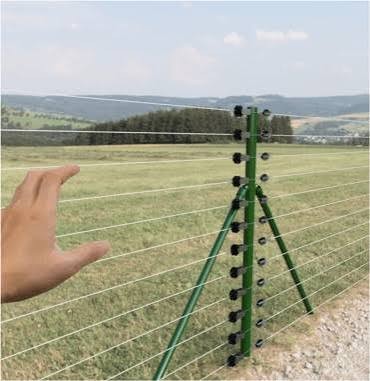
Protecting a property requires more than installing strong gates, perimeter walls and security cameras. Homes, commercial buildings, factories, warehouses and industrial facilities also need effective ways to discourage unauthorised access and protect their external boundaries.
One of the widely used technologies for perimeter protection is the electric fence security system. Designed to provide a physical deterrent and support intrusion detection, electric fencing helps property owners strengthen boundary security and monitor attempts to interfere with protected fence lines.
Electric fence security systems are suitable for various properties, including residential homes, commercial premises, industrial facilities, farms, warehouses, schools, hotels and large estates. When properly designed and installed, they can form an important part of a wider security arrangement alongside CCTV cameras, intruder alarms, access control systems and perimeter intrusion detection equipment.
For property owners in Uganda, electric fencing offers a practical option for protecting exposed boundaries, particularly where a property has valuable assets, multiple access points or a large outdoor perimeter.
This guide explains how electric fence security systems work, their components, installation process, benefits, applications, maintenance requirements and factors that influence installation costs in Uganda.
What Is an Electric Fence Security System?
An electric fence security system is a perimeter protection solution that uses energised conductors to deliver controlled electrical pulses when a person or animal comes into contact with the fence.
The system is powered by a specialised device called an electric fence energiser. The energiser converts its power supply into controlled high-voltage pulses delivered through the fence wires.
Unlike ordinary electrical wiring, a properly designed security electric fence is intended to deliver short, controlled pulses rather than a continuous electrical supply.
Electric security fencing is commonly installed on top of perimeter walls, around suitable fences or along designated property boundaries.
Its main purposes are to:
- Discourage unauthorised access.
- Create an additional physical security barrier.
- Detect certain attempts to cut or interfere with the fence.
- Support perimeter intrusion monitoring.
- Strengthen security around vulnerable property boundaries.
- Provide an additional layer of protection alongside other security systems.
Electric fencing does not replace a suitable physical boundary. It is normally installed as part of a properly designed perimeter security arrangement.
How Do Electric Fence Security Systems Work?
Electric fence security systems operate by sending controlled electrical pulses through conductive fence wires.
The system uses an energiser, insulated supports, connecting cables, grounding arrangements and monitoring equipment to deliver and supervise the electrical output.
The general operating process involves the following stages.
1. The Energiser Generates Electrical Pulses
The energiser receives power from an approved electrical supply or another compatible source, such as a suitable solar power arrangement.
It converts this power into controlled pulses and supplies them to the fence conductors.
2. Electrical Pulses Travel Along the Fence Wires
The energised conductors carry the pulses along the protected perimeter.
Insulators prevent the conductors from making unintended electrical contact with the supporting posts, wall or other structures.
3. Contact with the Fence Creates an Electrical Circuit
When a person or animal touches the energised conductor while also providing a suitable path to earth, an electrical pulse can pass through the contact path.
The controlled pulse is intended to act as a deterrent.
4. The System Monitors Fence Conditions
Many modern security electric fence systems include monitoring functions that help identify abnormal operating conditions.
Depending on the equipment, these may include:
- Fence voltage monitoring.
- Low-voltage warnings.
- Fence cutting detection.
- Short-circuit detection.
- Unauthorised interference alerts.
- Power supply fault notifications.
- Energiser tampering detection.
The exact monitoring features depend on the energiser and connected security equipment.
5. An Alarm Is Generated When a Monitored Fault Occurs
If the system identifies a condition that meets its programmed alarm criteria, it can send an alert to a compatible control panel, siren or monitoring platform.
This allows security personnel or authorised property owners to investigate possible fence interference.
Main Components of an Electric Fence Security System
An effective electric fence installation requires several components working together. Each part contributes to the system’s operation, safety and monitoring capability.
1. Electric Fence Energiser
The energiser is the main power unit of the electric fence system.
It generates controlled electrical pulses and supplies them to the fence conductors.
When choosing an energiser, consider:
- Fence length.
- Number of wire sections.
- Expected electrical load.
- Manufacturer-rated output.
- Available power supply.
- Backup power requirements.
- Monitoring and alarm features.
- Compatibility with the intended installation.
The energiser should be selected according to the manufacturer’s specifications and the design of the fence.
2. Electric Fence Wires
Electric fence wires carry the electrical pulses around the perimeter.
They may be made from suitable conductive materials designed for electric fencing.
The number of conductors and their arrangement depend on the fence design, property layout and security requirements.
3. Insulators
Insulators separate energised wires from supporting posts, brackets and other structures.
They help prevent unwanted electrical leakage and maintain the intended electrical path.
Suitable insulators should be selected for the fence type, environmental exposure and installation method.
4. Fence Posts and Brackets
Posts and brackets support the fence conductors and maintain the required spacing and alignment.
They must be strong enough to withstand normal environmental exposure and mechanical forces.
The mounting arrangement should also account for the existing perimeter wall or fence structure.
5. Earthing System
The earthing arrangement is an essential part of an electric fence system.
It provides the return path required for the electrical circuit and supports the proper operation of the energiser.
The earthing system must be designed and installed according to the energiser manufacturer’s requirements and applicable electrical safety practices.
Poor earthing can reduce system performance and cause operational problems.
6. Fence Monitoring Equipment
Monitoring equipment checks the operating condition of the fence and identifies certain faults or interference events.
Depending on the system, it may detect:
- Fence cutting.
- Short circuits.
- Abnormal voltage conditions.
- Power supply failures.
- Tampering with the energiser.
- Other monitored faults.
7. Warning Signs
Clearly visible warning signs should be installed at appropriate locations along the electric fence.
They inform people that the fence is energised and help communicate the presence of an electrical hazard.
Warning signs are an important part of responsible electric fence installation.
8. Backup Power Supply
A backup power arrangement helps maintain system operation when the primary power source is interrupted.
Depending on the equipment, backup may involve a compatible battery system or solar-supported arrangement.
The backup system should be correctly sized and maintained according to the energiser specifications.
Types of Electric Fence Security Systems
Electric fencing can be designed in different configurations depending on the property, boundary structure and security objectives.
1. Wall-Top Electric Fence Systems
Wall-top electric fencing is installed above an existing perimeter wall.
It provides an additional deterrent along the top of the boundary and is commonly considered for residential homes, office compounds, commercial premises and institutional properties.
Benefits include:
- Adds a security layer to an existing wall.
- Helps discourage climbing attempts.
- Makes use of an existing perimeter structure.
- Can be integrated with suitable alarm monitoring equipment.
- Suitable for selected residential and commercial properties.
The wall must be structurally suitable, and the fence design must preserve appropriate safety clearances and access arrangements.
2. Standalone Electric Fence Systems
Standalone electric fences use their own supporting posts and structures to create a protected boundary.
They may be used where an existing wall is unavailable or where a dedicated electric fence arrangement is required.
Applications include selected farms, industrial compounds, storage areas and large properties.
3. Industrial Electric Fence Systems
Industrial electric fencing is designed for larger or more demanding commercial and industrial environments.
It may involve longer perimeter runs, multiple monitored zones, specialised mounting arrangements and integration with central security systems.
These installations require careful planning to account for the property’s size, operating environment and security requirements.
4. Solar-Powered Electric Fence Systems
Solar-powered electric fencing uses solar panels and a compatible battery arrangement to supply energy to the energiser.
It can be useful in locations where mains electricity is unavailable, unreliable or difficult to access.
Potential benefits include:
- Reduced dependence on the mains supply.
- Suitability for selected remote properties.
- Support for perimeter protection where electrical infrastructure is limited.
- Flexible installation in appropriate outdoor environments.
The solar panel, battery and energiser must be correctly matched to the expected energy requirements and local conditions.
5. Monitored Electric Fence Systems
Monitored electric fences include equipment designed to identify abnormal fence conditions and communicate alerts.
Depending on the system, monitoring may include fence voltage, cutting, short circuits and energiser tampering.
These systems are useful for properties where security personnel need to know when the perimeter has been disturbed.
6. Integrated Electric Fence Security Systems
An integrated system combines electric fencing with other compatible security technologies.
These may include:
- CCTV cameras.
- Intruder alarm panels.
- Perimeter intrusion detection systems.
- Automatic gates.
- Access control systems.
- Remote monitoring platforms.
Integration can help create a coordinated security arrangement across the property.
Benefits of Electric Fence Security Systems
Electric fencing provides several advantages when it is correctly designed, installed and maintained.
1. Stronger Perimeter Protection
Electric fencing adds an additional layer of security to an existing wall or suitable boundary fence.
It helps discourage unauthorised access and makes certain climbing attempts more difficult.
For properties with exposed boundaries, this additional protection can be valuable.
2. Deterrence Against Unauthorised Entry
The presence of clearly marked electric fencing can discourage individuals from attempting to cross a protected boundary.
This visible deterrent may reduce the attractiveness of a property to opportunistic intruders.
However, no fence can guarantee that unauthorised access will never occur.
3. Monitoring of Fence Interference
Compatible monitored electric fence systems can detect certain abnormal conditions, such as wire cutting, short circuits or other interference.
When connected to a suitable alarm system, these events can generate alerts for security personnel.
4. Protection for Valuable Assets
Industrial and commercial properties may contain expensive machinery, vehicles, stock, equipment, tools and raw materials.
Electric fencing helps strengthen the boundary around these assets by adding a deterrent and, where supported, perimeter monitoring.
5. Suitable for Large Properties
Electric fence systems can be designed for different boundary lengths and property layouts.
They may be suitable for:
- Industrial compounds.
- Warehouses.
- Commercial estates.
- Farms.
- Schools.
- Hotels.
- Large residential properties.
- Storage facilities.
The design must account for the perimeter length, terrain, electrical requirements and maintenance needs.
6. Integration with Other Security Technologies
Electric fencing can work alongside CCTV cameras, intruder alarms, motion detectors and access control systems.
This allows property owners to combine physical deterrence with electronic detection and visual monitoring.
7. Solar Power Options
In suitable locations, solar-powered energisers can reduce dependence on mains electricity.
This is particularly useful for selected remote facilities, farms and properties with limited access to electrical infrastructure.
8. Customisable Security Design
Electric fencing can be designed around the property’s existing walls, fences, gates and operational layout.
A suitable installation can protect selected sections of the perimeter according to the property’s security priorities.
Applications of Electric Fence Security Systems in Uganda
Electric fencing is used in various residential, commercial, industrial and agricultural environments.
The most appropriate configuration depends on the property and its security requirements.
1. Residential Homes and Estates
Homeowners can use electric fencing to strengthen boundary protection around houses and residential compounds.
Common applications include:
- Wall-top perimeter protection.
- Boundary protection around large homes.
- Residential estate boundaries.
- Protection around selected outdoor storage areas.
- Integration with home CCTV and burglar alarm systems.
For residential properties, the design should consider neighbouring properties, pedestrian access, children, pets, emergency routes and other safety requirements.
2. Factories and Manufacturing Plants
Factories often contain expensive production machinery, raw materials, finished products and operational equipment.
Electric fencing can help protect the external boundaries of manufacturing facilities.
It may be integrated with CCTV cameras and perimeter intrusion detection systems to provide additional monitoring.
3. Warehouses and Distribution Centres
Warehouses may store electronics, construction materials, consumer products, spare parts and other valuable goods.
Electric fencing can help strengthen perimeter protection around:
- Storage compounds.
- Loading areas.
- Distribution centres.
- Goods yards.
- Equipment storage areas.
- Restricted operational sections.
4. Commercial Buildings and Office Complexes
Commercial properties often have several entrances, parking areas and external spaces that require protection.
Electric fencing can be installed along suitable perimeter walls and integrated with access control and CCTV systems.
5. Schools and Educational Institutions
Schools, colleges and universities may use electric fencing as part of their wider perimeter security arrangements.
Installation planning should give particular attention to safe access, emergency exits, student movement and the placement of warning signs.
6. Hotels and Hospitality Facilities
Hotels, lodges, resorts and other hospitality facilities may have large grounds and multiple boundary sections.
Electric fencing can provide an additional layer of perimeter protection when carefully planned around guest areas, staff access routes and outdoor facilities.
7. Farms and Agricultural Properties
Farms and agricultural facilities may have extensive boundaries and valuable equipment, livestock infrastructure and storage areas.
Electric fencing can serve different purposes depending on the design. A system intended for livestock management is not automatically suitable for security protection. The energiser, conductors, layout and monitoring equipment must match the intended application.
8. Industrial Parks and Logistics Facilities
Industrial parks and logistics facilities may require coordinated perimeter security across large compounds.
Electric fencing can be combined with vehicle access control, CCTV surveillance and alarm monitoring to support wider facility protection.
Electric Fence Installation Process
Correct installation is essential for the performance and safety of an electric fence security system.
The process should be handled by appropriately qualified and experienced installers who understand electric fence equipment, electrical safety and applicable requirements.
A typical installation involves the following stages.
Step 1: Conduct a Site Assessment
The installation begins with an assessment of the property and its perimeter.
The installer examines:
- Total boundary length.
- Existing walls and fences.
- Gate positions.
- Ground conditions.
- Available power supply.
- Nearby buildings and access routes.
- Potential environmental hazards.
- Required security coverage.
The assessment helps determine whether wall-top, standalone, solar-powered or another suitable electric fence configuration is appropriate.
Step 2: Design the Electric Fence Layout
A fence layout is prepared according to the property’s dimensions and security objectives.
It identifies:
- Energiser location.
- Supporting posts and brackets.
- Conductor arrangement.
- Insulator positions.
- Gate and access arrangements.
- Earthing system.
- Warning sign locations.
- Monitoring equipment.
- Power and backup arrangements.
The design must also consider electrical safety, required clearances and safe access for authorised personnel.
Step 3: Select the Appropriate Energiser
The energiser is selected according to the fence length, electrical load, manufacturer’s specifications and required monitoring features.
For larger installations, the system may require suitable zoning and additional monitoring equipment.
Step 4: Prepare the Perimeter Structure
The installer checks the existing wall or fence to determine whether it can safely support the electric fence.
Where necessary, damaged sections are repaired and suitable supporting brackets or posts are installed.
Step 5: Install Conductors and Insulators
The fence wires and insulators are installed according to the approved design.
Correct spacing, alignment and mechanical support are important for reliable operation.
The conductors should be installed in a way that minimises unintended contact with structures and other materials.
Step 6: Install the Energiser and Earthing System
The energiser is installed in a suitable, secure and accessible location.
The earthing arrangement is completed according to the manufacturer’s requirements and appropriate electrical safety practices.
Step 7: Connect Monitoring and Alarm Equipment
Where required, the electric fence is connected to compatible monitoring equipment and an alarm control system.
This may allow the system to report certain fence faults, cutting events or tampering attempts.
Step 8: Install Warning Signs and Safety Features
Visible warning signs are installed at appropriate positions along the perimeter.
The installer also checks the required clearances, safe access arrangements and other safety measures applicable to the installation.
Step 9: Test and Commission the System
The installer tests the energiser output, fence condition, earthing arrangement, alarm functions and backup power where applicable.
Commissioning should verify that:
- The energiser operates according to its specifications.
- The fence has the intended electrical characteristics.
- The earthing system is functioning correctly.
- Monitoring equipment reports relevant faults.
- Alarm communication works as configured.
- Backup power operates as intended.
- Warning signs are visible.
- Safety arrangements are satisfactory.
Step 10: Handover and User Training
The property owner or facility manager should receive guidance on system operation, alarm indications, routine inspections and maintenance requirements.
Documentation should include relevant equipment details and manufacturer instructions.
Factors That Affect Electric Fence Installation Costs in Uganda
The cost of installing an electric fence security system in Uganda varies according to the property’s size, equipment selection and installation requirements.
A small residential wall-top fence will have different costs from a long industrial perimeter.
The following factors influence the overall project budget.
1. Length of the Perimeter
The total boundary length is one of the main cost factors.
Longer boundaries generally require more conductors, insulators, posts, brackets, cables and installation labour.
2. Type of Electric Fence System
Wall-top, standalone, industrial and solar-powered electric fence systems have different equipment and construction requirements.
The selected configuration affects the overall installation cost.
3. Quality of the Energiser
Energisers differ in output specifications, monitoring capabilities, power requirements and supported fence arrangements.
The equipment should be selected according to the design rather than price alone.
4. Existing Wall or Fence Condition
A property with a suitable existing perimeter wall may require less structural preparation than one with damaged or unsuitable boundary infrastructure.
Additional posts, brackets or repairs may increase the project cost.
5. Number of Fence Conductors
The number and arrangement of conductors affect material requirements and installation complexity.
The design should follow the system manufacturer’s specifications and the property’s security requirements.
6. Power Supply and Backup Requirements
A mains-powered installation may require electrical connections and backup batteries.
A solar-powered installation may require solar panels, batteries and compatible charge-control equipment.
7. Monitoring and Alarm Integration
Adding fence monitoring, alarm communication, CCTV integration or remote notifications may increase the overall equipment and configuration requirements.
8. Site Conditions and Installation Complexity
Uneven terrain, long cable routes, difficult access, existing structures and environmental exposure can affect labour and installation costs.
9. Maintenance Arrangements
Property owners should also consider the long-term costs of inspections, cleaning, battery replacement, repairs and servicing.
For an accurate estimate, request a site assessment and a detailed quotation based on the property’s actual perimeter and security requirements.
Electric Fence Maintenance: How to Keep the System Working Properly
Regular maintenance is essential for maintaining electric fence performance and safety.
Outdoor equipment is exposed to weather, dust, vegetation and physical interference, all of which can affect the system over time.
Property owners and facility managers should follow a planned maintenance programme.
1. Inspect Fence Wires Regularly
Check conductors for breakages, loose fittings, corrosion or physical damage.
Damaged wires should be repaired by an appropriately qualified technician.
2. Check Insulators
Inspect insulators for cracks, dirt accumulation and damage.
Faulty insulators may allow electrical leakage and reduce system performance.
3. Control Vegetation
Grass, branches and other vegetation can come into contact with the fence and affect its operation.
Maintain suitable clearance around the fence according to the installation design and manufacturer guidance.
4. Inspect the Energiser
Check the energiser for warning indicators, damage and abnormal operating conditions.
Follow the manufacturer’s maintenance and inspection requirements.
5. Monitor the Earthing System
The earthing arrangement should be inspected and tested according to the equipment specifications.
Poor earthing can affect the system’s performance.
6. Check Backup Power
Inspect backup batteries and solar components where installed.
Replace batteries and service charging equipment according to manufacturer recommendations.
7. Test Alarm and Monitoring Functions
Test the system’s monitoring equipment and confirm that relevant fault conditions generate the expected alerts.
8. Inspect Warning Signs
Ensure that warning signs remain visible, legible and correctly positioned.
9. Arrange Professional Servicing
Periodic servicing by an appropriately qualified technician helps identify faults before they affect the security system.
Do not attempt to repair energisers or handle energised conductors without the required training and isolation procedures.
Electric Fence Security Systems vs Traditional Perimeter Walls
Electric fencing and traditional perimeter walls serve related but different security purposes.
A perimeter wall creates a physical boundary, while electric fencing adds an energised deterrent above or around a suitable boundary structure.
| Feature | Traditional perimeter wall | Electric fence security system |
|---|---|---|
| Main purpose | Physical boundary and access restriction | Electrical deterrence and selected fence monitoring |
| Visibility | Clearly visible physical barrier | Visible conductors and warning signs |
| Intrusion deterrence | Depends on height, construction and design | Adds a deterrent through controlled electrical pulses |
| Monitoring | Usually requires additional security equipment | May include built-in fence fault monitoring |
| Maintenance | Structural repairs and inspection | Electrical, mechanical and monitoring checks |
| Integration | Can support CCTV and other security equipment | Can integrate with compatible alarms and CCTV |
For many properties, the most effective approach is to combine a suitable perimeter wall with an appropriately installed electric fence and additional security technologies.
Electric Fence Security Systems vs Razor Wire
Both electric fencing and razor wire may be used as part of perimeter security, but they have different operating principles and safety considerations.
| Feature | Electric fencing | Razor wire |
|---|---|---|
| Security method | Controlled electrical pulses | Physical cutting and puncture deterrent |
| Monitoring | Some systems detect fence faults and interference | Requires additional sensors for electronic monitoring |
| Power | Requires an energiser and suitable power arrangement | Does not require electrical power |
| Maintenance | Electrical and mechanical inspection | Physical condition and structural inspection |
| Alarm integration | Available with compatible monitoring equipment | Requires separate detection equipment |
| Safety considerations | Electrical hazards and warning requirements | Sharp edges and injury hazards |
The appropriate option depends on the property’s security requirements, boundary design, safety arrangements and applicable regulations. Neither should be selected without considering the surrounding environment and authorised access needs.
Integrating Electric Fencing with CCTV and Other Security Systems
Electric fencing provides an important perimeter deterrent, but combining it with other technologies can improve overall security monitoring.
1. Electric Fence and CCTV Cameras
CCTV cameras provide visual surveillance, while the electric fence helps deter unauthorised access and may detect certain fence interference events.
When integrated with compatible equipment, an alarm event can be associated with a nearby camera view or recording.
This helps security personnel investigate incidents.
2. Electric Fence and Intruder Alarm Systems
A compatible electric fence monitoring unit can send alerts to an intruder alarm control panel.
This allows security personnel to monitor selected fence faults and interference events alongside other intrusion sensors.
3. Electric Fence and Perimeter Intrusion Detection
Additional perimeter detection technologies can monitor areas that the electric fence alone does not adequately cover.
For example, infrared beams or suitable outdoor detection sensors may protect selected gates, open spaces or access routes.
4. Electric Fence and Automatic Gate Systems
Automatic gates control authorised vehicle or pedestrian entry through designated access points.
Integrating gate access control with perimeter monitoring can help create a more coordinated security arrangement.
5. Electric Fence and Access Control Systems
Access control systems regulate who can enter a building or restricted area.
When combined with electric fencing, they help protect both the property’s external boundary and its internal controlled entrances.
6. Electric Fence and Remote Monitoring
Some compatible systems allow authorised users or monitoring personnel to receive alerts about selected fence faults or alarm events.
The availability of remote monitoring depends on the equipment, communication connection and service configuration.
Important Electric Fence Safety Considerations
Electric fencing must be designed and installed with safety as a priority.
Although security energisers are designed to deliver controlled pulses, electric fences can still cause injury if incorrectly installed, accessed or maintained.
Property owners should consider the following precautions:
- Use an energiser designed and approved for the intended electric fence application.
- Have the installation carried out by appropriately qualified personnel.
- Follow manufacturer requirements and applicable electrical and safety standards.
- Install visible warning signs at appropriate locations.
- Maintain required clearances from public areas, buildings, access routes and other structures.
- Ensure that gates and authorised access points are designed safely.
- Keep the fence away from areas where people may unintentionally contact it.
- Provide appropriate arrangements for emergency access and evacuation.
- Inspect the fence regularly for damaged wires, loose components and electrical faults.
- Do not connect an electric fence directly to ordinary mains electricity.
- Never bypass energiser safety features or alarm monitoring.
- Isolate the system according to approved procedures before maintenance.
Electric fence installations should also be checked against applicable local requirements and any relevant restrictions affecting the property.
For commercial and industrial sites, safety planning should include employees, visitors, contractors, neighbouring properties and emergency responders.
Common Electric Fence Problems and Their Solutions
Electric fence systems may experience operational problems due to environmental conditions, component wear or incorrect installation.
Understanding common faults helps property owners recognise when professional inspection is necessary.
1. Low Fence Voltage
Low voltage may result from vegetation contact, damaged insulators, poor connections, excessive electrical loading or an unsuitable energiser.
Solution: Arrange a professional inspection to identify the cause and restore the system according to the manufacturer’s specifications.
2. Fence Wire Breakage
Physical damage, corrosion or mechanical interference can break fence conductors.
Solution: Have damaged conductors replaced using suitable components and approved repair procedures.
3. Faulty Insulators
Cracked or damaged insulators may allow unwanted electrical leakage.
Solution: Replace defective insulators and inspect nearby components.
4. Poor Earthing
An inadequate earthing arrangement may reduce the effectiveness of the system.
Solution: Have the earthing system inspected and tested by an appropriately qualified technician.
5. Battery or Power Supply Failure
A failed battery or power supply can interrupt system operation.
Solution: Check power indicators and arrange replacement or repair according to manufacturer instructions.
6. False Fence Alarm Activations
Environmental activity, vegetation contact, loose conductors and system faults may trigger unwanted alerts.
Solution: Inspect the fence, correct physical problems and review monitoring configuration.
7. Failure to Receive Alarm Notifications
Communication problems or incorrect configuration may prevent alerts from reaching the intended control point.
Solution: Test the alarm communication path and verify that all monitoring equipment is correctly configured.
How to Choose the Right Electric Fence Installation Company in Uganda
Choosing a suitable installation provider is important because electric fence systems involve electrical equipment, perimeter construction and safety considerations.
Before engaging a contractor, consider the following factors.
1. Experience with Similar Installations
Ask whether the contractor has experience with the type of property and fence arrangement you require.
A residential wall-top installation has different requirements from a long industrial perimeter.
2. Understanding of Electric Fence Equipment
The installer should understand energisers, conductors, insulators, earthing arrangements, monitoring equipment and backup power.
3. Site Assessment and System Design
A reliable installation process should begin with an assessment of the property rather than simply recommending equipment without understanding the boundary.
4. Safety and Compliance
Confirm that the proposed design addresses electrical safety, warning signs, access arrangements and applicable requirements.
5. Alarm and CCTV Integration
If you need a wider security solution, ask whether the proposed electric fence equipment can integrate with your existing alarm and CCTV systems.
6. Maintenance and After-Installation Support
Discuss inspection schedules, servicing, fault reporting and the availability of compatible replacement components.
7. Clear Quotation
Request a quotation that identifies the energiser, fence materials, installation work, monitoring equipment, power arrangements and any additional requirements.
Why Consider Daltrevco for Building and Perimeter Security Solutions?
Protecting a property requires a security strategy that considers the entire building and its surrounding boundaries.
Electric fencing can form one part of this strategy, working alongside CCTV surveillance, access control, intruder alarms and other security technologies.
Daltrevco provides a point of contact for businesses and property owners looking to discuss suitable building and security solutions in Uganda.
When planning an electric fence project, property owners should first assess their perimeter, identify vulnerable areas and determine which technologies are appropriate for the site.
Contact Daltrevco to discuss your property’s security requirements and explore suitable options for integrating electric fence security with other building protection systems.
Frequently Asked Questions About Electric Fence Security Systems
1. What is an electric fence security system?
An electric fence security system uses energised conductors connected to a specialised energiser to deliver controlled electrical pulses. It provides a perimeter deterrent and may include monitoring equipment that detects certain fence faults or interference events.
2. How does an electric security fence work?
An energiser generates controlled electrical pulses and sends them through the fence conductors. When a person or animal touches the fence while providing a suitable path to earth, an electrical pulse can pass through the contact path. The system may also monitor abnormal fence conditions.
3. Are electric fences suitable for residential homes?
Yes. Electric fencing can be installed on suitable residential perimeter walls and boundaries. The design must account for safety, neighbouring properties, children, pets and authorised access.
4. Can electric fences protect factories and warehouses?
Yes. Electric fences can strengthen perimeter protection around factories, warehouses, distribution centres and other industrial facilities. Larger sites may require zoned monitoring and integration with CCTV and alarm systems.
5. What is an electric fence energiser?
An electric fence energiser is the main power unit that converts its supply into controlled electrical pulses and delivers them to the fence conductors.
6. Can an electric fence operate using solar power?
Yes. Suitable electric fence energisers can operate with compatible solar panels and battery systems. The components must be correctly sized for the fence and its energy requirements.
7. Do electric fences detect wire cutting?
Some modern electric fence systems include monitoring equipment designed to identify wire cutting, short circuits or other abnormal fence conditions. These capabilities depend on the energiser and monitoring technology.
8. How much does electric fence installation cost in Uganda?
The cost depends on the perimeter length, energiser, number of conductors, supporting structures, power requirements, monitoring equipment and installation complexity. A site assessment is needed to prepare an accurate quotation.
9. Can electric fencing work with CCTV cameras?
Yes. Electric fence monitoring equipment can be integrated with compatible CCTV and alarm systems. This allows security personnel to investigate certain fence events using video footage.
10. What is the difference between an electric fence and ordinary fencing?
Ordinary fencing provides a physical boundary. An electric fence uses energised conductors to provide an additional deterrent and may include electronic monitoring of certain fence conditions.
11. How often should an electric fence be maintained?
Maintenance frequency depends on the equipment, environment and manufacturer’s recommendations. Regular inspections should cover wires, insulators, energiser condition, earthing, warning signs, backup power and alarm monitoring.
12. Can electric fences be installed on existing perimeter walls?
Yes, provided the wall is structurally suitable and the proposed installation meets the relevant safety and clearance requirements. A site assessment should determine the appropriate mounting arrangement.
13. Do electric fences work during power outages?
They can continue operating if a suitable backup power arrangement is installed and maintained. The actual operating period depends on battery capacity, energiser consumption and system condition.
14. Are electric fences safe?
Properly designed security electric fences use specialised energisers that deliver controlled pulses. However, they still present an electrical hazard and must be installed, marked, maintained and accessed according to applicable safety requirements.
15. Can an electric fence replace security guards?
No. Electric fencing provides a perimeter deterrent and may generate alerts, but security personnel remain important for monitoring, investigating incidents, controlling access and responding to emergencies.
Strengthen Your Property’s Perimeter Security with Electric Fencing
Electric fence security systems provide an additional layer of perimeter protection for residential, commercial, industrial and agricultural properties. By combining controlled electrical pulses with suitable monitoring equipment, they help discourage unauthorised access and identify certain attempts to interfere with the protected boundary.
Whether you manage a home, factory, warehouse, office complex, hotel, school or large commercial estate, the right electric fence installation can contribute to a stronger security arrangement.
For the best results, select an appropriate energiser, use suitable fence materials, ensure correct earthing, maintain visible warning signs and integrate the system with CCTV, intruder alarms and other compatible security technologies where required.
Contact Daltrevco to discuss suitable electric fence security solutions for your property in Uganda and explore ways to strengthen your building’s overall perimeter protection.

