
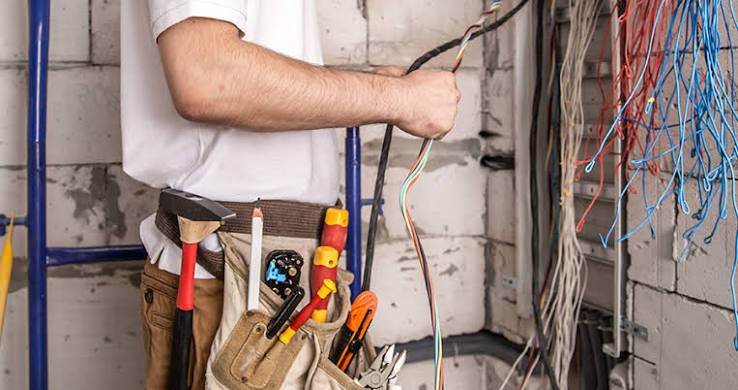
Electrical wiring is one of the most important parts of a home’s electrical installation. From lighting and socket outlets to kitchen appliances, water heaters, refrigerators and air conditioning systems, every electrical component depends on a properly designed wiring system.
Choosing the right electrical cables and accessories is essential for ensuring safety, reliable power distribution and long-term performance. Poor-quality cables, unsuitable switches, overloaded sockets and incorrectly rated protective devices can cause overheating, electrical faults, appliance damage and even electrical fires.
For homeowners constructing new houses or renovating existing properties in Uganda, understanding the different types of electrical cables and accessories can help make better decisions when working with an electrical contractor.
This guide explains how to choose electrical wiring for homes in Uganda, the types of cables and accessories commonly used, factors affecting cable selection, installation requirements, safety considerations and common mistakes to avoid.
What Is Electrical Wiring for Homes?
Electrical wiring for homes refers to the network of cables, conduits, switches, socket outlets, distribution boards and protective devices used to distribute electricity throughout a residential property.
The system connects the electricity supply to different parts of the house, allowing occupants to operate lights, appliances and other electrical equipment safely.
A typical residential electrical installation includes:
- Electrical supply cables.
- Lighting circuit cables.
- Socket outlet circuit cables.
- Switches and socket accessories.
- Electrical conduits and junction boxes.
- Distribution boards.
- Circuit breakers and protective devices.
- Earthing and bonding conductors.
- Dedicated circuits for high-power appliances.
- Outdoor lighting and security connections.
Every component must be selected according to the electrical design and the expected power requirements of the house.
Why Choosing the Right Electrical Cables and Accessories Matters
The quality and suitability of electrical materials directly affect the safety and performance of a home’s electrical installation.
1. Prevents Electrical Overheating
Cables that are too small for their electrical load may overheat during operation. Selecting suitable cable sizes helps ensure that conductors can safely carry the expected current under the actual installation conditions.
2. Improves Electrical Safety
Quality cables, properly rated switches, socket outlets and protective devices help reduce the risk of electrical faults, shocks and fire hazards.
3. Protects Electrical Appliances
A properly designed electrical installation provides suitable circuits and protective arrangements for household appliances, helping reduce damage caused by electrical faults.
4. Supports Reliable Power Distribution
Correctly selected wiring materials help distribute electricity efficiently to lighting points, sockets and appliances throughout the home.
5. Reduces Maintenance Costs
Using appropriate electrical materials and accessories from the beginning can reduce repeated repairs, premature component failure and expensive replacement work.
6. Supports Future Home Improvements
A well-planned electrical installation can accommodate additional appliances, lighting upgrades and other improvements without unnecessary rewiring.
Types of Electrical Cables Used in Residential Buildings
Electrical cables are available in different conductor materials, sizes, insulation types and construction designs. The correct selection depends on the intended application and installation conditions.
1. Single-Core Electrical Cables
Single-core cables contain one electrical conductor with its own insulation.
They are commonly used for fixed residential wiring inside suitable conduits, trunking or enclosures.
Applications include:
- Lighting circuits.
- Socket outlet circuits.
- Distribution board connections.
- Connections between electrical accessories.
Single-core cables are selected according to the electrical design, conductor material, insulation rating and installation method.
2. Twin and Earth Cables
Twin and earth cables contain two insulated conductors and a protective earth conductor within a common sheath.
They are used in some fixed-wiring applications, depending on the applicable installation standards and design.
Their suitability depends on the cable construction, environmental conditions and method of installation. They should not be selected simply because they are commonly used in another country or building type.
3. Flexible Electrical Cables
Flexible cables contain stranded conductors designed to allow greater flexibility.
They are commonly used for connecting portable electrical equipment and certain appliances.
Examples include connections for:
- Portable appliances.
- Some kitchen equipment.
- Certain lighting products.
- Equipment requiring flexible connections.
The cable must be suitable for the equipment, current demand and operating environment. Flexible cords should not automatically be used as substitutes for fixed building wiring.
4. Armoured Electrical Cables
Armoured cables include a protective mechanical layer designed to provide additional protection against physical damage.
Depending on their construction and rating, they may be used for outdoor supplies, underground distribution or other installations where mechanical protection is required.
Their use in a residential property depends on the electrical design and the conditions along the cable route.
5. Fire-Resistant and Fire-Performance Cables
Certain buildings and electrical systems require cables with specialised fire-performance characteristics.
These may be appropriate for selected safety-critical systems, emergency services or installations where continued circuit operation during fire conditions is required.
The correct cable type should be determined by the building’s design, applicable standards and the specific system requirements.
How to Choose the Right Electrical Cable Size for Your Home
Cable size is one of the most important considerations when planning residential electrical wiring.
Cable size generally refers to the conductor’s cross-sectional area, measured in square millimetres (mm²).
Choosing the correct cable size is not simply a matter of selecting a larger or smaller cable. It requires electrical calculations and consideration of the installation conditions.
1. Consider the Electrical Load
The first step is determining how much electrical current the circuit is expected to carry.
Different household equipment has different power requirements.
For example:
- Lighting systems generally have lower electrical loads.
- General-purpose socket circuits may supply several appliances.
- Electric cookers can require substantial electrical capacity.
- Water heaters may need dedicated circuits.
- Air conditioners have specific starting and operating requirements.
- Water pumps may require additional consideration because of motor starting current.
The electrical designer should calculate the expected load before selecting cable sizes.
2. Consider the Length of the Cable
Long cable routes can experience greater voltage drop.
If a cable is too small for its length and load, electrical equipment may not receive the required voltage under operating conditions.
Cable sizing should therefore consider the distance between the distribution board and the connected equipment.
3. Consider the Installation Method
Cable capacity depends partly on how the cable is installed.
For example, cables installed in conduits, grouped together, enclosed in insulation or exposed to high temperatures may have different current-carrying capacities.
The electrical designer should account for the actual installation method when calculating cable sizes.
4. Consider the Protective Device
The cable and its protective device must be appropriately coordinated.
A circuit breaker should be selected to protect the cable and connected circuit under the expected operating conditions.
Installing a larger circuit breaker without checking whether the cable can safely carry the current can create a serious safety hazard.
5. Consider Future Electrical Requirements
A homeowner may initially require a limited number of appliances but later install additional equipment.
Planning for future demand can help avoid expensive changes.
Potential future requirements may include:
- Additional air conditioners.
- Electric cooking equipment.
- More water heaters.
- Solar power and battery storage.
- Electric vehicle charging.
- Additional outdoor lighting.
- Home automation systems.
Future requirements should be incorporated into the design rather than addressed through unsafe extensions or overloaded circuits.
Important: There is no single cable size that is correct for every lighting, socket or appliance circuit. Cable sizes must be calculated by a competent electrical professional according to the applicable standards and installation conditions.
Common Electrical Accessories Used in Homes
Electrical accessories provide control, connection and protection throughout a residential building.
Choosing suitable accessories is just as important as selecting the correct cables.
1. Electrical Switches
Switches control lighting and other electrical equipment.
Common types include:
- One-way switches.
- Two-way switches.
- Intermediate switches.
- Dimmer switches.
- Smart switches.
- Special-purpose control switches.
When selecting switches, consider their electrical rating, compatibility with the lighting system, quality and intended application.
For modern homes, well-positioned switches can improve convenience and complement the interior design.
2. Socket Outlets
Socket outlets provide connection points for household appliances and electrical equipment.
They are commonly installed in:
- Living rooms.
- Bedrooms.
- Kitchens.
- Home offices.
- Utility rooms.
- Garages.
- Outdoor areas where suitable weatherproof accessories are provided.
Choose sockets that meet the required electrical ratings and relevant standards.
The number and position of outlets should be planned around furniture, appliances and the intended use of each room.
Avoid relying on excessive extension leads because they can introduce overloading and trip hazards.
3. Distribution Boards
A distribution board receives the incoming electrical supply and distributes it to individual circuits throughout the house.
It normally contains the main isolating equipment and appropriate circuit protection.
A residential distribution board may include:
- Main isolator.
- Miniature circuit breakers (MCBs).
- Residual current devices (RCDs).
- Residual current circuit breakers with overcurrent protection (RCBOs).
- Surge protection devices.
- Neutral and protective earth bars.
The distribution board should have sufficient capacity for the planned circuits and any reasonable future expansion.
Each circuit should be clearly labelled to make operation and maintenance easier.
4. Circuit Breakers
Circuit breakers protect electrical circuits against specified overcurrent conditions, including overloads and short circuits.
Different circuits may require different breaker ratings depending on the connected load, cable capacity and design requirements.
A qualified installer should select and coordinate these devices with the wiring system.
5. Residual Current Protection Devices
Residual current devices help protect against certain electric shock risks by detecting differences between outgoing and returning current.
They are particularly important for appropriate socket and other circuits where additional protection is required by the installation design and applicable standards.
The correct type and rating should be selected for the installation.
6. Electrical Conduits
Conduits provide routes for electrical cables and help protect them against mechanical damage.
Common types include:
- PVC conduits.
- Flexible conduits for suitable applications.
- Metal conduits where specified.
- Surface-mounted trunking.
The conduit system should be properly sized and installed to avoid overcrowding and make cable installation and future maintenance easier.
7. Junction Boxes
Junction boxes provide suitable enclosures for electrical connections where permitted by the installation design.
They should be appropriately rated, securely installed and accessible where required for inspection and maintenance.
8. Earthing Accessories
Earthing accessories form part of the protective electrical system.
They may include:
- Earth electrodes.
- Earthing conductors.
- Earth clamps.
- Bonding conductors.
- Earthing terminals.
These components must be installed according to the designed earthing arrangement and verified through appropriate testing.
9. Lighting Fixtures
Lighting fixtures are selected according to the purpose of each room.
Common residential lighting options include:
- LED downlights.
- Pendant lights.
- Ceiling-mounted lights.
- Wall lights.
- Outdoor security lights.
- Garden lighting.
- Decorative lighting.
The choice should consider energy efficiency, brightness, appearance and suitability for the installation environment.
How to Choose Quality Electrical Cables and Accessories in Uganda
The Ugandan market offers electrical cables and accessories from different manufacturers and suppliers. Homeowners should pay attention to product quality, technical specifications and suitability rather than choosing materials based on price alone.
Consider the following factors.
1. Check Product Standards and Compliance
Electrical cables and accessories should meet the applicable Ugandan standards and project specifications.
Where relevant, confirm the product’s conformity documentation and applicable certification or quality marks.
Do not assume that a product is suitable simply because it is available in a hardware shop.
2. Choose Reputable Manufacturers and Suppliers
Purchase cables, circuit breakers, sockets and switches from reputable manufacturers or authorised suppliers.
Ask for product documentation where necessary, especially for major electrical components.
3. Check Cable Conductor Material
Electrical cables may use copper or aluminium conductors, depending on the application and design.
Copper is commonly used for residential final circuits because of its electrical conductivity and suitability for many fixed-wiring applications.
Aluminium may be appropriate for certain larger power distribution applications when the cable, connectors and installation are specifically designed for it.
The two materials should not be substituted for one another without professional assessment.
4. Confirm Cable Markings and Ratings
Cable markings provide important information about the product.
Depending on the cable type, these may identify:
- Manufacturer.
- Conductor material.
- Cross-sectional area.
- Voltage rating.
- Insulation type.
- Applicable product standard.
- Manufacturing information.
The selected cable must match the electrical design.
5. Consider Environmental Conditions
Different areas of a house may require different cable and accessory specifications.
For example:
- Bathrooms require careful consideration of electrical zones and suitable equipment.
- Outdoor installations need accessories appropriate for weather exposure.
- Kitchens may require circuits and outlets suitable for appliance loads.
- Garages and workshops may require additional mechanical protection.
- Areas exposed to dust or moisture may require appropriately rated enclosures.
6. Avoid Counterfeit and Substandard Products
Very cheap electrical materials may not meet the expected conductor dimensions, insulation properties or performance requirements.
Using substandard products can increase the risk of electrical faults and premature failure.
Compare technical specifications and purchase from trusted sources rather than relying on price alone.
Recommended Electrical Wiring Considerations for Different Rooms
A good residential electrical plan considers how each room will be used.
Living Room
Living rooms commonly require lighting points, socket outlets, television connections, router locations and provision for entertainment equipment.
Consider the furniture arrangement before deciding where to position sockets and switches.
Bedrooms
Bedrooms may require general lighting, bedside lighting, conveniently positioned sockets and connections for televisions or other equipment.
Provide sufficient outlets to reduce the need for multiple extension leads.
Kitchen
Kitchens often have several electrical appliances with different power requirements.
Electrical planning should account for refrigerators, cookers, microwaves, dishwashers, extractors and other equipment.
High-demand appliances may require dedicated circuits.
Socket locations should be coordinated with worktops, cabinets, sinks and appliance positions.
Bathrooms
Bathrooms require particular care because of the presence of water and moisture.
Electrical equipment, lighting and accessories must comply with the applicable requirements for bathroom zones and protection.
The installation should be designed and completed by a qualified electrical professional.
Home Office
A home office may require several socket outlets, suitable lighting, computer equipment connections and reliable internet infrastructure.
Planning the layout in advance helps keep cables organised and reduces unnecessary extension leads.
Garage and Outdoor Areas
Garages and outdoor spaces may require lighting, socket outlets, security equipment and connections for pumps or other equipment.
Accessories must be suitable for their exposure to weather, dust and physical damage.
Electrical Wiring Requirements for Homes in Uganda
Residential electrical installations in Uganda must comply with applicable laws, electrical installation standards and regulatory requirements.
1. Use an ERA-Permitted Electrical Installer
The Electricity Regulatory Authority (ERA) regulates electrical installation work in Uganda.
Under the Electricity (Installation Permits) Regulations, 2025, persons undertaking electrical installation work must hold a valid permit in the appropriate category.
ERA identifies Class D as covering residential installations up to 240 volts, while other categories cover wider voltage levels and different installation types.
Homeowners should verify that the installer has a permit suitable for the work being undertaken.
2. Follow Applicable Electrical Standards
Electrical cables, wiring accessories and installation methods should comply with applicable Ugandan electrical installation standards and relevant product standards.
The Uganda National Bureau of Standards (UNBS) publishes standards covering electrical conductors and cables, including the US IEC 60228 series and US IEC 60227 series.
Cable selection should be based on the relevant product specification and the electrical installation design.
3. Arrange Testing and Completion Certification
After installation, the permitted electrical installer must inspect and test the work.
The Electricity (Installation Permits) Regulations, 2025 require the installer to issue a completion certificate after successful inspection and testing.
The certificate is submitted to the relevant electricity distribution licensee, with a duplicate given to the property owner.
4. Complete the Required Inspection Before Connection
The relevant distribution licensee inspects the completed installation to verify compliance before connection to the electricity supply.
Any identified defects must be corrected before the affected premises are connected.
5. Observe Periodic Inspection Requirements
Under the 2025 regulations, periodic testing and inspection intervals must not exceed ten years for domestic or residential electrical installations.
This is a maximum regulatory interval, not a reason to postpone maintenance. Homeowners should arrange earlier inspections whenever they notice warning signs, after significant alterations or when an electrical professional recommends them.
Common Electrical Wiring Mistakes Homeowners Should Avoid
Poor electrical decisions during construction or renovation can create safety problems and unnecessary costs.
Avoid the following mistakes:
1. Choosing cables based only on price: Cheap cables may not meet the required technical specifications or quality standards.
2. Using incorrect cable sizes: Cable sizes must be calculated according to the load, installation method, cable length and other relevant factors.
3. Overloading socket outlets: Connecting too many high-power appliances to one circuit can cause overloading and overheating.
4. Using unsuitable circuit breakers: Protective devices must be coordinated with the cables and connected loads.
5. Ignoring earthing requirements: A properly designed and tested earthing system is essential for electrical safety.
6. Installing too few socket outlets: Insufficient outlets can encourage excessive use of extension leads and adapters.
7. Using poor-quality switches and sockets: Substandard accessories can fail, become loose or overheat.
8. Poor cable management: Disorganised wiring can make future inspection and maintenance difficult.
9. Ignoring moisture protection: Electrical accessories in bathrooms and outdoor areas must be suitable for their environment.
10. Skipping electrical testing: Completed wiring must be properly inspected and tested before it is put into service.
How Much Does Home Electrical Wiring Cost in Uganda?
The cost of electrical wiring in Uganda depends on the size of the house, the number of electrical points, cable specifications, accessories and complexity of the installation.
There is no fixed price that applies to every residential property.
The following factors influence the overall cost.
1. Size and Design of the House
A larger house generally requires more cables, conduits, lighting points, switches, sockets and distribution equipment.
2. Number of Electrical Points
The number of lighting points, socket outlets, switches and dedicated appliance connections affects the materials and labour required.
3. Cable Quality and Specifications
Different cable types, conductor materials, sizes and insulation ratings have different costs.
4. Quality of Accessories
The choice of switches, sockets, circuit breakers, distribution boards and lighting fixtures can significantly affect the project budget.
5. Electrical Load Requirements
Homes with electric cookers, water heaters, air conditioners, pumps and other high-demand equipment may require more extensive electrical installations.
6. Number of Floors
Multi-storey houses may require additional distribution arrangements, longer cable routes and more complex installation work.
7. Specialised Electrical Systems
Solar power, backup generators, smart home systems, CCTV, electric gates and other specialised systems may increase the overall cost.
8. Labour and Installation Complexity
The cost of labour depends on the project scope, construction stage, accessibility and complexity of the electrical layout.
For a reliable quotation, homeowners should provide building plans and a list of major electrical appliances to the contractor.
Best Practices for Safe and Reliable Home Electrical Wiring
To achieve a safe and durable residential electrical system, follow these recommendations:
- Plan electrical wiring before plastering and finishing.
- Engage an appropriately ERA-permitted electrical installer.
- Use cables and accessories that meet the required specifications.
- Calculate electrical loads before selecting cable sizes.
- Provide sufficient socket outlets in every room.
- Use dedicated circuits where required for high-demand appliances.
- Install suitable circuit protection and earthing arrangements.
- Coordinate electrical work with plumbing and other building services.
- Keep distribution boards accessible and clearly labelled.
- Test the installation before connecting it to the electricity supply.
- Retain electrical drawings, certificates and testing records.
- Arrange periodic inspections and prompt repairs.
These practices help protect occupants and support reliable electrical performance throughout the life of the property.
Frequently Asked Questions About Electrical Wiring for Homes
1. What is the best cable for house wiring in Uganda?
The best cable depends on the intended circuit, electrical load, installation method and environmental conditions. Quality copper conductors with suitable insulation are commonly used for residential fixed wiring, but the exact cable specification and size must be determined by the electrical design.
2. What cable size is suitable for home lighting?
The correct cable size depends on the circuit design, expected load, cable length, installation method and protective device. A qualified installer should calculate the appropriate size rather than relying on a general rule.
3. What cable size should be used for socket outlets?
Socket circuit cable sizes must be determined by the expected demand, installation conditions, circuit arrangement and protective device. The same cable size is not automatically suitable for every house or socket circuit.
4. Which is better for house wiring: copper or aluminium cables?
Copper is commonly used for residential final circuits because of its electrical conductivity and suitability for fixed wiring. Aluminium can be appropriate for selected distribution applications when the equipment and connections are specifically designed for it. The choice should follow the electrical design.
5. How many socket outlets should a house have?
The number depends on the size of the rooms, furniture arrangement and expected electrical appliances. Bedrooms, kitchens, living rooms, offices and utility areas should have sufficient outlets for their intended use.
6. Are LED lights suitable for residential wiring?
Yes. LED lighting is widely used in homes because it can provide efficient illumination and lower electricity consumption compared with many traditional lighting technologies. The fittings and drivers must be compatible with the electrical installation.
7. Does a new house need an earthing system?
Yes. A properly designed protective earthing and bonding arrangement is an essential part of a safe electrical installation. It must be installed and tested by a competent professional.
8. How often should home electrical wiring be inspected in Uganda?
The Electricity (Installation Permits) Regulations, 2025 provide for periodic testing and inspection of domestic or residential installations at intervals not exceeding ten years. Earlier inspections may be necessary if the wiring is damaged, altered, showing warning signs or suspected to be unsafe.
9. Can I replace electrical cables without rewiring the whole house?
In some cases, only the affected circuits or sections need replacement. However, the condition of the wider installation should be assessed before deciding whether partial repairs or complete rewiring are appropriate.
10. Why do electrical cables become hot?
Possible causes include overloading, loose connections, incorrect cable sizing, damaged insulation or unsuitable protective devices. Hot cables, burning smells, buzzing or discoloured accessories should be treated as warning signs. Stop using the affected circuit if it is safe to do so and contact a qualified electrical professional promptly.
Professional Electrical Wiring Services for Homes in Uganda
Choosing the right electrical cables and accessories is essential for creating a safe, reliable and functional home.
From electrical load assessment and cable selection to conduit installation, distribution boards, switches, socket outlets, earthing and testing, every part of the installation should follow a carefully prepared electrical design.
Daltrevco provides building and construction solutions for residential, commercial and industrial developments in Uganda. Whether you are constructing a new home, renovating an existing property or planning an electrical upgrade, professional coordination and quality workmanship are important for achieving a reliable result.
Contact Daltrevco to discuss your residential construction and electrical installation requirements.
Conclusion
Electrical wiring for homes involves more than choosing cables and installing switches. It requires proper electrical planning, suitable materials, correctly rated accessories, effective protection and professional installation.
Homeowners in Uganda should prioritise cable quality, correct cable sizing, reliable switches and sockets, suitable distribution boards and a properly tested earthing system.
By working with an appropriately ERA-permitted electrical installer and following recognised installation practices, homeowners can create electrical systems that support everyday living, protect household appliances and provide reliable service for years to come.

