
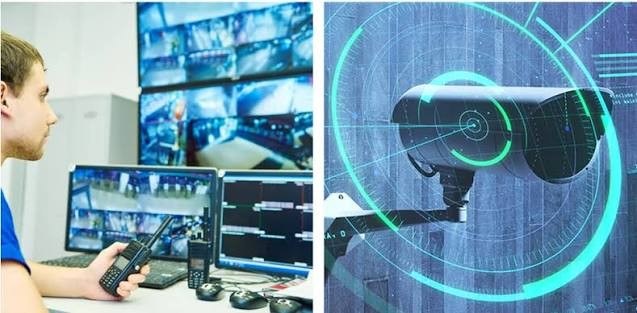
Security technology is changing rapidly as businesses, institutions and property owners look for more intelligent ways to protect their premises. Traditional security systems that rely mainly on standard CCTV cameras, basic burglar alarms and manual monitoring are increasingly being complemented by artificial intelligence (AI), automation, connected sensors and centralised security management platforms.
Modern security systems are becoming more capable of identifying unusual activity, generating alerts, controlling building access and helping security teams respond to potential threats. Instead of operating as separate installations, CCTV cameras, alarms, access control devices and monitoring software can increasingly work together through integrated security infrastructure.
For businesses and property owners in Uganda, these developments create opportunities to improve surveillance, manage access more efficiently and strengthen security across offices, warehouses, factories, shopping centres, hotels, residential estates and other facilities.
The future of security systems is not simply about installing more cameras. It is about combining intelligent technology, reliable network infrastructure, automation and effective human supervision to create a coordinated approach to property protection.
This guide explores how AI, automation and smart surveillance are transforming modern security systems, the technologies shaping the future, their applications in Uganda and what property owners should consider when planning a modern security installation.
1. What Is the Future of Security Systems?
The future of security systems involves the development of intelligent, connected and automated technologies that help organisations detect potential threats, monitor premises, manage access and respond to security events more effectively.
Modern security infrastructure increasingly combines several technologies, including:
- Artificial intelligence-powered CCTV cameras.
- Smart video analytics.
- Automated burglar alarm systems.
- Biometric and mobile access control.
- Internet of Things (IoT) security devices.
- Intelligent perimeter intrusion detection.
- Cloud-based security management.
- Remote CCTV monitoring.
- Automated security notifications.
- Integrated building security platforms.
These technologies can operate together to provide a more coordinated view of security across a property.
For example, an intelligent surveillance system may detect a person entering a restricted area, generate an alert and direct an authorised security operator to the relevant camera footage. If integrated with compatible access control and alarm equipment, the system may also provide additional information about the event.
The objective is to help security teams identify and investigate incidents efficiently while reducing dependence on continuous manual observation.
2. Artificial Intelligence Is Transforming Modern Security Systems
Artificial intelligence is one of the most important developments shaping the future of surveillance and property security.
Traditional CCTV systems primarily record video for later review or live observation. AI-enabled systems can analyse video streams and identify certain patterns, objects and activities based on their software capabilities and configuration.
This creates opportunities for more intelligent monitoring.
2.1 AI-Powered CCTV Surveillance
AI-powered CCTV cameras and video management platforms can analyse video footage to identify specific events.
Depending on the equipment and software, these systems may support:
- Human and vehicle detection.
- Object classification.
- Line-crossing detection.
- Restricted-area intrusion alerts.
- Loitering detection.
- People counting.
- Vehicle monitoring.
- Unusual activity detection.
- Object left-behind or object removal alerts.
For example, a warehouse may use video analytics to identify movement within a restricted storage area outside authorised operating hours.
Instead of relying entirely on a security operator to notice the activity, the system can generate an alert for investigation.
However, AI analytics are not infallible. Their accuracy depends on camera positioning, lighting, image quality, environmental conditions, software capabilities and system configuration. Alerts should be reviewed by authorised personnel rather than automatically treated as proof of wrongdoing.
2.2 Intelligent Motion Detection
Traditional motion detection may generate alerts whenever movement is detected within a camera’s field of view.
This can result in unnecessary notifications caused by animals, moving vegetation, changing lighting conditions or other environmental activity.
More advanced video analytics can distinguish between certain types of movement and objects.
For example, a system may be configured to generate alerts when a person enters a designated restricted zone while ignoring some irrelevant movement.
This can make surveillance monitoring more useful, although appropriate configuration and testing remain essential.
2.3 Facial Recognition Technology
Facial recognition is another technology being incorporated into some modern security applications.
It uses software to compare facial characteristics against reference information to estimate whether a person matches an enrolled identity.
Potential applications include:
- Identity verification at controlled entrances.
- Access management in selected facilities.
- Monitoring authorised personnel in restricted environments.
- Supporting investigations where legally and appropriately configured.
Facial recognition must be implemented carefully. Lighting, camera angles, image quality and differences in operating conditions can affect performance. False matches and missed matches are possible.
Biometric information also requires particularly careful handling. Organisations should assess whether facial recognition is necessary and appropriate, provide suitable safeguards and consider less intrusive alternatives such as access cards or PINs.
2.4 AI-Assisted Security Monitoring
AI can help security teams prioritise events by highlighting potentially important activity.
For example, a central monitoring platform may display alerts from multiple cameras and help operators identify which locations require attention.
This can be useful for large properties where monitoring many camera feeds manually is difficult.
AI should support human decision-making rather than completely replace trained security personnel.
3. Smart Surveillance Systems Will Become More Connected
The future of CCTV is closely connected to developments in networking, automation and the Internet of Things.
Smart surveillance systems connect cameras, recorders, sensors and monitoring platforms to enable more coordinated security operations.
3.1 Internet Protocol (IP) CCTV Cameras
IP cameras transmit digital video through network infrastructure, making them suitable for modern surveillance environments.
They can support features such as:
- Remote viewing.
- Network-based recording.
- Video analytics.
- Centralised camera management.
- Integration with compatible security platforms.
- High-resolution video capture.
As buildings become more connected, IP surveillance systems are likely to remain an important part of commercial and residential security infrastructure.
3.2 IoT-Connected Security Devices
The Internet of Things allows compatible devices to communicate through network connections.
In security applications, IoT technology can connect:
- CCTV cameras.
- Door and window sensors.
- Motion detectors.
- Smart alarms.
- Access control devices.
- Video intercoms.
- Environmental sensors.
- Security monitoring platforms.
For example, a door sensor may detect an unauthorised opening and trigger an alarm event. If the system is integrated with compatible CCTV equipment, an operator may be able to view the relevant camera feed.
Not every device automatically communicates with every other device. Integration depends on supported interfaces, protocols, software and configuration.
3.3 Centralised Surveillance Management
Large organisations may operate cameras across several buildings or locations.
Centralised management platforms help authorised users view and administer multiple surveillance devices through one system.
This can improve the organisation of camera networks, simplify user management and make it easier to investigate security events.
For example, a business with offices, warehouses and distribution facilities may use a central platform to manage surveillance across its different sites.
4. Automation Will Improve Security Response
Automation is another major development shaping modern security infrastructure.
Automated security systems use predefined rules and compatible devices to perform specific actions when certain events occur.
Rather than relying on every action being initiated manually, a system can respond to configured events.
4.1 Automated Alarm Activation
An alarm system can be configured to activate when supported sensors detect an event.
Examples include:
- Unauthorised door opening.
- Window contact activation.
- Motion detection.
- Glass-break detection.
- Perimeter intrusion.
- Entry into restricted areas.
Depending on the configuration, the system may activate audible alarms, send notifications or communicate with a monitoring platform.
4.2 Automated CCTV Alerts
Modern surveillance platforms can generate alerts when configured events are detected.
For example, an alert may be generated when a person crosses a virtual boundary or enters a restricted zone.
Security personnel can then review the relevant camera footage and decide whether further action is necessary.
4.3 Automated Access Control
Access control systems are becoming more intelligent through integration with software, mobile credentials and centralised user management.
Possible functions include:
- Automatically applying access schedules.
- Granting permissions based on user roles.
- Revoking access when a credential is no longer authorised.
- Recording entry and exit events.
- Managing access across multiple entrances.
- Supporting visitor registration workflows.
These features can be valuable in offices, schools, hotels, warehouses and commercial buildings.
Electronic locks and access-controlled doors must still be designed to preserve safe emergency exit and comply with applicable building and fire safety requirements.
4.4 Automated Security Notifications
Modern systems can send alerts through supported applications, email, monitoring platforms or other communication channels.
Notifications may relate to:
- Alarm activation.
- Camera disconnection.
- Device faults.
- Unauthorised access attempts.
- Perimeter detection events.
- Recording failures.
- System health warnings.
Notification delivery depends on system configuration, network availability and the communication services being used.
5. Biometric and Smart Access Control Will Shape Building Security
Access control is evolving beyond traditional keys and basic card readers.
Modern systems can use several forms of identification to manage entry into buildings and restricted areas.
5.1 Fingerprint Access Control
Fingerprint systems verify a person’s identity using biometric characteristics.
They may be used in offices, laboratories, restricted storage areas and other facilities where controlled entry is required.
Their suitability depends on reader quality, environmental conditions, enrolment procedures and the organisation’s biometric data protection arrangements.
5.2 Facial Recognition Access Control
Facial recognition systems can support identity verification at selected entrances.
They may be integrated with access control software to manage authorised users, although matching errors and privacy considerations must be addressed.
5.3 RFID and Smart Card Systems
RFID and card-based access control systems remain useful because they are relatively straightforward to administer.
Authorised users receive cards or credentials that can be enabled, restricted or revoked through compatible management software.
5.4 Mobile Access Credentials
Some modern access control systems allow authorised users to use smartphones as credentials.
Depending on the technology, access may be provided through Bluetooth, NFC or another supported communication method.
Mobile credentials can simplify administration, but devices and user accounts must be protected against loss, theft and unauthorised use.
5.5 Multi-Factor Authentication
For sensitive locations, access systems may require more than one form of verification.
For example, a user may need an access card and a PIN before entering a restricted room.
This approach can provide additional protection where the security requirements justify it.
6. Integrated Security Systems Will Become More Important
One of the biggest developments in modern building security is the integration of previously separate technologies.
Traditional installations may operate CCTV cameras, burglar alarms, access control and perimeter security as independent systems.
Integrated security systems allow compatible technologies to exchange information or coordinate selected functions.
How Integrated Security Systems Work
Consider a commercial property with CCTV cameras, access control and an intruder alarm.
An authorised person presents an access card at a controlled entrance. The access control system verifies the credential and records the event.
If an unauthorised entry attempt occurs, the access system may generate an alert. If configured to communicate with the CCTV platform, the event may be associated with the relevant camera feed.
The security operator can then review the event and investigate.
An integrated system may combine:
- CCTV surveillance.
- Intruder alarm systems.
- Biometric access control.
- RFID card readers.
- Video intercoms.
- Perimeter intrusion detection.
- Centralised monitoring software.
- Smart building management platforms.
The actual integration functions depend on equipment compatibility, supported interfaces and software configuration.
Benefits of Integrated Security
- Improved coordination between security devices.
- Centralised monitoring and administration.
- Easier investigation of security events.
- Reduced need to operate unrelated systems separately.
- Better management of access permissions.
- More organised security reporting.
- Potentially improved operational efficiency.
For large commercial and industrial properties in Uganda, integrated security can provide a more coordinated approach to managing multiple security requirements.
7. Cloud-Based Security Management Will Expand Remote Monitoring
Cloud technology is changing how organisations manage security equipment across different locations.
Cloud-based platforms can allow authorised administrators to manage cameras, access control devices and selected alarm functions remotely.
7.1 Remote CCTV Monitoring
Remote monitoring allows authorised users to access camera footage from supported devices and locations.
For business owners with several properties, this can make it easier to check premises without being physically present.
7.2 Centralised User Management
Cloud-based access control platforms may allow administrators to manage user accounts and access permissions from a central interface.
This can be useful for organisations with multiple branches or buildings.
7.3 Remote System Notifications
Some cloud platforms provide alerts about camera disconnections, system faults, access events and alarm activations.
The available functions depend on the platform and subscription.
7.4 Cloud Storage and Video Management
Cloud storage can provide an alternative or additional location for surveillance recordings.
Organisations should assess storage security, subscription costs, internet requirements, retention policies and where recordings are stored before selecting a cloud-based solution.
Cloud connectivity does not automatically make a security system more secure. Strong account protection, access controls, secure configuration and trusted service providers remain essential.
8. Predictive Security and Intelligent Threat Detection
Another important development is the use of data analysis to identify patterns that may help security teams investigate risks earlier.
Predictive security technologies analyse available information to identify unusual activity, repeated events or patterns that deserve attention.
For example:
- Repeated access attempts at unusual times.
- Frequent movement near restricted areas.
- Repeated perimeter alerts.
- Unusual activity around a warehouse entrance.
- Patterns of device disconnection.
- Repeated alarm activations in a specific location.
These systems may help organisations prioritise inspections and improve security planning.
However, predictive analytics should not be confused with certainty. A pattern or automated risk score does not prove that a crime will occur or that a particular person has committed wrongdoing.
Human review, accurate data and appropriate system configuration remain important.
9. Smart Perimeter Security Will Protect Larger Properties
Perimeter security is becoming more sophisticated as businesses seek to protect large properties and outdoor areas.
Traditional perimeter protection may include walls, gates, lighting and security patrols.
Modern installations can combine physical barriers with electronic detection and video surveillance.
Technologies Used in Smart Perimeter Security
Electric fence systems: Designed to provide an additional deterrent and perimeter protection layer when correctly installed and maintained.
Infrared beam sensors: Can detect interruption of a beam across a protected boundary.
Outdoor motion detectors: Identify movement within defined detection areas.
Fence-mounted sensors: Detect certain types of disturbance or vibration on suitable fencing.
AI-enabled CCTV: Can analyse selected camera views for people, vehicles or activity in designated zones.
Automated alerts: Notify authorised personnel when configured perimeter events occur.
Combining these technologies can improve perimeter awareness for warehouses, factories, industrial facilities, estates and other large properties.
Outdoor equipment must be selected and configured carefully because rain, vegetation, animals, lighting and environmental conditions can affect detection performance.
10. Smart Security Systems for Different Properties in Uganda
The future of security technology will affect different property types in different ways.
10.1 Residential Homes
Modern residential security systems can combine:
- Smart CCTV cameras.
- Video door phones.
- Motion sensors.
- Smart alarms.
- Electronic door locks.
- Mobile security applications.
- Automated notifications.
Homeowners can use compatible systems to monitor entrances, parking spaces and selected external areas.
10.2 Offices and Commercial Buildings
Commercial properties may benefit from integrated CCTV, access control, visitor management and burglar alarm systems.
Centralised monitoring can help property managers oversee multiple entrances and operational areas.
10.3 Warehouses and Distribution Centres
Warehouses require visibility across loading areas, storage zones, vehicle entrances and perimeter boundaries.
AI video analytics, access control and smart intrusion detection can support monitoring across large spaces.
10.4 Factories and Industrial Facilities
Industrial security may combine CCTV, restricted-area access control, perimeter sensors and central monitoring.
The surveillance network should be appropriately separated from critical operational technology and production networks.
10.5 Hotels and Hospitality Facilities
Hotels can use CCTV in appropriate public and operational areas, access control for staff and restricted areas, and visitor or guest access management.
Security technology should be deployed in ways that respect guest privacy and protect sensitive information.
10.6 Schools and Educational Institutions
Educational facilities may use controlled entrance systems, CCTV, visitor management and alarm technologies to support the protection of students, staff and property.
Camera placement and data access must account for the privacy and safety of children.
10.7 Shopping Centres and Retail Properties
Shopping centres may benefit from centralised CCTV monitoring, vehicle access management, intelligent video analytics and integrated alarm systems.
These technologies can support monitoring across entrances, parking facilities, corridors and selected operational areas.
11. The Role of Cybersecurity in the Future of Smart Security Systems
As surveillance and access control devices become more connected, cybersecurity will become increasingly important.
A smart security system may contain dozens or hundreds of network-connected devices. If these devices are poorly protected, attackers may attempt to gain access to cameras, recordings, user accounts or network infrastructure.
Important cybersecurity practices include:
Strong Authentication
Use strong, unique passwords and multi-factor authentication where supported.
Regular Firmware Updates
Keep cameras, NVRs, access controllers, routers and other connected devices updated using trusted manufacturer releases.
Network Segmentation
Separate surveillance and access control equipment from unrelated business networks wherever practical.
Secure Remote Access
Use properly configured VPNs or other approved secure access methods. Avoid exposing administrative interfaces directly to the public internet.
Restricted User Permissions
Give employees and administrators only the permissions required for their roles.
Data Protection
Protect video recordings, access logs, biometric information and other personal data against unauthorised access.
Continuous Maintenance
Review user accounts, device configurations, firmware versions and unusual system activity regularly.
For a deeper understanding, see Daltrevco’s related article on Cybersecurity for IP CCTV Cameras: Protecting Your Surveillance Network in Uganda.
12. Challenges Facing the Adoption of Smart Security Systems in Uganda
Although smart security technologies provide valuable capabilities, organisations should understand the practical challenges involved in adopting them.
12.1 Initial Installation Costs
AI cameras, access controllers, network equipment and centralised management platforms may require a higher initial investment than basic security installations.
The appropriate solution depends on the property’s size, risk profile and operational requirements.
12.2 Internet Connectivity
Cloud management, remote monitoring and certain connected services depend on reliable internet connectivity.
However, not every smart security function requires internet access. Some cameras, recorders, alarms and access controllers can continue operating locally when configured and powered correctly.
Businesses should establish which functions will remain available during internet interruptions.
12.3 Power Reliability
Security systems depend on electricity to operate cameras, recorders, sensors, network equipment and monitoring devices.
Power backup solutions may be necessary to maintain selected security functions during outages.
Backup capacity should be designed according to the total connected load and the required operating duration.
12.4 Equipment Compatibility
Not every CCTV camera, access controller, alarm panel or software platform can communicate with every other product.
Before purchasing equipment, organisations should confirm compatibility, supported protocols, integration functions and software requirements.
12.5 Cybersecurity Risks
Connected devices create additional cybersecurity responsibilities.
Poor password management, insecure network configuration and outdated software may expose surveillance systems to attacks.
12.6 Privacy and Data Protection
Smart security systems may collect video recordings, access records, visitor information and biometric data.
Organisations should establish appropriate procedures for collecting, storing, accessing and retaining this information.
In Uganda, the Data Protection and Privacy Act, 2019, and applicable regulations should be considered when designing and operating systems that process personal data.
13. How to Choose a Future-Ready Security System for Your Property
Selecting a modern security system requires more than choosing the latest camera or access control technology.
The best solution should address the property’s actual security requirements while allowing for future expansion.
Consider the following factors.
Assess Your Security Needs
Identify the areas that require protection, the potential risks and the level of monitoring required.
A residential home may need a different configuration from a large factory or shopping centre.
Choose Suitable Technology
Select cameras, alarms, access control equipment and sensors based on their intended applications.
Avoid paying for advanced features that the property does not need.
Consider Integration
Determine whether the selected systems can communicate and operate together.
Check compatibility before purchasing equipment.
Evaluate Network Infrastructure
AI surveillance and connected security systems require appropriate network capacity, secure configuration and reliable connectivity.
Consider Power Backup
Assess whether the installation needs backup power for cameras, recorders, switches, alarms and access controllers.
Prioritise Cybersecurity
Choose equipment with manufacturer security support, secure authentication and appropriate user-management features.
Plan for Expansion
Consider whether additional cameras, entrances, buildings or monitoring stations may be added in the future.
Establish a Maintenance Plan
Modern security equipment requires firmware updates, system testing, cleaning, configuration reviews and periodic maintenance.
A future-ready installation should remain manageable and supportable throughout its operational life.
14. The Future of Security Systems: What Businesses Should Expect
Several developments are likely to influence the direction of security technology in the coming years.
Greater Use of AI Video Analytics
Video analytics are likely to become more widely available across commercial surveillance platforms, supporting more detailed event detection and monitoring.
More Integrated Security Platforms
Organisations will increasingly look for ways to manage compatible CCTV, access control, alarms and perimeter security through coordinated platforms.
Smarter Access Management
Mobile credentials, biometric verification and centralised access administration will continue to influence how organisations control building entry.
More Flexible Cloud and Hybrid Systems
Cloud-managed platforms and local recording or processing are likely to coexist, allowing organisations to choose configurations based on connectivity, cost, privacy and operational requirements.
Improved Automation
Security platforms will continue to offer more configurable event-based responses, notifications and workflows.
Greater Focus on Cybersecurity
As more security devices connect to networks, organisations will need stronger authentication, network protection, software maintenance and data governance.
Better Use of Security Data
Centralised reporting and event analytics may help businesses understand recurring security incidents, identify system weaknesses and improve resource planning.
These developments will not eliminate the need for trained security personnel. Instead, they are likely to change how security teams monitor, investigate and respond to events.
15. Why Professional Security System Planning Matters
Modern security systems involve several interconnected technologies. Poor planning can result in incompatible equipment, unreliable communication, unnecessary installation costs and cybersecurity weaknesses.
Professional planning should consider:
- Site assessment and security requirements.
- Camera coverage and placement.
- CCTV network design.
- NVR and video storage requirements.
- Access control configuration.
- Alarm and perimeter detection.
- Integration between compatible devices.
- Internet and power backup requirements.
- Cybersecurity measures.
- Future expansion.
- Maintenance and technical support.
For example, a large warehouse may require perimeter detection, high-coverage CCTV, controlled staff entrances, vehicle access management and centralised monitoring.
These requirements should be considered together rather than handled as unrelated equipment purchases.
A coordinated design helps ensure that each component supports the overall security objectives of the property.
16. Why Consider Daltrevco for Security and Infrastructure Solutions in Uganda?
As security technology develops, property owners need solutions that consider surveillance, access management, network infrastructure and long-term operational requirements.
Daltrevco provides a point of contact for organisations and property owners exploring suitable building, electrical and security-related solutions in Uganda.
Whether you are planning a new CCTV installation, upgrading an existing surveillance system or considering integrated security infrastructure, it is important to begin with a clear assessment of your property and operational requirements.
When discussing your project with Daltrevco, consider:
- The size and layout of your property.
- The number of cameras and monitoring locations required.
- Whether access control or alarm integration is needed.
- The availability of suitable network infrastructure.
- Internet and backup power requirements.
- Cybersecurity and privacy considerations.
- Future expansion and maintenance requirements.
From residential properties to offices, warehouses, factories and commercial buildings, the right approach is to select security technologies that are appropriate, compatible and manageable.
Visit https://www.daltrevco.com/ to contact Daltrevco and discuss suitable CCTV, access control, security and infrastructure solutions for your property in Uganda.
17. Frequently Asked Questions About the Future of Security Systems
1. What is the future of security systems?
The future of security systems involves greater use of artificial intelligence, automation, smart surveillance, connected sensors, cloud management and integrated security platforms. These technologies can help organisations monitor properties and manage security events more efficiently.
2. How is artificial intelligence changing security systems?
AI can analyse video footage, detect selected objects and activities, classify events and generate alerts. It helps security operators prioritise potentially important incidents, although human review remains necessary.
3. What are smart surveillance systems?
Smart surveillance systems use network-connected cameras, video analytics, monitoring software and other technologies to provide more advanced monitoring than basic video recording systems.
4. What is an AI-powered CCTV camera?
An AI-powered CCTV camera is a surveillance device that uses built-in or connected software to analyse video and perform supported functions such as object detection, classification, line crossing and intrusion alerts.
5. Will AI replace security guards?
AI is unlikely to eliminate the need for security personnel. It can assist with monitoring and alert generation, but trained people are still needed to investigate events, make decisions and respond appropriately.
6. What is an automated security system?
An automated security system uses sensors, cameras, access control equipment and software to perform predefined actions when configured events occur. These actions may include activating alarms, sending notifications or recording security events.
7. How do integrated security systems work?
Integrated security systems connect compatible technologies such as CCTV cameras, burglar alarms, access control and perimeter sensors. They allow information to be shared and selected functions to be coordinated through supported software or interfaces.
8. Are smart security systems suitable for homes in Uganda?
Yes. Smart security systems can be configured for residential properties using CCTV cameras, alarms, video intercoms, electronic locks and remote monitoring features. The design should reflect the property’s layout, power supply and connectivity.
9. What are the benefits of AI surveillance for businesses?
AI surveillance can support event detection, object classification, monitoring alerts, people counting and more efficient video review. The available functions depend on the camera, software and installation.
10. What is IoT in security systems?
The Internet of Things connects compatible devices through network infrastructure. In security applications, it can connect CCTV cameras, alarms, access controllers, sensors and management platforms.
11. Are cloud-based security systems better than traditional systems?
Cloud-based systems offer remote administration and centralised management, while traditional local systems may provide greater control over on-site recording and infrastructure. The most suitable option depends on connectivity, security, storage and operational requirements.
12. Can smart security systems operate without internet?
Some functions can operate locally without internet access if the equipment is correctly configured and powered. However, remote viewing, cloud storage and other internet-dependent features may become unavailable.
13. How does facial recognition improve building security?
Facial recognition can help verify identities against enrolled reference information in supported access control and surveillance applications. It must be implemented carefully because matching errors are possible and biometric data requires appropriate protection.
14. What is predictive security technology?
Predictive security technology analyses data and patterns to help identify unusual activity or recurring security events. It can support risk assessment but cannot reliably predict every incident or prove that wrongdoing will occur.
15. What is smart perimeter security?
Smart perimeter security combines physical barriers with electronic technologies such as electric fences, infrared beams, outdoor sensors and CCTV analytics to monitor boundaries and generate alerts.
16. How much does a modern security system cost in Uganda?
The cost depends on property size, camera quantity, equipment specifications, network infrastructure, storage, access control requirements, automation and installation complexity. A site assessment is the best way to establish a suitable budget.
17. Are AI security systems always accurate?
No. AI systems can generate false alerts and miss certain events. Performance depends on camera positioning, lighting, image quality, software, environmental conditions and configuration.
18. How can I protect a smart security system from hackers?
Use strong unique passwords, MFA where supported, updated firmware, secure remote access, network segmentation and restricted user permissions. Review connected devices and system activity regularly.
19. What security technologies are suitable for factories and warehouses?
Factories and warehouses may benefit from IP CCTV, AI video analytics, perimeter intrusion detection, access control, vehicle access management, burglar alarms and centralised monitoring. The appropriate combination depends on the facility’s risks and operational needs.
20. Why is professional security system installation important?
Professional planning helps ensure that cameras, sensors, recorders, access controllers and network equipment are suitable for the property and compatible with one another. It also helps address coverage, connectivity, cybersecurity and maintenance requirements.
Conclusion: Building the Future of Security Systems in Uganda
The future of security systems is being shaped by artificial intelligence, automation, smart surveillance and connected technologies. These developments are changing how businesses and property owners monitor their premises, control access and manage security events.
AI-powered CCTV, automated alarms, biometric access control, IoT-connected sensors and integrated monitoring platforms offer opportunities to create more coordinated security environments.
However, successful implementation requires more than adopting advanced technology. Organisations must consider equipment compatibility, network infrastructure, cybersecurity, privacy, power reliability and ongoing maintenance.
For businesses, institutions and property owners in Uganda, investing in properly planned security infrastructure can provide a stronger foundation for managing modern security requirements.
Ready to explore modern CCTV, access control and integrated security solutions for your property? Contact Daltrevco through https://www.daltrevco.com/ to discuss your security and infrastructure requirements.

