
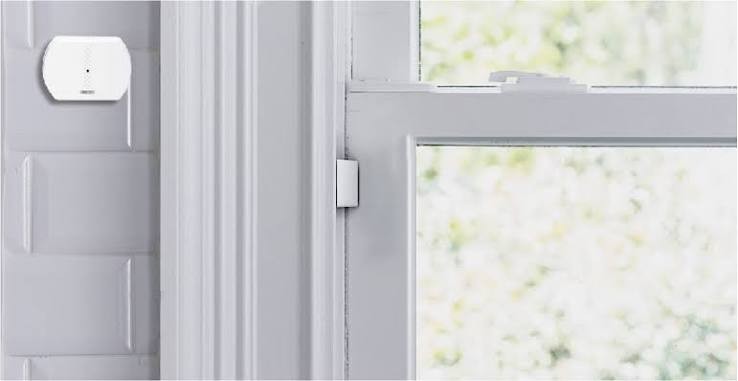
Glass doors and windows are attractive architectural features in modern homes, offices and commercial buildings. They allow natural light into interior spaces, improve visibility and create attractive building designs. However, glass openings can also present security vulnerabilities when they are not adequately protected.
An intruder may attempt to gain access by breaking a window, glass door, shopfront or other glazed section of a building. Traditional door contacts and magnetic window sensors can detect when an opening is moved, but they may not detect glass breaking if the window remains in its frame.
This is where glass break detectors become important.
Glass break detectors are security devices designed to identify the sound or physical characteristics associated with breaking glass. When connected to a compatible intruder alarm system, they can trigger an alarm when suspicious glass-breaking activity is detected within their coverage area.
For property owners in Uganda, these devices provide an additional layer of protection for residential buildings, offices, retail shops, hotels, banks, schools, warehouses and other facilities with vulnerable glass openings.
This guide explains how glass break detectors work, the different types available, their benefits, where they should be installed and how they can be integrated with CCTV cameras and other security technologies.
What Are Glass Break Detectors?
Glass break detectors are electronic security sensors designed to detect events associated with the breaking of glass.
Unlike magnetic door and window sensors, which monitor whether an opening is open or closed, glass break detectors identify signs of glass breakage. Depending on the technology, they may analyse sound frequencies, acoustic patterns or physical vibration.
When the detector identifies an event that meets its programmed detection criteria, it sends a signal to the connected alarm system.
The alarm panel can then activate a siren, generate an alert or initiate another configured security response.
Glass break detectors are commonly used to protect:
- Residential windows and sliding glass doors.
- Commercial shopfronts.
- Office glass partitions and external windows.
- Hotel reception areas.
- Retail display windows.
- Bank and financial institution premises.
- Glass entrance doors.
- Showrooms and exhibition spaces.
- Schools and institutional buildings.
- Commercial buildings with extensive glazing.
They are particularly useful where glass is an important part of the building’s design or where valuable property is located near windows and glazed entrances.
How Do Glass Break Detectors Work?
Glass break detectors work by identifying characteristics associated with breaking glass. The precise detection method depends on the sensor technology.
For example, an acoustic detector analyses sound produced during a glass-breaking event, while a vibration-based detector monitors physical vibrations transmitted through the protected glass surface.
The general operation involves the following stages.
1. The Detector Monitors Its Surroundings
Once installed and powered, the detector monitors the sound environment or physical vibration of the protected area.
An acoustic sensor listens for sound patterns that may indicate glass breaking. A vibration sensor monitors the surface to which it is attached.
2. Glass Breakage Produces a Detectable Signal
When glass breaks, it produces distinctive sound characteristics and, in some cases, physical vibrations.
Acoustic detectors may analyse different sound components, including the initial impact and the higher-frequency sound associated with shattering.
Vibration detectors identify changes in the physical movement of the protected glass.
3. The Detector Analyses the Event
The sensor’s electronic circuitry or processing software evaluates the detected signal against its programmed detection criteria.
More advanced acoustic detectors may use multiple frequency characteristics to distinguish glass-breaking sounds from ordinary environmental noise.
4. The Detector Sends an Alarm Signal
When the event meets the detector’s programmed criteria, it sends a signal to the alarm control panel.
The communication method depends on whether the detector is wired or wireless and whether it is compatible with the installed alarm platform.
5. The Security System Activates Its Response
If the system is armed and configured to respond to the detector, the alarm panel may activate a siren, send a notification or trigger another programmed action.
Where compatible CCTV equipment is integrated, the event may also be used to initiate recording or alert security personnel.
Important: Glass break detectors are not guaranteed to identify every type of glass damage or breakage. Their performance depends on the sensor technology, glass type, room acoustics, installation position and environmental conditions.
Types of Glass Break Detectors
Different glass break detectors are designed for different security environments. Choosing the correct type is important for achieving reliable detection.
1. Acoustic Glass Break Detectors
Acoustic glass break detectors identify the sound patterns associated with breaking glass.
They are commonly mounted on walls or ceilings within the detector’s specified coverage area.
When glass breaks within the protected space, the sensor analyses the resulting sound and determines whether it matches the characteristics of a glass-breaking event.
Advantages include:
- Can monitor suitable glass surfaces within a room without being attached to every window.
- Useful for protecting several nearby windows, depending on coverage.
- Can be installed in many residential and commercial environments.
- Available in wired and wireless versions.
- Can integrate with compatible intruder alarm systems.
Potential limitations:
- Background noise may affect performance.
- Furniture, curtains and room layout can influence sound transmission.
- The detector must be within its specified coverage range.
- Different glass types may produce different acoustic characteristics.
Acoustic detectors are commonly considered for living rooms, offices, retail shops and other indoor areas with multiple glazed openings.
2. Vibration-Based Glass Break Detectors
Vibration-based detectors monitor physical vibrations associated with impacts or breaking glass.
They are usually mounted directly onto the protected glass or a suitable supporting surface, depending on the manufacturer’s design.
When the glass experiences a qualifying vibration, the detector sends a signal to the alarm system.
Advantages include:
- Detects physical activity at the protected surface.
- Does not depend solely on room-wide acoustic monitoring.
- Can be suitable for selected windows and glazed panels.
- Useful where direct monitoring of a specific glass surface is required.
Potential limitations:
- Usually protects the surface or panel on which it is installed.
- Incorrect mounting may affect detection.
- Environmental vibration can cause unwanted activations if the sensor is unsuitable or poorly configured.
- Not every vibration detector is specifically designed for glass break detection.
The selected model should be designed for the type of glass and installation application.
3. Wired Glass Break Detectors
Wired detectors connect to the intruder alarm control panel through security cables.
They are commonly selected for permanent security installations where wiring can be concealed during construction or renovation.
Benefits include:
- No individual wireless communication battery is normally required.
- Direct connection to a compatible alarm system.
- Suitable for permanent residential and commercial installations.
- Can be incorporated into a larger wired alarm network.
Considerations:
- Cable installation may require additional labour.
- Existing buildings may need surface trunking or concealed wiring.
- Damaged cables or loose connections can affect operation.
- Installation must follow the alarm panel’s electrical and configuration requirements.
4. Wireless Glass Break Detectors
Wireless glass break detectors communicate with a compatible alarm panel using a supported radio-frequency protocol.
They commonly use internal batteries and can be useful where extensive wiring would be difficult.
Benefits include:
- Reduced need for signal cables.
- Flexible installation in existing buildings.
- Useful for upgrading older security systems.
- Can be added to compatible wireless alarm systems.
- Often suitable for selected residential and commercial applications.
Considerations:
- Batteries require periodic inspection and replacement.
- Radio signal coverage must be tested.
- The detector must be compatible with the alarm panel.
- Metal structures and other environmental conditions may affect communication.
5. Smart Glass Break Detectors
Some modern security platforms support glass break sensors that communicate with smart alarm systems.
Depending on the equipment, users may receive alerts through a compatible mobile application or monitor selected security events remotely.
These features vary by manufacturer and system configuration. Not every smart security platform supports every detector.
Benefits of Glass Break Detectors for Residential Properties
Residential properties often have several potential entry points, including windows, patio doors, balcony doors and glazed entrances.
Glass break detectors can strengthen home security by providing another way to detect attempted intrusion.
1. Protection for Vulnerable Windows
Ground-floor windows and accessible upper-floor windows may present security risks.
Acoustic detectors can monitor suitable areas containing multiple windows, while appropriate vibration-based sensors can monitor selected glass panels directly.
2. Additional Protection for Sliding Glass Doors
Sliding glass doors are common in modern homes, apartments and residential developments.
Because these doors contain large glass panels, a suitable glass break detector can complement the door’s existing locks and magnetic contact sensors.
3. Improved Night-Time Security
When a home alarm system is armed at night, glass break detectors can help identify suspicious glass-breaking events.
This provides an additional layer of detection alongside door contacts and motion sensors.
4. Protection for Valuable Household Items
Homes may contain televisions, computers, appliances, furniture, jewellery and other valuable possessions.
By monitoring vulnerable glazed openings, glass break detectors can support a wider security strategy designed to protect these assets.
5. Integration with Home Alarm Systems
Glass break detectors can be integrated into compatible intruder alarm systems that also monitor doors, windows and internal movement.
This allows homeowners to use multiple detection methods rather than relying on a single sensor type.
Benefits of Glass Break Detectors for Commercial Properties
Commercial buildings frequently contain extensive glass surfaces, valuable stock, equipment and sensitive business information.
Glass break detection can strengthen security in these environments.
1. Retail Shops and Shopping Complexes
Retail shops often use large glass shopfronts and display windows to showcase products.
These areas may contain electronics, clothing, jewellery and other valuable merchandise.
Glass break detectors can help monitor suitable glazed areas and alert the alarm system when a qualifying glass-breaking event occurs.
2. Offices and Corporate Buildings
Offices may contain glass entrance doors, windows, partitions and meeting rooms.
Glass break detectors can be installed in selected areas to provide additional intrusion detection, particularly around vulnerable external windows and entrances.
3. Hotels and Hospitality Facilities
Hotels, lodges and other hospitality businesses may have glass entrances, reception areas, restaurant windows and large glazed doors.
Glass break detection can complement CCTV, access control and intruder alarm systems in selected locations.
4. Banks and Financial Institutions
Financial institutions require carefully planned security arrangements to protect their premises, equipment and assets.
Glass break detectors may form part of a wider alarm strategy alongside CCTV, access control, intrusion detection and appropriate physical security measures.
The exact solution should be based on a professional risk assessment and applicable security requirements.
5. Warehouses and Industrial Facilities
Warehouses may contain office windows, glazed entrances and internal glass partitions.
Glass break detection can be useful in areas where unauthorised access through glazing is a concern.
Industrial environments require special attention to vibration, machinery noise, dust and other conditions that may affect sensor performance.
6. Schools and Educational Institutions
Schools, universities and training centres may use glass break detectors to monitor selected administrative offices, laboratories, libraries and other restricted areas.
They can complement existing alarm and CCTV installations.
Glass Break Detectors vs Magnetic Door and Window Sensors
Both glass break detectors and magnetic contact sensors improve building security, but they serve different purposes.
Understanding the difference is important when designing a complete intruder alarm system.
| Feature | Glass break detectors | Magnetic contact sensors |
|---|---|---|
| Main function | Detects characteristics associated with breaking glass | Detects opening of a door or window |
| Detection method | Acoustic analysis or physical vibration | Magnetic field and contact-state change |
| Typical installation | Wall, ceiling or directly on suitable glass, depending on type | Door or window frame and moving section |
| Detects broken glass while window remains closed | Suitable models may detect the event | Generally no |
| Protects ordinary doors | Not their primary purpose | Yes, when installed appropriately |
| Coverage | Depends on technology and rated coverage | Usually monitors one opening per contact |
| Common application | Glazed windows, doors and shopfronts | Doors, windows and other movable openings |
Which is better?
Neither technology replaces the other. Magnetic contacts are useful for detecting when doors and windows open, while glass break detectors provide another method of detecting potential intrusion through glazing.
For stronger protection, both can be used together with motion detectors and CCTV cameras.
Where Should Glass Break Detectors Be Installed?
The location of a glass break detector directly affects its performance.
Before installation, the property should be assessed to identify vulnerable glass surfaces and determine the most appropriate detector technology.
Residential Installation Areas
Glass break detectors may be installed in:
- Living rooms with large windows.
- Rooms with sliding glass doors.
- Ground-floor bedrooms.
- Home offices.
- Rooms with accessible balcony doors.
- Areas containing valuable household equipment.
The detector’s coverage specifications should be checked against the room’s dimensions and layout.
Commercial Installation Areas
Commercial buildings may require glass break detectors in:
- Retail display areas.
- Shopfronts.
- Office reception areas.
- Ground-floor offices.
- Boardrooms with external glazing.
- Showrooms.
- Restricted storage areas.
- Selected warehouse offices.
- Financial service premises.
Factors to Consider When Choosing a Location
A suitable installation position should consider:
Coverage area: The detector must be within the manufacturer’s recommended coverage range of the protected glass.
Room layout: Walls, partitions, curtains and large furniture may affect sound transmission.
Background noise: Machinery, loud music and other environmental sounds may affect acoustic detection.
Glass type: Ordinary, laminated, tempered and insulated glazing can produce different detection characteristics.
Mounting requirements: Acoustic and vibration-based detectors have different installation requirements.
Environmental conditions: Temperature, moisture, dust and vibration should be considered when selecting equipment.
How Are Glass Break Detectors Installed?
Professional installation is important because incorrect positioning or configuration can result in missed detection or unwanted alarms.
A typical installation process involves the following stages.
Step 1: Conduct a Security Assessment
The installer evaluates the property to identify vulnerable glass surfaces and determine which areas require protection.
The assessment considers:
- Number of windows and glazed doors.
- Glass type and dimensions.
- Room layout.
- Environmental noise.
- Existing alarm equipment.
- Power and wiring availability.
- Required alarm response.
Step 2: Select the Appropriate Detector
The installer determines whether acoustic, vibration-based, wired or wireless detectors are suitable.
The selection should be based on the glass construction, coverage requirements and compatibility with the alarm system.
Step 3: Identify the Correct Installation Position
The detector is positioned according to the manufacturer’s specifications.
For acoustic sensors, this includes considering the relationship between the detector, the protected glass and the room’s layout.
For vibration-based detectors, the correct mounting surface and installation method are essential.
Step 4: Mount the Detector
The equipment is securely installed using the recommended mounting method.
Wireless devices must also be positioned where reliable communication with the alarm receiver can be achieved.
Step 5: Connect the Detector to the Alarm System
Wired detectors are connected to the appropriate alarm zone.
Wireless detectors are enrolled or paired with a compatible control panel.
The installer configures the sensor according to the alarm system’s requirements.
Step 6: Configure and Test the System
The detector is programmed and tested using the manufacturer’s approved procedure.
Testing should verify that:
- The detector communicates with the alarm panel.
- The correct alarm zone is displayed.
- Power and battery status are satisfactory.
- The detector is positioned within its intended coverage area.
- The alarm responds correctly to an approved test.
- The system does not produce unwanted activations under normal operating conditions.
Installers should use approved glass-break detector test equipment where specified. Randomly breaking glass is not an appropriate commissioning method.
Step 7: Explain Operation and Maintenance
The property owner or authorised personnel should be shown how the alarm system operates, how to identify alerts and how to arrange routine maintenance.
Factors That Affect the Cost of Glass Break Detector Installation in Uganda
The cost of glass break detector installation in Uganda depends on the type of equipment, property size and complexity of the security system.
There is no single price that applies to every building.
The following factors influence the total project cost.
1. Number of Detectors Required
A small home with one vulnerable glass area may need fewer detectors than a shopping complex or office building with extensive glazing.
The number of devices affects the equipment quantity and installation work.
2. Type of Glass Break Detector
Acoustic, vibration-based, wired and wireless detectors have different technical requirements and equipment costs.
The correct type should be selected for the specific application.
3. Existing Alarm System
If the property already has a compatible alarm control panel, adding detectors may be more straightforward.
If there is no existing alarm system, the project may also require a control panel, keypad, siren, communication equipment and other sensors.
4. Building Layout
Large rooms, multiple floors, partitions and complex interior layouts may require additional planning or more detectors to achieve suitable coverage.
5. Wiring Requirements
Wired installations may involve cables, conduits, trunking and additional labour.
Wireless installations may reduce cabling but require compatible equipment and appropriate radio coverage.
6. Integration with CCTV and Other Security Equipment
Connecting glass break detectors to CCTV, remote notification platforms or other security technologies may increase the equipment and configuration requirements.
7. Installation and Testing
The final quotation should account for assessment, mounting, wiring, configuration, commissioning and user guidance.
Property owners should request a site assessment and itemised quotation to understand the complete installation requirements.
Common Glass Break Detector Problems and How to Prevent Them
Even high-quality glass break detectors can experience problems when poorly installed, incorrectly configured or used in unsuitable environments.
1. False Alarms
Acoustic detectors may occasionally respond to sounds that resemble the characteristics of breaking glass.
Potential causes include loud environmental noise, certain impacts or unsuitable detector positioning.
Solution: Select a suitable detector, follow manufacturer installation instructions and configure the system correctly. Investigate recurring false alarms rather than simply disabling the sensor.
2. Poor Detector Placement
A detector positioned outside its rated coverage area may fail to identify glass breakage reliably.
Solution: Review the manufacturer’s coverage specifications and assess the room layout before installation.
3. Incorrect Sensor Selection
An acoustic detector may not be the best choice for every environment, especially where there is significant background noise.
Solution: Match the sensor technology to the glass type, room conditions and security requirements.
4. Wireless Communication Problems
Wireless detectors may experience unreliable communication if the signal is weak or obstructed.
Solution: Test signal strength at the final installation location and use compatible signal-extension equipment where supported.
5. Low Battery Levels
Wireless sensors depend on batteries, which eventually require replacement.
Solution: Monitor low-battery warnings and replace batteries according to the manufacturer’s instructions.
6. Loose or Incorrect Mounting
Vibration-based detectors may be affected by poor mounting or unsuitable contact with the protected surface.
Solution: Ensure that the detector is installed using the correct mounting method and regularly inspect its physical condition.
7. Failure to Maintain the Alarm System
An unmaintained alarm system may develop communication, power or configuration problems.
Solution: Arrange periodic inspections and test all connected security devices.
Integrating Glass Break Detectors with Modern Security Systems
Glass break detectors provide an important detection function, but they are even more useful when incorporated into a wider security system.
1. Integration with CCTV Cameras
CCTV cameras provide visual monitoring, while glass break detectors identify potential glass-breaking events.
When compatible systems are integrated, an alarm event may trigger camera recording, display or notification.
For example, a shopfront glass break alert could be associated with CCTV footage from the relevant camera.
2. Integration with Motion Detectors
Motion detectors monitor movement within protected areas, while glass break detectors monitor events associated with glass breaking.
Using both technologies provides different forms of intrusion detection.
3. Integration with Magnetic Door and Window Sensors
Magnetic contacts detect the opening of doors and windows. Glass break detectors may identify glass breakage even when the window remains in its frame.
Together, these devices can help monitor different stages or methods of attempted entry.
4. Integration with Intruder Alarm Systems
Glass break detectors are commonly connected to intruder alarm control panels.
The panel receives signals from the detectors and activates the configured response when an armed zone is triggered.
5. Integration with Access Control Systems
Access control systems regulate authorised entry into buildings and restricted areas.
Where compatible technologies are integrated, security personnel may receive alerts about suspicious events near controlled entrances.
6. Integration with Remote Monitoring and Notifications
Some alarm systems support remote notifications through mobile applications or monitoring services.
Depending on the equipment and service arrangement, authorised users may receive alerts when a glass break detector is activated.
Remote notification depends on the system’s communication connection, configuration and availability of the relevant service.
Glass Break Detectors for Modern Building Security in Uganda
As residential and commercial buildings increasingly incorporate large windows, glass entrances and modern glazed architectural designs, protecting these areas becomes an important part of security planning.
In Uganda, glass break detection can be considered for:
- Homes and residential estates.
- Offices and corporate premises.
- Retail shops and supermarkets.
- Hotels and hospitality facilities.
- Banks and financial institutions.
- Warehouses and storage buildings.
- Schools and universities.
- Industrial facilities.
- Commercial shopping complexes.
The most appropriate solution depends on the building’s layout, the type of glass, the surrounding environment and the existing security infrastructure.
Property owners should avoid treating glass break detectors as a complete security solution. They work best alongside suitable physical security measures, alarm systems, CCTV cameras and other appropriate detection technologies.
Why Choose Professional Security System Installation?
Selecting the right equipment is only one part of building security. Correct installation, configuration and testing are equally important.
A professional security installation process helps ensure that:
- Suitable detectors are selected for the protected glass.
- Sensors are installed within their recommended coverage areas.
- Wiring and wireless communication are properly configured.
- Alarm zones are programmed correctly.
- False alarm risks are considered.
- Connected security systems work as intended.
- Users understand how to operate the system.
For property owners and businesses in Uganda, Daltrevco can be contacted to discuss suitable security solutions and the integration of glass break detectors into a wider building security system.
Frequently Asked Questions About Glass Break Detectors
1. What is a glass break detector?
A glass break detector is an electronic security device designed to identify sounds or physical vibrations associated with breaking glass. It can be connected to an intruder alarm system to help detect attempted entry through glazed openings.
2. How does a glass break alarm sensor work?
An acoustic detector analyses sound patterns associated with breaking glass, while a vibration-based detector monitors physical vibrations at the protected surface. When the sensor identifies a qualifying event, it sends a signal to the alarm system.
3. Can glass break detectors protect windows?
Yes. Glass break detectors are commonly used to protect suitable residential and commercial windows, including selected shopfronts, sliding glass doors and large glazed panels.
4. Do glass break detectors work through walls?
Acoustic detectors are designed to monitor sound within their specified coverage area. Walls and other obstructions can reduce or alter sound transmission, so a detector should not be assumed to protect rooms separated by walls. Follow the manufacturer’s coverage specifications.
5. Can a glass break detector detect broken glass if the window remains closed?
A suitable glass break detector may identify the sound or vibration associated with glass breaking even if the window remains in its frame. A magnetic contact sensor generally will not detect this event unless the window itself opens.
6. Are glass break detectors suitable for commercial buildings?
Yes. They are useful in suitable commercial environments such as retail shops, offices, hotels, showrooms, financial institutions and buildings with large glass surfaces.
7. What is the difference between acoustic and vibration glass break detectors?
Acoustic detectors analyse sound patterns associated with breaking glass. Vibration-based detectors monitor physical vibrations transmitted through the protected glass or mounting surface. Their installation methods and coverage characteristics are different.
8. Are wireless glass break detectors reliable?
Wireless detectors can operate reliably when they are compatible with the alarm system, correctly positioned and within the recommended radio communication range. Battery condition and environmental interference should be monitored.
9. Can glass break detectors trigger CCTV recording?
Yes, where compatible alarm and CCTV equipment supports this integration. A detector activation may trigger a camera event, recording or notification depending on the system configuration.
10. Can glass break detectors work with burglar alarms?
Yes. They are commonly integrated into compatible intruder alarm systems, where the control panel monitors the detectors and initiates the configured alarm response.
11. Do glass break detectors detect every type of glass?
No. Detection performance depends on the detector design, glass construction, room acoustics and installation conditions. The manufacturer’s compatibility guidance should be followed.
12. Can loud sounds trigger false alarms?
Certain sounds may resemble glass-breaking patterns and potentially cause unwanted activations. Suitable detector selection, positioning and configuration help reduce this risk.
13. Where should glass break detectors be installed?
They should be installed in suitable positions within their specified coverage area, taking account of protected windows, room layout, furniture, partitions, background noise and mounting requirements.
14. Do glass break detectors require maintenance?
Yes. Maintenance includes checking power and battery status, inspecting mounting, testing detector communication and verifying the alarm system’s operation.
15. Are glass break detectors enough to secure a property?
No. They provide one layer of intrusion detection. A comprehensive security solution may also include magnetic door and window sensors, motion detectors, CCTV cameras, intruder alarms, access control and appropriate physical security measures.
Protect Your Property with Effective Glass Break Detection
Glass break detectors provide an additional layer of protection for buildings with vulnerable windows, glazed doors and commercial shopfronts. By identifying sound or vibration patterns associated with breaking glass, they help intruder alarm systems detect potential security incidents.
Whether you own a home, manage an office, operate a retail shop or oversee a commercial facility, selecting suitable glass break detection equipment can strengthen your building’s security arrangements.
For effective results, consider the type of glass, room layout, detector technology, installation position and compatibility with your existing alarm system.
Contact Daltrevco to discuss suitable security solutions for your property in Uganda and explore how glass break detectors can be integrated with CCTV cameras, intruder alarms, magnetic contacts and other modern security technologies.

