
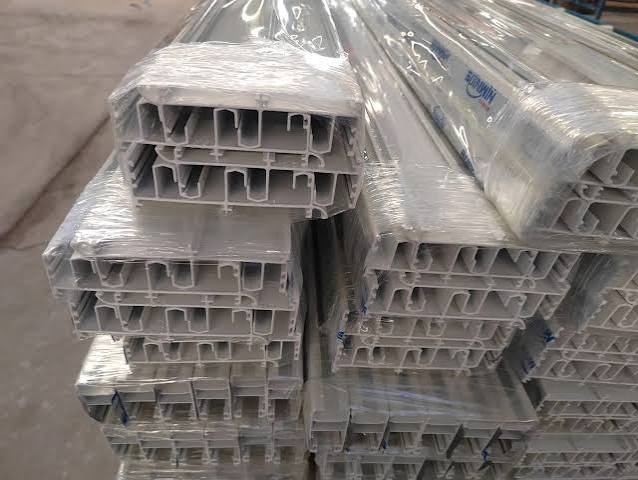
Aluminium profiles are essential components in modern construction. They are used to manufacture windows, doors, curtain walls, office partitions, shopfronts, glass enclosures, roofing systems and various architectural structures. Their lightweight properties, strength, corrosion resistance and design flexibility make aluminium a popular material for residential and commercial buildings in Uganda.
However, not all aluminium profiles offer the same level of quality. Differences in alloy composition, wall thickness, structural design, manufacturing precision and surface finishing can significantly affect their performance and durability.
Choosing poor-quality aluminium profiles can lead to weak frames, poor fitting, difficult window and door operation, premature surface deterioration and unnecessary repair costs. On the other hand, selecting suitable, high-quality profiles can help improve the strength, appearance, functionality and service life of fabricated building components.
Whether you are constructing a residential home, renovating an existing property or developing a commercial building, understanding how to identify quality aluminium profiles is important before purchasing or ordering fabrication services.
This guide explains how to identify high-quality aluminium profiles for construction in Uganda, the characteristics to look for, common warning signs and practical tips for choosing the right profiles for your project.
1. Understand What Aluminium Profiles Are
Aluminium profiles are shaped aluminium sections manufactured through an extrusion process. During extrusion, aluminium alloy is heated and pushed through a specially designed die to create a specific cross-sectional shape.
The resulting profiles are used in different construction applications depending on their dimensions, design, strength and technical specifications.
Common types of aluminium profiles include:
- Square aluminium profiles.
- Rectangular aluminium profiles.
- Round aluminium tubes.
- U-shaped aluminium channels.
- L-shaped aluminium angles.
- T-shaped aluminium sections.
- Aluminium window frame profiles.
- Aluminium door frame profiles.
- Curtain wall profiles.
- Custom aluminium extrusion profiles.
Each profile has a specific purpose. For example, window and door profiles are designed to accommodate glazing, gaskets, hardware and frame connections, while structural profiles may be selected for their load-bearing requirements.
Understanding the intended application helps you identify which profile specifications matter most.
2. Check the Aluminium Alloy Composition
One of the first factors to consider when evaluating aluminium profile quality is the alloy used in manufacturing.
Aluminium alloys contain aluminium combined with controlled amounts of other elements to achieve particular mechanical and physical properties.
Different alloys offer different characteristics, including strength, corrosion resistance, formability and suitability for extrusion.
For architectural and construction applications, 6000-series aluminium alloys are widely used because they offer a useful balance of strength, corrosion resistance and extrudability.
Common examples include:
- 6063 aluminium alloy: Widely used for architectural extrusions, including window frames, doors and decorative building profiles.
- 6061 aluminium alloy: Used in applications requiring higher strength and suitable structural performance.
The appropriate alloy depends on the intended application and required performance.
How to identify quality:
- Ask the supplier for the alloy designation.
- Request technical specifications or material documentation.
- Confirm that the alloy is suitable for the intended application.
- Check whether the material meets the project’s requirements.
- Avoid relying only on appearance to judge alloy quality.
A reputable supplier should be able to explain the alloy specification rather than simply describing the product as premium aluminium.
3. Examine the Wall Thickness of the Profile
Wall thickness is an important consideration when selecting aluminium profiles for construction. It influences the profile’s stiffness, resistance to deformation and suitability for particular applications.
Profiles with insufficient wall thickness may be unsuitable for large windows, heavy doors or applications involving significant structural demands.
However, thicker profiles are not automatically better in every situation. The correct thickness depends on the profile design, dimensions, alloy, loading conditions and intended use.
When checking wall thickness, consider:
- Whether the thickness is consistent.
- Whether it matches the approved specifications.
- Whether the profile is suitable for the size of the finished product.
- Whether it can accommodate the required glass and hardware.
- Whether the complete system meets the project’s performance requirements.
Practical tip: Ask the supplier for the specified wall thickness and, where necessary, verify it using suitable measuring equipment such as a calibrated digital calliper or micrometer.
Do not select profiles based solely on a supplier’s verbal claim that they are heavy-duty. Request measurable specifications.
4. Inspect the Surface Finish
The surface finish is another important indicator of aluminium profile quality. A properly finished profile should have a consistent appearance and be free from significant visible defects.
Poor surface finishing can affect the appearance of windows, doors and other fabricated products. It may also indicate inadequate surface preparation or finishing control.
Common aluminium profile finishes include:
Powder-Coated Aluminium Profiles
Powder coating involves applying a dry coating material to the aluminium surface and curing it to form a protective decorative finish.
It is available in various colours, including black, white, grey and bronze.
Anodised Aluminium Profiles
Anodising is an electrochemical process that creates a controlled oxide layer on the aluminium surface. It can improve surface durability and provide different decorative appearances.
Mill-Finish Aluminium Profiles
Mill finish refers to aluminium in its basic manufactured surface condition without an additional decorative coating.
The appearance depends on the extrusion and handling process.
How to identify a good finish:
- Check for consistent colour.
- Look for scratches and visible surface damage.
- Inspect for peeling or blistering.
- Check for uneven coating.
- Examine corners and edges.
- Confirm the specified finishing process.
- Ask about the coating specification where relevant.
For construction projects in Uganda, consider the building’s environmental exposure and select a finish appropriate for the expected conditions.
5. Check the Strength and Structural Suitability
High-quality aluminium profiles should be suitable for the loads and conditions expected in their intended application.
For example, a profile used in a large commercial entrance door may need different structural characteristics from one used in a small residential window.
Before purchasing, consider:
- Profile dimensions.
- Alloy and temper.
- Wall thickness.
- Section geometry.
- Span and support arrangements.
- Glass dimensions and weight.
- Wind loading where applicable.
- Fixing and connection details.
A profile should not be selected based on its appearance alone. Its structural suitability must be assessed as part of the complete system.
For larger architectural applications, ask for technical documentation or engineering assessment where required.
6. Inspect the Accuracy and Consistency of the Extrusion
Manufacturing precision is important because aluminium profiles must fit together correctly during fabrication and installation.
Poorly manufactured profiles may have inconsistent dimensions, uneven surfaces or distorted sections.
These defects can affect the accuracy of frame assembly and the performance of finished windows and doors.
When inspecting profiles, look for:
- Straight and uniform sections.
- Consistent dimensions.
- Clean edges.
- Accurate grooves and channels.
- Properly formed corners and details.
- No significant twisting or bending.
- Consistent profile geometry along the length.
Profiles should also be compatible with the accessories, connectors, gaskets and glazing components required by the selected system.
Accurate extrusion helps fabricators achieve better-fitting products and more consistent finishes.
7. Consider Corrosion Resistance
Aluminium naturally forms a thin oxide layer when exposed to air, helping protect it against corrosion. However, the long-term performance of aluminium profiles also depends on alloy selection, surface treatment, environmental exposure and maintenance.
Buildings in Uganda may experience different environmental conditions, including heavy rainfall, humidity, dust and strong sunlight. Coastal or industrial environments may present additional corrosion-related considerations.
To identify suitable profiles:
- Confirm the alloy specification.
- Inspect the surface finish.
- Look for signs of corrosion or contamination.
- Select suitable finishing systems for the environment.
- Consider exposure to moisture and aggressive substances.
- Follow appropriate cleaning and maintenance guidance.
Where aluminium profiles are installed near dissimilar metals, suitable detailing and isolation may be necessary to reduce galvanic corrosion.
Selecting profiles with appropriate corrosion protection helps preserve their appearance and performance.
8. Evaluate the Profile Design and Shape
The shape of an aluminium profile influences its strength, functionality and suitability for specific construction applications.
Different designs are developed to perform different functions.
For example:
- Hollow profiles can provide useful stiffness while limiting material weight.
- U-shaped profiles are used for channels and framing applications.
- T-shaped profiles can support certain connection and framing arrangements.
- Window profiles include channels and grooves for glazing, seals and accessories.
- Door profiles are designed to accommodate specific panel and hardware requirements.
- Curtain wall profiles are part of systems designed for external building façades.
When selecting profiles, ensure that the shape matches the intended application and is compatible with the complete fabrication system.
Avoid mixing components from incompatible profile systems because this can create problems during assembly and installation.
9. Check Compatibility With Glass and Hardware
Aluminium profiles used for windows, doors and partitions must accommodate the correct glass thickness, glazing components and operating accessories.
A profile may appear strong but still be unsuitable if it cannot properly support the selected glass or accommodate the required hardware.
Before purchasing, confirm compatibility with:
- Glass thickness and dimensions.
- Glazing beads.
- Rubber gaskets.
- Window handles.
- Door locks.
- Hinges.
- Rollers.
- Sliding tracks.
- Corner connectors.
- Weather seals.
For sliding windows and doors, ensure that the profile system works with the selected tracks and rollers.
For casement windows, check compatibility with the hinges, handles and locking arrangements.
A complete, compatible system is important for reliable operation and easier maintenance.
10. Request Manufacturer Specifications and Product Documentation
One of the most reliable ways to evaluate aluminium profile quality is to request technical documentation from the manufacturer or supplier.
Documentation helps verify product characteristics instead of depending entirely on visual inspection.
Useful documents may include:
- Alloy designation.
- Temper designation.
- Nominal wall thickness.
- Profile dimensions.
- Mechanical property information.
- Surface finishing specifications.
- Applicable product test reports.
- Manufacturer identification.
- Relevant conformity documentation.
For specialised applications, additional information on structural performance, coating durability and system testing may be required.
Where standards or certifications are claimed, ask for the actual documentation and confirm that it applies to the specific product being supplied.
11. Consider the Manufacturer and Supplier’s Reputation
The reliability of the manufacturer or supplier can influence the consistency and availability of aluminium profiles.
A supplier with a good product range and clear technical information can make it easier to choose appropriate materials for a construction project.
Before placing an order, consider:
- The supplier’s product range.
- Availability of technical specifications.
- Consistency of product quality.
- Ability to supply the required dimensions.
- Availability of matching accessories.
- Previous customer feedback.
- Delivery arrangements.
- After-sales support.
You can also ask for samples before committing to a large order.
For major projects, confirm that the supplied profiles match the approved specifications and that any substitutions are agreed upon before fabrication.
12. Compare Aluminium Profiles According to Their Intended Application
Different construction applications require different aluminium profile characteristics. The best profile for a window may not be suitable for a structural frame or curtain wall.
Consider the following examples:
Aluminium Profiles for Windows
<AsyncImage query=”architectural aluminium window frame extrusion profiles close up” aspectRatio=”16:9″/>
Window profiles should accommodate the selected glass, glazing beads, gaskets, drainage details and operating hardware.
Aluminium Profiles for Doors
<AsyncImage query=”aluminium door frame profiles and sections fabrication workshop” aspectRatio=”16:9″/>
Door profiles should be appropriate for the door dimensions, panel weight, locking system and expected frequency of use.
Aluminium Profiles for Office Partitions
<AsyncImage query=”modern aluminium glass office partition framing system” aspectRatio=”16:9″/>
Partition profiles should suit the glass dimensions, framing arrangement and privacy requirements of the space.
Aluminium Profiles for Curtain Walls
<AsyncImage query=”modern commercial building aluminium curtain wall facade mullion transom profiles” aspectRatio=”16:9″/>
Curtain wall profiles form part of a larger façade system. Their selection must consider structural requirements, glazing specifications, wind loads, drainage and installation details.
Aluminium Profiles for Shopfronts
<AsyncImage query=”modern retail shopfront aluminium glass framing system” aspectRatio=”16:9″/>
Shopfront profiles should suit the required visibility, entrance configuration, glass panels and security arrangements.
Selecting application-specific profiles helps improve performance and reduces the likelihood of fabrication problems.
13. Evaluate the Cost Against Quality
Price is an important consideration when purchasing aluminium profiles, but the cheapest option is not always the most economical over the life of a building.
Differences in alloy, dimensions, wall thickness, finish, manufacturing precision and supplier specifications can explain why profiles have different prices.
Before comparing quotations, confirm that the products have equivalent specifications.
Consider:
- Alloy and temper.
- Profile dimensions.
- Wall thickness.
- Surface finishing.
- Product consistency.
- Quantity required.
- Transportation.
- Availability of accessories.
- Expected maintenance requirements.
A quotation that appears cheaper may cover a different profile specification or exclude important components.
Request detailed quotations and compare the actual products rather than relying on price alone.
14. Inspect the Profiles Before Accepting Delivery
Even when aluminium profiles have been ordered from a reputable supplier, inspection before acceptance is important.
A delivery inspection can help identify damage, incorrect specifications or inconsistencies before fabrication begins.
Check the following:
- Confirm the quantity delivered.
- Verify the profile type and dimensions.
- Check the alloy and finish against the order.
- Inspect for scratches, dents and bending.
- Look for twisting or distortion.
- Check for consistent colour and surface appearance.
- Confirm that accessories and matching components are available.
- Document any discrepancies before accepting the delivery.
Proper inspection can help prevent defective or incorrect materials from being used in the construction project.
15. Avoid Common Mistakes When Buying Aluminium Profiles
When selecting aluminium profiles for construction, avoid these common purchasing mistakes:
Choosing profiles based only on price: Low prices may reflect different material specifications or finishing quality.
Ignoring wall thickness: Profile dimensions and thickness should match the intended application.
Failing to verify alloy specifications: Ask for material information instead of relying on general descriptions.
Ignoring surface defects: Scratches, dents and inconsistent finishes can affect the final appearance.
Using incompatible profile systems: Profiles, gaskets, glass and hardware should work together.
Overlooking structural requirements: Large windows, doors and façades require appropriate system design.
Failing to request documentation: Technical specifications help confirm that the product matches project requirements.
Not inspecting deliveries: Check materials before they enter the fabrication process.
Avoiding these mistakes helps reduce material wastage, installation problems and unnecessary project expenses.
16. Best Practices for Selecting Aluminium Profiles in Uganda
To select suitable aluminium profiles for a construction project in Uganda, follow a systematic purchasing process.
- Define the application: Establish whether the profiles are required for windows, doors, partitions, curtain walls or another purpose.
- Confirm technical requirements: Determine the necessary dimensions, alloy, temper and structural characteristics.
- Check wall thickness: Verify that the thickness matches the approved product specification.
- Inspect the finish: Look for consistent surface quality and appropriate protection.
- Confirm compatibility: Ensure the profiles work with the selected glass, hardware and accessories.
- Request documentation: Obtain technical specifications from the manufacturer or supplier.
- Compare quotations: Evaluate equivalent products and specifications.
- Inspect samples: Where possible, examine a sample before placing a large order.
- Check delivery quality: Inspect the profiles when they arrive.
- Use suitable fabrication and installation professionals: Good materials must be supported by proper workmanship.
Following these steps can help property owners, contractors and developers make more informed decisions.
Why High-Quality Aluminium Profiles Matter in Modern Construction
Selecting suitable aluminium profiles contributes to the overall quality of construction projects.
Improved Strength and Stability
Appropriate profile dimensions, alloy selection and structural design help provide the strength required for the intended application.
Better Fabrication Accuracy
Consistent profile dimensions make cutting, assembly and installation more predictable.
Attractive Finishes
Quality profiles with suitable surface finishes can improve the appearance of windows, doors and architectural features.
Long-Term Durability
Appropriate materials and finishing systems help aluminium components withstand their expected environmental exposure.
Reliable Operation
Compatible profiles and accessories help windows and doors operate as intended.
Greater Design Flexibility
Aluminium extrusion allows different profile shapes and configurations to be developed for modern architectural requirements.
Why Choose Daltrev Co. for Aluminium Fabrication Requirements?
Selecting the right materials is only one part of achieving quality aluminium products. Proper measurements, suitable profile selection, accurate fabrication, compatible accessories and professional installation also contribute to the finished result.
Daltrev Co. can be contacted to discuss aluminium fabrication and installation requirements for residential and commercial construction projects in Uganda.
Whether you are planning aluminium windows, doors, office partitions, shopfronts or other aluminium building components, it is important to establish the appropriate specifications before fabrication begins.
Contact Daltrev Co. to discuss your project requirements and request a quotation for suitable aluminium fabrication solutions.
Frequently Asked Questions About High-Quality Aluminium Profiles
1. How can I identify high-quality aluminium profiles?
Check the alloy specification, wall thickness, dimensions, surface finish, structural suitability and manufacturing consistency. Request technical documentation and inspect the profiles for visible defects.
2. Which aluminium alloy is commonly used for construction profiles?
6000-series aluminium alloys are widely used in construction extrusion applications. Alloy 6063 is common in architectural profiles, while 6061 is used in applications requiring higher strength. The appropriate alloy depends on the product and design requirements.
3. Why is aluminium profile thickness important?
Wall thickness influences profile stiffness and suitability for particular applications. The required thickness depends on profile geometry, dimensions, loading conditions and the intended use.
4. Are all aluminium profiles suitable for windows and doors?
No. Different profiles are designed for specific applications. Window and door systems require profiles that accommodate glazing, hardware, seals and the relevant operating mechanisms.
5. What is the best finish for aluminium profiles?
The best finish depends on the intended appearance, environmental exposure and maintenance requirements. Powder coating and anodising are common options for architectural aluminium profiles.
6. Do aluminium profiles rust?
Aluminium does not develop iron rust. It naturally forms an oxide layer that helps protect it against corrosion. However, unsuitable alloys, damaged finishes and aggressive environmental conditions can still contribute to surface deterioration or corrosion.
7. How do I check aluminium profile wall thickness?
Use suitable measuring equipment, such as a calibrated digital calliper or micrometer, and compare the result with the manufacturer’s stated specification. For complex hollow sections, appropriate measurement methods may be necessary.
8. Are thicker aluminium profiles always better?
No. Greater thickness does not automatically mean a profile is better. The correct profile depends on the alloy, shape, dimensions, structural requirements and intended application.
9. Where can aluminium profiles be used in construction?
They are used in windows, doors, office partitions, curtain walls, shopfronts, glass enclosures, decorative structures and other architectural applications.
10. What should I check before buying aluminium profiles in Uganda?
Confirm the alloy, wall thickness, profile dimensions, surface finish, compatibility with accessories, technical documentation, supplier reliability, price and delivery condition.
Conclusion
Identifying high-quality aluminium profiles is an important step in achieving durable, attractive and functional construction products. Factors such as alloy composition, wall thickness, surface finish, extrusion accuracy, structural suitability and compatibility with glass and hardware should all be considered before purchasing.
For construction projects in Uganda, it is equally important to work with reliable suppliers and experienced fabrication professionals who understand the technical requirements of different aluminium applications.
Taking time to inspect profiles, verify specifications and compare products can help reduce fabrication errors, unnecessary expenses and future maintenance problems.
Planning to use aluminium profiles for your construction project? Contact Daltrev Co. to discuss your aluminium fabrication requirements and request a quotation for your residential or commercial building.

