
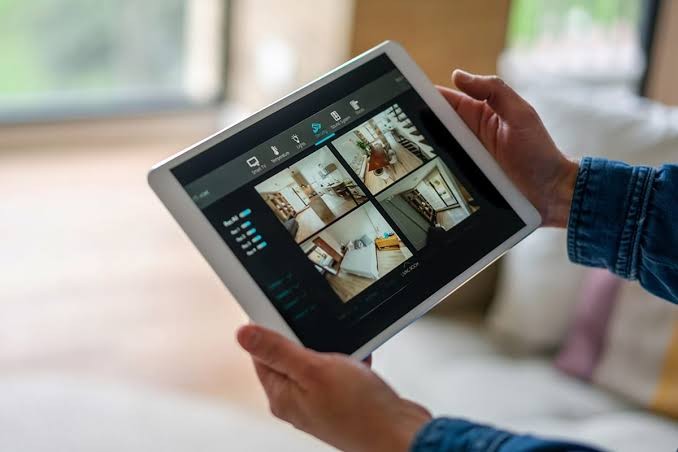
Introduction
Modern property security is moving beyond individual CCTV cameras, standalone burglar alarms and traditional door locks. Businesses and property owners increasingly need security technologies that communicate with one another, share information and support faster responses to potential security incidents.
Internet of Things (IoT)-based security systems make this possible by connecting cameras, sensors, alarms, access control devices and other smart equipment through communication networks. Instead of operating as completely separate devices, compatible security components can exchange information and coordinate selected functions through a central platform.
For example, a motion sensor can detect movement in a restricted area, trigger an alarm and notify authorised users. A connected CCTV camera may simultaneously record the event, allowing security personnel to review the relevant footage. Similarly, an electronic access control system can record an entry event and link it to compatible surveillance equipment.
In Uganda, IoT-based security systems have potential applications in residential properties, office buildings, shopping centres, hotels, warehouses, factories, schools and other facilities where coordinated security management is important.
For businesses in Kampala, Wakiso, Entebbe and other commercial areas, connected security technology can support better monitoring, access management and visibility across different parts of a property.
This guide explains what IoT-based security systems are, how connected cameras and sensors work, their applications, benefits, installation requirements, cybersecurity considerations and the factors that influence implementation costs in Uganda.
What Are IoT-Based Security Systems?
IoT-based security systems are networks of connected electronic devices that collect, exchange and process information to support security monitoring and management.
IoT stands for Internet of Things. It refers to physical devices equipped with sensors, software and communication capabilities that allow them to exchange information with other devices or platforms.
In security applications, these connected devices may include:
- CCTV surveillance cameras.
- Motion detectors.
- Door and window sensors.
- Smart burglar alarm panels.
- Electronic door locks.
- Biometric access control readers.
- Video intercoms.
- Perimeter intrusion detection sensors.
- Smart lighting.
- Environmental sensors.
- Centralised security management platforms.
Depending on the design, devices may communicate through wired networks, Wi-Fi, Ethernet, cellular connections or other wireless communication technologies.
An IoT security system can operate locally, remotely or through a combination of both. Some systems process information within the building, while others use cloud platforms for selected functions.
The main purpose is to connect security devices so that information can be shared and relevant actions can be coordinated.
How Do IoT-Based Security Systems Work?
IoT security systems work by collecting information from connected devices, transmitting it through a communication network and processing it according to configured rules.
The exact process depends on the equipment and software, but most systems involve several important stages.
1. Data Collection Through Connected Devices
The process begins when cameras and sensors collect information about the property’s surroundings.
Examples include:
- CCTV cameras capturing video.
- Motion sensors detecting movement.
- Door contacts identifying when an entrance opens.
- Glass-break detectors identifying possible window damage.
- Access readers recording credential activity.
- Environmental sensors detecting conditions such as smoke or water leakage where supported.
Each device performs a specific function and sends information to a compatible controller, recorder, gateway or software platform.
2. Communication Through a Network
Connected devices transmit information through an appropriate communication network.
Common communication options include:
Ethernet: Provides wired network connectivity for devices such as IP cameras, recorders and access controllers.
Wi-Fi: Allows compatible cameras and smart devices to communicate wirelessly with a network.
Power over Ethernet (PoE): Allows compatible network cables to carry both power and data to devices such as IP cameras.
Cellular connectivity: Can provide communication through mobile networks, depending on equipment and network coverage.
Wireless sensor protocols: Some security sensors use dedicated communication technologies designed for low-power devices.
The communication method should be selected according to the property’s size, device requirements, network conditions and reliability needs.
3. Data Processing and Analysis
Once information reaches the relevant controller or platform, the system processes it.
For example, a security platform may receive a motion detection event and determine whether it should generate an alert.
Some advanced systems use video analytics or artificial intelligence to classify objects, detect configured activities or identify unusual events.
Processing may take place:
- Inside the camera.
- At a local recording device.
- On an on-site server.
- Through a dedicated security controller.
- On a cloud-based platform.
Not every IoT system requires cloud processing or artificial intelligence.
4. Automated Security Actions
After processing an event, the system may perform a configured action.
Examples include:
- Activating an alarm siren.
- Sending a mobile notification.
- Triggering a compatible camera recording event.
- Displaying a relevant CCTV camera feed.
- Restricting access through an electronic door controller.
- Switching on connected security lighting.
These actions depend on compatible equipment and properly configured automation rules.
5. Remote Monitoring and Management
Authorised users may access selected security functions through a computer, smartphone or tablet.
Depending on the platform, they may be able to:
- View live CCTV footage.
- Review recorded video.
- Receive alarm notifications.
- Check selected sensor statuses.
- Manage authorised access credentials.
- Review security event logs.
- Control compatible connected devices.
Remote management requires suitable connectivity and secure user authentication.
Main Components of an IoT-Based Security System
An effective IoT security arrangement combines different devices according to the property’s needs.
1. IoT-Enabled CCTV Cameras
<AsyncImage query=”modern IP CCTV security camera installed on commercial building exterior network surveillance camera” aspectRatio=”16:9″ width=”100%” alt=”IoT-enabled IP CCTV surveillance camera installed on a commercial building”/>
Connected CCTV cameras are an important part of IoT-based security systems because they provide visual information about monitored areas.
Modern IP cameras can transmit digital video over network infrastructure and may support remote access, motion detection and selected video analytics.
Common features include:
- High-resolution video recording.
- Night vision or low-light imaging.
- Motion detection.
- Remote viewing.
- Event notifications.
- Two-way audio on compatible models.
- Person and vehicle classification on supported models.
- Integration with network video recorders.
- Connection to centralised monitoring platforms.
In commercial environments, cameras can be installed at entrances, parking areas, reception spaces, corridors, loading bays, warehouses and perimeter boundaries.
The system should be designed around camera coverage requirements, recording capacity, network bandwidth and the intended monitoring functions.
2. Smart Motion Sensors
<AsyncImage query=”wireless PIR motion detector security sensor mounted on office wall” aspectRatio=”16:9″ width=”100%” alt=”Smart motion detection sensor installed inside a building”/>
Motion sensors detect movement within a designated area and send signals to a connected security system.
Depending on their design, they may use passive infrared, microwave or combined detection technologies.
Applications include:
- Detecting movement in restricted offices.
- Monitoring warehouse sections.
- Protecting residential rooms.
- Triggering configured alarm events.
- Activating compatible security lighting.
- Supporting perimeter security arrangements.
Motion sensors should be selected and positioned carefully. Poor placement, unsuitable environmental conditions and incorrect sensitivity settings may result in missed detections or false alarms.
3. Smart Door and Window Sensors
<AsyncImage query=”wireless magnetic door contact security sensor mounted on door frame” aspectRatio=”16:9″ width=”100%” alt=”Smart magnetic door contact sensor used in a connected security system”/>
Door and window sensors monitor the opening and closing of protected entry points.
Most magnetic contact sensors use two components installed on a door or window and its frame. When the components separate, the system detects a change in status.
Connected door and window sensors can be used to:
- Monitor office entrances.
- Detect unauthorised opening of warehouse doors.
- Protect residential windows.
- Monitor restricted storage rooms.
- Trigger burglar alarm events.
- Send notifications to authorised users.
These sensors are particularly useful when combined with CCTV cameras and alarm control panels.
4. Smart Burglar Alarm Systems
<AsyncImage query=”modern smart burglar alarm control panel keypad and wireless security sensors” aspectRatio=”16:9″ width=”100%” alt=”Connected burglar alarm control panel with smart security sensors”/>
IoT-enabled burglar alarm systems connect detection devices to an alarm controller and may support remote notifications or integration with other security technologies.
A typical arrangement may include motion sensors, magnetic contacts, glass-break detectors, sirens and a control panel.
When a sensor detects a configured event, the alarm system can activate an audible warning or send a notification through a supported communication channel.
Where integration is available, an alarm event may also be associated with a CCTV camera view or video recording.
5. Smart Access Control Systems
<AsyncImage query=”modern electronic biometric fingerprint card access control door reader installed at commercial office entrance” aspectRatio=”16:9″ width=”100%” alt=”Connected electronic access control reader installed at a commercial entrance”/>
Smart access control systems manage entry into buildings and restricted areas.
They can use different authentication methods, including:
- RFID cards and tags.
- PIN codes.
- Fingerprint readers.
- Facial recognition.
- Mobile credentials.
- Electronic door locks.
Connected access control systems can record entry events, manage user permissions and communicate with compatible security platforms.
For example, an authorised entry event may be recorded with a timestamp and associated with relevant CCTV footage, depending on the integration.
Access control systems should also be designed to preserve safe emergency egress and meet applicable fire and building safety requirements.
6. Smart Video Intercom Systems
Video intercoms combine audio and video communication to help occupants or security personnel identify and communicate with visitors.
Connected intercoms may support:
- Live video.
- Two-way communication.
- Visitor notifications.
- Remote answering.
- Controlled door or gate release.
- Integration with compatible access control systems.
They are useful in residential properties, apartment buildings, office complexes and controlled commercial entrances.
7. Smart Security Lighting
Connected lighting can be integrated with suitable sensors or security platforms.
For example, an outdoor motion sensor may activate a compatible security light when movement is detected.
Smart lighting can improve visibility around entrances, parking areas, walkways and building perimeters.
However, lighting automation should be configured carefully to avoid unnecessary activation and to prevent glare that affects CCTV cameras.
8. Centralised IoT Security Management Platforms
<AsyncImage query=”professional security control room monitoring multiple CCTV camera feeds on large video wall” aspectRatio=”16:9″ width=”100%” alt=”Centralised security monitoring platform displaying multiple connected CCTV camera feeds”/>
A centralised security management platform allows authorised users to view and manage selected connected devices through one interface.
Depending on its capabilities, it may provide:
- CCTV camera monitoring.
- Alarm event management.
- Access control administration.
- Device status monitoring.
- Security notifications.
- Event logs.
- User permissions.
- Selected automation controls.
For large facilities, centralised management can make it easier to coordinate security functions across different departments or buildings.
How IoT Connects Cameras, Sensors and Smart Devices
The main advantage of IoT-based security systems is the ability to coordinate compatible devices.
Consider a commercial warehouse fitted with network cameras, motion sensors, door contacts and a connected alarm system.
A possible security event may follow this sequence:
- A door sensor detects that a restricted entrance has opened.
- The sensor sends an event to the security controller.
- The alarm system checks whether the area is armed and how the event should be handled.
- The configured alarm response is activated.
- A compatible CCTV camera records the event or provides a relevant video view.
- The security platform sends an alert to authorised personnel.
- Security staff review the footage and follow the organisation’s response procedure.
A second example involves an office building:
- An employee presents an authorised access card at an electronic door reader.
- The access controller checks the credential and permissions.
- The door is released if the access request is approved.
- The system records the event.
- Where compatible integration exists, the event may be associated with a CCTV recording.
This coordinated approach can provide better visibility than operating each device independently.
However, the integration must be designed and tested. Not every camera, alarm panel, access controller and smart device supports communication with every other product.
Benefits of IoT-Based Security Systems for Businesses and Property Owners
1. Centralised Security Management
Connected security devices can be managed through a common platform when the selected equipment supports integration.
This can reduce the need to monitor completely separate systems and help authorised personnel review relevant events more efficiently.
2. Real-Time Security Notifications
IoT systems can send notifications when configured events occur.
Examples include:
- Motion detected in a restricted area.
- A protected door opened.
- An alarm zone activated.
- A connected device went offline.
- An access request was denied.
Notifications depend on system configuration, device capabilities and communication availability.
3. Improved CCTV Monitoring
Network-connected cameras can provide live video and recorded footage through compatible monitoring platforms.
Security personnel can review selected camera feeds and investigate events without necessarily being physically present at the camera location.
4. Faster Event Investigation
When compatible CCTV, alarm and access control systems share event information, security teams may be able to identify relevant footage more efficiently.
For example, an access event timestamp can help locate the corresponding camera recording.
5. Better Access Management
Connected access control systems can help administrators manage authorised users, update credentials and review entry records.
This is useful in office buildings, warehouses, schools, hotels and multi-tenant commercial properties.
6. Support for Automation
Connected devices can trigger configured actions based on sensor information.
Examples include switching on security lights, activating an alarm or displaying a camera feed following a detection event.
Automation should be designed to minimise false alarms and avoid unsafe actions.
7. Remote Monitoring
Authorised users can monitor selected security devices from different locations using compatible applications.
This is particularly useful for property managers and organisations responsible for multiple facilities.
8. Easier Security Expansion
A properly designed IoT system may allow additional cameras, sensors or access control devices to be added as security requirements change.
Expansion depends on network capacity, software licences, controller limits, storage and device compatibility.
9. Better Security Event Records
Connected devices can generate records containing timestamps, device information and event details.
These records can help organisations review security activities, investigate incidents and assess system performance.
10. Improved Operational Awareness
IoT security platforms may provide information about device availability, alarm activity and access events.
This helps security administrators identify equipment problems and respond to operational issues.
Applications of IoT-Based Security Systems in Uganda
IoT security technologies can support different types of properties, depending on their security requirements and infrastructure.
1. Residential Homes
<AsyncImage query=”modern residential house with CCTV cameras smart door lock and outdoor security lighting” aspectRatio=”16:9″ width=”100%” alt=”Residential property using connected CCTV cameras and smart home security devices”/>
Homeowners can connect CCTV cameras, burglar alarms, motion sensors, smart locks and video intercoms.
Potential applications include:
- Monitoring entrances and outdoor spaces.
- Receiving alerts from configured alarm sensors.
- Viewing CCTV footage remotely.
- Managing electronic door access.
- Monitoring garages and storage areas.
- Activating connected security lighting.
For homes in Kampala, Wakiso and other residential areas, system design should account for power availability, internet connectivity and the property’s layout.
2. Office Buildings
Office complexes require security arrangements that protect employees, visitors, information and business assets.
IoT security applications may include:
- Connected CCTV cameras at entrances and corridors.
- Electronic access control for restricted offices.
- Alarm sensors in sensitive areas.
- Visitor management integration.
- Centralised security monitoring.
- Event-based notifications.
These systems can help security teams coordinate activities across different floors and departments.
3. Shopping Centres and Retail Properties
Shopping centres have many entrances, public areas, shops, storage spaces and parking facilities.
Connected security technologies may support:
- CCTV monitoring.
- Alarm integration.
- Controlled staff access.
- Monitoring of loading bays.
- Parking access management.
- Centralised security operations.
Retail operators should ensure that surveillance and access records are handled responsibly, especially in areas accessible to the public.
4. Warehouses and Logistics Facilities
Warehouses contain valuable inventory, equipment and goods awaiting distribution.
IoT-based security systems may connect cameras, door sensors, motion detectors, access control and perimeter devices.
Applications include:
- Monitoring loading and unloading areas.
- Detecting activity in restricted storage zones.
- Recording warehouse entry events.
- Receiving alarm notifications.
- Monitoring selected perimeter locations.
- Reviewing security events remotely.
5. Factories and Industrial Facilities
Industrial sites may have multiple buildings, production areas, equipment rooms and restricted operational zones.
Connected security systems can help coordinate:
- CCTV surveillance.
- Perimeter intrusion detection.
- Electronic access control.
- Alarm monitoring.
- Restricted-area sensors.
- Centralised security management.
In industrial environments, security technology should be planned alongside operational safety requirements and the facility’s existing network infrastructure.
6. Hotels and Hospitality Facilities
Hotels need to balance visitor convenience with security and privacy.
IoT security applications may include:
- CCTV monitoring of appropriate shared areas.
- Staff access control.
- Video intercoms.
- Alarm systems.
- Parking access management.
- Centralised monitoring.
Systems should be designed to protect guests’ privacy and avoid unnecessary monitoring of private spaces.
7. Schools and Educational Institutions
Educational institutions may use connected security devices to monitor entrances, manage access and improve awareness of selected security events.
Applications include:
- CCTV at designated entrances.
- Electronic access control for restricted facilities.
- Alarm sensors.
- Visitor management.
- Perimeter monitoring.
- Centralised security supervision.
The system should be proportionate to the institution’s needs and include appropriate safeguards for children and other vulnerable individuals.
8. Hospitals and Healthcare Facilities
Hospitals require security systems that protect patients, staff, equipment and restricted departments.
Connected CCTV, access control and alarms can support monitoring of approved areas, controlled access and coordinated incident response.
Patient privacy and the handling of sensitive personal information must remain central to system design.
9. Multi-Storey and Multi-Tenant Buildings
Large buildings may have several entrances, tenants, shared spaces and restricted facilities.
IoT security systems can help coordinate CCTV, access control, alarm monitoring and visitor management through a central platform.
Access rights should be assigned according to the responsibilities of tenants, building managers and authorised personnel.
Wired, Wireless and Hybrid IoT Security Systems
IoT security devices can communicate through wired or wireless infrastructure.
The right option depends on the building, the devices involved and the required level of reliability.
| Feature | Wired IoT Systems | Wireless IoT Systems |
|---|---|---|
| Communication | Physical network or signal cables | Wi-Fi or other wireless protocols |
| Installation | Requires cable planning and routing | Often easier to install in existing buildings |
| Connectivity | Can provide stable connections when correctly installed | Depends on signal strength and interference |
| Power | May use PoE or separate power supplies | May use batteries or separate power |
| Expansion | May require additional cabling and network capacity | Often flexible, subject to compatibility |
| Maintenance | Includes cable and network inspections | Includes battery, signal and device checks |
| Typical applications | IP cameras, recorders and fixed access controllers | Wireless sensors and compatible smart devices |
Wired IoT Security Systems
Wired systems use physical cables to connect devices to network infrastructure or controllers.
Ethernet and PoE are common options for IP surveillance cameras.
Advantages may include stable connectivity, predictable network performance and reduced dependence on wireless signal strength.
However, installation may require additional cabling, conduits and building work.
Wireless IoT Security Systems
Wireless systems use technologies such as Wi-Fi or dedicated sensor communication protocols.
They can be useful when cable installation is difficult or when devices need flexible placement.
However, wireless performance can be affected by interference, distance, building materials, battery condition and network congestion.
Hybrid IoT Security Systems
Hybrid systems combine wired and wireless devices.
For example, a commercial building may use wired IP cameras and network recorders alongside wireless door contacts and motion sensors.
This approach can provide flexibility while maintaining wired connections for equipment that requires higher bandwidth or continuous power.
IoT Security Systems and Cloud-Based Monitoring
Cloud technology is often used alongside IoT security systems, but it is important to understand the difference.
An IoT security system connects devices and allows them to exchange information. A cloud platform provides remote computing, storage or management services through internet infrastructure.
Some systems use cloud services for:
- Remote CCTV viewing.
- Video storage.
- Device management.
- Alarm notifications.
- Security event records.
- Multi-location administration.
- Software updates.
Other systems process and store most information locally using recorders, controllers or on-site servers.
Local Processing vs Cloud Processing
| Feature | Local Processing | Cloud-Based Processing |
|---|---|---|
| Data handling | Within the property or local network | Through remote cloud infrastructure |
| Internet dependency | Some functions may work without internet | Remote and cloud functions require connectivity |
| Storage | Local recorders or servers | Cloud storage or hybrid arrangements |
| Remote access | Requires a suitable remote access setup | Often provided through cloud services |
| Management | Local platform or server | Internet-based platform |
| Main consideration | Equipment capacity and physical protection | Connectivity, subscription costs and provider security |
A hybrid design may provide local recording and selected cloud-based remote services.
Businesses should understand where video footage and personal information are stored, who can access them, how long they are retained and how they are protected.
IoT Security System Installation Process
A reliable IoT security installation begins with an assessment of the property and its security requirements.
Step 1: Conduct a Site Security Assessment
The first stage is to identify the property’s layout, entry points, vulnerable areas and existing security infrastructure.
The assessment should consider:
- Building size and number of floors.
- Number of entrances and exits.
- Existing CCTV equipment.
- Existing alarm systems.
- Access control requirements.
- Network availability.
- Power supply and backup requirements.
- Areas requiring restricted access.
Step 2: Define the Security Requirements
Determine what the system should achieve.
For example, a warehouse may require perimeter monitoring and restricted access, while an office building may prioritise visitor management and staff entry records.
Clearly defined requirements help prevent unnecessary equipment purchases.
Step 3: Design the Device Network
Plan how cameras, sensors, controllers and smart devices will communicate.
The design should consider network capacity, device addresses, wireless coverage, cybersecurity and the separation of security equipment from ordinary office or guest networks where appropriate.
Step 4: Select Compatible Equipment
Choose cameras, sensors, alarm panels, access controllers and software that support the intended functions.
Confirm compatibility before purchasing equipment, especially where devices from different manufacturers will be integrated.
Step 5: Install Cameras and Sensors
Install devices in appropriate positions according to their purpose.
Cameras need suitable viewing angles and lighting. Motion sensors need appropriate detection zones. Door contacts should be aligned correctly.
Step 6: Configure Network and Communication Settings
Configure network connections, communication protocols, device permissions and any required gateways or controllers.
Security devices should not be left with default passwords or unnecessary network exposure.
Step 7: Integrate the Security Devices
Connect compatible cameras, sensors, alarms and access control equipment to the selected management platform.
Configure event rules and notifications according to the property’s security requirements.
Step 8: Test System Performance
Testing should confirm that:
- Cameras provide suitable images.
- Recording functions correctly.
- Sensors detect configured events.
- Alarms respond appropriately.
- Notifications reach authorised users.
- Access permissions work correctly.
- Connected devices communicate reliably.
- Local functions behave as expected during network interruptions.
Step 9: Train Users and Administrators
Property owners and security personnel should understand how to use the system, review events, manage access permissions and respond to alerts.
Step 10: Establish a Maintenance Plan
Regular maintenance should cover cameras, sensors, network equipment, software, storage, batteries and user permissions.
Cybersecurity Risks in IoT-Based Security Systems
Connecting more devices creates additional opportunities for unauthorised access if the system is not properly secured.
IoT security devices can be vulnerable to weak passwords, outdated firmware, insecure network configurations and poor access management.
Important risks include:
1. Unauthorised Device Access
Weak or default passwords may allow unauthorised individuals to access cameras, recorders or other connected devices.
2. Insecure Network Connections
Poorly configured networks can expose security devices to unnecessary access from other systems or external networks.
3. Outdated Software
Unpatched firmware and software may contain vulnerabilities that attackers can exploit.
4. Compromised User Accounts
Shared administrator accounts and weak authentication can make it difficult to control who accesses the security platform.
5. Unprotected Data Storage
Video recordings, access logs and other sensitive records may be exposed if storage systems and cloud accounts are poorly protected.
6. Device and Network Disruption
Network failures, power interruptions or deliberate interference may affect the operation of connected devices.
Best Practices for Securing IoT-Based Security Systems
Businesses and homeowners should apply appropriate cybersecurity measures from the beginning of the project.
Recommended practices include:
- Change default usernames and passwords.
- Use strong, unique passwords for every device and account.
- Enable multi-factor authentication where available.
- Install firmware and software updates regularly.
- Restrict administrator privileges.
- Create separate network segments for security equipment where appropriate.
- Use secure communication protocols.
- Disable unused services and features.
- Monitor device status and unusual login activity.
- Secure remote access and avoid unnecessary public internet exposure.
- Back up important configurations and records.
- Establish procedures for responding to suspected security breaches.
Businesses should also consider the security practices of equipment manufacturers and cloud service providers before selecting a platform.
IoT Security Systems and Data Protection in Uganda
Connected security systems may collect personal information through CCTV footage, biometric access records, visitor logs and other monitoring activities.
In Uganda, organisations should consider the Data Protection and Privacy Act, 2019, and applicable regulations when collecting, storing, using or sharing personal information.
Important considerations include:
Lawful and Transparent Data Processing
Organisations should identify an appropriate lawful basis for processing personal data and provide relevant information to individuals affected by surveillance.
Purpose Limitation
Information should be collected for clearly defined and legitimate purposes.
For example, CCTV footage collected for property security should not automatically be reused for unrelated activities without considering the applicable legal requirements.
Data Minimisation
Only information necessary for the intended purpose should be collected.
Camera placement should avoid unnecessary monitoring of private areas.
Access Restrictions
Only authorised personnel should be allowed to view recordings, manage access logs or administer connected security devices.
Data Retention
Organisations should establish appropriate retention periods and secure deletion procedures.
Biometric Information
Where facial recognition or fingerprint systems are connected to an IoT security platform, biometric information requires particular care and appropriate safeguards.
Third-Party Service Providers
Businesses using cloud platforms or external monitoring providers should understand how personal data is handled, stored, accessed and protected.
Organisations should seek qualified data protection or legal advice where necessary to determine their specific obligations.
Common Challenges of IoT-Based Security Systems
Although connected security technology offers important capabilities, implementation requires careful planning.
1. Network Dependence
Some connected features require stable internet or local network connectivity.
Network interruptions may affect remote access, notifications and cloud-based functions.
Local recording and other functions may continue if correctly configured and powered.
2. Device Compatibility
Not all cameras, sensors, alarm panels and access controllers communicate with one another.
Compatibility should be checked before equipment is purchased.
3. Installation Complexity
Large installations may require network design, cabling, gateways, servers, device configuration and integration work.
4. Cybersecurity Risks
Connected devices increase the importance of secure configuration, software updates and access management.
5. Maintenance Requirements
Cameras, sensors, batteries, networks and software need regular checks to maintain reliable operation.
6. False Alarms
Poor sensor placement, incorrect sensitivity settings and environmental conditions may trigger unnecessary alerts.
7. Power Interruptions
Connected devices depend on electrical power or batteries. Backup arrangements may be necessary for critical equipment.
8. Recurring Costs
Some platforms require software licences, cloud storage subscriptions or ongoing technical support.
Businesses should understand these costs before selecting a solution.
Factors That Determine the Cost of IoT-Based Security Systems in Uganda
The cost of an IoT security installation depends on the property’s requirements, the selected equipment and the complexity of integrating different devices.
There is no single price that applies to every property.
1. Number of Connected Devices
The number of CCTV cameras, sensors, access readers, alarms and other devices affects the total equipment requirement.
2. Equipment Specifications
High-resolution cameras, advanced analytics, specialist sensors and sophisticated access controllers may cost more than basic devices.
3. Network Infrastructure
Costs may include Ethernet cabling, network switches, wireless access points, routers, gateways and other communication equipment.
4. Recording and Storage Capacity
Video storage requirements depend on camera numbers, image resolution, recording settings and retention periods.
5. Software and Platform Licensing
Some systems require paid licences, subscriptions or additional software modules.
6. Integration Requirements
Connecting CCTV, alarms, access control and other devices may require compatible controllers, software and specialist configuration.
7. Power and Backup Infrastructure
Power supplies, batteries and backup systems contribute to the installation cost.
8. Installation Complexity
The building’s size, layout, cable routes and mounting requirements influence labour and installation costs.
9. Maintenance and Technical Support
Ongoing expenses may include servicing, replacement components, software updates, cloud services and technical support.
For an accurate estimate, businesses and homeowners should request a site assessment and an itemised quotation based on their actual security requirements.
IoT-Based Security Systems vs Traditional Security Systems
Traditional security systems often operate as separate devices, while IoT-based systems are designed to connect compatible equipment and share information.
| Feature | Traditional Security Systems | IoT-Based Security Systems |
|---|---|---|
| Device communication | Often limited or independent | Connected devices can exchange information |
| CCTV monitoring | Local or dedicated monitoring | Local and remote monitoring options |
| Alarm notifications | Depends on alarm configuration | May support connected mobile notifications |
| Access control | May operate independently | Can integrate with compatible security platforms |
| Automation | Often limited | Supports configured automated actions |
| Remote management | May require additional equipment | Often supported through connected platforms |
| Event records | May be stored separately | Can be coordinated through central platforms |
| Cybersecurity | Important | Particularly important due to network connectivity |
Traditional security systems remain useful for many properties. IoT technology adds connectivity and coordination, but it also introduces additional network and cybersecurity requirements.
The right choice depends on the property’s security needs, budget and infrastructure.
How IoT Security Systems Integrate with Other Building Technologies
IoT security can form part of a wider smart building environment.
Integration with CCTV Surveillance
Connected cameras provide video feeds and event information to compatible security platforms.
Integration with Access Control
Electronic access controllers can share entry events and permissions with other security systems.
Integration with Burglar Alarms
Alarm panels can communicate selected events to a central platform or trigger configured responses.
Integration with Video Intercoms
Connected intercoms can support visitor communication and controlled access.
Integration with Security Lighting
Compatible sensors can activate lighting when movement is detected in designated areas.
Integration with Building Management Systems
Where supported, security devices may exchange selected information with wider building management platforms.
For example, an organisation may coordinate security events with lighting or facility management functions.
Such integration must be carefully designed to prevent security devices from interfering with critical building operations.
Why Professional IoT Security System Installation Matters
IoT-based security systems require more than simply connecting cameras and sensors to a Wi-Fi network.
The installation must account for network performance, equipment compatibility, power supply, data protection, device configuration and ongoing maintenance.
Professional planning can help businesses and property owners:
- Identify the correct security devices.
- Design suitable wired and wireless networks.
- Select compatible equipment.
- Position cameras and sensors correctly.
- Integrate CCTV, alarms and access control.
- Configure secure user access.
- Test communication between connected devices.
- Establish backup and maintenance arrangements.
A properly designed system should meet the property’s security requirements while remaining manageable, secure and suitable for future expansion.
IoT-Based Security Solutions from Daltrevco
Businesses and property owners exploring connected security technologies need solutions that bring together surveillance, intrusion detection and access management in a coordinated way.
Daltrevco provides a point of contact for organisations and property owners considering CCTV surveillance, electronic access control, alarm systems and integrated security solutions in Uganda.
Whether you are securing a residential home, office building, shopping centre, warehouse, factory or multi-storey commercial property, contact Daltrevco to discuss your security requirements and suitable technologies.
A well-planned security system should connect the right devices, provide useful monitoring information, protect sensitive data and support reliable day-to-day security operations.
Frequently Asked Questions About IoT-Based Security Systems
1. What are IoT-based security systems?
IoT-based security systems are connected networks of cameras, sensors, alarms, access control devices and software platforms that exchange information to support security monitoring and management.
2. What does IoT mean in security?
IoT means Internet of Things. In security, it refers to physical devices that use network connections to communicate, share information and perform configured security functions.
3. How do IoT security systems work?
Connected devices collect information and transmit it to compatible controllers, gateways or software platforms. The system processes the information and may generate alerts or perform configured actions.
4. What devices are used in IoT security systems?
Common devices include IP CCTV cameras, motion sensors, door contacts, glass-break detectors, smart alarms, electronic locks, access readers, video intercoms and centralised monitoring platforms.
5. Can CCTV cameras be connected to smart security sensors?
Yes, where compatible equipment and software support integration. A sensor event may trigger a camera recording, display a relevant video feed or generate an associated notification.
6. Can IoT security systems be monitored remotely?
Yes. Many platforms allow authorised users to view cameras, receive alerts and manage selected devices through smartphones or computers.
7. Do IoT security systems require internet access?
Not all functions require internet connectivity. Some devices communicate through a local network and can perform local functions without internet. Cloud services and remote access generally require connectivity.
8. What is the difference between IoT security and smart security?
The terms are closely related. Smart security describes security technologies with automated or intelligent features, while IoT security specifically emphasises connected devices that exchange information through networks.
9. Are IoT-based security systems suitable for homes?
Yes. They can connect residential CCTV cameras, burglar alarms, motion sensors, smart locks and video intercoms to support coordinated home security.
10. Can IoT security systems be used in commercial buildings?
Yes. They can support CCTV monitoring, electronic access control, alarm management and centralised security operations in offices, shopping centres, warehouses and other commercial facilities.
11. Are wired or wireless IoT security systems better?
Neither is universally better. Wired systems can provide stable connectivity for cameras and fixed devices, while wireless systems offer flexibility for compatible sensors and equipment. Hybrid designs are also possible.
12. Can IoT security systems work during power outages?
Some functions may continue using suitable backup power or device batteries. The operating duration depends on the equipment, battery capacity and connected load.
13. Are IoT security systems secure?
They can be secure when properly designed and maintained. Strong passwords, multi-factor authentication, secure networks, restricted access and software updates are important safeguards.
14. Can IoT security systems be hacked?
Like other connected technologies, poorly secured IoT devices can be vulnerable to unauthorised access. Secure configuration and regular maintenance help reduce this risk.
15. Can IoT systems connect CCTV and access control?
Yes, where the selected cameras, access controllers and management software support the required integration.
16. What is the role of cloud technology in IoT security?
Cloud platforms may provide remote monitoring, video storage, device management, notifications and centralised administration. Some systems use local processing instead or combine local and cloud services.
17. Can IoT security systems detect intruders?
Connected motion sensors, door contacts and other devices can detect configured events and generate alerts. Their performance depends on suitable placement, configuration and environmental conditions.
18. How much do IoT-based security systems cost in Uganda?
Costs depend on the number and type of devices, network infrastructure, software licences, storage, installation complexity, integration and maintenance requirements. A site assessment is needed for an accurate quotation.
19. How often should IoT security systems be maintained?
Maintenance frequency depends on the equipment and operating environment. Regular checks should cover camera quality, sensor operation, batteries, network connectivity, software updates, storage and user permissions.
20. What is the best IoT security system for a commercial property?
The best solution depends on the property’s layout, security risks, network infrastructure and operational requirements. A suitable system may combine IP CCTV cameras, alarm sensors, electronic access control and centralised monitoring.
Conclusion
IoT-based security systems are transforming property protection by connecting cameras, sensors, alarms, access control and smart devices through coordinated communication networks.
For homes, offices, shopping centres, warehouses, factories and other properties in Uganda, these technologies can support centralised monitoring, remote access, automated alerts and more efficient security management.
However, successful implementation requires careful planning. Equipment compatibility, network reliability, cybersecurity, data protection, backup power and regular maintenance all influence how effectively the system performs.
Businesses and homeowners should focus on selecting connected devices that meet their actual security requirements rather than adopting technology simply because it offers advanced features.
By combining suitable CCTV cameras, sensors, alarms and automated access control, property owners can develop a connected security environment that supports better monitoring and more coordinated responses to security events.
For connected CCTV, access control and integrated security solutions, contact Daltrevco to discuss suitable options for your property in Uganda.

