
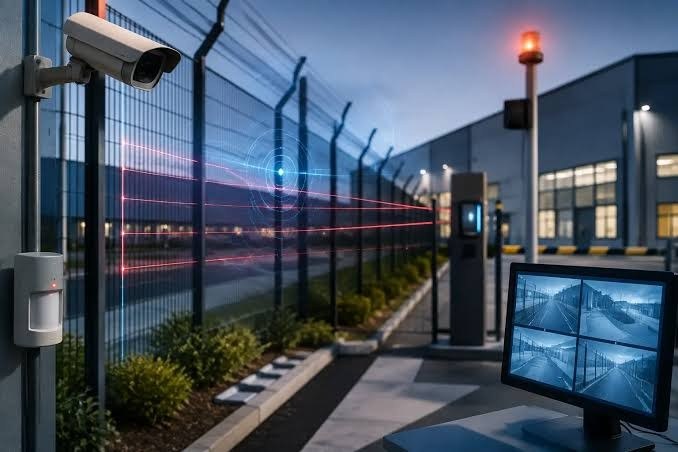
Commercial and industrial properties face security risks that require more than conventional locks, gates and security guards. Warehouses, factories, office complexes, shopping centres, distribution facilities and other large properties often have multiple entrances, valuable equipment, restricted areas and extensive perimeter boundaries that must be protected.
Unauthorised access, attempted break-ins, vandalism, theft and suspicious movement can expose businesses to financial losses, operational interruptions and safety concerns. Detecting these activities early is therefore an important part of protecting commercial and industrial facilities.
Smart intrusion detection systems provide a modern approach to property security by combining intelligent sensors, motion detectors, perimeter protection, CCTV surveillance, burglar alarms and automated notifications. These technologies help identify potential intrusions and alert authorised personnel when predefined security conditions occur.
Unlike basic alarm systems that may only respond to movement or the opening of a door, advanced intrusion detection solutions can use different detection technologies to monitor specific areas, identify unusual activity and communicate with other security systems.
For businesses and property owners in Uganda, installing a suitable intrusion detection system can strengthen security across warehouses, factories, offices, commercial buildings, industrial parks and large residential or mixed-use developments.
At Daltrevco, we understand the importance of selecting security solutions that address the actual risks facing each property. This guide explains how smart intrusion detection systems work, the technologies involved, their benefits, installation considerations and how to choose a suitable solution for commercial and industrial facilities.
What Are Smart Intrusion Detection Systems?
Smart intrusion detection systems are security solutions designed to identify unauthorised entry or suspicious activity within a protected property and generate alerts when predefined conditions are detected.
They combine electronic sensors, intelligent detection technology, alarm equipment and monitoring software to improve the identification of potential security incidents.
Depending on the system design, components may include:
- Motion detectors.
- Door and window magnetic contacts.
- Glass-break detectors.
- Outdoor perimeter sensors.
- Infrared beam detectors.
- Fence-mounted intrusion detection sensors.
- CCTV cameras with intelligent video analytics.
- Alarm control panels.
- Sirens and warning devices.
- Remote monitoring applications.
- Centralised security management platforms.
These components can work independently or as part of an integrated security system.
For example, a warehouse may use perimeter sensors to detect movement near its boundary, magnetic contacts to monitor access doors and CCTV cameras to provide visual verification when an alarm is triggered.
The main objective is to identify potential security incidents as early as possible and provide useful information to the people responsible for responding.
How Do Smart Intrusion Detection Systems Work?
Smart intrusion detection systems operate by monitoring designated areas and identifying activities that match programmed detection rules.
Although individual systems differ, the general process involves several stages.
1. Monitoring the Protected Area
Sensors and surveillance devices continuously monitor selected areas of a property.
These may include:
- External property boundaries.
- Main gates and pedestrian entrances.
- Warehouse doors.
- Windows and loading bays.
- Equipment storage rooms.
- Server rooms.
- Restricted production areas.
- Parking facilities.
The type of detection device used depends on the security risk and physical environment.
2. Detecting Unauthorised Activity
When a sensor identifies a relevant event, it sends a signal to the alarm control panel or connected monitoring platform.
For example, a door contact may detect that a warehouse entrance has been opened while the alarm system is armed.
An outdoor motion detector may identify movement within a restricted zone, while a CCTV camera with intrusion analytics may detect a person entering a designated virtual boundary.
3. Processing the Detection Signal
The control panel or monitoring platform processes the signal according to the system’s programmed rules.
Some systems use basic sensor inputs, while more advanced platforms can combine information from multiple devices.
For example, an alarm event may be associated with footage from a nearby CCTV camera to help security personnel assess what happened.
4. Generating Security Alerts
When a configured intrusion event occurs, the system can generate an alert.
Depending on the equipment and configuration, notifications may be delivered through:
- Audible sirens.
- Security monitoring screens.
- Mobile applications.
- Email notifications.
- Alarm control panels.
- Centralised monitoring platforms.
- Compatible connected security devices.
5. Supporting Security Response
Authorised personnel can assess the alert and take appropriate action according to the property’s security procedures.
If CCTV integration is available, security teams may review the associated camera footage to help verify the event.
An alarm notification does not automatically establish that a crime has occurred. It indicates that a configured detection condition has been triggered and may require investigation.
Key Technologies Used in Smart Intrusion Detection Systems
Different detection technologies are designed to identify different types of security events. Large commercial and industrial properties often benefit from combining several technologies to address gaps that a single sensor type may leave.
1. Motion Detection Sensors
<PRIVATE_PERSON>Motion sensors detect movement within a designated area and can trigger an alarm when configured conditions are met.
Common technologies include passive infrared (PIR) sensors and microwave motion detectors. Some devices combine technologies to improve detection performance in suitable environments.
Motion detectors are commonly installed in:
- Office corridors.
- Warehouses.
- Equipment storage rooms.
- Reception areas.
- Restricted production spaces.
- Internal access routes.
- Building entrances.
For industrial environments, sensor selection must account for temperature changes, moving machinery, air movement, dust and other environmental conditions that may affect performance.
2. Door and Window Magnetic Sensors
Magnetic contact sensors monitor whether a door, window or other opening is open or closed.
They typically consist of two parts: a sensor and a magnet. When the protected opening is opened and the two components separate, the system detects the change and can generate an alarm if the relevant zone is armed.
Applications include:
- Warehouse access doors.
- Office entrances.
- Emergency exits.
- Equipment rooms.
- Store rooms.
- Windows and service entrances.
- Restricted industrial access points.
These sensors are particularly useful for monitoring specific openings rather than relying entirely on movement detection.
3. Glass-Break Detectors
Glass-break detectors are designed to identify sounds or other signals associated with breaking glass, depending on the detector technology.
They can provide an additional layer of protection for properties with vulnerable windows, glazed entrances and display areas.
Common applications include:
- Commercial offices.
- Retail premises.
- Showrooms.
- Reception areas.
- Ground-floor windows.
- Industrial control rooms.
Correct placement is important because background noise, room layout and the type of glass can influence detection performance.
4. Outdoor Perimeter Motion Sensors
Outdoor motion sensors monitor movement around a property’s external areas.
They may use infrared, microwave or combined detection technologies to identify movement within defined zones.
These devices can help monitor:
- External building walls.
- Parking areas.
- Loading zones.
- Storage yards.
- Restricted outdoor spaces.
- Approaches to warehouse entrances.
Outdoor detectors must be selected and positioned according to environmental conditions. Rain, vegetation, animals, temperature changes and other sources of interference can cause unwanted alarms if the system is poorly configured.
5. Infrared Beam Sensors
Infrared beam sensors create an invisible detection line between a transmitter and receiver.
When an object interrupts the beam, the system can generate an alarm signal.
They are commonly used for:
- Boundary protection.
- Gate approaches.
- Warehouse entrances.
- Restricted outdoor passages.
- Industrial compounds.
- Long corridors and access routes.
Multi-beam configurations may be used where the installation requires more controlled detection.
6. Fence-Mounted Intrusion Detection Sensors
Some perimeter security systems use sensors attached to fencing to identify climbing, cutting, lifting or vibration associated with attempted intrusion.
Depending on the technology, the system may analyse vibration or disturbance patterns and generate alerts when configured thresholds are exceeded.
These solutions can be useful for:
- Industrial compounds.
- Warehouses.
- Distribution facilities.
- Large commercial premises.
- Storage yards.
- Restricted operational sites.
Fence-mounted detection should be selected according to fence construction, environmental exposure and the type of interference expected at the site.
7. CCTV Cameras with Intelligent Intrusion Analytics
Modern IP cameras and video management systems may include intelligent analytics that identify specific activities within monitored areas.
Supported functions can include:
- Person detection.
- Vehicle detection.
- Line crossing.
- Virtual boundary monitoring.
- Restricted-area intrusion detection.
- Loitering detection.
- Object tracking.
For example, a camera overlooking a factory perimeter may be configured to generate an alert when a person enters a designated restricted area.
The actual functions depend on the camera, recorder, analytics software and system configuration. Basic CCTV motion detection should not be confused with advanced intelligent intrusion analytics.
8. Alarm Control Panels and Monitoring Platforms
The alarm control panel receives signals from connected detection devices and processes them according to programmed rules.
More advanced systems can communicate with compatible monitoring platforms, allowing authorised personnel to view alarm events and manage different security zones.
For large facilities, centralised management can make it easier to monitor multiple areas from one location.
Types of Smart Intrusion Detection Systems for Commercial and Industrial Properties
Different properties require different protection strategies. The following system types address common security requirements.
1. Internal Intrusion Detection Systems
Internal intrusion detection protects areas inside buildings.
It may include motion detectors, door contacts, glass-break detectors and alarm control equipment.
Typical applications include:
- Office buildings.
- Server rooms.
- Warehouses.
- Stockrooms.
- Production facilities.
- Financial and administrative offices.
These systems are particularly useful for detecting unauthorised movement after working hours.
2. External Perimeter Intrusion Detection Systems
Perimeter detection focuses on identifying potential intrusion attempts before someone reaches the main building.
It may combine infrared beams, outdoor motion sensors, fence-mounted detection and intelligent CCTV analytics.
This approach is useful for large properties with extensive boundaries and multiple access points.
3. Wireless Intrusion Detection Systems
Wireless systems use radio communication to connect sensors with a central alarm panel or receiver.
They can be useful in buildings where installing new cables is difficult or where flexibility is important.
Potential advantages include:
- Reduced cable installation requirements.
- Flexible sensor placement.
- Suitability for selected retrofit projects.
- Easier relocation of compatible devices.
However, wireless systems require careful assessment of signal coverage, interference, battery life, encryption and device supervision.
4. Wired Intrusion Detection Systems
Wired systems connect sensors and other devices through physical cables.
They are often considered for new buildings, industrial facilities and properties where suitable cable routes are available.
Potential advantages include:
- Reliable physical connections when correctly installed.
- Reduced dependence on wireless signal conditions.
- Centralised power arrangements for compatible devices.
- Suitability for permanent installations.
Installation may require more cable routing and planning, particularly in completed buildings.
5. Hybrid Intrusion Detection Systems
Hybrid systems combine wired and wireless devices within one security arrangement.
They can be useful for properties with existing alarm infrastructure, new extensions or areas where wiring is impractical.
The suitability of a hybrid arrangement depends on the control panel, device compatibility and system design.
Benefits of Smart Intrusion Detection Systems for Commercial and Industrial Properties
Installing a suitable intrusion detection system can improve the way businesses monitor and protect their facilities.
1. Early Detection of Potential Intrusions
Perimeter sensors, door contacts and motion detectors can identify activity at important access points.
This helps security teams become aware of potential incidents without relying entirely on manual observation.
2. Improved Protection of Valuable Assets
Commercial and industrial properties may contain machinery, stock, computers, tools, raw materials and other valuable assets.
Intrusion detection helps monitor areas where unauthorised access could result in theft, damage or operational disruption.
3. Reduced Dependence on Continuous Manual Monitoring
Automated detection devices can monitor designated areas even when security personnel are not watching every location.
This can support more efficient use of security resources, although physical security personnel and appropriate response procedures may still be necessary.
4. Faster Security Notifications
Configured alerts can notify authorised personnel when a detection event occurs.
This can help reduce delays in becoming aware of potential security incidents.
5. Better Monitoring of Restricted Areas
Businesses can establish separate security zones for different parts of their premises.
For example, a factory may have different monitoring arrangements for its offices, production areas, equipment storage rooms and external perimeter.
6. Improved Integration with CCTV Surveillance
When compatible systems are integrated, an intrusion alert can be associated with relevant CCTV footage.
This allows security teams to assess the event visually instead of relying only on a sensor notification.
7. Better Security Management Across Large Properties
Centralised monitoring platforms can help businesses manage multiple detection devices and security zones from a central location.
This is especially useful for industrial sites and commercial complexes with several buildings or access points.
8. Support for Business Continuity
Unauthorised access can result in equipment damage, stock losses and operational interruptions.
A well-designed intrusion detection system supports broader security planning by helping businesses identify potential incidents and respond according to established procedures.
Applications in Different Commercial and Industrial Properties in Uganda
Smart intrusion detection systems can be adapted to the security requirements of different property types.
1. Warehouses and Distribution Centres
Warehouses may store valuable inventory, machinery, packaging materials and goods awaiting transportation.
A suitable system can combine:
- Perimeter detection.
- Door and loading-bay contacts.
- Internal motion sensors.
- CCTV intrusion analytics.
- Alarm notifications.
For facilities around Kampala, Wakiso and other commercial distribution areas, the system should reflect the building layout, storage arrangements and access routes.
2. Factories and Manufacturing Facilities
Factories often have extensive operational areas, machinery, raw materials and restricted production sections.
Intrusion detection can help monitor:
- Equipment storage areas.
- Production entrances.
- External boundaries.
- Maintenance rooms.
- Restricted operational sections.
- Loading and dispatch zones.
Detection equipment must be selected for the industrial environment, especially where heat, dust, vibration and moving machinery are present.
3. Office Buildings and Business Complexes
Commercial office buildings may have several entrances, floors, corridors, meeting rooms and restricted administrative areas.
A smart intrusion detection system can monitor sensitive rooms, entrances and after-hours movement.
Integration with access control can also help coordinate security around authorised entry points where compatible equipment is available.
4. Shopping Centres and Retail Properties
Shopping centres and retail premises have public entrances, stockrooms, service corridors, loading areas and restricted staff sections.
Intrusion detection can help monitor these areas outside normal business hours and identify activity in designated restricted zones.
5. Industrial Parks and Large Compounds
Large industrial compounds may contain multiple buildings, storage areas, parking facilities and extensive boundary fencing.
A layered security arrangement can combine perimeter sensors, fence-mounted detection, CCTV surveillance, gate monitoring and centralised alarms.
6. Hotels and Hospitality Properties
Hotels may require intrusion detection around staff-only sections, equipment rooms, storage areas and other restricted spaces.
Detection systems should be installed with careful consideration of guest privacy, public movement and emergency access requirements.
7. Institutions and Healthcare Facilities
Educational institutions and healthcare facilities often contain restricted offices, equipment stores, records rooms and operational areas.
Intrusion detection can help identify unauthorised access while supporting wider security and access management procedures.
Integrating Smart Intrusion Detection with CCTV, Access Control and Alarm Systems
One of the most useful developments in modern property security is the ability to connect different security technologies.
Instead of managing intrusion sensors, cameras and access control equipment as completely separate systems, compatible devices can be integrated into a coordinated security arrangement.
1. Integration with CCTV Systems
When an intrusion sensor is activated, compatible CCTV software can display a nearby camera feed or associate the event with recorded footage.
For example, if a warehouse door sensor detects an opening after business hours, the monitoring platform may display the camera covering that entrance.
This helps security personnel assess the situation.
2. Integration with Burglar Alarm Systems
Intrusion detection sensors commonly form part of a burglar alarm system.
When a configured zone is triggered, the alarm panel can activate a siren, send a notification or communicate with a compatible monitoring platform.
3. Integration with Access Control Systems
Access control systems manage authorised entry through credentials such as access cards, PIN codes or biometric verification.
When compatible systems are integrated, access events may be considered alongside intrusion alarms.
For example, a security manager may compare a door access event with a sensor alert to investigate unexpected activity.
However, an access-control event does not automatically prove that the person entering is authorised to be in every area of a building.
4. Integration with Centralised Security Monitoring
Large properties may use centralised platforms to manage CCTV, alarms, access control and perimeter detection.
A unified interface can help authorised personnel view events from multiple systems and understand what is happening across different areas.
Integration capabilities depend on the equipment, communication protocols, software and system configuration.
Not every device from every manufacturer will work together automatically.
Smart Intrusion Detection vs Traditional Alarm Systems
Traditional burglar alarms and smart intrusion detection systems share the objective of identifying unauthorised activity, but their capabilities can differ.
| Feature | Traditional Alarm System | Smart Intrusion Detection System |
|---|---|---|
| Basic movement detection | Yes | Yes |
| Door and window monitoring | Yes | Yes |
| Perimeter monitoring | Depends on equipment | Can support multiple perimeter technologies |
| Intelligent video analytics | Usually unavailable | Available on compatible systems |
| CCTV integration | May be limited | Can support advanced integration |
| Remote notifications | Depends on configuration | Commonly available on supported systems |
| Centralised monitoring | Depends on system | Available on suitable platforms |
| Object classification | Usually unavailable | Available with compatible analytics |
| Multi-zone management | Available on many systems | Available on suitable systems |
A traditional alarm may be sufficient for a small office or shop. A larger industrial property may benefit from a more comprehensive arrangement combining perimeter detection, CCTV analytics, alarms and centralised monitoring.
The best solution depends on the property’s risks, layout and operating requirements.
How to Choose the Right Smart Intrusion Detection System in Uganda
Selecting the right system requires an assessment of the property’s physical layout, security risks and operational needs.
1. Assess the Property’s Security Risks
Begin by identifying vulnerable areas and possible intrusion routes.
Consider:
- Number of entrances and exits.
- Perimeter length and fence condition.
- Number of buildings.
- Storage and equipment locations.
- Windows and loading bays.
- Restricted operational areas.
- Operating hours.
- Existing security arrangements.
This assessment helps determine which detection technologies are necessary.
2. Choose Suitable Detection Technologies
Different environments require different sensors.
For example, a warehouse may need door contacts and internal motion detectors, while a large industrial compound may require outdoor perimeter detection and fence-mounted sensors.
Avoid selecting equipment solely because it is advertised as intelligent or AI-powered. Confirm that it performs the required detection function.
3. Consider Wired, Wireless or Hybrid Installation
Evaluate the building structure, cable routes, distance between sensors, wireless coverage and maintenance requirements.
A wired installation may suit a new industrial facility, while a hybrid system may be practical for an existing property undergoing upgrades.
4. Evaluate Environmental Conditions
Ugandan properties may experience heavy rainfall, humidity, dust, high temperatures and changing outdoor conditions.
Outdoor detection devices should have suitable environmental protection and be installed according to manufacturer recommendations.
5. Check System Integration
If the property already has CCTV cameras, alarms, electric fencing or access control, verify whether the proposed equipment can integrate with those systems.
Check the supported interfaces and functions rather than assuming compatibility.
6. Consider Remote Monitoring
Remote notifications can help authorised personnel become aware of security events when they are away from the property.
However, remote features depend on suitable connectivity, secure configuration and the capabilities of the chosen platform.
7. Assess Power Backup Requirements
Intrusion detection systems rely on power to operate.
Consider backup batteries or other suitable backup power arrangements for the alarm panel, sensors, network equipment and connected monitoring devices.
The required backup capacity depends on the total load and expected operating duration.
8. Plan for Maintenance and Expansion
Choose equipment that can be maintained and supported appropriately.
Consider whether the system can accommodate additional sensors, cameras, buildings or monitoring points as the property expands.
Installation Process for Smart Intrusion Detection Systems
A well-planned installation helps ensure that detection devices cover the intended areas and communicate correctly with the control system.
Step 1: Site Assessment
The installer evaluates the property layout, identifies vulnerable points and determines the required level of protection.
Step 2: Security System Design
A suitable design is developed showing sensor positions, detection zones, alarm equipment, communication routes and any required CCTV or access control integration.
Step 3: Equipment Selection
The required sensors, control panels, sirens, cameras, network equipment and supporting devices are selected according to the property’s needs.
Step 4: Installation and Configuration
Devices are installed in suitable locations and connected to the control panel or monitoring platform.
Detection zones, alarm conditions, user permissions and notifications are configured.
Step 5: Integration
Where required, the intrusion detection system is connected to compatible CCTV, access control and centralised monitoring equipment.
Step 6: Testing and Commissioning
Each sensor and detection zone should be tested under realistic operating conditions.
Testing should include alarm activation, notification delivery, power backup operation and any connected security responses.
Step 7: User Training and Handover
Authorised users should understand how to arm and disarm the system, manage alerts, identify faults and follow the property’s response procedures.
Common Problems with Smart Intrusion Detection Systems
Even properly selected systems require regular inspection, testing and maintenance.
Some common problems include:
1. Frequent False Alarms
False alarms may occur because of incorrect sensor positioning, environmental interference, unsuitable detection sensitivity or poorly configured zones.
Solution: Review sensor placement, adjust detection settings and select devices suitable for the environment.
2. Sensors Failing to Detect Movement
Obstructions, unsuitable installation angles, environmental conditions and device faults can affect detection.
Solution: Inspect the sensor, review its coverage area and test its operation.
3. Wireless Communication Problems
Wireless sensors may experience interference, weak signal strength or battery-related issues.
Solution: Check communication quality, replace batteries where necessary and reposition devices or use suitable repeaters if supported.
4. Power Supply Failures
Power interruptions or deteriorating backup batteries may affect system availability.
Solution: Inspect the power supply, test backup batteries and ensure that critical components receive suitable backup power.
5. Poor CCTV Integration
An intrusion event may fail to display the expected camera feed if the devices or software are incompatible or incorrectly configured.
Solution: Confirm equipment compatibility, review integration settings and test the complete event workflow.
6. Missed Perimeter Detection
Poorly positioned outdoor sensors, unsuitable detection ranges and environmental interference may create gaps in perimeter protection.
Solution: Review the property boundary, adjust device positioning and test the detection coverage.
Maintaining Smart Intrusion Detection Systems
Regular maintenance helps keep security equipment reliable and reduces the likelihood of unnoticed faults.
A maintenance programme should include:
- Testing motion detectors.
- Checking door and window contacts.
- Inspecting outdoor perimeter sensors.
- Testing infrared beam detectors.
- Checking fence-mounted detection equipment.
- Inspecting alarm control panels.
- Testing sirens and notification functions.
- Checking backup batteries.
- Reviewing communication connections.
- Testing CCTV and alarm integration.
- Reviewing system logs and fault notifications.
- Updating supported software and firmware.
- Checking user permissions.
The frequency of maintenance should depend on the equipment, environmental exposure, manufacturer recommendations and security risk.
For large industrial properties, periodic professional inspections are particularly important because a fault in one detection zone may create an unmonitored section of the facility.
Cybersecurity and Data Protection Considerations
Smart intrusion detection systems may connect to networks, mobile applications and centralised monitoring platforms. This introduces cybersecurity and data protection responsibilities.
Businesses should:
- Change default passwords.
- Use strong, unique credentials.
- Enable multi-factor authentication where supported.
- Restrict system access to authorised users.
- Keep supported software and firmware updated.
- Secure remote access.
- Segment security devices from general business networks where appropriate.
- Review access logs and system activity.
- Protect recorded CCTV footage.
- Establish suitable retention and deletion procedures.
Where CCTV, access logs or other system records identify individuals, businesses should also consider Uganda’s Data Protection and Privacy Act, 2019, and applicable regulations.
Surveillance should have a legitimate purpose and be conducted responsibly. Access to recorded information should be restricted to authorised personnel.
Factors Affecting the Cost of Smart Intrusion Detection Systems in Uganda
The cost of installing a smart intrusion detection system depends on the property’s size, the detection technologies selected and the complexity of the installation.
Important cost factors include:
- Property size: Larger properties generally require more sensors and detection zones.
- Number of access points: More doors, windows, gates and loading areas may require additional detection devices.
- Detection technology: Basic motion sensors, infrared beams, outdoor detectors and fence-mounted systems have different equipment requirements.
- Wired or wireless design: Cabling, communication devices and installation conditions affect project costs.
- CCTV integration: Connecting intrusion detection with intelligent cameras and video management software may require additional equipment or licensing.
- Alarm equipment: Control panels, sirens, communication modules and monitoring devices contribute to the total cost.
- Network infrastructure: Larger installations may require additional switches, cabling and network configuration.
- Backup power: Batteries and other backup arrangements add to the system requirements.
- Installation complexity: Building design, access conditions, outdoor exposure and cable routes influence labour requirements.
- Maintenance and support: Ongoing inspections, servicing and software support should be included in long-term planning.
Because commercial and industrial properties differ significantly, a site assessment is the most reliable way to establish the appropriate system design and obtain an accurate quotation.
Why Professional Intrusion Detection Planning Matters
A smart intrusion detection system is only effective when its components are selected, positioned and configured correctly.
Poor planning can create blind spots, unnecessary alarms, unreliable communication and gaps in property protection.
Professional planning should consider:
- Property layout and security risks.
- Vulnerable access points.
- Appropriate detection technologies.
- Indoor and outdoor environmental conditions.
- CCTV and alarm integration.
- Network and power requirements.
- Backup arrangements.
- User permissions and monitoring procedures.
- Testing and maintenance requirements.
For businesses, factories, warehouses and commercial property owners in Uganda, Daltrevco can be contacted to discuss suitable security and property protection solutions.
Why Consider Daltrevco for Commercial and Industrial Security Solutions?
Protecting a commercial or industrial property requires a security arrangement that reflects the property’s size, operations and potential vulnerabilities.
A suitable solution may combine intrusion detection sensors, CCTV surveillance, burglar alarms, access control and perimeter security technologies.
Daltrevco provides a point of contact for property owners and organisations exploring security solutions for their facilities. The appropriate equipment and system configuration should be determined according to an assessment of the property and its requirements.
Whether you are planning security for a new industrial facility, improving warehouse protection or upgrading an existing commercial security system, selecting compatible equipment and planning the installation carefully are important steps.
Visit www.daltrevco.com to contact Daltrevco and discuss suitable security solutions for your property.
Frequently Asked Questions About Smart Intrusion Detection Systems
1. What is a smart intrusion detection system?
A smart intrusion detection system uses electronic sensors, alarm equipment and intelligent monitoring technology to identify potential unauthorised entry and generate security alerts.
2. How do smart intrusion detection systems work?
They monitor selected areas using sensors and detection devices. When a configured event occurs, the system sends a signal to an alarm panel or monitoring platform, which can generate a notification or trigger a connected response.
3. What is the difference between an intrusion detection system and a burglar alarm?
An intrusion detection system identifies potential unauthorised activity through sensors and detection technologies. A burglar alarm is one way of responding to that detection, typically through a siren, notification or monitoring connection.
4. Which sensors are used in commercial intrusion detection systems?
Common devices include motion detectors, door and window contacts, glass-break detectors, infrared beams, outdoor motion sensors and fence-mounted perimeter detection equipment.
5. Are smart intrusion detection systems suitable for warehouses?
Yes. They can help monitor warehouse entrances, storage rooms, loading bays, external boundaries and restricted areas using suitable sensors and alarm equipment.
6. Can intrusion detection systems protect factories?
Yes. They can monitor factory perimeters, equipment rooms, restricted production areas and other sensitive locations. Equipment should be selected for the factory’s environmental and operational conditions.
7. What is perimeter intrusion detection?
Perimeter intrusion detection identifies potential unauthorised movement or interference around a property’s external boundary before an intruder reaches the main building.
8. Can CCTV cameras detect intruders automatically?
Some modern CCTV cameras and analytics platforms support intrusion detection features that identify movement into designated restricted zones and generate alerts.
9. Can intrusion detection systems work with CCTV cameras?
Yes. Compatible systems can associate alarm events with nearby camera feeds or recorded footage, helping security personnel assess detected activity.
10. Can intrusion detection systems be connected to access control?
Yes. Compatible access control and intrusion detection systems can share relevant event information through supported interfaces or centralised software.
11. Are wireless intrusion detection systems reliable?
Wireless systems can be reliable when properly selected and installed. Their performance depends on signal coverage, interference, battery condition, encryption and communication supervision.
12. Are wired intrusion detection systems better than wireless systems?
Neither is universally better. Wired systems can suit permanent installations with suitable cable routes, while wireless systems can be practical where cabling is difficult. The right choice depends on the property.
13. Can outdoor motion sensors work in rainy conditions?
Suitable outdoor sensors are designed for environmental exposure, but performance depends on their specifications, installation and configuration. Rain, vegetation and temperature changes may still affect detection.
14. Do smart intrusion detection systems send mobile notifications?
Supported systems can send notifications through mobile applications or other communication channels when configured events occur. Remote notifications generally require suitable connectivity.
15. Can intrusion detection systems operate without internet?
Many locally connected alarm systems can detect events and activate local sirens without internet access, provided they have power and are correctly configured. Remote notifications and cloud-based functions may require internet or another communication connection.
16. Can one intrusion detection system protect several buildings?
Yes. Suitable systems can monitor multiple buildings and security zones through a centralised platform. The required control equipment, communication infrastructure and software depend on the site design.
17. How often should an intrusion detection system be maintained?
Maintenance frequency depends on the equipment, operating environment and manufacturer recommendations. Regular testing and periodic professional inspections help identify faults before they compromise security.
18. What causes false alarms in intrusion detection systems?
Common causes include incorrect sensor positioning, moving vegetation, animals, environmental interference, unsuitable sensitivity settings, faulty devices and poorly configured detection zones.
19. How much does a smart intrusion detection system cost in Uganda?
Costs depend on property size, number of sensors, detection technology, installation complexity, CCTV integration, alarm equipment and backup power requirements. A site assessment is recommended for an accurate quotation.
20. Do smart intrusion detection systems guarantee complete security?
No. They help identify potential security incidents but cannot guarantee that every intrusion will be detected or prevented. They should be combined with appropriate physical security, access management, monitoring and response procedures.
Conclusion: Strengthen Property Protection with Smart Intrusion Detection
Smart intrusion detection systems provide commercial and industrial property owners with additional ways to identify unauthorised entry, monitor restricted areas and receive timely security notifications.
By combining motion sensors, door contacts, infrared beams, perimeter detection, intelligent CCTV analytics and alarm systems, businesses can establish a layered approach to property protection.
For warehouses, factories, offices, shopping centres, industrial compounds and other commercial facilities in Uganda, the right system should be designed around the property’s layout, security risks, operational requirements and future expansion plans.
Proper installation, compatible equipment, regular testing and responsible monitoring are essential for dependable performance.
Contact Daltrevco through www.daltrevco.com to discuss suitable intrusion detection and integrated security solutions for your commercial or industrial property.

