
Security is an essential consideration for businesses, commercial buildings and institutions that need to control who enters their premises. From corporate offices and banks to schools, hospitals, hotels, warehouses and industrial facilities, managing access to buildings and restricted areas helps protect employees, visitors, equipment, confidential information and other valuable assets.
Traditional security methods, such as physical keys and manual security registers, can become difficult to manage in buildings with many employees, multiple entrances and different levels of access. Lost keys, unauthorised duplication and limited access monitoring can create unnecessary security challenges.
Card-based access control systems provide a modern electronic solution for managing building access. These systems use programmed identification cards to allow authorised individuals to enter designated buildings, rooms and restricted areas without relying entirely on conventional keys.
For organisations in Uganda, card-based access control offers a practical way to improve security, organise employee access and manage movement within commercial and institutional facilities.
At Daltrev Co. Ltd, we recognise the importance of reliable building security infrastructure. Through our access control and time attendance product range, we provide access management equipment, including card readers, access cards, control panels, magnetic locks, door closers and related accessories.
Whether you are planning security for a new office, upgrading an existing commercial building or equipping an institution with electronic access management equipment, understanding how card-based access control works can help you make an informed decision.
This guide explores the types, components, benefits, applications, installation considerations and costs of card-based access control systems in Uganda.
What Are Card-Based Access Control Systems?
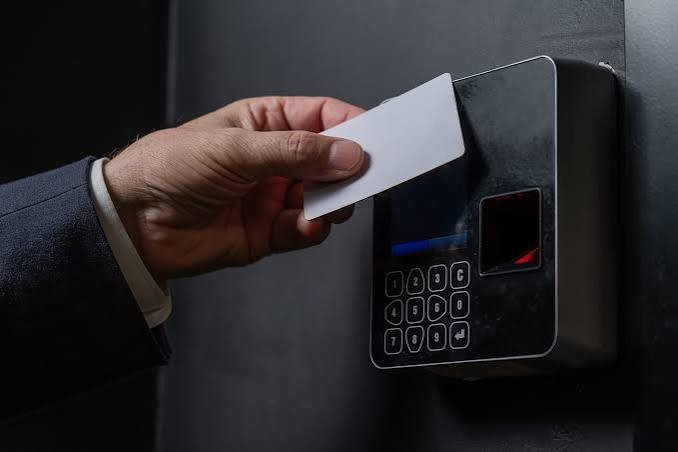
Card-based access control systems are electronic security solutions that use programmed identification cards to regulate entry into buildings and restricted areas.
Each authorised user receives an access card containing identification credentials. When the card is presented to a compatible electronic card reader, the system checks whether the user has permission to enter the particular area.
If the credentials are valid and authorised, the access control panel activates the electronic locking mechanism, allowing the door to open. If the card is invalid, expired or not authorised for that location, access is denied.
Unlike traditional locks, which generally rely on physical keys, electronic card access systems allow administrators to assign different access permissions to individual users.
For example, a commercial organisation can configure its access control system so that:
- General employees can access designated office areas.
- Management personnel can enter executive offices.
- Finance employees can access financial records departments.
- IT personnel can enter server rooms.
- Security officers can access designated monitoring areas.
- Visitors and contractors can receive temporary access credentials.
This flexibility makes card-based access control suitable for organisations that need structured security management across multiple departments, floors or buildings.
How Do Card-Based Access Control Systems Work?
A card-based access control system operates through several interconnected components that identify users, verify access permissions and control electronic door locks.
1. Access Cards
Each authorised user receives an electronic card containing identification credentials.
Depending on the technology, the card may use RFID, proximity or smart-card technology.
The credentials are registered in the access control software and assigned to a particular user.
2. Card Readers
Card readers are installed near controlled doors, gates or other entry points.
When an employee presents an access card, the reader detects and reads its credentials.
3. Access Control Panel
The access control panel processes the information received from the reader and determines whether the cardholder is authorised to enter.
It communicates with the electronic locking mechanism to grant or deny access.
4. Electronic Door Locks
Electronic locks secure controlled entrances.
Common options include magnetic locks and electric strikes. When access is approved, the locking mechanism releases the door according to the system configuration.
5. Access Control Software
The management software allows administrators to register employees, issue access cards, assign permissions, establish access schedules and review access records.
For large facilities, centralised software can simplify management across multiple controlled entrances.
6. Exit Switches and Emergency Release Devices
Exit switches allow users to operate designated doors from the inside.
Break glass units can provide emergency release functionality where required by the door design and applicable safety arrangements.
All exit arrangements should be designed to comply with relevant fire and life-safety requirements.
Types of Card-Based Access Control Systems
Different access control cards use different technologies. Choosing the right technology depends on the required security level, number of users, available infrastructure and intended application.
1. RFID Card Access Control Systems
Radio Frequency Identification (RFID) technology allows access cards to communicate with compatible readers using radio waves.
Users generally present their cards close to the reader without inserting them into a slot.
RFID access control is commonly used in offices, hotels, commercial buildings, institutions and residential developments.
Key features include:
- Contactless identification.
- Convenient employee access.
- Fast card authentication.
- Individual user registration.
- Compatibility with suitable electronic locking systems.
RFID card access control is a practical option for organisations that need convenient access management across several entrances.
2. Proximity Card Access Control Systems
Proximity cards allow authorised individuals to enter controlled areas by presenting their cards within the operating range of a compatible reader.
They are commonly used in offices, apartment buildings, staff entrances and commercial facilities.
Advantages include:
- Simple operation.
- Contactless access.
- Convenient card management.
- Reduced dependence on physical keys.
- Suitability for routine employee access.
The operating frequency and credential technology should be checked to ensure compatibility with the selected reader.
3. Smart Card Access Control Systems
Smart cards contain integrated electronic chips that can store or process identification information.
Depending on the card technology, they may support encryption, secure authentication and additional applications.
They are suitable for organisations that require stronger credential security, including:
- Financial institutions.
- Corporate offices.
- Government facilities.
- Research laboratories.
- Healthcare facilities.
- Data centres.
When selecting smart cards, consider encryption capabilities, authentication methods and compatibility with the access control equipment.
4. Magnetic Stripe Access Cards
Magnetic stripe cards store information on a magnetic strip that is read by a compatible reader.
They have traditionally been used in hotels, membership facilities and older access control installations.
However, they generally provide less protection against copying and credential duplication than modern secure smart-card technologies.
For facilities requiring stronger security, modern contactless credentials may be more appropriate.
5. Dual-Technology Access Cards
Dual-technology cards combine two credential technologies within a single card.
They can help organisations transition from an older access control installation to a more advanced system while maintaining compatibility with supported readers.
Before selecting this option, confirm that the existing and proposed equipment support the required technologies.
Benefits of Card-Based Access Control Systems for Businesses and Institutions
Investing in card-based access control provides several benefits for organisations seeking better building security and access management.
1. Improved Premises Security
Card-based access control helps restrict building entry to authorised employees, visitors and other approved individuals.
Administrators can control which users enter particular rooms, departments and facilities.
This helps reduce the risk of unauthorised access to sensitive areas.
2. Better Employee Access Management
Different employees have different responsibilities and access requirements.
Electronic access control allows administrators to assign permissions according to departments, job roles and operational duties.
For example, an employee may be permitted to enter general office areas but restricted from accessing financial records, server rooms or management offices.
3. Easy Management of Lost or Stolen Cards
Lost physical keys can create significant security concerns because replacing locks may be necessary.
With electronic access control, administrators can deactivate a missing card through the management system and issue a replacement.
This helps reduce the inconvenience associated with lost credentials.
4. Time-Based Access Restrictions
Many access control systems allow administrators to establish specific access schedules.
For example:
- Employees can access offices during working hours.
- Cleaning teams can receive access during designated periods.
- Contractors can receive temporary access.
- Restricted departments can remain accessible only to approved personnel.
This provides better control over building operations.
5. Improved Accountability
Electronic access control systems can record access events, including successful entries and denied access attempts.
These records can help authorised administrators review security activities and investigate incidents.
6. Reduced Dependence on Physical Keys
Managing physical keys across large organisations can be difficult.
Employees may lose keys, duplicate them or fail to return them after leaving employment.
Card-based access control provides a more manageable electronic alternative.
7. Convenient Employee and Visitor Access
Contactless access cards allow authorised individuals to enter controlled areas conveniently.
Temporary cards can also be issued to approved visitors, contractors and maintenance personnel where supported.
8. Centralised Security Management
Modern access control software can allow administrators to manage several doors and buildings through one central platform.
This is particularly useful for universities, hospitals, office complexes and organisations operating across multiple departments.
9. Integration with CCTV and Other Security Systems
Card-based access control can work alongside other compatible security technologies.
These may include:
- CCTV surveillance systems.
- Intruder alarm systems.
- Automatic gate systems.
- Boom barriers.
- Turnstiles.
- Visitor management systems.
- Building management systems.
- Time and attendance systems.
For example, integration with CCTV can help authorised security personnel review camera footage associated with specific door access events.
10. Scalability for Growing Businesses
A properly selected access control system can accommodate additional employees, controlled doors and departments as an organisation expands.
This makes it a suitable long-term investment for businesses and institutions with changing security requirements.
Applications of Card-Based Access Control Systems in Uganda
Card-based access control systems can be used in different buildings and facilities depending on their security requirements.
1. Corporate Offices and Commercial Buildings
Businesses can use electronic card readers to regulate entry into office buildings, reception areas, meeting rooms, executive offices and restricted departments.
Employees receive individual access cards, while administrators assign permissions according to their responsibilities.
Daltrevco’s access control products can support organisations exploring electronic entry management for commercial premises.
2. Schools, Colleges and Universities
Educational institutions manage large numbers of students, teachers, administrators and visitors.
Card access systems can help regulate entry into:
- Administrative offices.
- Computer laboratories.
- Libraries.
- Examination rooms.
- Research laboratories.
- Staff-only departments.
- Student accommodation facilities.
Different credentials can be assigned to students, teachers and administrative personnel.
3. Hospitals and Healthcare Facilities
Healthcare facilities contain sensitive equipment, medicines, patient records and specialised departments that may require restricted access.
Card-based access control can help manage entry into:
- Medical records departments.
- Pharmacies and medicine stores.
- Laboratories.
- Administrative offices.
- Equipment storage rooms.
- Staff-only areas.
Access permissions can be assigned according to employee responsibilities.
4. Hotels and Hospitality Facilities
Hotels commonly use electronic keycard technology to manage guest room access.
Cards can also be used to control entry into staff-only departments, management offices, storage facilities and selected guest amenities.
Card-based access management can support more organised security arrangements in hospitality facilities.
5. Factories and Industrial Facilities
Factories contain machinery, raw materials, valuable equipment and operational areas that may require restricted access.
Card access systems can help control entry into:
- Production departments.
- Equipment stores.
- Control rooms.
- Laboratories.
- Administrative offices.
- Restricted manufacturing areas.
6. Warehouses and Distribution Centres
Warehouses require proper access management to protect stored goods, machinery and inventory.
Card-based systems can help regulate entry into storage sections, dispatch departments, loading areas and management offices.
When integrated with CCTV, they can provide additional information for security investigations.
7. Banks and Financial Institutions
Financial institutions handle sensitive records, valuable assets and confidential information.
Electronic card access control can help regulate entry into designated staff offices, records departments, equipment rooms and other restricted facilities.
Higher-security smart-card credentials may be appropriate for particularly sensitive environments.
8. Government and Public Institutions
Government offices and public institutions may require different access levels depending on employee responsibilities and the sensitivity of their operations.
Card-based systems can help manage entry into administrative offices, records departments, meeting rooms and controlled areas.
9. Apartments and Gated Residential Developments
Residential developments can use access cards to manage entry through main doors, pedestrian gates, parking facilities and selected shared amenities.
Individual cards can be issued to residents, while property managers retain control over access permissions.
Essential Components of a Card-Based Access Control System
A reliable installation requires compatible equipment that works together to identify users and control access.
Daltrevco’s access control and time attendance product range includes several of the essential components required for these installations.
| Equipment | Function |
|---|---|
| Access cards | Identify authorised users |
| Card readers | Read electronic card credentials |
| Access control panels | Process access decisions |
| Magnetic locks | Secure controlled doors |
| Door closers | Help doors close correctly |
| Exit switches | Support authorised exit |
| Break glass units | Provide emergency release where required |
| Access control software | Manage users and permissions |
| Power supplies | Provide electrical power to equipment |
| Backup batteries | Support operation during power interruptions |
The selected equipment should be compatible with the building’s doors, electrical infrastructure and intended security requirements.
Card-Based Access Control vs Traditional Key Systems
Businesses considering an upgrade often compare electronic access control with conventional lock-and-key arrangements.
| Feature | Card-Based Access Control | Traditional Key Systems |
|---|---|---|
| User identification | Electronic credentials | Physical keys |
| Access permissions | Customisable | Limited |
| Lost credentials | Can be deactivated | May require lock replacement |
| Access records | Available with supported systems | Generally unavailable |
| Time restrictions | Supported by suitable systems | Not normally available |
| Multiple doors | Can be centrally managed | Requires key distribution |
| User management | Software-based | Manual |
| Expansion | Can support additional readers and doors | May require additional locks and keys |
For organisations with many employees and restricted areas, card-based access control provides more flexible access management.
Factors to Consider When Choosing Card-Based Access Control Systems in Uganda
Selecting suitable equipment requires careful consideration of the organisation’s security objectives and building requirements.
1. Number of Doors and Access Points
Identify how many entrances require electronic access control.
A small office may only need one controlled entrance, while a hospital or university may require several readers across different departments.
2. Number of Employees and Users
Consider how many people will require access cards.
The system should have sufficient capacity to accommodate existing users and future staff expansion.
3. Card Technology and Security
Choose appropriate credential technology based on the sensitivity of the facility.
Basic proximity cards may be sufficient for routine office access, while encrypted smart cards may be more appropriate for sensitive environments.
4. Card Reader Compatibility
Ensure that access cards and readers use compatible technologies.
This is especially important when upgrading existing installations.
5. Quality of Electronic Locks
Select suitable magnetic locks or electric strikes based on the door construction, frame and required security level.
6. Access Control Software
Choose software that supports convenient user registration, card management, access permissions, schedules and reporting.
7. Backup Power Requirements
Consider backup power for readers, controllers and electronic locks.
The installation should also provide appropriate emergency exit arrangements.
8. Integration with Other Security Equipment
Consider whether the access control system can work with existing CCTV cameras, alarm systems, automatic gates and building management solutions.
9. Future Expansion
Choose equipment that can accommodate additional doors, employees and departments without requiring a complete replacement.
10. Product Quality and Technical Support
Consider equipment specifications, manufacturer support, availability of replacement components and access to technical assistance.
Working with a supplier that understands building security equipment can help simplify product selection.
Card-Based Access Control System Installation Process
Proper installation is important for ensuring reliable operation and effective security management.
The following steps outline the typical installation process.
Step 1: Site Assessment
Evaluate the building to identify entrances, exits, restricted departments, door types, cable routes and electrical requirements.
Step 2: System Design
Determine the number of readers, control panels, electronic locks, access cards and other required components.
Step 3: Equipment Selection
Select compatible card readers, access cards, magnetic locks, control panels and accessories based on the project specifications.
Step 4: Card Reader Installation
Install readers at suitable locations near controlled doors and entrances.
Step 5: Electronic Lock Installation
Install suitable magnetic locks or electric strikes according to the door construction and safety requirements.
Step 6: Control Panel and Wiring Installation
Connect the readers, locks, exit switches and associated equipment to the access control panels.
Step 7: Software Configuration
Configure the management software and establish the required access permissions and schedules.
Step 8: Card Registration
Register individual access cards and assign them to authorised users.
Step 9: Testing and Commissioning
Test the system to confirm that authorised cards grant access, unauthorised cards are rejected, electronic locks operate correctly and emergency release arrangements function properly.
Step 10: User Training and Handover
Train authorised administrators on card registration, permission management, lost-card deactivation and routine system operation.
Integrating Card-Based Access Control with CCTV, Automatic Gates and Turnstiles
One of the advantages of electronic access management is the ability to coordinate it with other security technologies.
Daltrevco’s wider security product range includes CCTV surveillance systems, automatic gate motors, boom barriers, turnstiles and access control equipment.
These solutions can support different security requirements within a commercial or institutional property.
1. Access Control and CCTV Integration
CCTV cameras can monitor controlled entrances while the access control system manages electronic entry permissions.
Where compatible systems are integrated, authorised security personnel can review relevant footage alongside access records.
2. Access Control and Automatic Gates
Automatic gate systems can be used to manage vehicle or pedestrian entry into selected premises.
Depending on the system configuration, compatible access credentials can be incorporated into gate automation arrangements.
3. Access Control and Boom Barriers
Boom barriers are commonly used at parking facilities, commercial entrances, residential developments and checkpoints.
They can form part of a coordinated vehicle access management system.
4. Access Control and Turnstiles
Turnstiles help manage pedestrian movement through controlled entrances.
They are suitable for offices, institutions, commercial buildings and other facilities where organised pedestrian entry is required.
5. Access Control and Building Management Systems
Compatible access control equipment can be integrated into wider building management systems.
This can help property managers coordinate selected security and building operations through centralised management platforms.
How Much Do Card-Based Access Control Systems Cost in Uganda?
The cost of card-based access control systems in Uganda depends on the equipment specifications, number of controlled doors, number of users and complexity of the installation.
A basic office entrance installation will have different requirements from a centralised system controlling several floors or buildings.
Important cost factors include:
1. Number of Access Points: Each controlled door may require a card reader, electronic lock and associated control equipment.
2. Type of Access Cards: Basic proximity cards and advanced encrypted smart cards have different specifications and costs.
3. Card Reader Specifications: Reader prices depend on technology, durability, security features and communication capabilities.
4. Electronic Locking Equipment: Magnetic locks, electric strikes and other locking devices have different technical requirements.
5. Access Control Panels: The required number and capacity of control panels influence the equipment budget.
6. Software Requirements: Advanced access management, centralised administration and integration may involve additional costs.
7. Cabling and Electrical Infrastructure: New installations may require additional cables, conduits, power supplies and backup batteries.
8. Installation Complexity: Building layout, number of doors and integration requirements affect the amount of installation work.
9. Maintenance Requirements: Businesses should also consider replacement cards, equipment servicing and software support.
For an accurate quotation, organisations should first establish the number of doors, expected users, required equipment and desired system capabilities.
Daltrev Co. Ltd can be contacted to discuss access control equipment requirements and suitable product options for your project.
Why Source Access Control Equipment from Daltrev Co. Ltd?
Choosing suitable access control equipment is an important part of establishing reliable building security.
Daltrev Co. Ltd supplies building utility and security products for residential, commercial, institutional and industrial projects in Uganda.
Our access control and time attendance product category includes:
- Card readers.
- Access control panels.
- Magnetic locks.
- Door closers.
- Exit switches.
- Break glass units.
- Access cards.
- Fingerprint terminals.
In addition to access management equipment, our wider utility products range includes CCTV cameras, burglar alarm systems, automatic gate motors, boom barriers, turnstiles, metal detectors, intercom systems and other building security products.
This broad product range allows customers to explore related security equipment for different building requirements.
Our Approach to Access Control Product Requirements
We focus on understanding your project requirements and identifying suitable equipment for your intended application.
Our approach includes:
Understanding Your Requirements: We discuss the building type, security objectives, number of doors and expected users.
Identifying Suitable Equipment: We help you explore the relevant access control products and technical specifications.
Discussing Project Requirements: We consider the required components, quantities and compatibility with your existing infrastructure.
Quotation and Order Arrangements: We provide an opportunity to discuss product options and pricing based on your requirements.
Whether you are equipping an office, school, hospital, hotel, warehouse or industrial facility, Daltrevco is a point of contact for access control equipment and wider building security product enquiries.
Explore our products here:
Frequently Asked Questions About Card-Based Access Control Systems
1. What is a card-based access control system?
A card-based access control system is an electronic security solution that uses programmed cards to control entry into buildings and restricted areas. Users present their cards to compatible readers, which verify their credentials before granting or denying access.
2. How do electronic access cards work?
Electronic access cards contain identification credentials that can be detected by compatible readers. The access control system checks the credentials against registered permissions and determines whether the user is authorised to enter.
3. What is the difference between RFID and smart card access control?
RFID uses radio-frequency communication to identify credentials. Smart cards contain integrated electronic chips and may support additional security features such as encryption and advanced authentication. Some smart cards also use RFID technology.
4. Can one access card open multiple doors?
Yes. A properly configured system can assign one card permissions for several controlled doors. The administrator determines which areas each cardholder can access.
5. What happens when an employee loses an access card?
The administrator can deactivate the missing card through the access management software and register a replacement card with the appropriate permissions.
6. Can access cards have expiry dates?
Yes. Many access control systems support temporary credentials with expiry dates. This is useful for visitors, contractors and temporary employees.
7. Can card access control systems monitor employee attendance?
Yes. Some access control solutions integrate with time and attendance software to record employee entry and exit activities. However, not every access control system includes attendance management functionality.
8. Can card-based access control work without internet?
Many systems can continue controlling doors using locally connected readers and control panels without an internet connection. However, remote access and cloud-based management features may require internet connectivity.
9. Are card access systems suitable for schools and hospitals?
Yes. They can help manage access to administrative offices, laboratories, medical records departments, pharmacies, libraries and other restricted areas.
10. Can access control systems be integrated with CCTV?
Yes. Compatible access control and CCTV systems can work together to support security monitoring and the investigation of access-related incidents.
11. Can card-based systems work with automatic gates?
Yes. Compatible access control credentials can be integrated with suitable automatic gate systems to manage authorised entry.
12. Are card-based access systems better than biometric systems?
Both technologies have advantages. Card systems provide convenient credential management, while biometric systems identify users through physical characteristics such as fingerprints or facial features. Some organisations combine both technologies for additional security.
13. How much does access control installation cost in Uganda?
The cost depends on the number of controlled doors, card technology, reader specifications, electronic locks, control panels, software and installation requirements. A project-specific quotation is recommended.
14. Where can I buy card-based access control equipment in Uganda?
Businesses and institutions can contact Daltrev Co. Ltd to enquire about access control products, including card readers, access cards, access control panels, magnetic locks, door closers and related accessories.
Visit https://www.daltrevco.com/utility-products/ to explore the available product categories.
Conclusion: Invest in Reliable Card-Based Access Control Systems for Your Business or Institution
Card-based access control systems provide an effective way for businesses and institutions to manage building security, regulate entry and organise employee access permissions.
By using electronic identification cards instead of relying entirely on traditional keys, organisations can control access to different departments, deactivate lost credentials, establish access schedules and maintain records of entry activities.
From corporate offices and schools to hospitals, hotels, warehouses, banks and industrial facilities, these systems support more organised security management.
Selecting the right solution requires careful consideration of card technology, reader compatibility, electronic locks, access control panels, software, backup power and future expansion requirements.
It is equally important to source compatible equipment and ensure that the complete system is properly configured for the building’s operational and safety requirements.
Daltrev Co. Ltd supplies access control and time attendance equipment in Uganda, including card readers, access cards, control panels, magnetic locks and related security accessories.
If you are planning to install an electronic access control system, upgrade your existing security equipment or source access management products for a commercial or institutional project, contact Daltrevco to discuss your requirements.

