
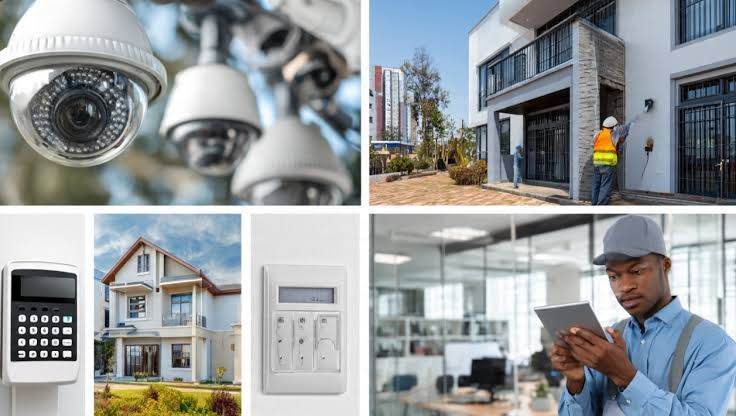
Choosing the right security systems contractor is one of the most important decisions when protecting a home, office, commercial building, warehouse, factory or institutional facility. A well-designed security system can help monitor property, control access, detect intrusions and improve the management of security incidents. However, the effectiveness of the system depends not only on the equipment purchased but also on the quality of its planning, installation, configuration and ongoing maintenance.
In Uganda, demand for modern security solutions continues to create more options for property owners. From CCTV cameras and burglar alarms to biometric access control, electric fencing, intercoms and integrated security systems, there are different technologies available for protecting buildings and managing access.
With so many products and service providers to consider, how do you identify the right security systems contractor for your project?
The cheapest quotation may not provide the most suitable solution. Similarly, an expensive installation does not automatically guarantee quality. A reliable contractor should understand your property’s security requirements, recommend appropriate equipment, provide a clear installation plan and explain how the system will operate after commissioning.
Whether you are securing a residential property in Kampala, an office in Wakiso, a warehouse in Namanve, a hotel in Entebbe or an industrial facility elsewhere in Uganda, this guide explains how to choose a suitable security systems contractor.
1. Understand Your Security Requirements Before Hiring a Contractor
Before contacting security installation companies, identify what you want your security system to achieve.
Different properties have different security needs. A residential home may require CCTV cameras, an alarm system and electric fencing, while a commercial building may need access control, visitor management, centralised monitoring and surveillance across several floors.
Start by identifying:
- The type and size of your property.
- The number of entrances and exits.
- Areas containing valuable equipment or stock.
- Locations requiring restricted access.
- Outdoor and perimeter security requirements.
- Existing security equipment.
- Power and internet availability.
- Future expansion requirements.
- Your preferred project budget.
For example, a warehouse may need cameras covering loading bays, storage sections and vehicle entrances. A school may require surveillance around selected entrances and shared areas, alongside controlled access to administrative offices and restricted facilities.
Having a clear understanding of your requirements helps you explain the project to contractors and compare their recommendations more accurately.
2. Look for Relevant Security Installation Experience
Experience is an important factor when selecting a security systems contractor. However, the relevant experience should match the type of installation you require.
A contractor experienced in installing basic residential CCTV systems may not necessarily have the technical capability to design a large integrated security system for a factory or multi-storey commercial building.
Ask about experience with the technologies and property types relevant to your project.
For example:
- CCTV camera installation.
- IP CCTV networking.
- DVR and NVR recording systems.
- Biometric access control.
- Card-based access control.
- Intruder alarm systems.
- Electric fence security systems.
- Intercom and video door phone systems.
- Perimeter intrusion detection.
- Integrated security solutions.
- Centralised security monitoring.
If you are installing security systems in a warehouse, ask whether the contractor understands large outdoor areas, loading bays, network infrastructure and industrial operating conditions.
For a multi-storey building, ask about experience with lift access, multiple entrances, floor-by-floor surveillance and centralised management.
The objective is to select a contractor whose technical capabilities match the complexity of your project.
3. Check the Range of Security Systems Offered
A suitable security contractor should be able to assess your requirements and explain which technologies are appropriate.
Security systems are not interchangeable. Each technology performs a different function, and some properties require several systems working together.
CCTV surveillance systems
CCTV cameras provide visual monitoring and recorded footage of selected areas.
A CCTV installation may include:
- Indoor and outdoor cameras.
- Dome, bullet and turret cameras.
- PTZ cameras where appropriate.
- DVR or NVR recording equipment.
- Network cabling.
- Surveillance storage.
- Remote viewing configuration.
- Video analytics where supported.
Ask whether the contractor can explain camera placement, recording requirements, night surveillance and network connectivity.
Access control systems
Access control systems manage who can enter particular doors, buildings or restricted sections.
Available options may include:
- Fingerprint readers.
- Facial recognition terminals.
- RFID card readers.
- PIN-based access.
- Electronic door locks.
- Access control panels.
- Visitor management systems.
The contractor should be able to recommend a suitable technology based on the number of users, doors, security requirements and operating procedures.
Intruder alarm systems
Burglar alarm systems detect selected security events using sensors and control equipment.
Common components include:
- Motion detectors.
- Door and window contacts.
- Glass-break detectors.
- Alarm control panels.
- Indoor and outdoor sirens.
- Communication modules.
- Backup batteries.
The contractor should explain the areas that need detection and how alarm notifications will be handled.
Electric fencing and perimeter protection
Electric fencing and perimeter detection systems provide an additional layer of protection around property boundaries.
The installation may include energisers, fence wires, insulators, supporting structures, earthing systems and monitoring equipment.
The contractor should assess the boundary layout, existing wall or fence condition and appropriate safety requirements.
Intercom systems
Intercoms allow occupants or security personnel to communicate with visitors before granting access.
Audio intercoms provide voice communication, while video door phones also allow users to see visitors.
A suitable contractor should understand how intercoms can work with compatible access control and gate systems.
4. Confirm That the Contractor Conducts a Proper Site Assessment
One of the strongest indicators of a well-planned installation is a site assessment before the final quotation.
A contractor who recommends equipment without understanding the property may overlook important security requirements.
A site assessment should consider:
Building layout: The contractor should examine entrances, exits, corridors, parking areas, restricted rooms and other important locations.
Camera positions: CCTV cameras should be positioned according to the required viewing coverage, lighting conditions and level of image detail.
Access points: Doors and gates should be assessed to determine the appropriate access readers, locks and exit arrangements.
Perimeter conditions: Boundary walls, fences, vegetation and surrounding terrain may influence the selection of outdoor security equipment.
Power supply: The installer should determine how the security equipment will receive power and whether backup arrangements are needed.
Network infrastructure: IP cameras and networked access control devices may require suitable cabling, switches and network configuration.
Existing equipment: If the property already has cameras, alarms or access control devices, the contractor should assess whether they can be retained or integrated.
A site assessment helps the contractor develop a solution based on actual property conditions rather than assumptions.
5. Evaluate the Quality of Equipment Recommended
The equipment selected has a major influence on security system performance, reliability and long-term operating costs.
A good contractor should explain the specifications of the proposed equipment and why it is suitable for the intended application.
Important CCTV equipment considerations
When evaluating CCTV cameras, consider:
- Image resolution.
- Lens and viewing angle.
- Low-light performance.
- Infrared or colour night imaging.
- Weather protection for outdoor cameras.
- Recording compatibility.
- Storage requirements.
- Network connectivity.
- Supported analytics and remote features.
For recording equipment, check the number of supported channels, camera compatibility, storage capacity and available management features.
Important access control considerations
For access control systems, examine:
- Reader technology.
- User capacity.
- Credential management.
- Electronic lock compatibility.
- Controller specifications.
- Network connectivity.
- Software functionality.
- Backup power arrangements.
- Emergency exit provisions.
Do not select equipment based only on appearance or advertised features. Ask for manufacturer names, model numbers and technical specifications.
The contractor should also explain any limitations, additional licences or recurring software charges.
6. Check Whether the Contractor Can Design Integrated Security Systems
Modern buildings may require more than one security technology.
A commercial property, for example, may need CCTV cameras, access control, burglar alarms, electric fencing, visitor management and intercom systems.
A suitable contractor should understand how these systems can operate together.
Benefits of integrated security systems
- More coordinated security monitoring.
- Better visibility of security events.
- Easier investigation of incidents.
- Centralised management of selected devices.
- Improved access administration.
- More organised security procedures.
For example, when a user presents an access card at a controlled entrance, a compatible integrated platform may associate the access event with relevant CCTV footage.
Similarly, an alarm event may trigger a camera view or notification if the equipment and software support that function.
Before selecting a contractor, ask them to explain how the proposed systems will communicate. Not all CCTV, alarm and access control equipment is automatically compatible.
7. Request a Detailed and Transparent Quotation
A professional security systems quotation should clearly explain what you are paying for.
Avoid accepting a quotation that only states a general package price without identifying the equipment and work involved.
A detailed quotation should include:
- Description of the proposed security system.
- Equipment brands and model numbers.
- Number of cameras, readers, sensors or other devices.
- Recording equipment and storage specifications.
- Cabling and installation materials.
- Installation labour.
- Power supplies and backup equipment.
- Network configuration.
- Software and licence costs.
- System programming and configuration.
- Testing and commissioning.
- User training and handover.
- Warranty terms.
- Maintenance arrangements.
- Applicable taxes and additional charges.
The quotation should also identify excluded work, such as electrical upgrades, wall repairs, trenching, internet service and major civil works.
Why should you compare quotations?
Obtaining quotations from multiple providers can help you understand available options and identify differences in equipment quality and installation scope.
However, compare like for like.
A quotation for eight basic analogue cameras should not be compared directly with one for eight advanced IP cameras without considering their different specifications.
A lower initial price may exclude recording storage, backup power or important installation accessories.
The best quotation is not necessarily the cheapest or most expensive. It is the one that provides a suitable solution with clear costs and deliverables.
8. Verify the Contractor’s Professional Credentials and Business Details
Before hiring a contractor, establish whether the business is identifiable and can be held accountable for the work.
Depending on the size and nature of your project, consider checking:
- Registered business details where applicable.
- Physical business address and contact information.
- Relevant technical qualifications.
- Manufacturer or distributor authorisations, where claimed.
- Applicable licences or regulatory approvals.
- References from previous clients.
- Written quotations and contractual terms.
- Insurance arrangements appropriate to the work.
If a contractor claims to be certified by a particular manufacturer, request evidence and verify the claim with the relevant manufacturer or authorised distributor.
Do not assume that every security installation company has the same technical qualifications or regulatory status.
For larger commercial and institutional projects, it may also be appropriate to request documentation demonstrating the contractor’s ability to manage the project safely and professionally.
9. Ask for Previous Projects and Client References
Previous projects can help you understand the contractor’s workmanship and experience.
Ask whether they can provide examples of installations similar to yours.
Useful evidence may include:
- CCTV installations in commercial buildings.
- Access control projects in offices.
- Security installations in warehouses.
- Integrated systems in hotels.
- Perimeter security installations.
- Multi-storey building security projects.
- Industrial security installations.
Where possible, request permission to speak with previous clients.
Ask those clients about:
- Quality of installation.
- Communication during the project.
- Whether the equipment met the agreed specifications.
- Whether the system operated as expected after handover.
- How faults were handled.
- Whether maintenance support was available.
- Whether additional costs arose outside the original quotation.
A portfolio should be treated as evidence to evaluate, not automatic proof of quality. Confirm that the contractor actually completed the work being presented.
10. Evaluate Installation Workmanship and Technical Standards
Even high-quality equipment can perform poorly if installed incorrectly.
Professional workmanship is essential for CCTV coverage, access control reliability, electrical safety and network performance.
CCTV installation workmanship
A properly executed CCTV installation should consider:
- Secure camera mounting.
- Suitable camera positioning.
- Protected cable routes.
- Correct power connections.
- Appropriate outdoor protection.
- Proper recorder configuration.
- Suitable recording settings.
- Secure network configuration.
- Testing of live and recorded footage.
Access control installation workmanship
An access control installation should consider:
- Correct reader positioning.
- Compatible door locks.
- Secure mounting.
- Proper controller wiring.
- Correct user permissions.
- Door status monitoring where required.
- Emergency release arrangements.
- Testing of authorised and denied access events.
Cabling and electrical work
Cabling should be selected and installed according to the equipment requirements and site conditions.
Outdoor cables may require appropriate protection against weather, physical damage and environmental exposure.
Power supplies should be correctly rated, and backup systems should be sized for the connected equipment.
A contractor should also consider the building’s electrical safety requirements rather than treating security equipment as a simple plug-and-play installation.
11. Check Cybersecurity and Data Protection Practices
Modern CCTV and access control systems often connect to computer networks, mobile applications and cloud platforms.
These connections introduce cybersecurity and privacy considerations that should be addressed during installation.
CCTV cybersecurity
Ask how the contractor will secure:
- Camera administrator accounts.
- DVR and NVR access.
- Remote viewing applications.
- Network connections.
- Firmware and software.
- Recorded footage.
- User permissions.
Good practices include using strong unique passwords, updating supported firmware, limiting administrator access and configuring secure remote connectivity.
Avoid exposing camera or recorder management interfaces directly to the internet through insecure configurations.
Access control data protection
Access control systems may store personal information, including:
- Employee names.
- Identification details.
- Access logs.
- Card credentials.
- Fingerprint templates.
- Facial recognition information.
In Uganda, organisations should consider their responsibilities under the Data Protection and Privacy Act, 2019 and applicable regulations.
Ask the contractor how access records and biometric information will be protected, who can access the system and how information is managed when employees leave the organisation.
A good security installation should protect both the physical property and the information collected by the security equipment.
12. Confirm Warranty and After-Installation Support
Security systems require ongoing attention after installation.
Cameras may need cleaning and adjustment, alarm sensors may require testing, access control readers may need configuration and recording equipment may require storage checks.
Before hiring a contractor, clarify the warranty and support arrangements.
Ask:
- What warranty applies to the equipment?
- Is installation workmanship covered?
- How are faults reported?
- What response times are offered?
- Are replacement parts included?
- Are software updates included?
- Is maintenance available under a separate agreement?
- Are emergency callouts charged separately?
Do not assume that every installation quotation includes unlimited technical support or free repairs.
The scope of after-installation services should be documented in writing.
13. Consider the Contractor’s Ability to Handle Future Expansion
Your security requirements may change as your property grows.
A business may open new offices, construct additional buildings, increase staff numbers or introduce new restricted areas.
A suitable contractor should consider future expansion when planning the initial system.
For CCTV, this may involve selecting a recorder with sufficient additional channels or planning network infrastructure that can support future cameras.
For access control, it may involve selecting controllers and management software that can accommodate additional doors and users.
For integrated systems, future expansion depends on equipment compatibility, software capacity and network design.
Planning ahead can reduce the need for expensive redesigns or complete system replacement.
14. Assess Communication and Project Management
Technical expertise is important, but effective communication also influences the success of a security installation.
The contractor should be able to explain the proposed solution in a way that you understand.
During discussions, assess whether the provider:
- Listens to your security concerns.
- Explains the proposed equipment.
- Answers technical questions clearly.
- Provides a written scope of work.
- Communicates installation timelines.
- Explains potential site challenges.
- Provides progress updates.
- Documents changes to the project.
- Conducts a proper handover.
For large installations, ask who will supervise the project and who will be responsible for technical decisions.
A clear communication process helps prevent misunderstandings about the equipment, installation scope and expected results.
15. Understand the Cost of Hiring a Security Systems Contractor in Uganda
The cost of hiring a security systems contractor in Uganda depends on the size of the property, equipment specifications, installation complexity and type of security technology.
There is no single price that applies to every property.
Factors that influence installation costs
Number of devices: More cameras, sensors, readers and access points generally increase equipment and installation costs.
Equipment specifications: Higher-resolution cameras, advanced analytics and specialised access control terminals may cost more than basic equipment.
Building layout: Multi-storey buildings, large compounds and multiple facilities may require more complex installation work.
Cabling and infrastructure: Long cable routes, concealed wiring, network switches and electrical modifications can increase the project budget.
Storage requirements: CCTV systems designed for longer recording retention may require additional hard drive capacity.
Backup power: UPS units and batteries add to the initial investment but may help keep selected security equipment operating during power interruptions.
Integration: Connecting CCTV, access control, alarms and other systems may require compatible hardware, software and configuration.
Maintenance: Ongoing inspections, repairs and replacement components should be considered when planning the total cost of ownership.
Should you choose the cheapest contractor?
Not necessarily.
A low quotation may exclude important installation materials, proper configuration, backup power, secure remote access or post-installation testing.
However, a high quotation should also be justified by the equipment specifications, workmanship and scope of service.
The best approach is to compare itemised quotations and assess the overall value of the proposed solution.
16. Warning Signs to Watch Out for When Choosing a Security Contractor
Be careful when dealing with providers who display the following warning signs.
1. They recommend equipment without assessing the property
A contractor should understand the site before recommending a final system design.
2. They refuse to provide an itemised quotation
You should be able to identify the equipment, materials, labour and other charges included in the project.
3. They cannot explain the equipment specifications
A contractor should be able to explain why particular cameras, readers, recorders or sensors are suitable.
4. They make unrealistic security guarantees
No CCTV camera, alarm or access control system can guarantee that crime will never occur.
Be cautious of promises that a system is impossible to hack or guarantees complete protection.
5. They cannot explain system compatibility
If you want CCTV and access control integrated, the contractor should explain how the devices will communicate and what functions are supported.
6. They ignore cybersecurity and privacy
Networked security systems require secure configuration, while CCTV and access control information must be handled responsibly.
7. They offer unclear warranty terms
Ask for written warranty conditions and exclusions before making payment.
8. They avoid documenting the installation scope
A written agreement helps establish what the contractor is expected to supply, install, configure and hand over.
17. Questions to Ask Before Hiring a Security Systems Contractor
Before signing an agreement, ask the contractor the following questions:
- Have you completed projects similar to mine?
- Can you assess the property before preparing the final quotation?
- Which equipment brands and models are you recommending?
- Why are these products suitable for my property?
- How many cameras or access readers will be required?
- Can the CCTV and access control systems be integrated?
- What network and power infrastructure is required?
- Does the quotation include cabling and accessories?
- Will remote viewing be configured?
- How will the system be protected against unauthorised access?
- What warranty applies to the equipment and workmanship?
- What maintenance services are available?
- Will the system be tested before handover?
- Will I receive system documentation and user training?
- Can the system be expanded in the future?
The answers can help you evaluate the contractor’s technical understanding, transparency and approach to customer support.
18. Choosing a Security Systems Contractor for Different Types of Properties
Different buildings require different technical capabilities. The contractor should understand the property’s activities and operational requirements.
Residential homes
For homes, consider a contractor experienced in CCTV cameras, burglar alarms, access control, intercoms and perimeter security.
The installation should protect important entrances and outdoor areas without unnecessarily compromising household privacy.
Offices and commercial buildings
Office installations may require CCTV, employee access control, visitor management and restricted access to sensitive departments.
For multi-storey buildings, ask about centralised monitoring and coordinated access management.
Warehouses and factories
Industrial and warehouse projects often require experience with large outdoor areas, vehicle access, loading bays, perimeter detection and network infrastructure.
Ask how the contractor will address environmental conditions and the challenges of monitoring large facilities.
Hotels and hospitality facilities
Hotels require a balance between security, guest privacy and convenient access.
A contractor should understand surveillance in appropriate shared areas, staff-only access control and the protection of private guest spaces.
Schools and universities
Educational institutions may need CCTV monitoring, visitor management and access control for administrative offices, laboratories and restricted areas.
The contractor should also consider safe emergency access and privacy requirements.
Hospitals and healthcare facilities
Healthcare facilities may require controlled access to medicine stores, records rooms, equipment areas and selected departments.
Patient privacy and the protection of sensitive personal information are especially important.
19. Why Choose Daltrevco for Security System Planning?
Choosing a security systems contractor is about finding a provider that understands your property’s requirements and can help establish a suitable solution.
Daltrevco provides a point of contact for property owners, businesses, developers and institutions exploring security and building-related solutions in Uganda.
When discussing your project with Daltrevco, explain the type of property, the areas requiring protection, existing equipment and the security technologies you are considering.
Important project details may include:
- Property type and approximate size.
- Number of entrances and controlled doors.
- CCTV coverage requirements.
- Whether you need biometric or card-based access.
- Perimeter security requirements.
- Existing network and power infrastructure.
- Integration with existing systems.
- Your preferred project budget.
This information can help clarify the scope of work and identify appropriate options for consideration.
Whether you are planning security for a residential property, office, hotel, warehouse, factory or commercial development, contact Daltrevco to discuss your requirements and request information about suitable security solutions.
Visit https://www.daltrevco.com/ to learn more about Daltrevco and discuss your security system requirements.
20. Frequently Asked Questions About Choosing a Security Systems Contractor in Uganda
1. How do I choose the best security systems contractor in Uganda?
Evaluate the contractor’s relevant experience, technical capabilities, equipment specifications, site assessment process, quotation transparency, installation workmanship, cybersecurity practices, warranty terms and maintenance arrangements.
2. What does a security systems contractor do?
A security systems contractor assesses security requirements, recommends suitable equipment, plans the system, installs and configures devices, tests performance and may provide maintenance services.
3. How much does it cost to hire a security systems contractor in Uganda?
The cost depends on the equipment, property size, installation complexity and project scope. Request an itemised quotation following a site assessment for an accurate estimate.
4. Should I hire a specialist CCTV installer or an integrated security contractor?
It depends on your project. A specialist CCTV installer may be suitable for a simple camera installation. A contractor with integrated security capabilities may be more appropriate when you need CCTV, access control, alarms and perimeter protection working together.
5. What qualifications should a security systems contractor have?
Look for relevant technical training, demonstrated installation experience, appropriate business and regulatory documentation, and manufacturer authorisations where claimed. Requirements may vary depending on the work being undertaken.
6. Why is a site assessment important before security system installation?
A site assessment helps identify vulnerable areas, camera positions, access points, power requirements, network infrastructure and suitable equipment. It also helps produce a more accurate quotation.
7. What should be included in a security system installation quotation?
A quotation should identify equipment models, quantities, materials, labour, configuration, testing, commissioning, warranty conditions, exclusions and any recurring charges.
8. Can one contractor install CCTV and access control systems?
Yes. A contractor with the appropriate technical capabilities can install both technologies. If integration is required, the contractor should confirm that the selected equipment supports the intended functions.
9. How do I know whether a CCTV installation company is reliable?
Review its business details, relevant project experience, equipment specifications, client references, quotation quality, workmanship approach and after-installation arrangements.
10. Should I check previous projects before hiring a contractor?
Yes. Previous projects can help you evaluate whether the contractor has experience with similar equipment and property types. Where possible, request client references and verify the work.
11. Does a security systems contractor provide maintenance?
Some contractors offer maintenance and inspection services, while others focus mainly on installation. Confirm the available services, charges, response times and contract conditions.
12. Can a contractor upgrade an existing CCTV system?
Yes, depending on the existing equipment’s condition, compatibility and available capacity. An assessment can establish whether the system can be upgraded or needs partial replacement.
13. What is the difference between an installer and a security systems contractor?
An installer may focus on fitting and connecting specific equipment. A security systems contractor may also handle site assessment, system design, equipment selection, integration, commissioning and maintenance, depending on the scope of services offered.
14. Can CCTV and access control be connected to a central monitoring system?
Yes, compatible equipment can be connected to a central monitoring platform. The supported features depend on the devices, software and network infrastructure.
15. What security systems are suitable for commercial buildings in Uganda?
Commercial buildings may use CCTV, biometric or card-based access control, intruder alarms, visitor management, intercoms and perimeter protection. The appropriate combination depends on the building’s security risks and operations.
16. How long does a security system installation project take?
A small installation may take a day or less, while large commercial projects may take several days or longer. The schedule depends on equipment quantities, cable routes, building complexity and commissioning requirements.
17. Should I choose wired or wireless security systems?
Neither option is automatically best for every property. Wired systems can be suitable for permanent installations with accessible cable routes, while wireless systems may be useful where cabling is difficult. Signal coverage, power, security and maintenance should be considered.
18. How important is cybersecurity when choosing a CCTV installer?
It is very important. Network-connected cameras and recorders should be configured with secure passwords, appropriate access restrictions, supported firmware updates and secure remote connectivity.
19. What should happen before a security system is handed over?
The contractor should test cameras, recording, access credentials, alarms and supported integrations. The client should receive relevant documentation, user guidance and details of warranty and maintenance arrangements.
20. Can I expand my security system in the future?
Many systems can be expanded, but this depends on recorder capacity, access control controllers, network infrastructure, software licences and equipment compatibility. Future expansion should be discussed during the initial design stage.
Conclusion: Choose a Security Systems Contractor Based on Quality, Experience and Value
Choosing the best security systems contractor in Uganda requires more than comparing installation prices. It involves assessing technical experience, equipment quality, system design, installation workmanship, cybersecurity, customer support and the ability to meet your property’s security requirements.
A reliable contractor should begin by understanding the property, identify the areas that need protection and recommend suitable technologies based on the actual security objectives.
Before making your decision, request a site assessment, compare itemised quotations, verify relevant experience and clarify warranty and maintenance arrangements.
Whether you need CCTV cameras for a home, biometric access control for an office, burglar alarms for a commercial building or an integrated security system for an industrial facility, careful contractor selection can help you make a better long-term investment.
Looking for security system solutions for your property in Uganda? Contact Daltrevco through https://www.daltrevco.com/ to discuss your project requirements and explore suitable options.

