
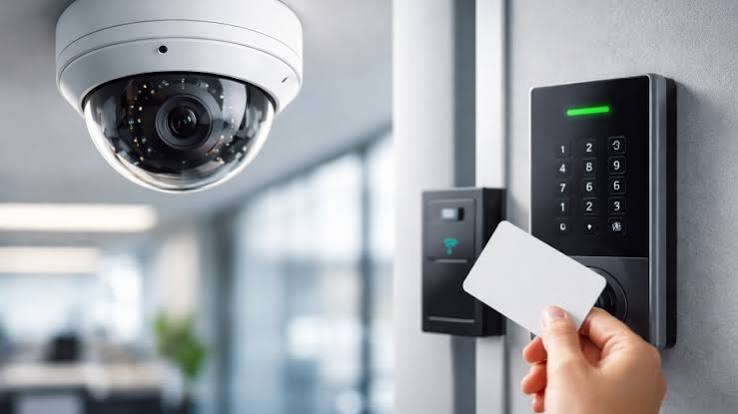
Security is a major concern for homeowners, business owners, property developers, institutions and industrial facility managers in Uganda. As residential and commercial properties become more complex, protecting buildings, employees, customers, equipment and valuable assets requires more than traditional locks and security guards.
Two of the most effective technologies for modern property protection are Closed-Circuit Television (CCTV) surveillance systems and electronic access control systems.
CCTV cameras help property owners monitor activities, record security events and maintain visibility across important areas. Access control systems regulate who can enter a building, room or restricted section, helping prevent unauthorised access.
However, purchasing quality security equipment is only one part of establishing effective protection. The way the equipment is selected, positioned, installed, configured and maintained has a significant influence on its performance.
Professional CCTV and access control installation helps ensure that security equipment is appropriate for the property, properly connected and configured to meet specific security requirements.
For businesses in Kampala, residential developments in Wakiso, warehouses in industrial areas, hotels, schools, hospitals and factories across Uganda, professionally planned security systems can improve monitoring, access management and operational efficiency.
This guide explores the major benefits of professional CCTV and access control installation, explains how the two technologies work together and highlights what property owners should consider when selecting a security installation provider.
1. What Is Professional CCTV and Access Control Installation?
Professional CCTV and access control installation involves assessing a property’s security requirements, selecting suitable equipment, designing the system layout, installing the devices and configuring them for reliable operation.
Although CCTV and access control serve different purposes, they complement each other.
What is professional CCTV installation?
CCTV installation involves setting up surveillance cameras and associated recording equipment to monitor selected areas within or around a property.
A professionally installed CCTV system may include:
- Indoor CCTV cameras.
- Outdoor surveillance cameras.
- Dome, bullet or turret cameras.
- PTZ cameras where appropriate.
- Digital Video Recorders (DVRs).
- Network Video Recorders (NVRs).
- Surveillance hard drives.
- Network switches and cabling.
- Power supplies and backup equipment.
- Remote viewing configuration.
- Monitoring displays and management software.
The system is designed around the areas that require surveillance, such as entrances, reception areas, corridors, parking spaces, loading bays, storage rooms and perimeter boundaries.
What is professional access control installation?
Access control installation involves setting up electronic systems that determine who can enter particular buildings, doors or restricted areas.
Depending on the property, an installation may include:
- Fingerprint access readers.
- Facial recognition terminals.
- RFID card readers.
- PIN-based access devices.
- Electronic door locks.
- Magnetic locks or electric strikes.
- Access control panels.
- Exit buttons and door sensors.
- Access management software.
- Power supplies and backup batteries.
These systems allow authorised individuals to enter designated areas while restricting access to unauthorised users.
Why install CCTV and access control together?
CCTV provides visual monitoring, while access control manages entry permissions.
When compatible systems are integrated, an access event can be associated with relevant video footage. For example, a security manager may review camera footage around the time an employee used a controlled entrance.
This creates a more coordinated approach to building security than relying on separate, disconnected devices.
2. Improved Protection Against Unauthorised Access
One of the main benefits of professional CCTV and access control installation is improved management of unauthorised entry.
Traditional locks provide basic physical protection, but they may not offer detailed records of who enters a building or when access takes place.
Electronic access control introduces additional layers of protection.
For example, a business can restrict access to:
- Management offices.
- Server rooms.
- Financial departments.
- Stores and inventory rooms.
- Production facilities.
- Laboratories.
- Staff-only sections.
- Restricted records storage areas.
CCTV cameras can monitor these entrances and provide recorded footage when an incident needs to be reviewed.
Professional installation helps ensure that readers, locks, door sensors and cameras are positioned correctly and configured according to the property’s access requirements.
For organisations handling valuable equipment, confidential information or sensitive materials, controlled entry can be an important part of a wider security strategy.
3. Continuous Surveillance and Better Property Monitoring
CCTV systems allow security personnel and authorised users to monitor selected areas throughout the day and night.
Without surveillance cameras, property owners may have limited visibility of what happens in different parts of their buildings, especially outside normal working hours.
Professionally installed CCTV cameras can monitor:
- Main entrances and exits.
- Reception areas.
- Parking facilities.
- Corridors and staircases.
- Warehouse storage areas.
- Loading and unloading points.
- External boundaries.
- Production areas where monitoring is appropriate.
Correct camera placement is essential. Cameras should provide useful views of the areas being protected while minimising blind spots.
Professional installation also considers lighting conditions, camera resolution, viewing angles, mounting height and environmental exposure.
For properties in Uganda, outdoor cameras should be selected and installed with consideration for rain, dust, sunlight, humidity and other site conditions.
4. Improved Employee and Visitor Access Management
Businesses and institutions regularly receive employees, contractors, suppliers, customers and visitors.
Managing these different groups through manual methods can become difficult, particularly in large organisations.
Access control systems help simplify entry management by allowing administrators to assign different permissions to different users.
For example:
- Employees may access approved working areas.
- Management may enter additional restricted offices.
- Visitors may be authorised for specific locations.
- Contractors may receive temporary access.
- Security personnel may manage designated entrances.
- Technical staff may have controlled access to equipment rooms.
Depending on the system, administrators can also activate, modify or revoke credentials when employees leave an organisation or change responsibilities.
CCTV provides additional visibility at entry points and common areas, supporting the review of security incidents.
This combination can be useful in offices, hospitals, schools, hotels, factories and commercial buildings.
5. Better Security Management Through Recorded Evidence
CCTV cameras record visual information that may help organisations investigate incidents and understand what happened at a particular time.
Recorded footage can assist with reviewing:
- Suspected theft.
- Unauthorised entry.
- Property damage.
- Disputes involving access to restricted areas.
- Suspicious activity.
- Security procedure violations.
- Incidents involving vehicles or deliveries.
Access control systems may also maintain electronic records showing credential activity, such as successful or denied access attempts.
When compatible CCTV and access control systems are integrated, security personnel may be able to associate access events with relevant video footage.
This can make investigations more organised and reduce the time required to locate relevant information.
However, recorded footage and access logs should be protected against unauthorised access, alteration or disclosure. They should also be retained and used in accordance with applicable privacy and data protection requirements.
6. Reduced Dependence on Manual Security Procedures
Security guards and reception personnel remain important in many properties. However, relying entirely on manual entry checks can create administrative challenges.
Professional access control installation introduces electronic processes that help manage routine entry activities.
Depending on the system, authorised users may gain access through:
- Fingerprint verification.
- Facial recognition.
- RFID cards or key fobs.
- PIN codes.
- Mobile credentials.
- Other supported identification methods.
This can reduce the need for staff to manually check every employee credential at every controlled entrance.
CCTV can provide additional monitoring of entrances, corridors and other important areas.
These technologies do not eliminate the need for security personnel. Instead, they can support security teams by improving visibility, managing access permissions and making information easier to review.
7. Improved Protection of Sensitive and Restricted Areas
Some areas within a property require stronger access restrictions than others.
For example, an office building may have public reception areas, staff workspaces, management offices and a restricted server room.
Allowing every person to enter all these areas can expose the organisation to unnecessary security risks.
Access control allows property managers to establish different security levels based on users’ responsibilities.
A professionally designed installation can help implement these restrictions through appropriate readers, locks, controllers and management software.
CCTV cameras can monitor selected restricted entrances, helping security teams review activity when necessary.
This is particularly useful for:
- Financial institutions.
- Hospitals and medical facilities.
- Government and administrative offices.
- Schools and universities.
- Manufacturing facilities.
- Data centres and server rooms.
- Warehouses and distribution centres.
The installation must also preserve safe emergency exits and comply with relevant building and fire safety requirements.
8. Remote CCTV Monitoring and Access Management
Modern CCTV and access control systems may support remote management through computers, smartphones and other authorised devices.
This allows property owners and security managers to access selected security functions without always being physically present at the premises.
Depending on the equipment and software, remote capabilities may include:
- Viewing live CCTV footage.
- Reviewing recorded video.
- Receiving selected security notifications.
- Checking access events.
- Managing user credentials.
- Modifying access permissions.
- Reviewing system status.
For example, a business owner with several premises may be able to review camera footage from different locations through a supported management platform.
Remote access must be configured securely. Strong passwords, restricted user permissions, firmware updates and multi-factor authentication where available help reduce the risk of unauthorised access.
Remote functions generally require suitable internet or network connectivity. Local CCTV recording and access control functions may continue during an internet outage if the equipment is configured and powered appropriately.
9. Better Integration with Other Security Systems
Professional installation makes it easier to plan CCTV and access control as part of a wider security arrangement.
Depending on the equipment and compatibility, the systems may be integrated with:
- Intruder alarm systems.
- Electric fencing.
- Perimeter intrusion detection.
- Intercom systems.
- Visitor management platforms.
- Vehicle access control.
- Centralised monitoring systems.
- Building management platforms.
For example, a commercial facility may use access control to regulate entry through the main gate, CCTV to monitor vehicles and an alarm system to detect unauthorised entry into restricted areas.
An integrated system can help security personnel understand events across different parts of the property.
However, not all products communicate automatically. Integration must be confirmed through compatible hardware, software, interfaces and supported functions before equipment is purchased.
10. Improved Operational Efficiency in Commercial Buildings
Professional CCTV and access control installation can support more organised building operations.
In a commercial building, access control may help administrators manage employee entry, restrict access to selected departments and control entry into shared facilities.
CCTV can provide visibility across reception areas, parking facilities, corridors and other common spaces.
These functions may support:
- Better visitor management.
- More organised employee entry.
- Controlled access to equipment rooms.
- Improved monitoring of deliveries.
- Easier investigation of reported incidents.
- Better management of multiple entrances.
- More structured security procedures.
For property managers responsible for large buildings, these capabilities can make security operations easier to coordinate.
11. Reduced Security System Installation Errors
One of the most important benefits of professional installation is the reduction of errors that can affect system performance.
Incorrect installation can cause poor camera coverage, unreliable access readers, failed network connections and difficulties retrieving recorded footage.
Common installation mistakes include:
- Positioning cameras where important areas remain hidden.
- Installing outdoor cameras without suitable environmental protection.
- Using unsuitable cabling.
- Failing to configure recording schedules correctly.
- Installing access readers without considering the door hardware.
- Using incompatible CCTV and access control equipment.
- Neglecting power backup.
- Failing to secure networked devices.
- Leaving default passwords unchanged.
- Not testing the system after installation.
Professional planning helps identify these issues before they become expensive problems.
A proper handover should include testing, configuration checks and guidance on how authorised users operate the system.
12. Better CCTV Camera Placement and Coverage
A CCTV camera is only useful when it captures the information needed for the security purpose.
Installing cameras without a clear coverage plan can leave important areas unmonitored.
Professional installation considers the purpose of each camera before selecting its position.
Important areas for CCTV camera installation
Main entrances: Cameras can monitor people entering and leaving the building.
Reception areas: Surveillance can provide visibility of visitor activity and common entry points.
Parking areas: Cameras can monitor selected vehicle movement and parking locations.
Corridors and staircases: Cameras can cover important internal movement routes where monitoring is appropriate.
Warehouses: Cameras can monitor loading bays, storage sections and selected operational areas.
External boundaries: Outdoor cameras can help monitor selected perimeter locations.
Restricted areas: Cameras may be installed near server rooms, stores and other controlled entrances.
Why camera positioning matters
The correct position depends on:
- Camera resolution.
- Lens selection.
- Lighting conditions.
- Viewing angle.
- Mounting height.
- Distance from the subject.
- Required level of identification detail.
- Environmental conditions.
A camera that provides a wide overview may not capture enough facial detail for identification at a distant entrance.
Professional camera planning helps balance general coverage with the need for useful detail.
13. Improved Access Control Accuracy and User Management
Access control systems allow organisations to manage entry permissions more systematically than traditional physical keys alone.
A business can assign different credentials to employees, contractors and authorised visitors.
When a user leaves the organisation, an administrator may revoke or disable their credential without having to replace every physical lock.
This can be particularly useful in organisations with frequent staff changes or multiple controlled entrances.
Common access control technologies
Fingerprint access control: Uses fingerprint characteristics to verify authorised users.
Facial recognition: Uses facial matching technology to verify a person against enrolled records. Performance depends on image quality, lighting, camera position and the system’s algorithms.
RFID card access: Uses compatible cards or key fobs to grant access.
PIN-based access: Requires a user to enter an authorised code.
Mobile access credentials: Uses supported mobile devices or applications to authenticate users.
Each technology has different security, convenience, cost and privacy considerations.
Biometric information requires particular care because it can be sensitive personal data. Organisations should assess whether biometric processing is necessary and consider suitable alternatives where appropriate.
14. Improved Security for Different Types of Properties
Professional CCTV and access control installation can be adapted to different property types.
Residential properties
Homes may benefit from CCTV cameras at entrances, gates, parking areas and selected outdoor locations.
Access control can be used for gated entrances, shared residential facilities and selected doors.
Offices
Office installations may include cameras at entrances and common areas, card or biometric access for staff, visitor management and controlled access to restricted departments.
Schools and universities
Educational institutions may use CCTV to monitor selected entrances, corridors, administrative areas and shared spaces.
Access control can help regulate entry to staff offices, laboratories, stores and other restricted areas while maintaining appropriate emergency access.
Hospitals and healthcare facilities
Hospitals may use CCTV in appropriate public and operational areas and access control for restricted departments, medicine storage and equipment rooms.
Patient privacy must be carefully considered when selecting camera locations and determining how footage is accessed.
Hotels
Hotels may use CCTV in appropriate common areas and access control for staff-only sections, administrative offices and selected operational areas.
Guest rooms and private spaces require particular privacy protection.
Factories and industrial facilities
Factories may require surveillance of entrances, loading bays, storage sections and selected production areas.
Access control can restrict entry to hazardous or sensitive areas to authorised personnel.
Warehouses and distribution centres
Warehouses can benefit from cameras monitoring loading bays, vehicle entrances and storage areas, alongside access control for staff-only sections and inventory rooms.
15. Long-Term Cost Benefits of Professional Installation
Although professional installation may involve a higher initial cost than purchasing equipment and attempting to install it without specialist support, proper planning can help avoid unnecessary expenses over time.
Reduced reinstallation costs
Correct camera positioning, cabling and system configuration can reduce the likelihood of expensive installation corrections.
Better equipment selection
A suitable system design helps prevent unnecessary purchases and reduces the risk of installing equipment that does not meet the property’s requirements.
Easier system expansion
Planning for future growth can make it easier to add cameras, readers or access points without replacing the entire installation.
Reduced downtime
Testing and commissioning can help identify faults before the system is handed over for normal operation.
More organised maintenance
A properly documented installation makes it easier to identify equipment, connections and system settings during future servicing.
Professional installation does not eliminate every future repair or replacement expense, but it can help reduce avoidable problems.
16. Why Professional Installation Is Better Than DIY Installation
Some property owners consider installing CCTV cameras or access control equipment themselves to reduce initial expenses.
DIY installation may be suitable for certain simple, standalone devices. However, more complex systems require careful planning and technical configuration.
| Professional installation | DIY installation |
|---|---|
| Begins with an assessment of security requirements | May begin with equipment purchased without a full assessment |
| Uses planned camera positions and coverage objectives | Camera placement may be based on convenience |
| Considers network and power requirements | Network and power issues may be overlooked |
| Checks equipment compatibility | Compatibility may not be confirmed before purchase |
| Includes system configuration and testing | Configuration may be incomplete |
| Can include documentation and handover | Documentation may be limited |
| Can consider future expansion | Expansion may require additional redesign |
| Provides a clearer basis for maintenance | Troubleshooting may be more difficult |
For larger commercial buildings, warehouses, schools, factories and integrated installations, professional planning is particularly important.
17. Important Factors to Consider Before Hiring a CCTV and Access Control Installer in Uganda
Selecting an appropriate installation provider is an important part of establishing a reliable security system.
Before making a decision, consider the following factors.
1. Experience with the required system
Ask whether the provider has relevant experience with the type of installation you need, such as IP CCTV, biometric access control, multi-door systems or integrated security.
2. Site assessment
A suitable provider should understand the property’s layout and security requirements before recommending equipment.
3. Equipment specifications
Request the manufacturer, model and technical specifications of the proposed cameras, recorders, readers and controllers.
4. Installation scope
Confirm whether the quotation includes equipment, cabling, accessories, configuration, testing and commissioning.
5. System compatibility
If CCTV and access control will be integrated, confirm that the selected products support the intended functions.
6. Data protection and cybersecurity
Ask how camera footage, access records and user information will be protected.
7. Maintenance arrangements
Clarify whether inspections, repairs, software updates and replacement parts are available under a separate agreement or included in the quoted service.
8. Warranty terms
Check the equipment warranty, installation workmanship terms, exclusions and procedures for reporting faults.
9. Documentation and training
A proper handover should explain system operation, user access, basic troubleshooting and relevant administrative responsibilities.
10. Cost transparency
Request an itemised quotation and compare providers using equivalent equipment and installation requirements.
18. Security and Privacy Considerations When Installing CCTV and Access Control
Installing CCTV cameras and access control systems involves collecting and managing information about people.
CCTV footage may capture employees, customers, visitors, contractors and members of the public. Access control systems may store names, identification details, access logs, card credentials and biometric information.
In Uganda, organisations should consider the Data Protection and Privacy Act, 2019 and applicable regulations when collecting, using, storing and sharing personal data.
Important considerations include:
- Informing people where CCTV monitoring is taking place through appropriate notices.
- Avoiding unnecessary surveillance of private areas.
- Restricting access to recorded footage.
- Using appropriate retention periods.
- Protecting video recordings and access logs against unauthorised disclosure.
- Limiting administrator permissions.
- Securing network-connected devices.
- Considering whether biometric identification is necessary.
- Providing appropriate safeguards for personal information.
Camera placement should be proportionate to the security purpose. Areas such as toilets, changing rooms and other private spaces should not be treated as ordinary surveillance locations.
A security installation should improve protection without unnecessarily compromising people’s privacy.
19. Why Choose Daltrevco for Security System Planning?
Selecting CCTV cameras and access control equipment is only one part of building a suitable security solution. The equipment must also match the property’s layout, security objectives and operational requirements.
Daltrevco provides a point of contact for property owners, businesses, developers and organisations exploring security and building-related solutions in Uganda.
When discussing a CCTV or access control project, it is useful to provide information about:
- The type of property.
- The location and size of the building.
- The number of entrances requiring protection.
- Areas that need CCTV coverage.
- Whether biometric, card-based or other access control is required.
- Existing security equipment.
- Any planned future expansion.
- Your preferred project budget.
This information helps establish the project scope and identify suitable options for consideration.
Whether you are planning security for a home, office, school, hotel, warehouse, factory or commercial development, contact Daltrevco to discuss your requirements and request information about an appropriate solution.
Visit https://www.daltrevco.com/ to learn more and discuss your security system requirements.
20. Frequently Asked Questions About Professional CCTV and Access Control Installation
1. What are the benefits of professional CCTV installation?
Professional CCTV installation helps ensure cameras are correctly positioned, connected and configured. It can improve surveillance coverage, recording reliability, image quality and the ability to review security events.
2. Why should I install CCTV and access control together?
CCTV monitors activities, while access control regulates entry. When compatible systems are integrated, security personnel can associate selected access events with relevant video footage, improving incident review and building security management.
3. How much does professional CCTV installation cost in Uganda?
The cost depends on the number of cameras, camera specifications, recorder, storage, cabling and installation complexity. A site assessment and itemised quotation provide a more reliable estimate than a general package price.
4. Is professional CCTV installation better than DIY installation?
Professional installation is generally more suitable for complex systems because it considers camera coverage, cabling, power, storage, network security and system configuration. DIY installation may be suitable for some simple standalone devices.
5. What types of CCTV cameras are suitable for commercial buildings?
Suitable options may include dome, bullet, turret and PTZ cameras. The best choice depends on the installation location, viewing distance, lighting, coverage requirements and desired image detail.
6. What is the difference between CCTV and access control?
CCTV is used for visual surveillance and video recording. Access control manages who is permitted to enter specific doors, buildings or restricted areas.
7. Can CCTV cameras be connected to access control systems?
Yes, compatible systems can be integrated. Depending on the equipment, access events may be associated with video footage, camera views or notifications.
8. Can I monitor my CCTV cameras remotely?
Many modern CCTV systems support remote viewing through compatible mobile applications or computer software. Remote access generally requires suitable network connectivity and secure configuration.
9. Can access control systems use fingerprints?
Yes. Fingerprint access control systems use biometric verification to identify authorised users. Their performance depends on reader quality, enrolment, environmental conditions and configuration.
10. Are facial recognition access control systems reliable?
They can be useful when properly selected and configured, but performance varies with lighting, camera position, image quality, algorithms and user conditions. Organisations should also consider biometric privacy requirements and alternative access methods.
11. Can access control systems record employee entry and exit times?
Some access control platforms maintain timestamped access records and may integrate with time and attendance software. The exact reporting features depend on the system.
12. Do CCTV cameras work without internet?
Cameras connected to a local DVR or NVR can continue recording without internet if the system has power and functional storage. Remote viewing and cloud services may become unavailable during an internet outage.
13. Do access control systems work during power outages?
Some systems have backup batteries or UPS arrangements. Their ability to continue operating depends on the backup design, equipment load and configuration.
14. Can I install CCTV cameras in an existing office building?
Yes. CCTV systems can be installed in existing buildings after assessing camera positions, cable routes, mounting requirements, power and network infrastructure.
15. Can CCTV cameras monitor parking areas?
Yes. Suitable outdoor cameras can monitor parking areas, vehicle entrances and selected access routes. Camera selection and positioning should account for lighting, distance and the level of detail required.
16. How many CCTV cameras does a commercial building need?
There is no universal number. The required quantity depends on the building layout, entrances, security risks, viewing objectives and camera specifications. A coverage assessment helps determine the appropriate number.
17. Does professional installation include system maintenance?
Not automatically. Maintenance may be provided under a separate service agreement. Confirm the scope, inspection schedule, response times and costs before accepting an installation quotation.
18. Are CCTV recordings protected by Ugandan data protection laws?
CCTV footage may constitute personal data when individuals can be identified. Organisations should consider the Data Protection and Privacy Act, 2019 and applicable regulations when collecting, storing and using recordings.
19. Can CCTV and access control be integrated with burglar alarms?
Yes, where compatible equipment and software support the required functions. Integration may allow security personnel to review video associated with selected alarm events or access activity.
20. How do I choose a professional CCTV and access control installation company in Uganda?
Consider relevant installation experience, equipment specifications, site assessment, quotation transparency, system compatibility, cybersecurity, privacy, warranty terms, maintenance arrangements and documentation.
Conclusion
Professional CCTV and access control installation plays an important role in improving security for homes, offices, schools, hotels, hospitals, warehouses, factories and commercial buildings in Uganda.
CCTV cameras provide visibility and recorded evidence, while access control systems help regulate entry and protect restricted areas. When properly designed and integrated, the two technologies can support better security management, more organised operations and improved monitoring.
Professional installation also helps reduce common equipment, cabling, positioning and configuration mistakes that may affect system performance.
Before investing in security equipment, assess your property’s risks, identify the areas that require protection and select technologies that match your operational requirements.
If you are planning to install CCTV cameras or access control systems in Uganda, contact Daltrevco through https://www.daltrevco.com/ to discuss your property requirements and explore suitable security solutions.

