Concrete drainage channels are essential components of effective drainage systems in residential, commercial, industrial and infrastructure development projects. They help collect, control and direct rainwater and surface runoff away from buildings, roads, parking areas, walkways and other paved surfaces. When properly designed and installed, concrete drainage channels prevent waterlogging, reduce soil erosion, protect foundations and minimise damage to roads and other structures.
In Uganda, effective stormwater management is particularly important because seasonal heavy rainfall can overwhelm poorly designed drainage systems. Properties without adequate drainage may experience flooding, standing water, damaged pavements, foundation problems and erosion around buildings.
Whether you are constructing a residential property, developing a commercial complex, building an industrial facility or undertaking road construction, choosing the right concrete drainage channels is an important part of achieving a durable and reliable drainage system.
This guide explores the different types of concrete drainage channels, their applications, advantages, installation procedures, maintenance requirements and important considerations when selecting drainage solutions for your project in Uganda.
What Are Concrete Drainage Channels?
Concrete drainage channels are specially constructed or precast concrete structures designed to collect and transport excess water from one location to another. They form part of surface water drainage systems and are commonly installed along roads, driveways, building foundations, parking areas, walkways and landscaped spaces.
These channels provide controlled pathways through which rainwater and other surface runoff can flow towards designated drainage outlets, culverts, stormwater drains or suitable discharge points.
Concrete drainage channels can be manufactured in different shapes, sizes and configurations depending on the expected water volume, drainage requirements, site conditions and intended application.
Common designs include:
- U-shaped concrete drainage channels.
- V-shaped concrete drainage channels.
- Rectangular concrete drainage channels.
- Trapezoidal concrete drainage channels.
- Precast concrete drainage channels.
- Cast-in-situ concrete drainage channels.
- Covered concrete drainage channels.
- Reinforced concrete drainage channels.
The appropriate design depends on the drainage capacity required, available space, ground conditions, traffic loading and the overall drainage layout.
Importance of Concrete Drainage Channels in Construction
Proper drainage is a fundamental requirement in successful building and infrastructure development. Without adequate water management, rainwater can accumulate around structures, weaken foundations, damage paved surfaces and create unsafe conditions.
Concrete drainage channels provide several important benefits.
1. Preventing Flooding and Waterlogging
One of the main functions of concrete drainage channels is to collect and redirect excess rainwater. Properly designed channels help prevent water from accumulating in compounds, roads, parking areas and other developed spaces.
This is especially important in areas that experience heavy rainfall or have limited natural drainage.
2. Protecting Building Foundations
Water collecting around building foundations can gradually weaken surrounding soils and contribute to dampness, erosion and structural problems.
Concrete drainage channels help direct surface runoff away from buildings, reducing prolonged water accumulation around foundations.
3. Preventing Soil Erosion
Uncontrolled surface runoff can wash away soil, damage landscaping and undermine paved areas. Concrete drainage channels provide defined routes for water movement, helping minimise erosion.
4. Protecting Roads and Pavements
Poor drainage is a major contributor to road deterioration. Water can penetrate pavement layers, weaken supporting materials and contribute to potholes, cracking and surface failure.
Roadside concrete drainage channels help remove stormwater from road surfaces and protect surrounding infrastructure.
5. Improving Property Safety and Accessibility
Standing water can make compounds, walkways, driveways and parking areas slippery and difficult to use. Effective drainage improves accessibility and reduces water-related hazards.
6. Supporting Long-Term Infrastructure Durability
When properly designed, constructed and maintained, concrete drainage channels provide a durable solution for managing surface water. They help protect buildings, roads, paved areas and other infrastructure against water damage.
Types of Concrete Drainage Channels
Concrete drainage channels are available in several designs. Understanding their differences helps property owners, engineers and contractors select suitable drainage systems for specific projects.
1. U-Shaped Concrete Drainage Channels
U-shaped concrete drainage channels have a rounded or curved bottom with vertical or slightly inclined sides. They are widely used for collecting and conveying stormwater in residential, commercial and infrastructure projects.
Their shape allows water to flow through a defined channel while providing relatively smooth internal surfaces.
Common applications include:
- Residential property drainage.
- Commercial building compounds.
- Roadside stormwater drainage.
- Industrial premises.
- Estate and institutional developments.
- Parking areas and paved compounds.
U-shaped channels are available in different dimensions depending on the required water flow and drainage capacity.
2. V-Shaped Concrete Drainage Channels
V-shaped concrete drainage channels have sloping sides that meet at a central bottom point. They are commonly used in roadside drainage, open stormwater systems and areas where controlled surface runoff is required.
Their sloping sides help direct water towards the centre of the channel.
Common applications include:
- Roadside drainage systems.
- Agricultural access roads.
- Estate roads.
- Open surface drainage.
- Landscaped areas.
- Stormwater management projects.
V-shaped channels are particularly useful where the drainage design requires an open channel with sloping sides.
3. Rectangular Concrete Drainage Channels
Rectangular concrete drainage channels have flat bottoms and vertical sides. They are suitable for projects requiring defined channel dimensions, predictable cross-sectional geometry and efficient use of available space.
They can be constructed as open drains or incorporated into covered drainage systems.
Common applications include:
- Commercial developments.
- Industrial facilities.
- Urban drainage infrastructure.
- Large residential compounds.
- Road construction projects.
- Institutional developments.
Depending on their dimensions and structural design, rectangular channels can accommodate relatively substantial runoff volumes.
4. Trapezoidal Concrete Drainage Channels
Trapezoidal concrete drainage channels have a wider top opening and a narrower bottom. Their sloping sides provide a channel configuration commonly used for managing surface runoff over larger areas.
They are suitable for drainage projects where channel geometry, available land and expected water flow make this design appropriate.
Common applications include:
- Agricultural developments.
- Large construction sites.
- Estate developments.
- Roadside stormwater drainage.
- Industrial properties.
- Large open drainage systems.
5. Precast Concrete Drainage Channels
Precast concrete drainage channels are manufactured in a controlled production environment and transported to the construction site for installation.
They are available in different shapes, dimensions and load-bearing configurations.
Advantages of precast concrete drainage channels include:
- Faster installation compared with constructing every section on-site.
- Consistent manufacturing dimensions.
- Controlled concrete production and curing.
- Reduced on-site formwork requirements.
- Easier replacement of individual damaged sections.
- Better construction planning and quality control.
Precast drainage channels are suitable for residential, commercial, industrial and infrastructure developments where standardised drainage components are appropriate.
6. Cast-in-Situ Concrete Drainage Channels
Cast-in-situ concrete drainage channels are constructed directly at the project location using formwork, reinforcement where required, concrete placement and appropriate finishing.
They are useful where drainage systems require customised dimensions, special layouts or integration with existing structures.
Common applications include:
- Large commercial developments.
- Road construction.
- Industrial drainage systems.
- Complex building compounds.
- Specialised stormwater infrastructure.
- Sites with unusual ground conditions.
Their dimensions and structural details can be adapted to the specific requirements of the project.
7. Covered Concrete Drainage Channels
Covered concrete drainage channels have removable or fixed covers over the drainage opening. Covers may be made from reinforced concrete or other appropriately specified materials, depending on the design and expected loading.
They allow stormwater to flow beneath a covered surface while providing access to surrounding areas.
Common applications include:
- Residential driveways.
- Pedestrian walkways.
- Commercial parking areas.
- Industrial yards.
- Urban developments.
- Areas where open drains would obstruct movement.
Where vehicles or pedestrians will pass over covered channels, the covers and supporting structures must be designed for the relevant loads.
8. Reinforced Concrete Drainage Channels
Reinforced concrete drainage channels incorporate steel reinforcement to improve their ability to resist tensile stresses and structural loading.
They are commonly considered where channels have significant dimensions, demanding loading conditions, challenging ground conditions or specific structural requirements.
Common applications include:
- Heavy-duty industrial drainage.
- Road infrastructure.
- Large commercial developments.
- High-traffic parking facilities.
- Major stormwater drainage works.
The reinforcement arrangement should be determined by appropriate structural design rather than selected arbitrarily.
Applications of Concrete Drainage Channels
Concrete drainage channels are used across different construction and infrastructure sectors. Their versatility makes them suitable for managing stormwater in projects of varying sizes.
1. Residential Building Projects
Residential properties require effective drainage to protect houses, garages, outdoor spaces and foundations.
Concrete drainage channels can be installed around buildings, along driveways, beside boundary walls and within compounds to direct rainwater towards designated outlets.
They help prevent standing water, soil erosion and water accumulation around residential structures.
2. Commercial Buildings and Shopping Complexes
Commercial developments often contain large roof areas, parking facilities, paved compounds and pedestrian walkways that generate considerable surface runoff.
Concrete drainage channels help manage this water and maintain usable outdoor spaces.
They are commonly installed in:
- Shopping centres.
- Office complexes.
- Hotels and hospitality facilities.
- Commercial warehouses.
- Retail developments.
- Business parks.
3. Road Construction and Rehabilitation
Road drainage is essential for maintaining pavement strength and preventing water-related deterioration.
Concrete drainage channels are installed along road edges, medians, junctions and other locations identified in the drainage design.
They help collect runoff from road surfaces and convey it towards culverts, stormwater systems and designated discharge points.
4. Industrial Facilities and Warehouses
Industrial properties may have extensive concrete yards, loading bays, access roads and storage areas. These surfaces can generate significant runoff during rainfall.
Concrete drainage channels help control water movement and reduce flooding around operational areas.
They are particularly important in industrial facilities where drainage must also account for traffic loading and, where relevant, the safe management of contaminated runoff.
5. Parking Areas and Driveways
Parking areas and driveways need properly planned drainage to prevent water accumulation and protect paving materials.
Concrete drainage channels can be positioned along parking bays, driveway edges, entrance points and low-lying areas.
Covered channels may be used where vehicles need to cross the drainage route.
6. Schools, Hospitals and Institutional Developments
Schools, hospitals, universities and other institutions require reliable drainage systems to maintain safe and accessible outdoor environments.
Concrete drainage channels can be installed around buildings, sports facilities, parking spaces and pedestrian areas.
Proper drainage helps protect infrastructure and minimise disruptions during rainy seasons.
7. Agricultural and Estate Developments
Agricultural properties, residential estates and large developments often require drainage systems to control runoff across access roads, compounds and open spaces.
Concrete drainage channels can help direct excess water away from buildings, access routes and vulnerable areas.
The drainage design should also consider erosion control and appropriate discharge arrangements.
Precast vs Cast-in-Situ Concrete Drainage Channels: Which Is Better?
One of the important decisions when planning a concrete drainage system is whether to use precast or cast-in-situ channels.
Both options can provide effective drainage when properly designed and installed. However, they have different advantages and limitations.
| Feature | Precast Concrete Channels | Cast-in-Situ Concrete Channels |
|---|---|---|
| Manufacturing | Produced before delivery to site | Constructed at the project site |
| Installation | Generally faster for standard sections | Requires on-site construction |
| Dimensions | Available in standard or customised units | Can be adapted to site requirements |
| Quality control | Controlled factory production | Depends on site workmanship and supervision |
| Formwork | Usually minimal at installation | Requires appropriate formwork |
| Transportation | Requires delivery and handling | Materials are transported separately |
| Best suited for | Repetitive and standardised drainage layouts | Customised or complex drainage layouts |
Which option should you choose?
Precast concrete drainage channels are a practical option for projects that require consistent dimensions and efficient installation.
Cast-in-situ channels are more appropriate where the drainage system requires customised shapes, unusual dimensions or integration with existing structures.
The best choice depends on project size, site accessibility, drainage requirements, construction schedule and overall cost.
Materials Used in Concrete Drainage Channel Construction
The durability and performance of concrete drainage channels depend significantly on the quality of materials used during production and construction.
1. Cement
Cement is the binding material used in concrete production. The appropriate cement type and quantity should be selected according to the project specifications and exposure conditions.
2. Sand
Clean, suitable sand contributes to concrete workability and strength. Contaminated or poorly graded sand can negatively affect concrete quality.
3. Aggregates
Coarse aggregates provide bulk and contribute to concrete strength. Their grading, cleanliness and quality should comply with the applicable project requirements.
4. Water
Clean water is required for concrete mixing and hydration. Excessive water can reduce concrete strength and increase the risk of defects.
5. Reinforcement Steel
Steel reinforcement may be required for drainage channels exposed to structural loading or other demanding conditions.
The reinforcement size, spacing, concrete cover and arrangement should follow approved engineering drawings.
6. Formwork Materials
Timber, steel or other suitable formwork materials may be used to shape cast-in-situ drainage channels.
Formwork must be adequately supported to maintain the required dimensions and prevent concrete leakage or deformation during placement.
7. Channel Covers and Gratings
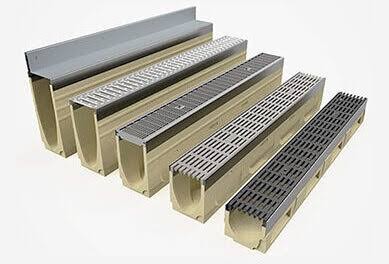
Where covered drainage is required, suitable concrete covers or metal gratings may be installed.
Their design must account for the intended traffic or pedestrian loading, opening dimensions and safe access for maintenance.
Step-by-Step Installation of Concrete Drainage Channels
Proper installation is essential for ensuring that concrete drainage channels perform effectively and remain durable over time.
The installation procedure varies depending on whether precast or cast-in-situ channels are being used. However, the following stages provide a general overview of the process.
Step 1: Site Inspection and Drainage Assessment
The first step involves inspecting the construction site and assessing its drainage requirements.
Important considerations include:
- Existing ground levels.
- Natural water flow directions.
- Soil conditions.
- Expected rainfall runoff.
- Available drainage outlets.
- Nearby buildings and infrastructure.
- Vehicle and pedestrian movement.
- Potential erosion risks.
The assessment helps establish the most suitable drainage layout and channel configuration.
Step 2: Drainage Design and Setting Out
Once the site has been assessed, the drainage system should be designed and its alignment established.
The design should determine:
- Channel dimensions.
- Required drainage capacity.
- Channel gradients.
- Inlet and outlet positions.
- Structural requirements.
- Cover requirements.
- Connections to existing drainage infrastructure.
The channel alignment and levels should be marked accurately before excavation begins.
Hydraulic calculations should account for the contributing catchment area, rainfall intensity, runoff characteristics and applicable design requirements.
Step 3: Excavation
Excavation is carried out along the proposed drainage alignment to create sufficient space for the channel and its foundation.
The excavation depth and width should accommodate the channel dimensions, bedding material and required installation tolerances.
The excavated area should be checked to ensure that the formation level is stable and suitable for construction.
Step 4: Preparation of the Channel Foundation
The channel foundation must provide adequate support and prevent uneven settlement.
Depending on the ground conditions and design, preparation may involve:
- Removing unsuitable soil.
- Compacting the formation.
- Installing a specified granular sub-base.
- Placing a concrete bedding layer.
- Providing additional foundation support where necessary.
Soft or unstable ground should be addressed before installing the drainage channel.
Step 5: Installation of Precast Channels or Formwork
For precast systems, the concrete units are carefully positioned on the prepared bedding.
Each section should be aligned and levelled to maintain the specified drainage gradient.
For cast-in-situ systems, suitable formwork is erected to establish the required channel dimensions, shape and alignment.
Reinforcement should be installed where required by the structural design.
Step 6: Concrete Placement and Jointing
For cast-in-situ channels, concrete is placed into the prepared formwork and properly compacted to minimise voids and honeycombing.
For precast channels, joints between individual sections should be connected or sealed using the specified jointing system.
Joints must be sufficiently watertight for the intended application and should not obstruct water flow.
Step 7: Concrete Finishing and Curing
Concrete surfaces should be finished to provide the required internal profile and suitable flow characteristics.
Newly placed concrete must be cured appropriately to support strength development and minimise premature drying and cracking.
The curing period and method should follow the project specifications and applicable concrete standards.
Step 8: Installation of Covers and Gratings
Where covered drainage channels are required, the specified covers or gratings should be installed after the supporting structures are ready.
They must be properly seated, stable and capable of supporting the intended loads.
Access points should be provided where required to facilitate inspection and cleaning.
Step 9: Backfilling and Surface Finishing
After installation and inspection, the surrounding areas can be backfilled using suitable materials.
Backfill should be placed and compacted carefully to avoid damaging the channel or causing uneven settlement.
Adjacent roads, pavements, driveways and landscaping should be finished to direct surface runoff towards the drainage system.
Step 10: Inspection and Water Flow Testing
The final stage involves checking the completed drainage system to confirm that it functions as intended.
Inspection should cover:
- Channel alignment.
- Drainage gradients.
- Joint quality.
- Concrete surface condition.
- Cover stability.
- Inlet and outlet connections.
- Evidence of blockages or leakage.
- Water flow through the system.
Any defects should be corrected before the drainage system is handed over for use.
Factors to Consider When Choosing Concrete Drainage Channels in Uganda
Selecting the right concrete drainage channels requires careful consideration of the site, drainage requirements and intended use.
1. Expected Water Flow
The channel must have sufficient capacity to handle the expected stormwater runoff.
Undersized channels may overflow during heavy rainfall, while poorly planned drainage layouts can create water accumulation in other parts of the property.
2. Channel Size and Dimensions
Channel width, depth and cross-sectional shape influence drainage capacity.
The dimensions should be based on hydraulic calculations rather than appearance or assumptions.
3. Site Topography and Gradient
The natural slope of the land determines how water moves across a site.
Drainage channels should be positioned and graded to encourage controlled flow without creating excessive velocities that could cause erosion or damage downstream.
4. Soil and Ground Conditions
Soil characteristics affect foundation stability, excavation requirements and the risk of settlement.
Sites with weak soils, expansive clays or high groundwater levels may require additional engineering considerations.
5. Traffic Loading
Channels installed near roads, driveways, loading bays and parking areas may be exposed to vehicle loads.
The channel structure, covers and supporting foundation must be designed for the expected loading conditions.
6. Concrete Quality
Good-quality concrete is essential for long-term durability.
Materials, mixing, placement, compaction and curing should be properly controlled to minimise cracking, honeycombing and premature deterioration.
7. Maintenance Accessibility
Drainage systems require periodic cleaning and inspection.
The design should provide practical access for removing leaves, soil, litter and other debris that may obstruct water flow.
8. Connection to Existing Drainage Systems
The drainage channels must discharge into a suitable and properly designed outlet.
The receiving system should have sufficient capacity, and discharge arrangements must comply with applicable requirements.
9. Total Project Cost
The overall cost depends on more than the price of the concrete channel itself.
Project budgeting should account for excavation, bedding, materials, reinforcement, transportation, installation, covers, labour, connections and maintenance access.
Common Problems with Concrete Drainage Channels and How to Prevent Them
Even well-designed drainage channels can experience problems when construction quality, maintenance or drainage planning is inadequate.
1. Cracking
Cracks may develop due to poor concrete quality, inadequate curing, ground movement, settlement or excessive loading.
Prevention: Use appropriate concrete specifications, prepare stable foundations, provide reinforcement where required and follow proper curing procedures.
2. Blockages
Leaves, soil, rubbish and other debris can accumulate inside channels and obstruct water flow.
Prevention: Inspect and clean drainage channels regularly, particularly before and during rainy seasons.
3. Water Overflow
Channels may overflow when they are undersized, blocked or connected to an inadequate outlet.
Prevention: Carry out proper drainage calculations, select suitable channel dimensions and ensure that downstream drainage infrastructure can accommodate the expected flow.
4. Uneven Settlement
Poor foundation preparation can cause sections of the channel to sink or become misaligned.
Prevention: Remove unsuitable materials, compact the foundation appropriately and provide the specified bedding.
5. Joint Leakage
Poorly connected precast sections may allow water to escape through joints.
Prevention: Use suitable jointing materials and ensure that connections are installed according to manufacturer and project specifications.
6. Erosion at Drainage Outlets
Fast-moving water discharged from a channel can erode the surrounding soil.
Prevention: Provide suitable outlet protection, energy dissipation and erosion-control measures based on the site conditions.
Maintenance of Concrete Drainage Channels
Regular maintenance helps preserve drainage capacity, prevent blockages and extend the service life of concrete drainage systems.
Recommended maintenance activities include:
- Removing leaves, litter and accumulated soil.
- Inspecting channels for cracks and structural damage.
- Checking joints for leakage or separation.
- Clearing inlet and outlet openings.
- Inspecting concrete covers and gratings.
- Checking for settlement and changes in channel alignment.
- Removing vegetation that obstructs water flow.
- Inspecting downstream discharge points.
- Repairing damaged sections promptly.
Drainage systems should be inspected routinely and after significant rainfall events, especially in locations vulnerable to flooding.
Concrete Drainage Channels vs Other Drainage Materials
Concrete is one of several materials used in drainage construction. Depending on the project, alternatives may include plastic, metal and masonry drainage systems.
| Drainage Material | Main Advantages | Important Considerations |
|---|---|---|
| Concrete | Durable, versatile and suitable for many heavy-duty applications | Requires proper design, installation and curing |
| Plastic | Lightweight and easy to handle | Load capacity and exposure conditions must be considered |
| Metal | Can provide strong drainage grating and channel components | Corrosion protection and maintenance may be necessary |
| Masonry | Can be constructed using locally available materials | Workmanship and waterproofing influence durability |
Concrete drainage channels are particularly suitable for projects requiring robust, permanent drainage infrastructure. However, the most appropriate material should always be selected according to project conditions and engineering requirements.
Why Quality Workmanship Matters in Concrete Drainage Channel Construction
The performance of a drainage system depends on more than the materials used. Design accuracy, construction workmanship and proper supervision are equally important.
Poorly constructed drainage channels may have incorrect gradients, weak joints, inadequate foundations and insufficient drainage capacity.
These defects can result in flooding, erosion, settlement and expensive repairs.
Professional construction practices help ensure that:
- Drainage layouts follow approved designs.
- Excavation and foundation preparation are properly executed.
- Concrete materials meet specified quality requirements.
- Channel dimensions and gradients are accurate.
- Reinforcement is installed correctly where required.
- Joints and connections are properly completed.
- Curing and finishing procedures are followed.
- Completed drainage systems are inspected and tested.
Working with an experienced construction contractor helps reduce installation errors and improves the reliability of the completed drainage infrastructure.
Why Choose Daltrevco for Concrete Drainage and Construction Solutions?
When undertaking a construction or infrastructure project, choosing a reliable contractor is important for achieving durable and functional results.
Daltrevco provides construction-focused solutions for clients undertaking property development, infrastructure improvement and related construction works in Uganda.
Whether your project involves drainage improvements, concrete works, road construction or broader site development, careful planning and quality workmanship are essential.
When planning concrete drainage channel construction, Daltrevco can help you consider important project requirements, including site conditions, drainage layout, material selection, installation procedures and the overall construction scope.
A properly planned drainage system helps protect your investment, improve site functionality and reduce the risk of water-related damage.
Contact Daltrevco to discuss your construction requirements and identify suitable solutions for your project.
Frequently Asked Questions About Concrete Drainage Channels
1. What are concrete drainage channels used for?
Concrete drainage channels are used to collect and direct rainwater and surface runoff away from buildings, roads, driveways, parking areas, industrial facilities and other developed spaces. They help prevent flooding, waterlogging, soil erosion and water-related infrastructure damage.
2. What are the main types of concrete drainage channels?
The main types include U-shaped, V-shaped, rectangular, trapezoidal, precast, cast-in-situ, covered and reinforced concrete drainage channels. Each type is suitable for different drainage conditions and construction applications.
3. Are concrete drainage channels suitable for road construction?
Yes. Concrete drainage channels are widely used in road construction to collect and direct stormwater away from road surfaces. They help protect pavement layers, reduce erosion and improve road durability.
4. What is the difference between precast and cast-in-situ concrete drainage channels?
Precast drainage channels are manufactured before being transported to the construction site for installation. Cast-in-situ channels are constructed directly on-site using formwork and concrete. Precast systems are often faster to install, while cast-in-situ systems offer greater flexibility for customised designs.
5. How deep should a concrete drainage channel be?
There is no single standard depth suitable for every project. The required depth depends on the expected water flow, catchment area, channel gradient, site conditions and drainage design.
A qualified engineer should determine the appropriate channel dimensions using relevant hydraulic and structural calculations.
6. How long do concrete drainage channels last?
The service life depends on concrete quality, structural design, ground conditions, traffic loading, workmanship and maintenance. Properly designed and constructed concrete drainage channels can provide many years of service.
7. Can concrete drainage channels be covered?
Yes. Concrete drainage channels can be covered using appropriately designed reinforced concrete covers or suitable gratings. The covers must be designed to support the expected pedestrian or vehicle loads.
8. How do you prevent concrete drainage channels from blocking?
Regularly remove leaves, rubbish, soil and other debris. Keep inlets and outlets clear, inspect the system after heavy rainfall and provide suitable maintenance access.
9. Are concrete drainage channels expensive to install?
Installation costs vary according to channel dimensions, concrete specifications, reinforcement requirements, excavation depth, site accessibility, labour, transportation and project complexity. A site assessment and detailed project specification are useful for preparing an accurate estimate.
10. Which concrete drainage channel is best for residential properties?
U-shaped, rectangular and covered concrete drainage channels are common options for residential properties. The best choice depends on available space, expected runoff, driveway access, landscaping and the property’s drainage layout.
11. Can concrete drainage channels be used in industrial facilities?
Yes. Reinforced and appropriately designed precast or cast-in-situ concrete drainage channels can be used in industrial facilities, warehouses, loading areas and factory compounds. The design must account for vehicle loading, runoff volumes and the nature of any water being discharged.
12. Why is proper gradient important when installing concrete drainage channels?
A suitable gradient allows water to flow towards the designated outlet. An insufficient gradient can cause standing water and sediment accumulation, while an excessive gradient may create high flow velocities and erosion risks.
Conclusion: Invest in Quality Concrete Drainage Channels for Long-Term Protection
Concrete drainage channels play an important role in protecting buildings, roads, parking areas, industrial facilities and other infrastructure against the damaging effects of uncontrolled surface water.
From U-shaped and V-shaped channels to rectangular, precast, covered and reinforced concrete drainage systems, each design offers different advantages depending on the intended application and drainage requirements.
For successful installation, property owners and developers should prioritise proper site assessment, accurate drainage design, quality materials, stable foundations, correct channel gradients and professional workmanship.
In Uganda, where seasonal rainfall can place significant pressure on poorly designed drainage systems, investing in reliable concrete drainage channels is an important step towards protecting property and improving infrastructure durability.
Are you planning a residential, commercial, industrial or road construction project? Contact Daltrevco for professional construction solutions and assistance with your project requirements.
Daltrevco – Building Reliable Construction Solutions in Uganda.