Decorative concrete paving is an excellent way to improve the appearance, functionality and value of residential and commercial properties. Whether you are developing a modern home, renovating a commercial compound, constructing a hotel entrance or improving an office parking area, decorative concrete paving provides an attractive and durable surface that combines practical performance with visual appeal.
In Uganda, property owners and developers increasingly require outdoor surfaces that are not only strong and functional but also complement the architectural design of their buildings. Decorative concrete paving offers a wide range of colours, patterns, textures and finishes that can transform ordinary outdoor spaces into attractive and professionally designed environments.
Unlike conventional plain concrete surfaces, decorative paving focuses on enhancing the appearance of concrete through carefully selected finishes, patterns, colours and installation techniques. It can be used for driveways, walkways, patios, courtyards, parking areas, entrances, garden paths and commercial outdoor spaces.
However, achieving an attractive and long-lasting paved surface requires more than selecting a beautiful design. Proper site preparation, quality concrete materials, professional installation, drainage planning and regular maintenance are equally important.
At Daltrevco, we understand the importance of quality construction solutions in residential, commercial and industrial developments. This guide explores decorative concrete paving in Uganda, including its benefits, popular designs, applications, installation procedures, maintenance requirements and factors that influence project costs.
What Is Decorative Concrete Paving?
Decorative concrete paving refers to the use of concrete materials and specialised finishing techniques to create attractive paved surfaces for indoor and outdoor environments.
It combines the structural properties of concrete with different decorative treatments to achieve specific colours, patterns, textures and surface appearances.
Depending on the project requirements, decorative concrete paving can be produced using precast concrete paving blocks, stamped concrete, coloured concrete, exposed aggregate finishes and other decorative concrete techniques.
These solutions allow property owners, architects, contractors and developers to customise paved areas to complement the surrounding buildings and landscape designs.
Decorative concrete paving is commonly used in:
- Residential driveways and parking spaces.
- Garden paths and pedestrian walkways.
- Patios and outdoor entertainment areas.
- Commercial building entrances.
- Hotel and restaurant compounds.
- Shopping centre parking areas.
- Office building landscapes.
- Apartment developments.
- Institutional compounds.
- Recreational and public spaces.
Its flexibility makes it suitable for both small residential improvements and large commercial property developments.
Benefits of Decorative Concrete Paving for Residential and Commercial Properties
Decorative concrete paving offers several advantages beyond improving the appearance of outdoor spaces. When correctly designed and installed, it can provide a functional and durable surface for different property requirements.
1. Enhances Property Appearance
One of the biggest advantages of decorative concrete paving is its ability to improve the visual appeal of a property.
Plain outdoor surfaces can appear unfinished or unattractive, particularly when they do not complement the building’s architectural design.
Decorative concrete paving introduces attractive colours, patterns and textures that create a more organised and professionally finished appearance.
For residential properties, decorative paving can enhance entrances, driveways, patios and garden pathways.
For commercial developments, it can create attractive entrances, well-organised pedestrian routes and professional outdoor environments.
2. Provides Durable Outdoor Surfaces
Concrete is widely used in construction because of its strength and durability.
Decorative concrete paving can provide reliable performance when suitable materials, concrete specifications, ground preparation and installation methods are used.
The appropriate paving system should be selected according to the intended application, expected traffic loads and site conditions.
This makes decorative concrete paving suitable for many residential, commercial and selected industrial environments.
3. Offers Multiple Design Options
Decorative concrete paving is available in different designs, patterns, colours and surface finishes.
Property owners can choose from simple modern designs, traditional paving patterns, textured finishes and customised decorative arrangements.
This flexibility makes it easier to coordinate outdoor surfaces with building facades, landscaping, fencing and other architectural features.
4. Improves Outdoor Functionality
Decorative paving creates defined surfaces for vehicle movement, pedestrian access, parking and outdoor activities.
It helps transform muddy, dusty or uneven outdoor areas into organised and usable spaces.
For residential developments, this can improve accessibility around the home.
For commercial properties, it can provide more organised circulation areas for employees, customers and visitors.
5. Relatively Easy to Maintain
Most decorative concrete paving systems require routine cleaning and occasional maintenance to preserve their appearance.
Maintenance may include sweeping, washing, removing stains, inspecting joints and repairing damaged sections.
For modular concrete paving blocks, individual units can often be lifted and replaced without reconstructing the entire paved area.
Certain decorative finishes, including stamped or coloured concrete, may require periodic resealing depending on the product and exposure conditions.
6. Supports Effective Drainage Planning
Decorative paving can be incorporated into a properly designed stormwater management system.
The surface can be shaped to direct rainwater towards drainage channels, gullies and suitable outlets.
Permeable concrete paving systems are also available for projects where controlled water infiltration is required.
In Uganda, where many areas experience seasonal heavy rainfall, effective drainage planning is essential for protecting paved surfaces and surrounding buildings.
7. Complements Different Architectural Styles
Decorative concrete paving can be designed to complement contemporary, traditional and modern architectural styles.
For example, a modern residential building may benefit from clean geometric paving patterns, while a hotel or landscaped commercial property may use textured finishes and decorative borders.
The ability to customise paving designs makes decorative concrete suitable for many different development projects.
8. Can Improve Property Value and Market Appeal
Attractive outdoor spaces contribute to the overall presentation of a property.
Well-designed driveways, entrances, pathways and parking areas can improve the first impression created by a residential or commercial development.
For property developers, this can make a development more attractive to potential buyers, tenants and visitors.
Types of Decorative Concrete Paving for Properties in Uganda
Different decorative concrete paving methods are available depending on the required appearance, budget, traffic conditions and installation requirements.
Understanding the available options helps property owners select a suitable solution.
1. Interlocking Decorative Concrete Pavers
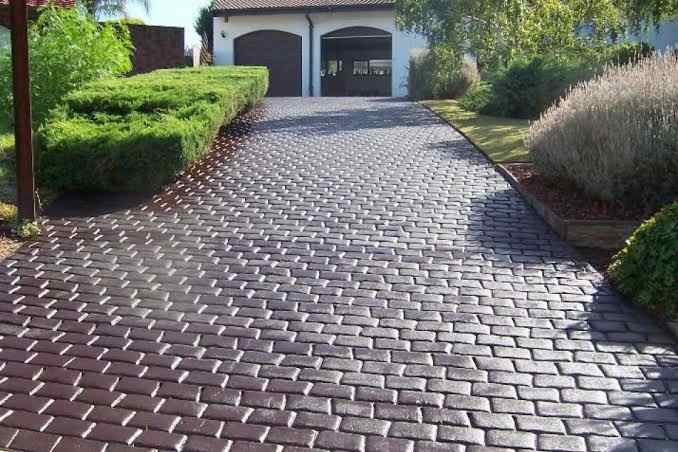
Interlocking decorative concrete pavers are precast concrete units manufactured in different shapes, sizes, colours and finishes.
They fit together to create attractive paved surfaces with defined joints and patterns.
Their modular design allows different colours and arrangements to be combined to create customised paving layouts.
Common applications include:
- Residential driveways.
- Commercial parking areas.
- Garden pathways.
- Courtyards.
- Hotel entrances.
- Apartment compounds.
Interlocking paving blocks are particularly suitable for properties that require decorative surfaces with relatively straightforward individual-unit repairs.
2. Stamped Concrete Paving
Stamped concrete is created by placing fresh concrete and pressing specialised stamping tools into its surface before it fully hardens.
The process produces patterns and textures that can resemble natural stone, brick, cobblestone, slate or other decorative materials.
Colour can also be incorporated through suitable colouring methods.
Common applications include:
- Residential patios.
- Outdoor entertainment areas.
- Hotel walkways.
- Courtyards.
- Garden surroundings.
- Decorative commercial entrances.
Stamped concrete is suitable for projects requiring the appearance of patterned materials without installing individual paving units.
However, it requires skilled installation, appropriate jointing and proper curing to achieve a good finish.
3. Coloured Concrete Paving
Coloured concrete paving uses suitable pigments or colouring systems to introduce colour into concrete surfaces.
Different colours can be selected to complement building designs and landscaping.
Colour may be introduced through integral pigments or appropriate surface-applied colouring methods.
Common applications include:
- Residential pathways.
- Commercial courtyards.
- Outdoor patios.
- Building entrances.
- Decorative parking areas.
The selected colouring system should be suitable for the intended exposure conditions to help maintain a consistent appearance.
4. Exposed Aggregate Concrete Paving
Exposed aggregate concrete is produced by revealing the natural aggregates within the concrete surface through a controlled finishing process.
This creates a textured decorative finish that may feature different aggregate sizes, shapes and colours.
Common applications include:
- Garden pathways.
- Residential driveways.
- Outdoor recreational areas.
- Commercial landscapes.
- Pedestrian spaces.
Exposed aggregate paving can provide an attractive natural appearance. Its surface texture should be carefully considered to ensure suitability for pedestrian movement and cleaning requirements.
5. Textured Concrete Paving
Textured concrete paving involves creating a patterned or textured surface using specialised finishing techniques.
The resulting surface may provide a more decorative appearance than ordinary smooth concrete.
Common applications include:
- Pedestrian walkways.
- Residential compounds.
- Outdoor recreational spaces.
- Commercial entrances.
- Selected landscaped areas.
Texture selection should consider slip resistance, cleaning requirements and the intended use of the paved surface.
6. Decorative Concrete Slabs
Decorative concrete slabs are manufactured or constructed to provide larger paving units with attractive surface finishes.
They may be produced in different dimensions, colours and textures depending on the project requirements.
Common applications include:
- Garden paths.
- Courtyards.
- Outdoor seating areas.
- Residential compounds.
- Commercial pedestrian spaces.
Their larger dimensions can create a simple and contemporary appearance.
Popular Decorative Concrete Paving Designs and Patterns
Choosing the right paving design is important because the pattern and finish influence the overall appearance of the property.
Some popular decorative concrete paving designs include:
1. Herringbone Paving Design
The herringbone design involves arranging rectangular paving blocks in a distinctive interlocking pattern.
It is commonly used for driveways and parking areas because the arrangement helps resist horizontal movement when properly installed.
It also creates an attractive appearance suitable for residential and commercial properties.
2. Basket Weave Paving Design
Basket weave paving uses rectangular blocks arranged in alternating pairs to create a woven appearance.
It is particularly suitable for patios, garden paths, courtyards and decorative pedestrian areas.
3. Running Bond Pattern
Running bond involves arranging rectangular paving units in parallel rows, with the joints offset between adjacent rows.
It offers a clean and organised appearance suitable for modern residential and commercial spaces.
4. Geometric Paving Designs
Geometric paving uses square, rectangular, hexagonal or other shaped units to create symmetrical and contemporary patterns.
Different colours can be combined to produce distinctive outdoor designs.
5. Natural Stone-Effect Designs
Decorative concrete can be finished to resemble natural stone surfaces.
Stamped concrete and selected textured paving products can provide the appearance of stone while offering the benefits of concrete construction.
6. Mixed-Colour Paving Designs
Combining different concrete paver colours can create decorative borders, pathways, parking bay divisions and entrance features.
For example, a residential driveway can use one primary colour with contrasting borders to create a refined appearance.
7. Modern Minimalist Paving Designs
Minimalist paving focuses on simple shapes, clean lines, neutral colours and organised layouts.
It is suitable for contemporary homes, office developments, hotels and commercial buildings.
Decorative Concrete Paving for Residential Properties
Residential properties benefit significantly from well-planned outdoor paving.
Decorative concrete paving can improve the functionality of outdoor spaces while creating an attractive environment around the home.
Decorative Concrete Driveways
A driveway is often one of the first features visitors notice when approaching a residential property.
Decorative paving can create an attractive entrance while providing a functional surface for vehicle access.
Popular options include interlocking pavers, herringbone designs, coloured concrete and selected stamped finishes.
The paving system should be designed for the expected vehicle loads and site conditions.
Decorative Garden Walkways
Garden pathways help connect different areas of a residential property.
Decorative concrete pavers can create attractive routes through gardens, landscaped spaces and outdoor recreational areas.
Different colours, shapes and textures can be used to complement plants, lawns and other landscape features.
Decorative Patios and Outdoor Living Spaces
Patios provide outdoor spaces for relaxation, entertainment and family activities.
Decorative concrete paving can improve these spaces through textured finishes, stamped patterns, coloured surfaces and attractive paving layouts.
The selected finish should be appropriate for outdoor exposure and pedestrian safety.
Residential Courtyards
Courtyards can benefit from decorative paving that creates a neat and organised outdoor environment.
Concrete paving can be used around gardens, seating areas, swimming pools and building entrances.
Where paving is installed around swimming pools, slip resistance and drainage should receive particular attention.
Apartment and Residential Estate Compounds
Apartment developments and residential estates require functional outdoor spaces for pedestrian circulation, parking and shared recreational activities.
Decorative concrete paving can create consistency across these areas while improving the appearance of the overall development.
Decorative Concrete Paving for Commercial Properties
Commercial properties require outdoor environments that are attractive, accessible and capable of supporting regular use.
Decorative concrete paving can help businesses improve their entrances, parking facilities, walkways and landscaped outdoor areas.
1. Office Buildings
Office developments can use decorative paving to create professional entrances, pedestrian routes and outdoor parking spaces.
A well-designed paved compound improves accessibility and creates a positive first impression for employees, clients and visitors.
2. Hotels and Resorts
Hotels and resorts rely heavily on attractive outdoor environments.
Decorative concrete paving can be used for:
- Main entrances.
- Outdoor walkways.
- Courtyards.
- Garden pathways.
- Outdoor dining spaces.
- Selected parking areas.
The choice of paving materials and finishes should complement the architectural design and overall hospitality experience.
3. Shopping Centres and Retail Developments
Shopping centres require organised parking facilities and pedestrian circulation areas.
Decorative concrete paving can help define parking zones, entrances, walkways and outdoor gathering spaces.
Different colours and patterns can be used to distinguish vehicle and pedestrian areas.
4. Restaurants and Entertainment Facilities
Restaurants and entertainment venues can use decorative concrete paving to improve outdoor dining areas, entrance spaces, terraces and courtyards.
Textured and coloured finishes can create attractive environments that complement the business’s architectural style.
5. Schools and Educational Institutions
Schools and universities require functional pathways, outdoor gathering spaces and organised pedestrian areas.
Decorative concrete paving can improve accessibility while creating a cleaner and more organised institutional environment.
6. Hospitals and Healthcare Facilities
Healthcare facilities require accessible and properly maintained outdoor circulation areas.
Concrete paving can be used for pedestrian routes, entrances, designated parking spaces and landscaped areas.
Surface levelness, accessibility, drainage and ease of cleaning should be prioritised.
7. Commercial Apartment Developments
Commercial residential developments require attractive shared spaces that accommodate pedestrians and vehicles.
Decorative concrete paving can improve entrances, internal walkways, parking areas and common outdoor facilities.
Decorative Concrete Paving Installation Process
Professional installation is essential for achieving attractive and durable decorative concrete paving.
The specific procedure depends on whether the project uses interlocking pavers, stamped concrete, exposed aggregate or another decorative system.
However, most paving projects involve the following important stages.
Step 1: Site Assessment and Design Planning
The first stage involves assessing the property and establishing the paving requirements.
Important considerations include:
- Size and shape of the paving area.
- Intended use of the surface.
- Expected pedestrian and vehicle traffic.
- Existing soil and ground conditions.
- Drainage requirements.
- Selected paving materials.
- Decorative patterns and finishes.
For larger commercial projects, detailed drawings and engineering assessments may be necessary.
Step 2: Site Clearing and Excavation
The paving area is cleared of vegetation, debris and unsuitable materials.
Excavation is carried out to the required depth based on the paving design and supporting foundation.
The depth depends on the intended use, ground conditions and material specifications.
Step 3: Ground Preparation and Compaction
The exposed ground is shaped and compacted to establish a stable foundation.
Weak or unsuitable soil may need to be removed or improved.
Proper compaction helps minimise future settlement and unevenness.
Step 4: Base Construction
Suitable base and sub-base materials are installed and compacted according to the project specifications.
The base provides structural support and helps distribute loads across the paved surface.
Driveways and commercial parking areas generally require more substantial supporting layers than pedestrian walkways.
Step 5: Drainage Installation
Drainage channels, gullies and other required components are incorporated into the paving design.
The surface is shaped to direct water towards appropriate outlets.
Effective drainage helps protect the paving foundation and surrounding structures.
Step 6: Installation of Decorative Concrete Pavers or Concrete
For interlocking pavers, a suitable bedding layer is prepared before laying the paving units according to the selected design.
For stamped or coloured concrete, the concrete is placed, finished and treated using the specified decorative techniques.
Exposed aggregate paving requires controlled finishing to reveal the selected aggregate.
Step 7: Patterning and Finishing
The decorative surface is completed according to the approved design.
This may involve arranging individual paving blocks, stamping fresh concrete, applying suitable colour treatments or exposing aggregates.
Attention to alignment, consistency and surface quality is important.
Step 8: Jointing and Curing
Interlocking paving systems require suitable jointing material and appropriate final compaction.
Cast-in-place decorative concrete requires appropriate jointing and curing procedures to control cracking and support concrete strength development.
Step 9: Final Inspection
The completed surface is inspected to confirm:
- Design consistency.
- Surface levelness.
- Proper drainage.
- Joint quality.
- Edge stability.
- Surface finish.
- Compliance with project specifications.
The paving area should be opened to traffic only when the selected system has reached the required condition.
Factors That Determine the Cost of Decorative Concrete Paving in Uganda
The cost of decorative concrete paving varies depending on the project size, selected materials, decorative finish and installation requirements.
Property owners should consider the following factors when preparing a construction budget.
1. Type of Decorative Concrete Paving
Different paving systems have different material and labour requirements.
For example, interlocking concrete pavers, stamped concrete and exposed aggregate finishes involve different production and installation processes.
2. Quality and Specifications of Materials
The quality, strength, thickness, colour and finish of the selected paving materials influence the overall project cost.
Specialised decorative products may cost more than standard concrete paving materials.
3. Size of the Paving Area
Larger projects require more materials and labour.
However, the cost per square metre may vary depending on project scale, site accessibility and material transportation.
4. Ground Conditions and Excavation
Sites with weak soil, vegetation, existing concrete or uneven terrain may require additional preparation.
Excavation, soil replacement and ground improvement can increase construction costs.
5. Complexity of the Design
Simple paving patterns are generally easier to install than complicated decorative layouts.
Custom patterns, multiple colours, curved edges and intricate borders may require additional labour and material handling.
6. Base Construction Requirements
The supporting foundation is an important part of the total project cost.
Driveways and commercial parking areas may require thicker or more carefully engineered base layers than pedestrian spaces.
7. Drainage Requirements
Additional drainage channels, pipes, gullies and surface shaping can influence the final project budget.
However, these components are important for protecting the paving system from water-related damage.
8. Labour and Transportation
Installation costs depend on the complexity of the project, contractor experience, site location, material delivery and accessibility.
Important: When requesting quotations for decorative concrete paving in Uganda, compare the full installation scope rather than considering material prices alone. A comprehensive quotation should clearly identify site preparation, materials, base construction, drainage, installation, decorative finishing and maintenance requirements.
Common Problems Associated with Decorative Concrete Paving
Although decorative concrete paving can provide long-lasting results, poor construction practices and inadequate maintenance may lead to various problems.
1. Cracking
Cracks can develop due to inadequate joint planning, shrinkage, ground movement, excessive loading or poor concrete practices.
Prevention: Use appropriate concrete specifications, proper jointing, suitable base preparation and correct curing procedures.
2. Fading and Discolouration
Decorative concrete surfaces may lose their original appearance due to prolonged exposure to sunlight, weather, chemicals and unsuitable cleaning products.
Prevention: Use suitable colouring systems and follow the manufacturer’s maintenance and sealing recommendations.
3. Uneven or Sunken Paving
This problem may occur when the underlying ground or base layers are poorly compacted.
Prevention: Ensure proper excavation, ground preparation and compaction before installation.
4. Water Accumulation
Poor surface gradients and inadequate drainage may result in standing water.
Prevention: Incorporate appropriate slopes and drainage outlets during the design and installation stages.
5. Weed Growth Between Paving Units
Weeds may grow in joints where soil and organic material accumulate.
Prevention: Clean paving joints regularly and maintain suitable jointing material.
6. Surface Deterioration
Certain decorative finishes may deteriorate because of unsuitable materials, poor installation or harsh cleaning practices.
Prevention: Use appropriate materials and follow recommended installation and maintenance procedures.
Maintenance Tips for Decorative Concrete Paving
Regular maintenance helps preserve the appearance, safety and functionality of decorative concrete surfaces.
Property owners should adopt the following practices:
- Sweep regularly: Remove dust, leaves and other debris from paved surfaces.
- Wash periodically: Use suitable cleaning methods to remove accumulated dirt.
- Remove stains promptly: Address oil, grease and other stains using products suitable for the paving finish.
- Inspect joints: Check interlocking paving joints and replenish jointing material where necessary.
- Control weed growth: Remove weeds before they become established.
- Maintain drainage: Keep drainage channels and outlets free from debris.
- Repair damaged areas: Replace damaged pavers or repair concrete surfaces promptly.
- Reseal where required: Apply suitable sealers to decorative concrete finishes according to manufacturer recommendations.
- Avoid harsh chemicals: Use cleaning products that will not damage the concrete surface or decorative treatment.
Commercial properties should establish periodic inspection and maintenance programmes to keep outdoor surfaces safe and attractive.
How to Choose the Best Decorative Concrete Paving for Your Property
Choosing the right decorative paving solution requires balancing appearance, functionality, durability and budget.
Consider the following factors before selecting a paving system.
Identify the Purpose of the Paved Area
Determine whether the area will be used for pedestrian movement, vehicle access, parking, outdoor entertainment or decorative landscaping.
This helps establish the required material specifications and construction method.
Consider the Building’s Architectural Design
Choose colours, textures and patterns that complement the building’s exterior, roofing, walls, landscaping and other architectural features.
Evaluate Durability Requirements
Consider expected traffic volumes, vehicle types, weather exposure and site conditions.
The selected paving system should be suitable for its intended use.
Prioritise Drainage
Ensure that the paving design incorporates appropriate gradients and stormwater management systems.
This is particularly important for properties exposed to heavy rainfall.
Consider Maintenance Requirements
Some decorative finishes require more maintenance than others.
Choose a solution that matches the property’s maintenance capacity and long-term expectations.
Work With Experienced Construction Professionals
Professional guidance helps ensure that the selected paving material, installation method and foundation design are appropriate for the project.
Request clear specifications, installation details and quotations before beginning construction.
Decorative Concrete Paving Trends for Modern Properties
Modern residential and commercial developments increasingly emphasise attractive outdoor environments that complement building architecture.
Some popular design approaches include:
Minimalist paving: Simple geometric shapes, neutral colours and clean layouts create a contemporary appearance.
Natural stone-effect finishes: Stamped concrete and textured pavers provide attractive alternatives to certain natural stone finishes.
Mixed-colour patterns: Combining complementary colours creates distinctive borders, pathways and decorative zones.
Large-format paving: Larger concrete paving units create a clean and spacious appearance in courtyards and pedestrian areas.
Integrated landscaping: Decorative paving can be combined with gardens, lawns, outdoor lighting and landscaped seating areas.
Permeable paving systems: Specially designed paving systems can support sustainable stormwater management where site conditions allow.
These design approaches can be adapted to suit different residential, commercial and institutional developments in Uganda.
Why Professional Decorative Concrete Paving Services Matter
Decorative paving requires both technical construction knowledge and attention to finishing details.
A visually attractive surface may still develop problems if the underlying foundation is weak or drainage is poorly planned.
Professional construction services help ensure that:
- Suitable materials are selected for the intended application.
- Ground conditions are properly assessed.
- Excavation and compaction meet project requirements.
- Supporting layers are correctly constructed.
- Drainage is incorporated into the design.
- Decorative finishes are applied consistently.
- Concrete is properly jointed and cured where required.
- The finished surface meets the required quality standards.
Working with experienced professionals helps reduce avoidable construction defects and supports the long-term performance of the paved surface.
Why Choose Daltrevco for Your Construction Project?
Choosing the right construction partner is an important part of achieving successful residential and commercial developments.
Daltrevco is committed to providing construction-related solutions that respond to the practical requirements of property owners, developers and organisations.
Whether you are improving a residential driveway, developing a commercial compound, upgrading an office entrance or planning a larger property development, careful planning and quality workmanship are essential.
When considering decorative concrete paving, it is important to focus on:
- Appropriate concrete products and materials.
- Functional and attractive paving designs.
- Proper site preparation.
- Effective drainage planning.
- Suitable installation techniques.
- Durable finishing and maintenance requirements.
Visit Daltrevco to learn more about the company’s construction solutions and discuss your project requirements.
Frequently Asked Questions About Decorative Concrete Paving
1. What is decorative concrete paving?
Decorative concrete paving involves using concrete products and specialised finishing techniques to create attractive paved surfaces. It includes interlocking decorative pavers, stamped concrete, coloured concrete, exposed aggregate and textured concrete finishes.
2. Is decorative concrete paving suitable for residential properties?
Yes. It is suitable for residential driveways, walkways, patios, courtyards, garden paths and outdoor parking spaces. The selected paving system should match the intended use.
3. Can decorative concrete paving be used for commercial properties?
Yes. Decorative concrete paving is suitable for office buildings, hotels, shopping centres, restaurants, apartment developments and selected institutional properties.
4. What is the difference between decorative concrete and ordinary concrete?
Ordinary concrete generally focuses on providing a functional structural or paving surface, while decorative concrete incorporates additional colours, textures, patterns or specialised finishes to improve appearance.
5. Is stamped concrete better than interlocking concrete pavers?
Neither is universally better. Stamped concrete provides a continuous patterned surface, while interlocking pavers consist of individual units that can be lifted and replaced. The appropriate choice depends on the design, traffic requirements, maintenance expectations and budget.
6. How long does decorative concrete paving last?
Its lifespan depends on material quality, installation, traffic exposure, drainage and maintenance. Properly designed and installed decorative concrete paving can provide many years of service.
7. Is decorative concrete paving expensive in Uganda?
The cost varies according to the paving system, materials, design complexity, project size, site preparation, drainage and labour requirements. A site-specific quotation provides the most reliable estimate.
8. Does decorative concrete paving require sealing?
Some decorative concrete systems benefit from suitable sealers to help protect their colour and surface finish. Sealing requirements depend on the selected product and manufacturer’s recommendations.
9. Can decorative concrete paving be customised?
Yes. Decorative concrete paving can be customised using different colours, patterns, textures, shapes and finishes to complement residential and commercial building designs.
10. What is the best decorative concrete paving for a driveway?
Interlocking concrete pavers and properly designed decorative concrete systems can be suitable for driveways. The choice should consider vehicle loads, soil conditions, drainage and the required appearance.
11. Can decorative concrete paving be installed around swimming pools?
Yes, provided the selected paving material and finish are suitable for wet environments. Slip resistance, drainage, comfort underfoot and compatibility with pool chemicals should be considered.
12. How do I maintain decorative concrete paving?
Regular sweeping, washing, stain removal, drainage inspection and timely repairs help maintain decorative concrete surfaces. Certain finishes may also require periodic resealing.
Conclusion: Transform Your Property With Quality Decorative Concrete Paving
Decorative concrete paving offers an effective way to improve the appearance, accessibility and functionality of residential and commercial properties in Uganda.
With different paving blocks, colours, patterns, textures and finishing techniques available, property owners can create outdoor spaces that complement their buildings while meeting practical construction requirements.
From attractive residential driveways and garden pathways to commercial parking areas, hotel entrances and landscaped courtyards, decorative concrete paving provides versatile solutions for modern property development.
However, the success of any paving project depends on selecting suitable materials, preparing the ground correctly, constructing a stable foundation, incorporating effective drainage and maintaining the finished surface.
Planning a decorative concrete paving project in Uganda?
Contact Daltrevco to discuss your construction requirements and explore suitable solutions for your residential or commercial development.
Visit www.daltrevco.com to learn more about Daltrevco’s construction solutions.