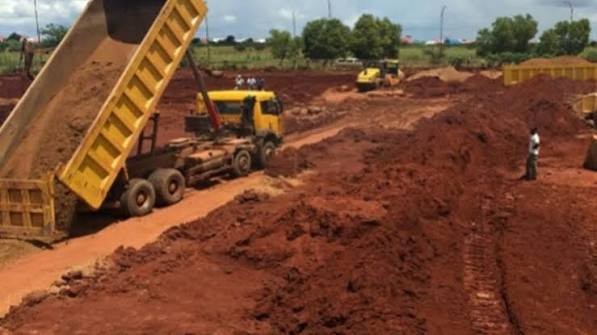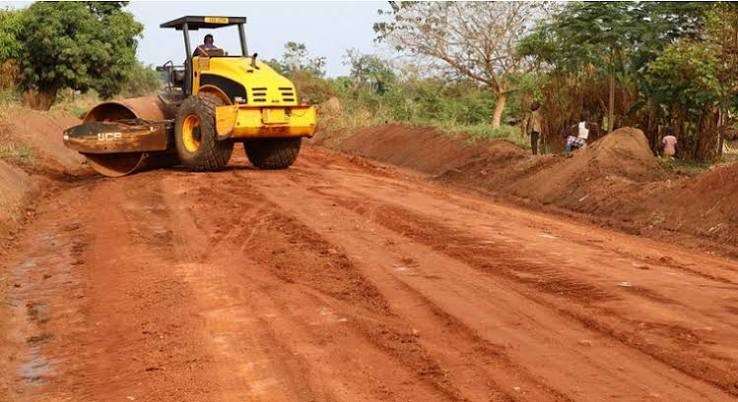
Are you planning to construct a murram access road in Uganda and wondering how much the project will cost? Whether you need a road for a residential development, farm, commercial property, construction site or rural community, understanding the factors that determine murram road construction costs can help you prepare a realistic budget and choose the right contractor.
The cost of murram road construction is not determined by road length alone. Several factors influence the final price, including road width, ground conditions, quality of murram, material transportation, drainage requirements, machinery, labour, compaction and the amount of earthworks required.
A relatively short road can become expensive if it crosses a swampy area, requires extensive excavation or needs several drainage structures. On the other hand, a longer road with stable ground, nearby material sources and straightforward drainage may be more economical to construct.
In Uganda, where rainfall, soil conditions and terrain vary from one location to another, proper planning is essential for achieving a durable and cost-effective road.
At Daltrev Co. Ltd, we provide civil works services that include murram road construction, road opening, road grading and improvement, drainage works and other road-related construction solutions.
This guide explains the major factors that determine the cost of murram road construction in Uganda, what to include in your project budget and how to obtain a reliable quotation.
What Is Murram Road Construction?
Murram road construction involves preparing a suitable road foundation and placing selected gravelly earth materials to create a usable road surface. The material is spread, shaped and compacted according to the project’s construction requirements.
Murram roads are commonly constructed for:
- Residential estates and private property access.
- Agricultural land and farm access roads.
- Construction sites and development projects.
- Rural roads connecting communities.
- Commercial and industrial properties.
- Schools, institutions and other facilities.
- Roads connecting farms to markets and trading centres.
Murram roads can be a practical option where a gravel surface is suitable for the expected traffic, available budget and site conditions. Their durability depends on the quality of construction, drainage, material selection and maintenance.
What Determines the Cost of Murram Road Construction in Uganda?
Several factors influence the amount required to construct a murram road. Understanding these factors makes it easier to compare quotations and identify the work that will have the greatest impact on your budget.
1. Length of the Road
Road length is one of the first things considered when estimating construction costs.
A longer road generally requires more materials, transportation, machinery operating hours and labour. However, the cost does not always increase at exactly the same rate because some project expenses may be shared across the entire construction site.
For example, setting up equipment, mobilising machinery and conducting initial site assessments may involve costs that do not double simply because the road length doubles.
When requesting a quotation, provide the contractor with the approximate road length and, where possible, a site plan or surveyed alignment.
2. Road Width and Design Requirements
The width of the road directly affects the quantity of material needed.
A wider road requires more murram, more earthworks and potentially more compaction work than a narrower road of the same length.
The design must also consider:
- Expected vehicle traffic.
- Whether heavy trucks will use the road.
- Available land and road reserve.
- Turning and passing requirements.
- Road shoulders.
- Gradients and drainage arrangements.
A private residential access road may require different dimensions from an agricultural road or an access route serving warehouses and industrial premises.
The appropriate width should be established according to the intended use, available space and engineering requirements.
3. Ground Conditions and Soil Type
The condition of the existing ground can significantly affect the cost of murram road construction.
Some sites have firm, stable ground that requires relatively straightforward preparation. Others contain weak soils, loose material, steep slopes, rocky sections or waterlogged areas that need additional work.
Difficult ground conditions may require:
- Excavation of unsuitable material.
- Additional filling and levelling.
- Ground improvement.
- Replacement of weak soil.
- Additional drainage.
- More machinery and labour.
- Special construction methods.
For example, constructing a road across a low-lying or waterlogged section may cost more than constructing a similar road on stable ground because the foundation may require additional preparation and drainage.
A proper site assessment helps identify these challenges before the contractor prepares the final quotation.
4. Quality and Availability of Murram Materials
The type and quality of murram used have a major influence on the construction budget and the road’s long-term performance.
Not all locally available murram is suitable for every road construction project. Some materials may contain excessive clay, organic matter or other unsuitable components. Others may not provide the strength and grading required for the intended road layer.
Material selection should consider:
- Particle-size distribution.
- Plasticity and clay content.
- Strength and bearing characteristics.
- Moisture behaviour.
- Suitability for the intended road layer.
- Compliance with project specifications.
Where required, material testing should be conducted before large quantities are purchased or transported to the site.
The availability of suitable material also matters. If an appropriate source is nearby, transportation may be more affordable. If the material must be obtained from a distant source, the additional haulage can increase the total project cost.
5. Distance from the Murram Source to the Construction Site
Transportation is an important part of the cost of murram road construction in Uganda.
Murram is often transported using tipper trucks. The distance between the approved material source and the construction site affects fuel consumption, vehicle operating time, delivery frequency and the number of trips required.
Transport costs may increase when:
- The material source is far from the project.
- Access roads to the site are poor.
- Trucks experience delays during loading or unloading.
- The route has difficult terrain.
- Large quantities of material are required.
- Traffic conditions slow down transportation.
When comparing quotations, ask whether material loading, transportation and delivery to the construction site are included.
A low material price does not necessarily mean a low total cost if the source is far away.
6. Excavation, Clearing and Site Preparation
Before placing murram, the proposed road area may need to be cleared and prepared.
The amount of preparation required depends on the existing site condition.
Activities may include:
- Removing bushes, grass and unwanted vegetation.
- Removing tree stumps and roots where necessary.
- Stripping unsuitable topsoil.
- Excavating weak or unsuitable ground.
- Cutting high sections.
- Filling low sections.
- Levelling the road formation.
- Preparing the subgrade for compaction.
A road passing through an already cleared and relatively level area may require less preparation than one passing through heavily vegetated, uneven or obstructed land.
The contractor should inspect the site and explain which preparation activities are necessary.
7. Drainage Works and Culvert Installation
Drainage is one of the most important cost considerations in murram road construction.
Water can damage the road foundation, wash away gravel, create potholes and cause erosion. Without effective drainage, a newly constructed road may deteriorate much sooner than expected.
Depending on the site, drainage works may include:
- Side drains.
- Culverts.
- Cross-drainage structures.
- Drainage channels.
- Erosion protection.
- Water discharge arrangements.
- Additional works in low-lying areas.
The cost depends on the number, size, type and location of the required structures, as well as the amount of excavation and associated construction work.
A road with several water crossings may require a significantly different budget from a road with simple surface drainage.
Do not exclude essential drainage simply to reduce the initial quotation. Poor drainage can lead to expensive repairs and repeated maintenance.
8. Quantity and Thickness of Murram Required
The amount of material required depends on the road’s length, width, design thickness and site levels.
A road requiring a thicker gravel layer will generally need more material than one with a thinner specified layer, assuming other conditions are similar.
However, the required thickness should not be guessed or selected simply to reduce costs. It should be determined by the engineering design, subgrade condition, material characteristics and expected traffic.
Additional material may also be required where:
- Existing ground levels are low.
- The road needs raising.
- Some sections require filling.
- The formation is uneven.
- Weak areas need additional treatment.
The contractor should explain how the material quantities have been estimated and whether the quoted volume refers to loose material delivered or compacted material in the completed road.
This distinction is important when comparing quotations.
9. Machinery and Equipment Requirements
The type and quantity of machinery required affect the total construction cost.
Common equipment used in murram road construction includes:
| Equipment | Purpose |
|---|---|
| Excavator | Excavation, earthworks and loading |
| Bulldozer | Clearing and pushing earth |
| Motor grader | Road shaping, levelling and grading |
| Tipper trucks | Transporting murram and other materials |
| Road roller | Compacting the road formation and gravel layers |
| Water bowser | Supplying water for compaction and dust control |
| Surveying equipment | Establishing levels and road alignment |
The total machinery cost depends on equipment availability, mobilisation distance, operating hours, fuel, site accessibility and the complexity of the work.
A project requiring extensive excavation, material transport and compaction will generally need more equipment time than a simple road grading project.
10. Labour and Technical Supervision
Murram road construction requires workers to carry out clearing, excavation, material placement, drainage works, grading and finishing.
The labour requirements depend on the size and complexity of the project.
Costs may include:
- Machine operators.
- General construction workers.
- Truck drivers.
- Site supervisors.
- Surveying personnel.
- Technical professionals where required.
For larger or more complex projects, technical supervision and quality-control activities may also form part of the budget.
A well-organised workforce can help reduce unnecessary delays, material wastage and mistakes during construction.
11. Compaction and Quality Control
Compaction is essential for producing a stable murram road surface.
If the road material is not properly compacted, it may become loose, develop ruts or deteriorate under vehicle traffic.
The construction process may involve:
- Spreading the material in controlled layers.
- Adjusting moisture content where necessary.
- Mixing the material to achieve uniform conditions.
- Compacting with suitable equipment.
- Checking the completed layer against project requirements.
The required compaction level and testing procedures depend on the road design and applicable specifications.
Quality-control costs may include material testing, field density testing, inspection and supervision where these are required by the project.
Skipping necessary quality checks may reduce the initial expenditure but can increase the risk of premature road failure.
12. Terrain, Slopes and Accessibility
The physical location of the project can affect construction costs.
A road on relatively flat terrain may require less cutting and filling than one crossing steep or uneven ground.
Difficult terrain can require:
- Additional excavation.
- More extensive filling.
- Slope protection.
- Additional drainage.
- Special machinery.
- Longer construction time.
Site accessibility also matters. If tipper trucks and other equipment cannot easily reach the work area, transportation and machinery operating costs may increase.
13. Weather and Construction Schedule
Uganda’s rainy seasons can affect road construction activities.
Heavy rainfall may make excavation difficult, increase soil moisture and delay the placement and compaction of gravel. It may also create temporary access problems for construction machinery and delivery trucks.
Weather-related delays can increase costs through:
- Additional equipment hire.
- Extended labour periods.
- Repeated preparation of damaged sections.
- Material handling difficulties.
- Delayed transportation.
- Temporary drainage requirements.
Planning construction around suitable weather conditions can help improve productivity, although the actual schedule should also consider project urgency, site conditions and available resources.
14. Project Location and Local Supply Conditions
The location of the road affects the availability and cost of materials, equipment and labour.
A project near suitable material suppliers and machinery providers may have different costs from one located far from major supply routes.
Factors to consider include:
- Distance from material sources.
- Availability of tipper trucks.
- Access to construction machinery.
- Local labour availability.
- Road conditions along delivery routes.
- Site security and operating arrangements.
This is why two murram road projects with similar dimensions can receive different quotations.
15. Maintenance and Long-Term Performance
The initial construction price is only one part of the total cost of owning and maintaining a murram road.
A road that is constructed without proper drainage or suitable material may require frequent repairs.
Long-term maintenance may include:
- Routine grading.
- Pothole repairs.
- Drain clearing.
- Culvert maintenance.
- Re-gravelling.
- Shoulder repairs.
- Erosion control.
A properly planned road may require a higher initial investment in certain areas but reduce avoidable maintenance expenses over time.
When comparing quotations, consider both the construction price and the expected maintenance requirements.
How Is the Cost of Murram Road Construction Calculated?
Contractors generally estimate the cost by identifying the work required, calculating quantities and determining the resources needed to complete the project.
A simplified project cost structure may include:
| Cost component | What it covers |
|---|---|
| Site assessment and surveying | Inspection, measurements and setting out |
| Site clearing | Vegetation removal and preparation |
| Earthworks | Excavation, filling and levelling |
| Murram materials | Purchase or sourcing of suitable gravel |
| Transportation | Loading, haulage and delivery |
| Drainage | Side drains, culverts and related structures |
| Machinery | Graders, rollers, excavators and other equipment |
| Labour | Operators, workers and supervision |
| Compaction and testing | Moisture conditioning, compaction and quality checks |
| Finishing | Final grading, shaping and shoulders |
| Project management and preliminaries | Mobilisation, coordination and other agreed project costs |
The total estimated cost is the sum of the applicable work items, quantities and agreed rates, together with any applicable taxes and other contractual charges.
Not every project will require every item. A contractor should clearly identify which activities are included and which are excluded.
Example: How Road Dimensions Affect Material Quantities
Road dimensions help explain why width and layer thickness influence the amount of material required.
For example, consider a hypothetical road with:
- Length: 1,000 metres.
- Width: 4 metres.
- Specified compacted gravel layer: 0.15 metres.
The theoretical compacted layer volume would be:
Volume = Length × Width × Compacted Thickness
Volume = 1,000 × 4 × 0.15
Volume = 600 cubic metres.
<text> </text>
<text color=”secondary” size=”xs”>Illustrative calculation only. The dimensions and layer thickness are not a recommended standard for every road.</text>
This example shows why a wider road or a thicker designed layer requires more material.
The actual quantity ordered may differ because of material characteristics, compaction, wastage, ground preparation, irregularities and the measurement method specified in the contract. A proper material estimate should be prepared from the approved design and site measurements.
Why Is It Difficult to Give One Fixed Price Per Kilometre?
Many property owners ask for the cost of constructing one kilometre of murram road. Although a per-kilometre estimate can be useful for preliminary budgeting, it does not provide a reliable quotation for every project.
Two roads of the same length may have very different construction requirements.
For example:
- One road may pass through firm and level ground.
- Another may require excavation and substantial filling.
- One may need only basic surface drainage.
- Another may require several culverts and drainage channels.
- One may have a nearby approved murram source.
- Another may require long-distance transportation.
The Ministry of Works and Transport’s road specifications treat drainage, earthworks, pavement layers and other activities as distinct work items. This illustrates why a road’s total cost depends on the actual quantities and construction requirements rather than distance alone.
For an accurate estimate, request a site assessment and an itemised quotation.
How to Reduce Murram Road Construction Costs Without Compromising Quality
Reducing project costs should not mean removing essential construction activities. The goal should be to minimise waste, improve planning and use resources efficiently.
Consider the following approaches:
1. Conduct a Site Assessment Before Construction
Identifying weak areas, drainage challenges and access problems early can reduce unexpected costs during construction.
2. Confirm the Road Design and Dimensions
Agree on the road length, width, design requirements and intended traffic before requesting final quotations.
3. Source Suitable Murram Strategically
Compare approved material sources while considering both material quality and transportation costs.
4. Plan Transportation Efficiently
Coordinating material deliveries and machinery movement can reduce unnecessary trips, waiting time and fuel consumption.
5. Include Drainage from the Beginning
Proper drainage planning can prevent expensive water-related damage and repeated repairs.
6. Use Appropriate Machinery
Select equipment according to the work required rather than hiring machinery that is unsuitable or unnecessarily large for the project.
7. Monitor Material Placement and Compaction
Good supervision can reduce material wastage and help ensure that the road is constructed according to the agreed specifications.
8. Compare Detailed Quotations
Compare the scope, material quantities, drainage provisions, machinery, labour and exclusions rather than choosing a contractor based only on the lowest total price.
What Should a Murram Road Construction Quotation Include?
Before accepting a quotation, check that it explains the work and costs clearly.
A professional quotation should ideally include:
- Project location.
- Road length and proposed width.
- Description of the existing site condition.
- Site clearing and preparation.
- Excavation and filling requirements.
- Material type and estimated quantities.
- Murram source and transportation arrangements.
- Drainage and culvert works.
- Machinery and equipment requirements.
- Compaction and quality-control provisions.
- Labour and supervision.
- Project timeline.
- Payment terms.
- Applicable taxes and other charges.
- Work exclusions and variations.
- Handover and any agreed maintenance responsibilities.
For larger projects, the quotation should be consistent with the approved drawings, specifications, bills of quantities and contract requirements.
A detailed quotation helps both the client and contractor understand what is being priced and reduces disagreements during construction.
Why Consider Daltrev Co. Ltd for Murram Road Construction in Uganda?
Choosing a suitable civil works company is an important step when planning a new access road or improving an existing one.
Daltrev Co. Ltd provides civil works and infrastructure construction services in Uganda, including:
- Murram road construction.
- Road opening.
- Road grading and improvement.
- Land levelling and landscaping.
- Tarmac road construction.
- Drainage works.
- Bridge construction.
The company also provides construction consultancy and project management support.
Whether you are planning a residential access road, farm road, commercial development or construction site access route, you can contact Daltrev Co. Ltd to discuss the project requirements and available services.
Explore the company’s Civil Works Services to learn more about its road construction and infrastructure solutions.
Frequently Asked Questions About Murram Road Construction Costs in Uganda
1. What determines the cost of murram road construction?
The main factors include road length, width, ground conditions, murram quality, material transportation, drainage, excavation, machinery, labour, compaction and project location.
2. How much does it cost to construct one kilometre of murram road in Uganda?
There is no single fixed price for constructing one kilometre of murram road. The cost depends on the road design, site conditions, drainage requirements, material source, transportation and construction specifications. A site assessment and detailed quotation are necessary for a reliable project estimate.
3. Does road width affect murram road construction costs?
Yes. A wider road generally requires more murram, additional earthworks and more compaction work than a narrower road of the same length.
4. Why does drainage increase the cost of road construction?
Drainage works may require excavation, culvert installation, channels, concrete structures and erosion protection. These activities add to the project budget but help protect the road from water damage.
5. Does the distance from a murram source affect the price?
Yes. Longer transportation distances can increase fuel consumption, truck operating costs and delivery time. The location of a suitable material source is therefore an important cost consideration.
6. Is murram quality important when estimating road construction costs?
Yes. Suitable materials are necessary for achieving the required road performance. Poor-quality material may cause premature deterioration and additional repair expenses. Material suitability should be assessed according to the project requirements.
7. Does constructing a murram road during the rainy season cost more?
It can. Heavy rainfall may delay excavation, transportation and compaction, while increasing the need for temporary drainage and repair of disturbed areas. The effect depends on the site’s conditions and construction schedule.
8. Can I reduce murram road construction costs by using less material?
Material quantities should follow the road design and site requirements. Using less material than specified may weaken the road and lead to costly repairs. It is better to reduce unnecessary wastage and optimise the construction process without compromising quality.
9. What is included in a murram road construction quotation?
A quotation may include site preparation, excavation, murram supply, transportation, drainage, machinery, labour, compaction and finishing. Always check the scope, quantities, exclusions and payment terms before accepting it.
10. How do I get an accurate murram road construction quotation in Uganda?
Provide the contractor with the project location, approximate road length, width, current ground condition, intended traffic and known drainage requirements. A site assessment and, where necessary, engineering design will help establish a more accurate estimate.
Request a Murram Road Construction Quotation from Daltrev Co. Ltd
Understanding what determines the cost of murram road construction is the first step towards planning a successful project. Road dimensions, ground conditions, material quality, transportation, drainage, machinery and compaction all influence the final budget.
Rather than relying on a general price per kilometre, obtain a quotation based on the actual site conditions and construction requirements. This helps you understand what you are paying for and reduces the risk of unexpected expenses.
Daltrev Co. Ltd provides murram road construction, road opening, road grading and improvement, drainage works and other civil works services in Uganda.
Contact the team to discuss your project and request further information.
Daltrev Co. Ltd
- Location: Kampala, Uganda
- Telephone: +256 744 702 773
- Email: daltrevco@gmail.com
- Website: https://www.daltrevco.com/
Planning a murram road project? Contact Daltrev Co. Ltd to discuss your requirements and take the next step towards a properly planned access road.