A well-constructed murram access road provides reliable access to homes, farms, construction sites, commercial properties and rural communities across Uganda. However, a road that looks good immediately after construction may quickly develop potholes, erosion, muddy sections and drainage problems if the work is not properly planned and executed.
Building a durable murram access road requires more than spreading gravel over the ground. The process involves proper site assessment, ground preparation, suitable murram selection, effective drainage, controlled material placement and adequate compaction. Each stage contributes to the road’s strength, safety and ability to withstand regular traffic and changing weather conditions.
Whether you are developing private property, opening access to agricultural land, constructing an estate road or improving an existing route, understanding the construction process can help you plan your project and avoid unnecessary repair costs.
At Daltrev Co. Ltd, we provide civil works services that include murram road construction, road opening, road grading and improvement, drainage works and other road-related construction services in Uganda. This guide explains the essential steps involved in building a durable murram access road and what to consider before starting your project.
What Is a Murram Access Road?
A murram access road is an unpaved road constructed using suitable gravelly earth materials commonly known as murram in Uganda. These materials are placed, shaped and compacted to create a stable surface for vehicles and other road users.
Murram roads are commonly used for:
- Access roads to residential homes and private properties.
- Roads connecting farms to markets and trading centres.
- Construction site access routes.
- Roads within estates and commercial developments.
- Rural roads connecting communities.
- Access routes to warehouses, industrial premises and institutions.
Compared with a paved road, a murram access road can be a practical option where traffic volumes, available budgets and site conditions make a gravel surface suitable. Its long-term performance, however, depends on proper engineering, material quality, drainage and maintenance.
Why Proper Construction Matters for a Durable Murram Road
Poorly constructed murram roads often develop problems shortly after completion. These may include potholes, loose gravel, surface erosion, standing water, muddy sections and damaged road edges.
Such problems can increase vehicle operating costs, interrupt access and create repeated maintenance expenses.
A properly planned and constructed road helps to:
- Provide a more stable surface for vehicles.
- Improve access during different weather conditions.
- Reduce water-related damage through effective drainage.
- Minimise premature pothole formation and erosion.
- Support the traffic loads anticipated in the road design.
- Reduce avoidable maintenance and rehabilitation costs.
- Improve access to homes, farms, businesses and development sites.
The objective should not simply be to complete the road at the lowest initial cost. It should be to construct a road that suits its intended use, ground conditions, traffic requirements and available maintenance budget.
Step-by-Step Process of Building a Durable Murram Access Road in Uganda
The construction process should be planned according to the site’s topography, soil conditions, expected traffic and applicable engineering specifications. The following stages explain the typical process.
1. Conduct a Site Assessment
The first step is to inspect the proposed road route and understand the physical conditions of the site.
A site assessment helps identify:
- The proposed road alignment and available space.
- Existing ground levels and slopes.
- Low-lying areas where water may collect.
- Soft, unstable or waterlogged sections.
- Existing drainage channels and watercourses.
- Trees, structures and other obstacles.
- The type and volume of traffic expected to use the road.
The assessment also helps determine whether the route requires clearing, excavation, filling, ground improvement or additional drainage structures.
For larger or technically complex projects, surveying and engineering investigations should be undertaken before construction begins.
2. Plan the Road Alignment and Design
After assessing the site, the next step is to establish the road alignment and construction requirements.
The road design should consider its intended purpose, available land, traffic volume, vehicle types, ground conditions and drainage requirements.
Important planning considerations include:
- Road width and available turning space.
- Gradients and changes in ground elevation.
- Surface drainage and water discharge points.
- Side drains and culvert requirements.
- Road shoulders and edge protection.
- Locations requiring additional ground preparation.
A private driveway, farm access road and road intended for heavy construction vehicles may require different designs. Road dimensions and construction specifications should therefore be determined by the project requirements rather than using one standard design for every site.
3. Clear and Prepare the Construction Area
Once the route has been established, vegetation, bushes, unwanted trees, roots, rubbish and other obstructions should be removed from the required working area.
The preparation stage may involve:
- Clearing vegetation along the road alignment.
- Removing unsuitable organic material.
- Removing stumps and roots where necessary.
- Stripping unsuitable topsoil.
- Preparing areas required for excavation or filling.
- Establishing safe access for construction machinery.
Organic materials should not be left beneath the road surface because they can decay and create weak areas that may eventually lead to settlement and surface failure.
Clearing should also be controlled to avoid unnecessary disturbance of neighbouring property, existing infrastructure and environmentally sensitive areas.
4. Carry Out Earthworks and Ground Preparation
Ground preparation creates the foundation on which the murram road will be constructed.
Depending on the site’s condition, earthworks may include excavation, cutting, filling, levelling and reshaping the existing ground.
Soft or unstable areas may require additional treatment before placing the road material. Simply covering weak ground with fresh murram may not solve the underlying problem.
During this stage, the construction team should:
- Remove unsuitable material where required.
- Shape the road formation to the intended levels.
- Fill low areas using suitable approved material.
- Prepare the subgrade.
- Compact the prepared ground as specified.
- Address unstable sections before proceeding.
The subgrade must provide adequate support for the road layers. Its suitability should be assessed according to the project design and relevant material test results.
5. Establish Effective Drainage
Drainage is one of the most important factors in constructing a durable murram access road in Uganda.
Rainwater can weaken the road foundation, wash away loose gravel, create potholes and cause erosion if it is not properly controlled.
A good drainage plan should provide a safe route for water to flow away from the road surface and surrounding formation.
Depending on the site, drainage works may include:
- Side drains along the road.
- Culverts beneath the road.
- Cross-drainage structures.
- Properly shaped road surfaces.
- Suitable discharge points.
- Erosion protection at vulnerable locations.
The road surface should be shaped to encourage water runoff rather than allowing it to collect in depressions.
Drainage structures must be appropriately sized and positioned according to the expected water flow, catchment conditions and engineering design. Poorly located drains can transfer water problems to neighbouring land or cause erosion downstream.
Important: A road with good gravel but inadequate drainage may deteriorate quickly, especially during Uganda’s rainy seasons.
6. Select Suitable Murram and Gravel Materials
The quality of the material used has a direct impact on the strength and durability of the finished road.
Not all murram is suitable for road construction. Some materials may contain excessive clay, organic matter or other unsuitable components. Others may not provide the required strength or grading for the intended traffic.
Before sourcing large quantities, the material should be assessed for suitability. Where required by the project specification, laboratory testing should be carried out.
Material selection should consider:
- Particle-size distribution.
- Plasticity and clay content.
- Strength and bearing characteristics.
- Moisture behaviour.
- Suitability for the intended road layer.
- Compliance with the project specifications.
Using suitable material helps create a more stable surface and reduces the risk of premature deterioration.
The source of the murram should also be considered because transport distance, access conditions and material availability can significantly affect the total project cost.
7. Transport and Spread the Murram in Controlled Layers
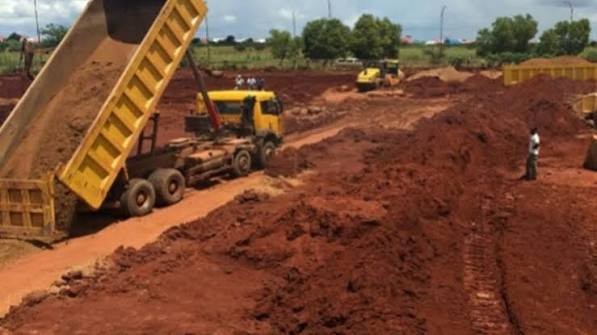
After approving the material, it can be transported to the site and spread over the prepared road formation.
The material should be distributed evenly and in controlled layers rather than dumped randomly in large heaps.
This helps ensure that the road receives a consistent thickness and that the material can be properly compacted.
During spreading, the construction team should:
- Distribute the material evenly.
- Maintain the intended road width.
- Avoid leaving isolated thick or thin sections.
- Correct visible depressions.
- Maintain the designed road profile.
- Check material quality during delivery and placement.
The thickness of each layer should follow the approved design and construction specification. It should not be assumed that one thickness is suitable for every road.
8. Condition the Material and Compact the Road
Compaction is essential because it helps the road material form a dense and stable layer.
Material that is not adequately compacted may become loose, develop ruts or move under vehicle traffic.
Before compaction, the material may need moisture conditioning to achieve the appropriate moisture content for the specified compaction method.
The typical work may involve:
- Checking the condition of the spread material.
- Adding water where necessary.
- Mixing or reshaping the material to distribute moisture evenly.
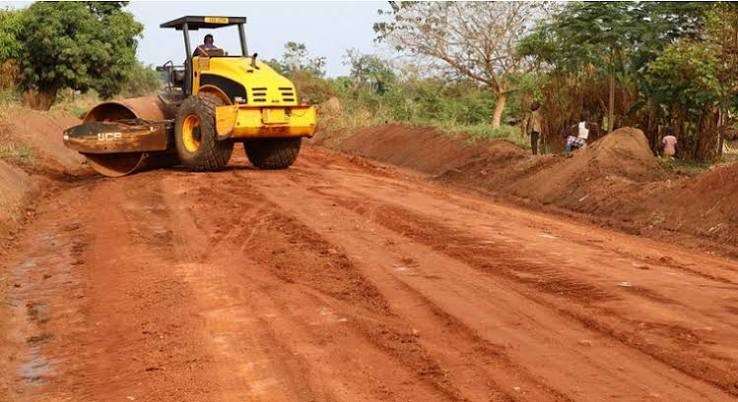
- Compacting using suitable road rollers or other equipment.
- Checking the finished layer against the project requirements.
The required moisture content, compaction level and testing method should be determined by the engineering specifications and material characteristics.
Compaction should not be judged only by how the road looks or feels underfoot. Where the project requires it, field density testing and other quality-control checks should be performed.
9. Shape the Road Surface and Shoulders
After the road material has been placed and compacted, the surface should be shaped to support effective drainage and safe vehicle movement.
The finished profile may include a suitable camber or crossfall that allows rainwater to flow towards the drainage system.
Road shoulders should also be shaped and maintained so that they do not obstruct water runoff or create dangerous edges.
The final surface should be:
- Even and properly graded.
- Free from significant depressions.
- Suitable for the intended traffic.
- Properly connected to the drainage system.
- Consistent with the approved road levels and design.
The appropriate road width, gradient and crossfall depend on the project design, site conditions and applicable road specifications.
10. Inspect and Test the Completed Road
Before the road is accepted for use, the completed works should be inspected against the project requirements.
Quality checks may cover:
- Road alignment and dimensions.
- Surface levels and general profile.
- Material quality.
- Layer thickness where specified.
- Compaction results.
- Drainage performance.
- Culvert installation and water discharge.
- Surface defects and unfinished sections.
Any defects identified during inspection should be corrected before handover.
For projects with formal engineering supervision, the inspection and testing requirements should be documented in accordance with the contract and applicable specifications.
11. Plan for Ongoing Road Maintenance
Even a properly constructed murram road requires maintenance. Weather, traffic, drainage problems and natural ground movement can gradually affect its condition.
A maintenance plan helps identify problems early and reduces the likelihood of expensive rehabilitation.
Regular maintenance may include:
- Clearing blocked side drains.
- Removing debris from culvert openings.
- Filling and repairing potholes.
- Grading uneven road sections.
- Replacing lost gravel where necessary.
- Repairing erosion and damaged shoulders.
- Checking low-lying areas after heavy rainfall.
Maintenance should be based on the road’s condition and usage rather than waiting until the surface becomes severely damaged.
Materials Required for Murram Access Road Construction
The materials required depend on the road design, ground conditions and construction scope.
| Material | Main purpose |
|---|---|
| Suitable murram or gravel | Forms the road surface or specified gravel layer |
| Approved fill material | Raises or prepares sections of the road formation |
| Water | Helps achieve suitable moisture conditions during compaction |
| Culvert pipes or structures | Allow water to pass beneath the road |
| Drainage materials | Support the construction of drains and erosion-control works |
| Geosynthetic materials, where specified | May help with separation, reinforcement or ground stabilisation |
The materials should be selected according to the engineering requirements. Not every project requires every material listed above.
Machinery and Equipment Used in Murram Road Construction
Different machines are used at different stages of the project. The equipment required depends on the road length, site access, ground conditions and work volume.
| Equipment | Main function |
|---|---|
| Excavator | Excavation, earthworks and loading |
| Bulldozer | Clearing, pushing and moving earth |
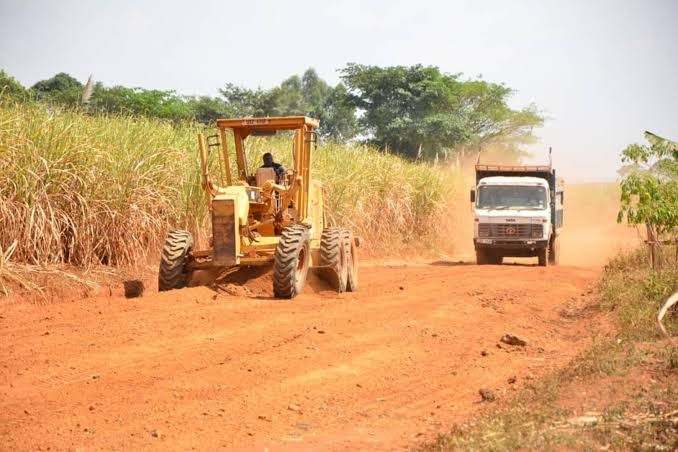
| Motor grader | Shaping and grading the road surface |
| Tipper trucks | Transporting murram and other construction materials |
| Road roller | Compacting the road formation and gravel layers |
| Water bowser | Supplying water for moisture conditioning and dust control |
| Surveying equipment | Establishing levels, alignment and road dimensions |
Using appropriate machinery helps improve productivity and construction quality. Equipment selection should be based on the actual work requirements.
Factors That Affect the Cost of Building a Murram Access Road in Uganda
The cost of constructing a murram access road varies from one project to another. A short private access road may require a different budget from a long rural road or a route designed for heavy vehicles.
The main cost factors include:
1. Road Length and Width
Longer and wider roads generally require more materials, labour, machinery time and transportation.
2. Ground Conditions
Sites with soft soils, steep slopes, rocky sections or waterlogged areas may require additional excavation, filling or ground improvement.
3. Murram Quality and Availability
The suitability and availability of murram influence the material cost. Transport distance from the source can also have a significant effect.
4. Drainage Requirements
Projects requiring side drains, culverts, cross-drainage structures or erosion protection may have higher costs.
5. Machinery and Labour
The type of equipment, operating hours, fuel, labour requirements and site conditions all contribute to the project budget.
6. Traffic Requirements
A road intended for frequent heavy vehicle use may require a stronger design and more substantial construction work than a light-traffic residential access road.
7. Site Accessibility
Difficult access for tipper trucks, graders and rollers can increase transport time and equipment costs.
8. Maintenance Requirements
The long-term budget should consider routine grading, drainage clearing and periodic gravel replacement where necessary.
For an accurate quotation, the project should be assessed before work begins. A useful quotation should clearly explain the road length and width, site preparation, material requirements, drainage works, equipment, labour and any testing or supervision included.
Common Mistakes to Avoid When Constructing a Murram Road
Avoiding common construction mistakes can help protect your investment and improve the road’s service life.
Ignoring drainage: Water is a major cause of murram road deterioration. Drainage should be included in the design and construction plan.
Using unsuitable material: Poor-quality gravel may not provide the required strength or stability. Material should be checked before use.
Building over weak ground: Soft or unstable areas should be treated appropriately before the road layers are placed.
Spreading material unevenly: Inconsistent material distribution can create weak and uneven sections.
Insufficient compaction: Poorly compacted material may move, rut or develop potholes under traffic.
Ignoring the road profile: A badly shaped surface can trap water and accelerate deterioration.
Choosing a contractor based only on the lowest price: A quotation that excludes drainage, ground preparation or proper compaction may lead to additional costs later.
Failing to maintain the road: Blocked drains and small potholes can develop into larger problems when left unattended.
How to Choose a Murram Road Construction Company in Uganda
Choosing a suitable road construction company is an important part of achieving a successful project.
Before hiring a contractor, consider the following:
- Relevant experience: Ask about experience with similar road construction, grading or improvement work.
- Clear scope of work: Ensure the quotation explains exactly what is included.
- Material sourcing: Ask where the murram will come from and how its suitability will be assessed.
- Drainage planning: Confirm that the proposed work addresses water flow and drainage structures.
- Machinery and resources: Discuss the equipment and labour required for the project.
- Quality control: Ask how material placement, compaction and completed works will be checked.
- Project supervision: Establish who will coordinate and monitor the work.
- Cost transparency: Request a breakdown of major cost items and any exclusions.
- Project timeline: Agree on a realistic work schedule, taking weather and site conditions into account.
- Maintenance advice: Ask what maintenance the completed road is likely to require.
For public road projects or projects subject to formal procurement, confirm the applicable registration, qualification, approval and contract requirements before appointment.
Why Consider Daltrev Co. Ltd for Murram Road Construction in Uganda?
Selecting a company that understands the requirements of civil works is important when planning a new access road or improving an existing one.
Daltrev Co. Ltd provides civil works services in Uganda, including:
- Murram road construction.
- Road opening.
- Road grading and improvement.
- Land levelling and landscaping.
- Tarmac road construction.
- Drainage works.
- Bridge construction.
The company also provides construction-related consultancy and project management support.
Whether you are planning an access road for a private property, farm, commercial development or construction site, Daltrev Co. Ltd can be contacted to discuss your project requirements and the services available.
Learn more about the company’s Civil Works Services and explore its Works page.
Frequently Asked Questions About Murram Access Road Construction in Uganda
1. How long does it take to construct a murram access road?
The construction period depends on the road length, site conditions, weather, drainage requirements, material availability and machinery. A short private access road may take considerably less time than a longer road requiring extensive earthworks and drainage structures. A realistic programme should be prepared after assessing the site.
2. What is the best material for constructing a murram road?
The best material is one that meets the requirements of the intended road layer and project specification. Its grading, plasticity, strength and moisture characteristics should be considered. Material testing may be necessary before large-scale use.
3. Can a murram road be used by heavy trucks?
Yes, a murram road can be designed for certain heavy vehicle requirements. However, its ability to carry heavy traffic depends on the subgrade, material quality, layer design, compaction, drainage and expected traffic loads. An appropriate engineering assessment is important.
4. Why do murram roads develop potholes?
Potholes can result from poor drainage, unsuitable materials, weak foundations, inadequate compaction, traffic loading and delayed maintenance. Water entering the road structure is a particularly important factor.
5. Is drainage necessary when constructing a murram access road?
Yes. Drainage is essential because uncontrolled water can weaken the road foundation, wash away gravel and cause erosion. Side drains, culverts and suitable surface shaping should be provided where required by the site and design.
6. How often should a murram access road be maintained?
There is no single maintenance interval for every road. Maintenance frequency depends on traffic, rainfall, drainage performance, material quality and the road’s condition. Regular inspections, particularly after heavy rainfall, help identify problems early.
7. Can an existing damaged murram road be repaired?
Yes. Depending on the extent of the damage, the road may be improved through grading, pothole repairs, drainage clearing, re-gravelling, compaction or more extensive rehabilitation. The underlying cause of the damage should be addressed rather than simply covering the affected surface.
8. Is a murram road cheaper than a tarmac road?
A murram road generally requires a different level of initial construction investment from a paved road. However, the overall cost comparison should consider traffic, drainage, maintenance frequency, material availability and the required service life.
9. What machinery is needed to construct a murram road?
Commonly used equipment includes excavators, bulldozers, motor graders, tipper trucks, road rollers and water bowsers. The exact machinery depends on the road’s size and construction requirements.
10. Can murram roads be constructed during the rainy season?
Construction may be possible during some rainy periods, but excessive rainfall can make earthworks, material handling and compaction difficult. Project scheduling should consider weather conditions, soil moisture and the availability of suitable working conditions.
11. How can I get a quotation for murram road construction in Uganda?
Contact a road construction company with details such as the project location, approximate road length and width, current site condition, intended use and drainage requirements. A site assessment may be needed before a reliable quotation can be prepared.
Contact Daltrev Co. Ltd for Murram Road Construction Services in Uganda
A durable murram access road starts with proper planning, suitable construction materials, effective drainage and careful execution. Whether you need a new access road, road opening, grading, improvement or related civil works, choosing the right approach can help reduce future repair costs and improve access to your property.
Daltrev Co. Ltd offers civil works services in Uganda, including murram road construction, road opening, road grading and improvement, drainage works and other road-related services.
Contact the team to discuss your project requirements and request further information.
- Company: Daltrev Co. Ltd
- Location: Kampala, Uganda
- Telephone: +256 744 702 773
- Email: daltrevco@gmail.com
- Website: https://www.daltrevco.com/
Planning a murram access road in Uganda? Contact Daltrev Co. Ltd to discuss your civil works project.