
Guest security, convenience and efficient room management are essential to the successful operation of every hotel. From luxury resorts and boutique hotels to business hotels, lodges and guest houses, accommodation providers need reliable ways to control access to guest rooms and restricted areas.
Traditional metal keys can be difficult to manage, especially in hotels with many rooms, frequent guest check-ins and changing occupancy. Lost keys may create security concerns, while replacing locks and managing duplicate keys can become inconvenient and costly.
Hotel key card access systems provide a modern alternative by allowing guests and authorised staff to unlock designated doors using electronic access cards. These systems help hotels manage room access, improve security, simplify check-in procedures and reduce the administrative challenges associated with traditional keys.
In Uganda, where the hospitality industry serves business travellers, tourists, conference guests and domestic visitors, electronic hotel door locks can support more organised accommodation management.
At Daltrevco, we understand the importance of integrating effective access control technology into modern buildings and hospitality facilities. This guide explores how hotel key card access systems work, their features and benefits, available technologies, installation requirements and the factors hotels should consider when choosing a suitable solution.
What Are Hotel Key Card Access Systems?
A hotel key card access system is an electronic locking and access management solution that allows authorised guests or staff to unlock designated doors using programmed access cards.
Instead of using a conventional metal key, a guest receives a card that has been configured to provide access to a specific room or authorised area.
The hotel can programme the card to work within a defined period, such as the guest’s booking dates. When the guest checks out, the card’s access permission can expire or be cancelled, depending on the system.
A typical hotel key card access installation includes:
- Electronic hotel door locks.
- RFID or magnetic stripe key cards.
- Card encoders or programming devices.
- Access management software.
- Front desk management equipment.
- Batteries or a suitable power supply.
- Optional management and monitoring devices.
Some systems operate independently at each door, while others connect to a central management platform. The appropriate arrangement depends on the hotel’s size, operational requirements and preferred level of access management.
How Do Hotel Key Card Access Systems Work?
Hotel key card systems use electronic credentials to verify whether a guest or staff member is authorised to unlock a particular door.
Although the technology varies between systems, the general process is straightforward.
1. Guest Check-In and Card Programming
When a guest checks in, hotel reception staff use a card encoder or compatible management system to programme a key card.
The card is configured with the appropriate access permissions, which may include:
- The assigned guest room.
- The permitted check-in and check-out period.
- Selected hotel facilities, where supported.
- Other authorised access areas.
2. Guest Presents the Key Card
The guest approaches the assigned room and presents the card to the electronic door lock.
Depending on the system, the card may be tapped against or placed near the reader.
3. The Lock Verifies the Card
The electronic lock reads the card’s information and checks whether the credential is valid for that door.
If the card has the correct permissions and has not expired or been cancelled, the lock authorises access.
4. The Door Unlocks
The electronic locking mechanism releases, allowing the guest to enter the room.
If the card is invalid, expired or not authorised for that room, the lock remains secured.
5. Access Permissions Expire or Are Updated
At checkout, the hotel’s management system can update or cancel the guest’s access permissions, depending on the system design.
The hotel can then issue a new card to the next guest without needing to replace the physical door lock.
This makes electronic key cards particularly useful for accommodation facilities with frequent guest turnover.
Types of Hotel Key Card Access Systems
Different hotels have different security requirements, budgets and operational arrangements. The technology selected should be compatible with the hotel’s doors, access management software and preferred guest experience.
The main types include the following.
1. RFID Hotel Key Card Systems
<PRIVATE_PERSON>RFID (Radio Frequency Identification) hotel key cards use radio-frequency communication to transmit credential information to a compatible electronic door lock.
Guests generally hold or tap the card near the reader to unlock their room.
RFID systems are widely used in modern hospitality environments because they provide convenient contactless access.
Key features include:
- Contactless card reading.
- Quick guest access.
- Programmable room permissions.
- Ability to cancel or replace lost credentials, depending on system architecture.
- Compatibility with selected hotel management platforms.
- Support for access management across multiple rooms.
RFID hotel locks are suitable for hotels, resorts, lodges, serviced apartments and guest houses.
It is important to confirm the card technology and security standard supported by the lock. Not all RFID cards offer the same level of credential protection.
2. Magnetic Stripe Hotel Key Card Systems
Magnetic stripe systems use cards containing encoded magnetic information.
The guest inserts or swipes the card through a compatible reader, which reads the encoded data and determines whether access should be granted.
These systems have been used in hotels for many years.
Common features include:
- Card-based room access.
- Programmable guest permissions.
- Relatively straightforward card issuance.
- Compatibility with selected older hotel locking systems.
However, magnetic stripe cards can be affected by wear, magnetic damage and repeated handling. They may also require more physical contact with the reader than contactless alternatives.
Hotels considering a new installation should compare the long-term practicality and security of magnetic stripe technology with modern RFID solutions.
3. Smart RFID Hotel Lock Systems
Smart RFID hotel locks use electronic credentials and more advanced access management features to improve room access administration.
Depending on the model, they may support secure card technologies, audit records, centralised management and integration with hotel operating systems.
Possible features include:
- Secure electronic credentials.
- Programmable guest access.
- Staff access permissions.
- Access event records.
- Centralised administration.
- Integration with selected hotel management platforms.
The actual features depend on the lock manufacturer, software and system configuration.
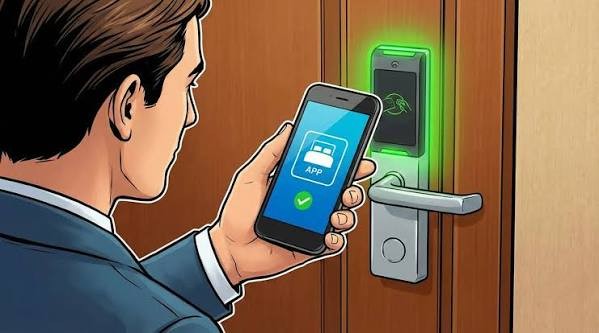
4. Mobile Key Hotel Access Systems
Some modern hotel access systems allow guests to use compatible smartphones as digital room keys.
Access may be provided through a hotel application or another supported mobile credential method, such as Bluetooth or NFC.
Potential benefits include:
- Reduced reliance on physical key cards.
- Convenient guest access.
- Digital credential management.
- Potential integration with online check-in.
- Easier delivery of temporary access permissions.
Mobile key systems require compatible locks, mobile devices and appropriate software. Hotels should also provide a practical alternative for guests whose devices are incompatible, unavailable or out of battery.
5. Hybrid Hotel Access Control Systems
Hybrid systems combine physical key cards with other access technologies, such as mobile credentials or selected staff access methods.
This approach allows hotels to offer guests different access options while maintaining a centralised access management process where supported.
For example, a hotel may issue RFID cards to guests while allowing authorised management staff to use additional credentials.
Hybrid solutions can be useful for hotels planning gradual upgrades or serving guests with different technology preferences.
Important Features of a Modern Hotel Key Card Access System
When selecting an electronic hotel locking solution, hotel owners should consider more than the ability to unlock a room using a card.
The following features can improve daily hotel operations and access management.
1. Programmable Guest Access
A suitable system should allow authorised hotel staff to programme room cards according to guest bookings.
For example, a guest checking in on Monday and checking out on Thursday may receive a card with access configured for the relevant stay period.
The exact expiry behaviour depends on the system’s clock, software and configuration.
2. Lost or Stolen Card Management
Hotels need a reliable way to respond when a guest reports a lost key card.
Depending on the system, staff may be able to cancel the lost credential, issue a replacement card and ensure that the previous card can no longer unlock the room.
Hotels should confirm whether cancellation takes effect immediately, requires communication with the lock or occurs when the lock next receives updated information.
3. Staff Access Permissions
Housekeeping teams, maintenance personnel, supervisors and hotel managers may require access to different rooms and service areas.
An electronic access system can provide different permissions based on job responsibilities.
For example:
- Housekeeping staff may receive access to assigned rooms.
- Maintenance personnel may access authorised service areas.
- Managers may have broader administrative permissions.
- Reception staff may manage guest card issuance.
These permissions should be reviewed regularly to prevent unnecessary access.
4. Access Event Records
Some hotel electronic locks can record access events, such as card use and unsuccessful access attempts.
Depending on the system, authorised administrators may review these records to investigate security concerns or understand room access activity.
The available records and storage period vary by product.
5. Centralised Access Management
Hotels with many rooms can benefit from a central management platform.
Instead of managing every door separately, authorised staff can use compatible software to issue credentials, assign permissions and administer selected access points.
This can make access management easier in larger hotels and accommodation facilities.
6. Low-Battery Alerts
Many battery-powered electronic hotel locks provide a low-battery warning through an indicator, management software or another supported notification method.
This allows hotel maintenance personnel to replace batteries before the lock stops operating normally.
Hotels should establish a routine battery inspection and replacement schedule.
7. Integration with Hotel Management Systems
Some hotel key card systems can integrate with Property Management Systems (PMS).
A PMS helps manage hotel reservations, guest check-in, room allocation and checkout.
When the access control system supports compatible integration, guest room access can be managed as part of the check-in process.
However, integration is not universal. Hotels should verify software compatibility, supported interfaces and any additional licensing requirements before purchasing equipment.
8. Emergency and Mechanical Access
Electronic locks should be selected with suitable emergency access arrangements.
Depending on the model, these may include mechanical override keys, emergency power provisions or other manufacturer-approved procedures.
Hotels must also ensure that room occupants can exit safely without being trapped by electronic locking arrangements.
Benefits of Hotel Key Card Access Systems
Installing a suitable electronic hotel locking system can improve security, guest convenience and operational efficiency.
1. Improved Guest Room Security
Electronic key cards help hotels control which credentials can unlock specific rooms.
Unlike conventional keys, electronic credentials can often be cancelled or reprogrammed without changing the physical lock.
This is particularly useful when guests lose cards or when room access permissions need to change.
However, overall security still depends on the quality of the lock, credential technology, installation and access management procedures.
2. Convenient Guest Experience
Guests can access their rooms using a simple card rather than carrying traditional metal keys.
Contactless RFID systems are particularly convenient because the guest usually only needs to hold the card near the reader.
This can improve the arrival and departure experience, especially in hotels with frequent guest check-ins.
3. Easier Key Management
Hotels can issue cards to guests and staff according to their access requirements.
When a guest checks out, the previous credential can be allowed to expire or be cancelled according to the system’s configuration.
This reduces the administrative burden associated with collecting, tracking and replacing conventional room keys.
4. Better Control of Staff Access
Electronic access management allows hotels to assign staff credentials according to their responsibilities.
For example, housekeeping employees may access designated rooms, while maintenance personnel may be authorised to enter technical areas.
This helps hotels avoid giving every employee unrestricted access to all rooms and facilities.
5. Reduced Costs Associated with Lost Keys
With traditional mechanical keys, losing a key may create concerns about unauthorised duplication or access.
In some situations, the hotel may need to replace the lock or rekey the door.
Electronic systems can reduce this inconvenience because compatible systems allow administrators to cancel or replace lost cards without necessarily changing the lock.
The actual process depends on the lock technology and system configuration.
6. More Efficient Hotel Operations
A well-integrated system can simplify the process of assigning room access during check-in and updating permissions at checkout.
For larger hotels, centralised administration can reduce repetitive manual tasks and make it easier to manage access across multiple rooms.
7. Improved Security Monitoring
Where access event logging is supported, authorised hotel administrators can review selected access activity.
This may help investigate reported incidents, review staff access and identify unusual patterns.
Access records should be protected and made available only to authorised personnel.
8. Support for Modern Hospitality Facilities
Electronic key card locks complement other modern hotel technologies, including CCTV surveillance, visitor management, electronic door locks and building security systems.
They can form part of a wider security strategy for hotels, resorts and serviced accommodation facilities.
Where Can Hotels Use Key Card Access Systems?
Hotel key card technology is not limited to guest bedrooms. Depending on the selected system, it can also manage access to other parts of a hospitality property.
Guest Rooms
The main application is controlling access to individual guest rooms. Each guest receives a credential programmed for the room assigned to them.
Staff-Only Areas
Electronic access control can restrict entry to offices, housekeeping stores, maintenance rooms and other designated staff areas.
Conference and Meeting Rooms
Hotels that host conferences, business meetings and private events may use electronic access systems to manage selected meeting facilities.
Fitness Centres and Swimming Pool Areas
Compatible access systems can regulate entry to selected recreational facilities for authorised guests or members.
Storage and Service Areas
Hotels may use electronic locks to protect equipment stores, supply rooms and other areas containing valuable or sensitive items.
Administrative Offices
Management offices, finance departments and records rooms may require additional access restrictions.
The hotel should select compatible locking equipment for each door type and access requirement rather than assuming that one lock model will suit every entrance.
Hotel Key Card Access Systems vs Traditional Metal Keys
Both traditional keys and electronic key cards can provide room access, but they differ in how permissions are managed.
| Feature | Hotel key card system | Traditional metal key |
|---|---|---|
| Access method | Electronic credential | Physical key |
| Guest access permissions | Can be programmed electronically | Controlled by key distribution |
| Lost key management | Credential can often be cancelled | May require rekeying or lock replacement |
| Access expiry | Supported by compatible systems | No automatic expiry |
| Staff permissions | Can be assigned by role | Requires separate physical keys |
| Access records | Available on selected systems | Usually unavailable without additional equipment |
| Guest convenience | Contactless options available | Requires inserting a physical key |
| Management | May support central administration | Usually manual |
For hotels with frequent guest turnover, electronic key cards can provide more flexible access management.
However, the best solution depends on the hotel’s budget, room count, security requirements and operational processes.
How to Choose the Best Hotel Key Card Access System
Selecting the right hotel door locking system requires careful consideration of the property’s needs.
Before purchasing equipment, hotel owners and managers should evaluate the following factors.
1. Number of Guest Rooms
A small guest house may need a simple electronic locking arrangement, while a large hotel may require centralised access management across many rooms and service areas.
Consider the total number of doors and whether the system can support future expansion.
2. Card Technology and Security
Determine whether the system uses magnetic stripe, RFID or another credential technology.
For new installations, compare the supported security standards, credential protection and card management capabilities.
Avoid assuming that every RFID card is equally secure. The specific card technology and implementation matter.
3. Compatibility with Existing Doors
Electronic hotel locks must match the physical construction and dimensions of the doors.
Consider:
- Door material.
- Door thickness.
- Lock preparation and cut-outs.
- Door handing and opening direction.
- Existing mechanical hardware.
- Fire-rated door requirements, where applicable.
A site assessment helps prevent compatibility problems during installation.
4. Hotel Management Software Compatibility
If the hotel uses a Property Management System, confirm whether the proposed electronic lock system can integrate with it.
Ask the supplier about supported software versions, integration requirements, licensing and ongoing support.
5. Offline or Online Operation
Some hotel locks operate independently and store authorised credentials locally. Others support online communication with a central system.
Offline systems may be suitable for properties that want simpler infrastructure, while online systems can offer additional central management capabilities.
The hotel should confirm what happens when network communication is interrupted and whether access permissions continue to work.
6. Power and Battery Requirements
Many electronic hotel door locks operate using batteries.
Before selecting a system, understand its battery type, expected operating life, low-battery warning method and replacement procedure.
7. Maintenance and Technical Support
Choose equipment for which replacement components, technical support and maintenance can be arranged.
This is particularly important for hotels because a faulty room lock can inconvenience guests and disrupt room availability.
8. Future Expansion
A hotel may begin with a limited number of electronic locks and expand later.
Choose a system that can accommodate additional rooms, staff credentials and access points without requiring an unnecessary complete replacement.
Hotel Key Card Access System Installation Process
Professional installation helps ensure that hotel electronic locks work correctly, remain compatible with the doors and support the hotel’s daily operations.
A typical installation project involves the following stages.
Step 1: Hotel Site Assessment
The installation team assesses the property and identifies the doors that require electronic access control.
The assessment should consider:
- Number of guest rooms.
- Staff-only areas.
- Existing door hardware.
- Door construction and condition.
- Required access control features.
- Network and power requirements.
- Reception and management arrangements.
This information helps determine the most suitable equipment.
Step 2: Selection of Electronic Hotel Locks
The appropriate lock type is selected according to the door specifications, security requirements and preferred access technology.
Options may include RFID electronic locks, compatible magnetic stripe locks or systems that support additional mobile credentials.
Step 3: Access Card and Software Planning
The hotel determines how guest cards will be issued and managed.
This may involve installing a card encoder, configuring access management software and establishing permissions for reception staff, managers and other employees.
Step 4: Door Preparation
Existing locks and door hardware are assessed.
Where necessary, the doors are prepared to accommodate the electronic locking equipment. Care must be taken to preserve the door’s structural integrity and applicable fire safety requirements.
Step 5: Electronic Lock Installation
The electronic locks are fitted according to the manufacturer’s specifications.
The installer checks alignment, mechanical operation and compatibility with the door frame.
Step 6: System Configuration
The locks, card encoders and management software are configured.
This may include:
- Setting up room identifiers.
- Programming authorised cards.
- Configuring staff access.
- Setting credential expiry rules.
- Establishing administrative permissions.
- Configuring supported reporting features.
Step 7: Testing and Commissioning
Every installed lock should be tested to confirm that it works correctly.
Testing should include:
- Valid guest card access.
- Invalid card rejection.
- Expired or cancelled card behaviour.
- Staff access permissions.
- Door locking and unlocking.
- Battery status and warnings.
- Mechanical emergency access arrangements.
- Software communication, where applicable.
Step 8: Staff Training and Handover
Reception and management staff should understand how to issue cards, replace lost credentials, manage room assignments and respond to common access problems.
Maintenance personnel should also understand the approved battery replacement and servicing procedures.
How Much Does Hotel Key Card Access System Installation Cost in Uganda?
The cost of installing hotel key card access systems in Uganda depends on the type of electronic locks, number of rooms, access technology and complexity of the project.
A small guest house with a limited number of doors will have different installation requirements from a large hotel requiring centralised access management and software integration.
The main factors that influence the overall cost include:
1. Number of doors: The total number of guest rooms and additional access-controlled areas directly affects the amount of equipment required.
2. Type of electronic lock: RFID, magnetic stripe and more advanced electronic locking systems have different equipment requirements and prices.
3. Access card technology: The type and security standard of cards and readers can influence the system cost.
4. Software and management platform: Some systems require dedicated management software, licences or additional configuration.
5. Hotel management integration: Connecting the locking system to an existing Property Management System may involve additional technical work and licensing.
6. Door condition and installation work: Existing door hardware, door material and preparation requirements can affect installation costs.
7. Networking and communication: Online systems may require additional network infrastructure and communication equipment.
8. Power and battery requirements: The cost of batteries, backup arrangements and related components should be considered.
9. Maintenance and technical support: Hotels should account for ongoing servicing, replacement parts and support.
The most reliable way to determine the cost is to assess the property, identify the required features and prepare a quotation based on the actual installation requirements.
Contact Daltrevco to discuss hotel key card access solutions for your property in Uganda.
Common Hotel Key Card Access Problems and Solutions
Although electronic hotel locks offer several advantages, they may occasionally experience technical or operational problems.
Understanding common faults helps hotel staff respond appropriately.
1. Guest Key Card Does Not Unlock the Door
Possible causes:
- The card was not programmed correctly.
- The guest has been assigned the wrong room.
- The credential has expired or been cancelled.
- The card is damaged.
- The lock reader is faulty.
Recommended solution: Confirm the room assignment and card permissions, then test with a correctly programmed replacement card. If the problem continues, arrange a technical inspection.
2. Electronic Door Lock Stops Responding
Possible causes:
- Low or depleted batteries.
- Internal electronic faults.
- Damaged wiring or components.
- Reader malfunction.
Recommended solution: Follow the manufacturer’s approved emergency access procedure and check the battery condition. A qualified technician should inspect persistent faults.
3. Key Cards Work Intermittently
Possible causes:
- Damaged cards.
- Reader problems.
- Incorrect card technology.
- Poor card programming.
Recommended solution: Test a known working card and check compatibility between the card and the lock. Replace damaged cards and arrange inspection if the reader is faulty.
4. Guest Access Does Not Expire as Expected
Possible causes:
- Incorrect expiry configuration.
- Incorrect lock clock settings.
- Incomplete system updates.
- Software or communication issues.
Recommended solution: Review the card programming procedure and confirm that the lock is operating with the correct date and time settings.
5. Hotel Management Software Cannot Communicate with Locks
Possible causes:
- Network interruptions.
- Incorrect system configuration.
- Communication device faults.
- Software compatibility issues.
Recommended solution: Check the communication infrastructure and system configuration. Refer persistent integration problems to the relevant technical support team.
Maintenance Tips for Hotel Key Card Access Systems
Regular maintenance helps hotels reduce lock failures, improve reliability and maintain a good guest experience.
Recommended maintenance practices include:
- Checking electronic locks regularly.
- Replacing batteries according to manufacturer guidance.
- Monitoring low-battery warnings.
- Cleaning card readers using approved methods.
- Inspecting door handles, lock bodies and mechanical components.
- Testing guest and staff credentials.
- Reviewing access permissions regularly.
- Checking card encoders and management software.
- Updating supported software and firmware when appropriate.
- Keeping approved emergency access procedures available.
- Training reception and maintenance staff.
Hotels should also maintain spare cards and establish a clear process for handling lost or damaged credentials.
Hotel Security: Combining Key Card Systems with Other Technologies
Hotel key card access systems are most effective when they form part of a wider security strategy.
Depending on the hotel’s requirements, electronic room locks can complement other security solutions.
CCTV Surveillance Systems
CCTV cameras can help monitor selected entrances, reception areas, corridors and other common spaces.
When an incident occurs, authorised personnel may review relevant footage alongside available access records.
Camera placement should respect guest privacy. Cameras should not be installed in private guest rooms or other areas where people reasonably expect privacy.
Biometric Access Control Systems
Fingerprint or facial recognition systems may be suitable for selected staff-only or restricted areas.
Hotels should assess the privacy implications and applicable data protection requirements before collecting biometric information.
Electronic Door Locks
Additional electronic locks can help protect offices, stores, equipment rooms and other restricted areas.
Visitor Management Systems
Visitor management technology can help hotels register contractors, suppliers and other authorised visitors.
Combining appropriate visitor procedures with access control can improve accountability across the property.
Alarm and Building Security Systems
Compatible alarm and security technologies can support a coordinated approach to protecting hotel facilities.
The extent of integration depends on the equipment, software and system design.
Why Choose Daltrevco for Hotel Access Control Solutions?
Selecting an electronic hotel locking system is an important investment in guest security and daily hotel operations.
The right solution should match the hotel’s room layout, door specifications, guest management processes and long-term security requirements.
Daltrevco provides a point of contact for businesses and property owners exploring modern access control and building security solutions in Uganda.
When planning a hotel key card access project, it is important to consider:
- The most suitable electronic hotel lock technology.
- The number and type of doors requiring access control.
- Compatibility with existing door hardware.
- Guest and staff access management requirements.
- Card programming and credential replacement procedures.
- Integration with hotel management software.
- Maintenance and technical support requirements.
- Future expansion of the property.
Whether you operate a hotel, resort, lodge, guest house or serviced apartment facility, contact Daltrevco to discuss suitable access control solutions for your property.
Frequently Asked Questions About Hotel Key Card Access Systems
1. What is a hotel key card access system?
A hotel key card access system is an electronic locking solution that allows guests and authorised staff to unlock designated doors using programmed access cards instead of traditional metal keys.
2. How do hotel key cards work?
A guest presents a programmed card to an electronic door lock. The lock verifies the credential and unlocks if the card has valid permission for that room.
3. Which key card technology is best for hotels?
RFID technology is a common choice for modern hotel installations because it supports convenient contactless access. The best option depends on the hotel’s budget, security requirements and compatibility needs.
4. Can hotel key cards be programmed for specific rooms?
Yes. Compatible systems allow each card to be programmed for a designated room or selected authorised areas.
5. Can hotel key cards expire automatically?
Many systems support time-limited credentials. The expiry behaviour depends on the lock, card programming and system configuration.
6. What happens if a hotel guest loses their key card?
Hotel staff can issue a replacement card and, where supported, cancel the lost credential. Hotels should confirm how quickly cancellation takes effect on their particular system.
7. Do hotel key card locks require electricity?
Many electronic hotel locks operate using batteries rather than continuous mains electricity. Other systems may use different power arrangements. The selected lock’s specifications should be checked before installation.
8. Can hotel key card systems work without internet?
Some systems can operate offline because the lock stores or verifies authorised credentials locally. Others rely on network communication for certain management functions. Offline operation depends on the equipment and system design.
9. Can hotel key card systems be integrated with hotel management software?
Yes. Some electronic locking systems support integration with compatible Property Management Systems, allowing hotels to coordinate guest check-in, room allocation and access card issuance.
10. Can staff members have different access permissions?
Yes. Compatible systems allow administrators to assign different permissions to receptionists, housekeeping staff, maintenance personnel and managers.
11. Are RFID hotel key cards secure?
RFID systems can provide effective access management, but security varies according to the card technology, encryption, lock design and configuration. Hotels should choose systems with appropriate credential security rather than assuming all RFID cards offer the same protection.
12. Can hotel key cards be used for swimming pools and gyms?
Yes. Compatible access systems can manage entry to selected hotel facilities, including gyms, swimming pools and other restricted areas.
13. How long do hotel electronic door locks last?
Their lifespan depends on the lock’s quality, frequency of use, installation and maintenance. Following manufacturer recommendations and replacing worn components can help maintain reliable operation.
14. Can electronic hotel locks be installed on existing doors?
In many cases, yes. However, compatibility depends on the door material, thickness, dimensions, existing lock preparation and the electronic lock design. A site assessment is recommended.
15. How much does a hotel key card access system cost in Uganda?
The cost depends on the number of doors, lock technology, card type, management software, installation requirements and system integration. A site assessment is needed to prepare an accurate quotation.
Conclusion: Upgrade Your Hotel with Modern Key Card Access Control
Hotel key card access systems offer a convenient and organised way to manage guest room security and staff access. By replacing traditional keys with programmable electronic credentials, hotels can simplify room access management, respond more easily to lost cards and support modern hospitality operations.
From RFID hotel door locks to mobile key systems and centrally managed electronic access solutions, different technologies are available to suit different accommodation facilities.
Choosing the right system requires careful consideration of room numbers, door compatibility, card security, software integration, maintenance and guest convenience.
For hotels, resorts, lodges and serviced apartments in Uganda looking to modernise their access management, Daltrevco can help you explore suitable security solutions.
Contact Daltrevco today to discuss hotel key card access systems and electronic door lock solutions for your hospitality facility in Uganda.

