Water penetration and dampness are among the common problems that affect residential, commercial and industrial buildings in Uganda. From leaking roofs and wet basement walls to rising dampness, peeling paint and damaged floors, moisture problems can gradually weaken building materials, reduce indoor comfort and increase maintenance costs.
Uganda experiences seasonal heavy rainfall, high humidity in many regions and varying ground conditions. These factors make proper waterproofing and damp-proofing essential during building construction, renovation and maintenance.
Whether you are constructing a new house, renovating an office block, developing apartments, building a warehouse or managing a commercial property, choosing the right waterproofing solution helps protect your investment against moisture damage.
However, waterproofing is not simply applying a waterproof coating to a wet wall. Effective protection begins with identifying where the water is coming from, understanding how it enters the building and selecting a suitable system for the affected area.
At Daltrev Co. Ltd – Build for Legacy, we recognise the importance of quality construction practices and durable building protection. This guide explains waterproofing and damp-proofing solutions for buildings in Uganda, including their types, applications, benefits, costs and common mistakes to avoid.
What Is Waterproofing in Building Construction?
Waterproofing is the process of preventing water from penetrating building structures and internal spaces.
It involves using suitable materials, construction details and protective systems to prevent water from entering areas such as roofs, foundations, walls, balconies, bathrooms, terraces and underground structures.
Waterproofing is particularly important in areas exposed to direct rainfall, standing water, soil moisture and continuous contact with water.
Common waterproofing applications include:
- Roof waterproofing.
- Foundation waterproofing.
- Basement and retaining wall waterproofing.
- Bathroom and shower waterproofing.
- Balcony and terrace waterproofing.
- Water tank waterproofing.
- Swimming pool waterproofing.
- Waterproofing of concrete slabs.
- Waterproofing of external walls and other exposed surfaces.
The appropriate waterproofing system depends on the building design, surface condition, water exposure, movement characteristics and expected service conditions.
What Is Damp-Proofing?
Damp-proofing is the process of preventing moisture from entering building materials and internal spaces, particularly from the surrounding ground or through porous walls.
It is commonly used to control moisture movement through foundations, walls and floors.
Damp-proofing methods may include:
- Installing a damp-proof course (DPC).
- Installing a damp-proof membrane (DPM).
- Applying suitable damp-proof coatings.
- Improving ground drainage.
- Treating rising dampness.
- Sealing vulnerable wall and floor junctions.
- Correcting moisture entry points.
Although waterproofing and damp-proofing are related, they are not exactly the same.
Difference Between Waterproofing and Damp-Proofing
| Waterproofing | Damp-proofing |
|---|---|
| Designed to prevent water penetration, including under more demanding water exposure conditions | Designed mainly to control moisture and dampness |
| Commonly used on roofs, basements, bathrooms and water-retaining structures | Commonly used in foundations, ground floors and walls |
| May involve membranes, liquid-applied systems, cementitious coatings and other specialised systems | May involve DPCs, DPMs, coatings and drainage improvements |
| System selection depends on water pressure, exposure and movement | System selection depends on moisture source, ground conditions and building details |
A damp-proofing system should not automatically be assumed to provide protection against significant hydrostatic water pressure. Where water is pressing against a basement wall or underground structure, a properly designed waterproofing system may be required.
Why Waterproofing and Damp-Proofing Are Important for Buildings in Uganda
Waterproofing should be considered during the design and construction of buildings rather than treated as an optional finishing activity.
In Uganda, seasonal rainfall, ground moisture, poor drainage and inadequate construction details can expose buildings to moisture-related problems.
The following are some of the main reasons why waterproofing and damp-proofing are important.
1. Prevents Water Leakage
Waterproofing helps prevent rainwater and other sources of water from entering buildings through roofs, walls, balconies, bathrooms and foundations.
Without proper protection, water can penetrate building materials and damage ceilings, plaster, paint, floor finishes and internal fittings.
Installing suitable waterproofing systems helps reduce the likelihood of leakage and protects interior spaces.
2. Protects Foundations and Structural Components
Foundations and underground structural components may be exposed to moisture from surrounding soil.
Where water enters through defective joints, cracks or porous concrete, it can contribute to deterioration and corrosion of embedded reinforcement.
Waterproofing and appropriate drainage help protect foundations, basement walls and other underground components from moisture-related damage.
The system must be selected according to the ground conditions, water exposure and structural design.
3. Prevents Rising Dampness
Rising damp occurs when moisture moves upwards through porous masonry from the ground by capillary action.
It is commonly associated with missing, damaged or ineffective damp-proof courses, although other sources of moisture can create similar symptoms.
Rising dampness can cause:
- Damp patches near the bottom of walls.
- Peeling paint.
- Damaged plaster.
- Salt deposits on wall surfaces.
- Deteriorating skirting boards.
- Unpleasant indoor smells.
A suitable damp-proofing solution helps interrupt or control the movement of moisture through walls.
4. Protects Paint, Plaster and Interior Finishes
Moisture can damage decorative and protective finishes.
When water enters walls and ceilings, it may cause paint to blister, plaster to weaken and floor finishes to detach.
These defects make buildings appear poorly maintained and may require repeated repairs.
Proper waterproofing helps protect finishes by reducing moisture penetration.
5. Reduces Mould and Indoor Dampness
Persistent moisture can create conditions that support mould growth, particularly in poorly ventilated rooms, bathrooms, kitchens and storage spaces.
Mould and damp indoor conditions can affect indoor comfort and may aggravate respiratory or allergy-related symptoms in some occupants.
Waterproofing, proper ventilation and effective moisture management help maintain healthier indoor environments.
6. Extends the Useful Life of Building Materials
Water can contribute to deterioration of concrete, masonry, timber, metal components and other building materials.
For example, moisture can encourage corrosion of steel reinforcement, damage timber and weaken some wall finishes.
By controlling water penetration, waterproofing helps preserve building materials and reduces avoidable deterioration.
7. Reduces Maintenance and Repair Expenses
A small roof leak may initially require a simple repair. If ignored, it can damage ceilings, electrical installations, wall finishes and furniture.
Similarly, untreated dampness may spread across walls and floors, increasing the scope of repair work.
Preventive waterproofing helps reduce the likelihood of recurring water damage and unexpected repair expenses.
8. Improves Property Value and Occupant Confidence
A dry, well-maintained building is generally more attractive to tenants, buyers, business operators and visitors.
Water stains, peeling paint, damp smells and leaking roofs can reduce confidence in a property’s condition.
Proper moisture protection helps maintain the appearance, functionality and overall condition of the property.
Common Causes of Water Leakage and Dampness in Buildings
Before choosing a waterproofing solution, it is important to identify the actual source of moisture.
Applying a coating without correcting the underlying problem may only provide temporary results.
Common causes include:
1. Poor Roof Waterproofing
Damaged roofing sheets, defective roof joints, cracked roof coverings and poorly installed flashing can allow rainwater to enter buildings.
Roof leaks are particularly problematic during periods of heavy rainfall.
2. Missing or Damaged Damp-Proof Course
A damp-proof course is designed to prevent ground moisture from rising through walls.
If it is missing, damaged, incorrectly installed or bridged by surrounding materials, moisture may move upwards through porous masonry.
3. Poor Site Drainage
Water that collects around buildings can increase moisture exposure to foundations and underground walls.
Poorly designed drainage channels, blocked gutters and incorrect ground levels can direct rainwater towards the building instead of away from it.
4. Cracks in Concrete and Masonry
Cracks in roofs, walls, slabs and foundations can create pathways for water penetration.
Some cracks result from shrinkage or temperature changes, while others may be associated with settlement or structural movement.
The cause should be investigated before selecting a repair method.
5. Defective Plumbing Systems
Leaking water supply pipes, faulty bathroom connections and damaged drainage pipes can introduce moisture into walls, floors and ceilings.
These leaks may remain hidden for long periods before visible damage appears.
6. Poor Bathroom and Balcony Waterproofing
Bathrooms, showers, balconies and terraces are regularly exposed to water.
Without suitable waterproofing and properly detailed drainage, water can penetrate floor slabs, wall junctions and adjacent rooms.
7. Poor Construction Workmanship
Incorrect application of waterproofing materials, inadequate surface preparation, defective joints and failure to follow manufacturer instructions can cause waterproofing systems to fail.
8. Inadequate Ventilation
Moisture generated by cooking, bathing and other indoor activities can accumulate where ventilation is insufficient.
This may result in condensation on walls, ceilings and windows.
Unlike rainwater penetration, condensation is an indoor moisture problem and requires appropriate ventilation, insulation and moisture management.
Best Waterproofing Solutions for Buildings in Uganda
Different parts of a building require different waterproofing systems.
The best choice depends on the location, type of construction, exposure to water, substrate condition and expected performance.
1. Roof Waterproofing Systems
Roof waterproofing protects the building against rainfall and water penetration from above.
It is suitable for concrete roofs, flat roofs, terraces and other roof designs where conventional roof coverings may not provide sufficient protection on their own.
Common roof waterproofing solutions include:
Liquid-applied waterproofing membranes: These are applied as liquid coatings that cure to form a continuous waterproof layer. They are useful for suitably prepared roof surfaces and areas with complex detailing.
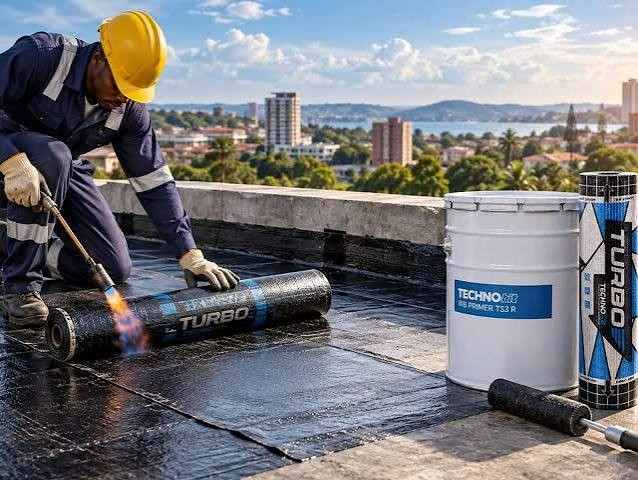
Bituminous membranes: These are sheet membranes commonly used on flat roofs and other suitable roof surfaces. They require correct installation, joint treatment and protection.
Cementitious waterproofing: Cement-based waterproofing products can be used on selected concrete and masonry surfaces, depending on the manufacturer’s specifications.
Roof coatings: Specialised coatings may provide water protection for compatible roof surfaces. The coating must be suitable for the roofing material and exposure conditions.
Important roof waterproofing considerations include:
- Proper surface preparation.
- Suitable roof falls and drainage.
- Correct treatment of joints and penetrations.
- Proper detailing around parapets.
- Compatibility with existing roof materials.
- Protection of the waterproofing layer where required.
2. Foundation Waterproofing
Foundations are exposed to ground moisture and, depending on site conditions, water accumulation around the building.
Foundation waterproofing helps protect underground building components against water penetration.
Common solutions include:
- Suitable bituminous waterproofing systems.
- Waterproofing membranes.
- Cementitious waterproof coatings.
- Water-resistant concrete systems.
- Properly designed drainage layers.
- Protective boards or layers over selected membranes.
Foundation waterproofing should be installed at the appropriate construction stage, usually before backfilling.
The system should be selected according to soil conditions, groundwater levels, expected water pressure and the foundation design.
3. Basement Waterproofing
Basements and underground rooms can experience water penetration because they are in direct contact with surrounding soil.
Water may enter through concrete walls, floor slabs, construction joints, cracks and service penetrations.
Basement waterproofing solutions may include:
External waterproofing: A suitable membrane or coating is applied to the outside of basement walls before backfilling. This is often considered during new construction because the external surface is accessible.
Internal waterproofing: Selected systems are applied to internal surfaces to control water penetration. The appropriate system depends on the source and pressure of the water.
Cementitious waterproofing: Specialised cement-based coatings may be used on compatible basement surfaces.
Drainage systems: Properly designed drainage can help manage groundwater and reduce water accumulation around underground structures.
Where water pressure is significant, the design must account for hydrostatic pressure. Simply painting the inside of a wet basement wall may not solve the problem and could lead to further deterioration.
4. Bathroom and Shower Waterproofing
Bathrooms, showers and other wet areas require proper waterproofing because they are regularly exposed to water.
Water can penetrate through floor joints, wall junctions, pipe openings and damaged tile grout.
Effective bathroom waterproofing may include:
- Applying suitable waterproofing membranes beneath tiles.
- Sealing wall and floor junctions.
- Treating pipe penetrations.
- Waterproofing shower floors and walls.
- Providing appropriate floor gradients.
- Installing suitable drainage outlets.
- Sealing movement joints with compatible materials.
A water test should be conducted where appropriate before installing final finishes, following the waterproofing system manufacturer’s requirements.
Tile grout alone should not be relied upon as the primary waterproofing layer.
5. Balcony and Terrace Waterproofing
Balconies and terraces are exposed to rainwater, sunlight and temperature changes.
Poor drainage or defective waterproofing can allow water to penetrate into the rooms below.
Recommended solutions include:
- Liquid-applied waterproofing membranes.
- Suitable sheet membranes.
- Cementitious waterproofing systems for compatible substrates.
- Properly designed drainage outlets.
- Correct floor gradients.
- Appropriate treatment of parapet and wall junctions.
The waterproofing system should be compatible with the selected tile or finishing system and should accommodate expected movement.
6. Water Tank Waterproofing
Water tanks require appropriate waterproofing to prevent leakage and protect the stored water.
The system must be suitable for the intended use of the tank.
For potable water tanks, all coatings, membranes and sealants that come into contact with the water must be specifically approved or certified as suitable for potable-water contact under the relevant requirements.
Before applying any waterproofing material, inspect the tank for cracks, defective joints, surface deterioration and other defects.
7. External Wall Waterproofing
External walls are exposed to rain, humidity and changing weather conditions.
Water may enter through cracks, porous masonry, defective window joints and deteriorated exterior finishes.
Solutions may include:
- Repairing wall cracks using suitable methods.
- Applying compatible exterior waterproof coatings.
- Installing suitable sealants around openings.
- Repairing damaged plaster.
- Improving roof overhangs and rainwater discharge.
- Correcting defects around window and door frames.
Before applying a coating, ensure that the wall is properly prepared and that the moisture source has been addressed.
Damp-Proofing Solutions for Buildings in Uganda
While waterproofing focuses on preventing water penetration, damp-proofing is particularly important for controlling moisture rising from the ground or moving through porous building materials.
The following methods are commonly used.
1. Damp-Proof Course (DPC)
A damp-proof course is a moisture-resistant layer installed within a wall to prevent ground moisture from rising through masonry.
It is normally incorporated into the wall construction at an appropriate level above the surrounding ground.
DPC materials may include suitable polymeric membranes and other approved moisture-resistant materials.
For effective performance:
- The DPC should be continuous.
- Joints and connections should be properly sealed or lapped.
- It should connect appropriately with the floor damp-proof membrane.
- External ground levels should not bridge the DPC.
- The selected material should be compatible with the wall construction.
A missing or defective DPC can contribute to rising dampness.
2. Damp-Proof Membrane (DPM)
A damp-proof membrane is used to prevent ground moisture from passing through floors and into internal spaces.
It is commonly installed beneath concrete ground-floor slabs or within suitable floor construction systems.
Important installation considerations include:
- Preparing and levelling the ground.
- Providing suitable protection against puncture.
- Correctly lapping and sealing membrane joints.
- Sealing around service penetrations.
- Connecting the membrane appropriately with the wall DPC.
- Following the specified floor construction details.
A damaged or poorly joined membrane may allow moisture to enter the floor.
3. Chemical Damp-Proofing Treatment
Chemical damp-proofing is sometimes used to treat rising damp in existing masonry walls.
The process may involve introducing a suitable water-repellent chemical into the wall to create a barrier against capillary moisture movement.
However, chemical treatment is not appropriate for every damp wall.
Before using this method, investigate whether the moisture is caused by rising damp, leaking pipes, rain penetration, defective drainage or condensation.
The selected treatment should be suitable for the wall material, thickness and condition.
4. Cementitious Damp-Proof Coatings
Cementitious damp-proof coatings are used on selected masonry and concrete surfaces to control moisture penetration.
They may be suitable for some foundation walls, internal wet areas and other compatible substrates.
Application normally requires:
- Cleaning the surface.
- Removing loose material.
- Repairing defects.
- Preparing the substrate according to product instructions.
- Applying the specified number of coats.
- Allowing adequate curing.
Cementitious coatings should not be used as a universal solution for every moisture problem.
5. Improved Drainage Around the Building
Good drainage is one of the most important ways to manage moisture around foundations.
When rainwater collects near a building, it may increase moisture exposure and contribute to leakage or dampness.
Practical improvements include:
- Cleaning gutters and downpipes.
- Repairing leaking rainwater pipes.
- Constructing suitable surface drainage channels.
- Correcting ground slopes.
- Directing roof runoff away from foundations.
- Maintaining drainage outlets.
- Addressing areas where water accumulates.
Drainage solutions should be designed to discharge water safely without causing erosion or directing runoff onto neighbouring properties.
How to Identify Dampness and Water Leakage in a Building
Early identification helps prevent moisture problems from becoming more expensive to repair.
Property owners, building managers and contractors should look for the following warning signs:
| Warning sign | Possible cause |
|---|---|
| Peeling paint near the bottom of walls | Rising damp or another moisture source |
| Water stains on ceilings | Roof leakage or plumbing leaks |
| Damp patches on basement walls | Groundwater penetration or defective waterproofing |
| White powdery deposits on masonry | Salt deposits associated with moisture movement |
| Mould on walls or ceilings | Persistent dampness or condensation |
| Cracked or detached floor tiles | Moisture, substrate movement or installation defects |
| Wet patches around pipes | Plumbing leakage |
| Water collecting around foundations | Poor site drainage or inadequate surface falls |
| Dampness around windows | Defective seals, joints or rainwater penetration |
These signs are indicators, not definitive diagnoses. Similar symptoms can have different causes.
For persistent or extensive dampness, a qualified building professional should investigate the moisture source before repairs are selected.
Step-by-Step Process of Applying Waterproofing in Building Construction
Proper installation is essential for the performance and durability of waterproofing systems.
Although application methods vary depending on the product, location and substrate, the following stages provide a general guide.
Step 1: Inspect the Affected Area
Examine the surface and surrounding building components to identify the source of water penetration.
Determine whether the problem comes from rainfall, groundwater, plumbing leakage, condensation or another source.
Step 2: Select the Appropriate Waterproofing System
Choose a waterproofing product that is suitable for the intended application.
Consider:
- Surface type.
- Water exposure.
- Expected water pressure.
- Temperature and weather conditions.
- Structural movement.
- Compatibility with existing materials.
- Expected maintenance requirements.
Step 3: Prepare the Surface
Remove dirt, dust, loose plaster, oil, old coatings and other materials that may prevent proper bonding.
Repair cracks and damaged areas using appropriate methods.
The surface should meet the preparation requirements specified for the chosen waterproofing system.
Step 4: Apply the Waterproofing Material
Apply the selected material according to the manufacturer’s instructions.
This may involve:
- Applying a primer.
- Installing a sheet membrane.
- Applying liquid waterproofing in specified coats.
- Installing reinforcement at joints and corners.
- Treating pipe penetrations.
- Sealing movement joints.
Correct application thickness, coverage and overlapping are important for system performance.
Step 5: Allow Adequate Curing
Waterproofing materials require different drying and curing periods.
Do not rush the process or cover the waterproofing layer before the manufacturer’s recommended curing time has been achieved.
Step 6: Conduct Appropriate Testing
Where appropriate, conduct a water test or flood test to check the completed waterproofing system before installing final finishes.
Testing should follow the manufacturer’s instructions and the requirements of the project specification.
Step 7: Install Protective and Finishing Layers
Depending on the application, the waterproofing layer may require protection before tiles, screed, backfill or other finishing materials are installed.
Ensure that later construction activities do not puncture or damage the completed membrane.
Step 8: Carry Out Final Inspection
Inspect joints, corners, outlets, penetrations and other vulnerable locations.
Document the completed work and establish a maintenance schedule.
Factors to Consider When Choosing Waterproofing Materials
Not all waterproofing products are suitable for every part of a building.
Before selecting materials, consider the following factors.
1. Type of Surface
Concrete, masonry, metal, timber and existing roof finishes have different material requirements.
The waterproofing product must be compatible with the substrate.
2. Level of Water Exposure
A bathroom floor, exposed roof, basement wall and water tank experience different water conditions.
The system should be selected according to whether the surface is exposed to occasional splashing, rainfall, standing water or sustained water pressure.
3. Durability
Choose materials with suitable durability for the expected service conditions.
Consider exposure to sunlight, weather, chemicals, movement and physical damage.
4. Flexibility
Some surfaces experience movement due to temperature changes, structural behaviour or building settlement.
Flexible waterproofing systems may be necessary in areas where movement is expected.
5. Ease of Application
Some systems require specialist installation equipment and experienced applicators, while others may be simpler to apply.
The choice should be based on technical suitability rather than convenience alone.
6. Maintenance Requirements
Consider how the waterproofing system will be inspected, accessed and maintained after installation.
Roof membranes and exposed coatings, for example, may require periodic inspection.
7. Cost and Product Availability
Compare the total installed cost, not just the price of the material.
Include surface preparation, labour, accessories, protection, testing and future maintenance requirements.
How Much Does Waterproofing Cost in Uganda?
The cost of waterproofing and damp-proofing in Uganda varies according to the type of building, area being treated, condition of the surface, materials selected and complexity of the work.
Waterproofing a small bathroom is different from protecting a large concrete roof, basement or commercial building foundation.
The following factors influence the total cost.
1. Size of the area: Larger surfaces generally require more materials and labour.
2. Type of waterproofing system: Liquid membranes, bituminous membranes, cementitious coatings and specialised systems have different material and installation costs.
3. Surface condition: Cracks, damaged concrete, loose plaster and existing coatings may require preparation and repairs.
4. Location of the work: Roofs, basements, balconies and foundations have different access and installation requirements.
5. Labour requirements: Specialist installation, equipment and safety arrangements can affect the project cost.
6. Drainage improvements: Some projects require additional gutters, downpipes, channels or drainage systems.
7. Protection and finishing: Membranes may need protective screeds, boards, tiles or other finishing materials.
8. Testing and quality control: Appropriate testing and inspection should be included in the project scope.
For an accurate quotation, arrange an inspection and obtain a detailed scope of work showing surface preparation, selected materials, application method, labour, testing and finishing.
Avoid selecting a waterproofing contractor based only on the lowest quotation. Poor application can result in repeated leakage and higher long-term costs.
Common Waterproofing Mistakes to Avoid
Even high-quality waterproofing materials can fail when installation is poorly planned or carried out incorrectly.
Property owners and contractors should avoid the following mistakes.
1. Applying Waterproofing Without Identifying the Source of Moisture
A coating may hide visible dampness temporarily without correcting the underlying cause.
Always investigate whether moisture comes from rainfall, plumbing, groundwater, rising damp or condensation.
2. Poor Surface Preparation
Dust, loose plaster, oil and damaged concrete can prevent proper bonding.
Prepare the surface according to the product manufacturer’s requirements.
3. Choosing the Wrong Waterproofing Material
A product designed for a bathroom wall may not be suitable for a basement under hydrostatic pressure.
Select materials based on the specific location and water exposure.
4. Ignoring Cracks and Construction Joints
Cracks, joints and pipe openings are common water entry points.
Treat them using suitable repair and sealing details before completing the waterproofing installation.
5. Applying Insufficient Material
Using less material than specified or failing to achieve the required thickness can reduce the performance of a waterproofing system.
Follow the manufacturer’s coverage and application instructions.
6. Failing to Allow Proper Curing
Premature covering or exposure to water can interfere with the curing process of some waterproofing products.
Observe the recommended curing periods.
7. Ignoring Roof and Surface Drainage
Even a suitable waterproofing membrane may be subjected to unnecessary water accumulation if drainage is poorly designed.
Provide appropriate slopes, outlets and rainwater discharge arrangements.
8. Damaging the Waterproofing Layer During Finishing
Tiles, screed, backfilling and other construction activities can puncture or damage waterproofing membranes.
Use appropriate protective layers and inspect the system before covering it.
9. Failing to Test the Completed System
Where appropriate, conduct water testing before installing final finishes.
This allows defects to be identified while the waterproofing layer is still accessible.
10. Neglecting Maintenance
Roof outlets, gutters, sealants and exposed waterproofing systems require periodic inspection.
Maintenance helps identify damage before water penetration occurs.
Waterproofing Requirements for Different Types of Buildings in Uganda
Waterproofing needs differ depending on the building’s design and intended use.
| Building type | Important waterproofing areas |
|---|---|
| Residential houses | Roofs, bathrooms, foundations, balconies and ground floors |
| Apartment buildings | Roof slabs, bathrooms, balconies, water tanks and underground areas |
| Commercial buildings | Roofs, basements, washrooms, external walls and terraces |
| Warehouses | Roofs, concrete floors, foundations and loading areas |
| Hotels | Guest bathrooms, roofs, swimming pools, balconies and water storage facilities |
| Hospitals | Roofs, wet areas, water storage and specialised service areas |
| Schools | Roofs, washrooms, foundations and drainage systems |
| Industrial buildings | Roofs, floors, foundations and areas exposed to process water |
For industrial and institutional facilities, waterproofing systems should also be selected according to the chemicals, cleaning methods and operational activities that may affect the surfaces.
How to Maintain Waterproofing Systems After Installation
Waterproofing does not eliminate the need for regular building maintenance.
Even properly installed systems can deteriorate due to weather exposure, building movement, physical damage and ageing.
To maintain waterproofing performance:
- Inspect roofs regularly, particularly before and after the rainy season.
- Clean gutters and drainage outlets.
- Check roof joints and flashing.
- Inspect balconies and terraces for standing water.
- Repair damaged sealants around windows and service penetrations.
- Monitor basement walls for signs of moisture.
- Repair plumbing leaks immediately.
- Avoid drilling or cutting through waterproofed surfaces without proper resealing.
- Inspect exposed waterproofing coatings for cracking or peeling.
- Keep records of installation, testing and repair work.
For large commercial and industrial buildings, establish a scheduled inspection and maintenance programme.
Why Choose Professional Waterproofing and Building Maintenance Services?
Waterproofing requires proper diagnosis, suitable materials and correct application techniques.
A poorly installed system can fail even when expensive products are used.
Professional construction and maintenance support can help property owners:
- Identify the source of water penetration.
- Assess affected building components.
- Select appropriate waterproofing methods.
- Prepare surfaces correctly.
- Repair cracks and defective joints.
- Coordinate specialist waterproofing installations.
- Inspect completed work.
- Plan long-term building maintenance.
When choosing a contractor in Uganda, consider their relevant experience, technical understanding, references, proposed materials, installation procedures and ability to provide a clear written scope of work.
For complex basement waterproofing, structural repairs, large roofs and water-retaining structures, ensure that the design and installation are handled by suitably qualified professionals.
Waterproofing and Damp-Proofing Solutions by Daltrev Co. Ltd
Protecting a building against moisture is an important part of quality construction and long-term property maintenance.
Whether you are constructing a new property, renovating an existing building or addressing recurring water leakage, the right approach begins with understanding the source of moisture and selecting an appropriate solution.
Daltrev Co. Ltd – Build for Legacy recognises the importance of durable construction practices, proper building protection and quality workmanship.
For residential, commercial and industrial property owners in Uganda, addressing waterproofing and damp-proofing requirements early can help prevent avoidable deterioration and costly repairs.
If you are planning a construction, renovation or building improvement project, contact Daltrev Co. Ltd to discuss your requirements.
Contact Daltrev Co. Ltd
- Phone/WhatsApp: +256 744 702 773
- Email: daltrevco@gmail.com
- Website: https://www.daltrevco.com/
- Works: https://www.daltrevco.com/works/
- Civil Works: https://www.daltrevco.com/civil-works/
- Contact Us: https://www.daltrevco.com/contact-us/
Protect your building from moisture damage through proper planning, suitable materials and quality construction.
Frequently Asked Questions About Waterproofing and Damp-Proofing in Uganda
1. What is the difference between waterproofing and damp-proofing?
Waterproofing is designed to prevent water penetration, including in areas exposed to significant water contact or pressure. Damp-proofing mainly controls moisture movement through building materials, especially from the ground. The correct system depends on the moisture source and exposure conditions.
2. Why is waterproofing important in Uganda?
Waterproofing is important because rainfall, ground moisture, poor drainage and plumbing leaks can cause water penetration in buildings. Proper waterproofing helps protect roofs, foundations, walls, floors and internal finishes from moisture-related deterioration.
3. What is the best waterproofing solution for a flat roof?
The best solution depends on the roof’s condition, construction material, drainage design and exposure. Suitable options may include liquid-applied membranes, bituminous sheet membranes and other compatible roofing waterproofing systems.
4. How do I stop dampness in walls?
First identify the source of moisture. It may be rising damp, leaking pipes, rain penetration, defective drainage or condensation. Depending on the cause, solutions may include DPC installation or repair, chemical damp-proofing, waterproof coatings, plumbing repairs, improved drainage or better ventilation.
5. What causes rising damp in buildings?
Rising damp occurs when moisture moves upwards through porous building materials from the ground. It may happen when a damp-proof course is missing, damaged, incorrectly installed or bridged by surrounding materials.
6. Can waterproofing prevent foundation damage?
Properly designed foundation waterproofing can reduce water penetration and moisture exposure around underground building components. It should be combined with suitable site drainage and structural detailing based on the ground conditions.
7. How long does waterproofing last?
The service life depends on the waterproofing material, installation quality, exposure conditions, maintenance and protection against physical damage. Follow the manufacturer’s product specifications and inspection recommendations rather than assuming all systems have the same lifespan.
8. Can I waterproof a building after construction?
Yes. Existing buildings can be waterproofed through suitable roof coatings, external membranes, internal systems, crack repairs, damp-proofing treatments and drainage improvements. The appropriate method depends on the source of moisture and accessibility of the affected area.
9. How much does waterproofing cost in Uganda?
Waterproofing costs vary according to the size of the area, material type, surface condition, labour, access requirements and complexity of the work. A site inspection and detailed quotation are the best ways to establish an accurate project cost.
10. Is waterproofing necessary for bathrooms?
Yes. Bathrooms and shower areas are regularly exposed to water. Suitable waterproofing beneath the finishing materials, together with correct drainage and sealing, helps prevent water from penetrating adjacent walls and floors.
11. Can paint stop dampness in walls?
Ordinary paint is not a reliable solution for persistent dampness. Some specialised coatings can help manage moisture on suitable surfaces, but the source of the moisture must be identified and corrected first.
12. When should waterproofing be done during construction?
Waterproofing should be incorporated at the appropriate construction stage. Foundation and basement waterproofing are generally planned before backfilling, while bathroom and balcony waterproofing are completed before final floor and wall finishes. Roof systems are installed according to the roof design and selected product.
Conclusion
Waterproofing and damp-proofing are essential for protecting buildings against moisture damage in Uganda. From roof leakage and rising dampness to basement water penetration and bathroom leaks, moisture problems can affect the durability, appearance, safety and functionality of a property.
The most effective approach is to identify the source of moisture, select the right waterproofing system, prepare surfaces properly and ensure that installation follows the manufacturer’s specifications and professional design requirements.
Whether you own a residential house, apartment block, commercial property, warehouse, hotel or industrial facility, investing in appropriate waterproofing during construction or renovation can help reduce future maintenance problems and protect your property.
Daltrev Co. Ltd – Build for Legacy.