
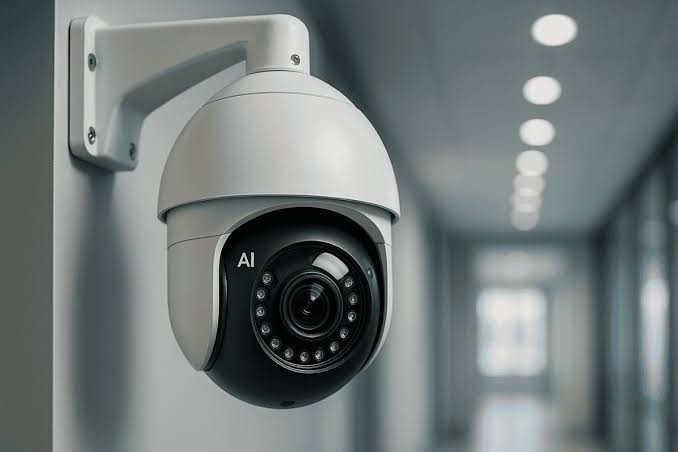
Security technology is changing rapidly as buildings become smarter, businesses expand and property owners demand more effective ways to protect people, assets and infrastructure. Traditional CCTV cameras remain important for security, but modern surveillance systems increasingly use artificial intelligence (AI) to analyse video footage, identify unusual activities and provide more intelligent monitoring.
AI-powered CCTV cameras combine video surveillance with intelligent analytics to help detect people, vehicles, objects and specific events. Instead of simply recording footage for later review, these systems can analyse activity in real time and generate alerts when configured security conditions are met.
For modern buildings in Uganda, including offices, shopping centres, hotels, apartments, hospitals, warehouses and industrial facilities, AI-powered CCTV cameras can improve security monitoring, support access management and help security teams respond more efficiently to potential incidents.
This guide explains how AI-powered CCTV cameras work, their key features, benefits, applications, installation requirements and the factors to consider when choosing an intelligent surveillance system.
What Are AI-Powered CCTV Cameras?
AI-powered CCTV cameras are surveillance cameras that use artificial intelligence and video analytics to interpret images and identify specific activities or objects.
Traditional CCTV cameras primarily capture and record video. Security personnel must often watch live footage or review recordings to identify incidents.
AI-powered cameras add intelligent analysis to this process. Depending on their capabilities, they can recognise people, distinguish vehicles from other moving objects, detect movement in restricted areas, identify abandoned objects and generate alerts when predefined events occur.
For example, an AI-powered CCTV camera installed at an office entrance may be configured to detect people entering a restricted area outside working hours. A camera monitoring a commercial car park may distinguish vehicles from pedestrians and identify movement in designated zones.
Some systems also support advanced functions such as facial recognition, number plate recognition, crowd analysis and behaviour-related alerts. These capabilities are not available on every camera and may require specialised software, compatible equipment and appropriate configuration.
AI-powered CCTV cameras are therefore more than recording devices. They form part of an intelligent security system that can help organisations understand what is happening within their buildings and respond to relevant events.
How Do AI-Powered CCTV Cameras Work?
AI-powered CCTV cameras use a combination of imaging hardware, video processing, artificial intelligence models and surveillance software.
Although the exact technology varies between manufacturers, the process generally involves the following stages.
1. Video Capture
The camera captures video footage of the monitored area using an image sensor and lens.
Depending on the camera model, it may also include features such as infrared night vision, wide dynamic range, optical zoom, motion detection and high-definition recording.
2. Image Processing
The captured footage is processed by the camera or an associated recording device.
Some cameras perform AI analysis directly within the device using an onboard processor. Others transmit footage to an AI-enabled network video recorder, server or video management platform for analysis.
3. AI Video Analysis
The system analyses video frames to identify objects and activities based on its trained models and configured rules.
Depending on the system, AI analytics may detect:
- People.
- Vehicles.
- Animals.
- Movement across virtual boundaries.
- Entry into restricted areas.
- Loitering in designated zones.
- Unattended or removed objects.
- Unusual crowd activity.
The exact functions depend on the system’s AI capabilities and configuration.
4. Event Detection and Alerts
When the system detects an event that matches a configured rule, it can generate an alert.
For example, a camera monitoring a restricted office area may send an alert when a person enters the area after working hours.
Alerts may appear through a monitoring dashboard, compatible mobile application, control room display or integrated alarm system.
5. Video Recording and Review
The system can record video and associate detected events with relevant timestamps.
This helps security personnel locate important footage without manually reviewing hours of recordings.
6. Integration with Other Security Systems
AI-powered CCTV cameras can be integrated with compatible access control systems, intrusion alarms, intercoms and building management platforms.
This creates opportunities for more coordinated building security and monitoring.
Key Features of AI-Powered CCTV Cameras
Modern AI surveillance systems offer different intelligent functions depending on the manufacturer, camera specifications and software platform.
1. Human Detection
Human detection allows a camera to distinguish people from other moving objects.
This can reduce unnecessary motion alerts caused by rain, insects, shadows, moving branches and other environmental activity.
For example, a camera installed around a commercial building can be configured to generate alerts when people enter a restricted area rather than notifying security personnel whenever any movement occurs.
2. Vehicle Detection
AI-powered cameras can identify vehicles within monitored areas.
This is useful for monitoring entrances, parking areas, loading bays, delivery zones and industrial compounds.
Some systems can also classify vehicles into categories such as cars, buses, motorcycles and trucks, depending on their capabilities.
3. Facial Recognition
Some specialised AI surveillance systems support facial recognition, which compares detected facial patterns against enrolled or authorised reference data.
Potential applications include identity verification and controlled access arrangements.
However, facial recognition requires careful consideration of privacy, data protection, accuracy, consent and applicable legal requirements. It should not be treated as a standard feature of every AI CCTV camera.
4. Number Plate Recognition
Automatic number plate recognition (ANPR), also called licence plate recognition, uses image processing and AI to read vehicle registration numbers.
It can support:
- Parking management.
- Vehicle entry monitoring.
- Visitor vehicle registration.
- Restricted parking enforcement.
- Vehicle movement records.
Successful number plate recognition depends on suitable camera positioning, lighting, shutter speed, image resolution, viewing angle and the condition of the number plate.
A general-purpose CCTV camera may not provide reliable number plate recognition.
5. Intrusion Detection
AI intrusion detection can identify people or vehicles entering designated restricted zones.
Security teams can configure virtual boundaries and monitoring areas to trigger alerts when specific events occur.
This is useful for protecting building perimeters, server rooms, storage areas, warehouses and other sensitive locations.
6. Loitering Detection
Loitering detection identifies a person or object remaining within a designated area longer than a configured period.
This can be useful around building entrances, loading zones, restricted corridors and sensitive outdoor spaces.
The system should be configured carefully to avoid unnecessary alerts in areas where people are expected to wait.
7. Crowd Detection and Counting
Certain AI cameras and analytics platforms can estimate the number of people within a monitored area.
Depending on the system, this can support occupancy monitoring, queue management and crowd management in shopping centres, offices, hotels and other public-facing buildings.
Crowd analytics should be evaluated for accuracy under the expected operating conditions, especially where people overlap or move through crowded spaces.
8. Object Detection
Some systems can detect objects that have been left behind or removed from a monitored area.
This may be useful for monitoring reception areas, transport facilities, storage spaces and selected public areas.
9. Smart Motion Detection
Traditional motion detection may trigger alerts whenever pixels change within a scene.
AI-enhanced motion detection can classify the movement and distinguish between relevant objects such as people and vehicles.
This can help security personnel focus on more meaningful events.
10. Real-Time Alerts and Remote Monitoring
AI-powered CCTV systems can send notifications when configured events occur.
Authorised users may be able to access live footage, receive alerts and review recordings through compatible applications or security management platforms.
Remote access should be protected with strong authentication, secure network configuration and appropriate user permissions.
AI-Powered CCTV Cameras vs Traditional CCTV Cameras
Both traditional and AI-powered CCTV cameras play important roles in modern security systems. The main difference is the level of video analysis available.
| Feature | Traditional CCTV Cameras | AI-Powered CCTV Cameras |
|---|---|---|
| Video recording | Yes | Yes |
| Standard motion detection | Available on many models | Available, with enhanced analytics on supported models |
| Human detection | Limited or software-dependent | Available on supported models |
| Vehicle detection | Limited or software-dependent | Available on supported models |
| Intrusion analytics | Basic or external software required | Available on supported systems |
| Event classification | Usually limited | More advanced classification capabilities |
| Smart alerts | Basic motion alerts | Configurable event-based alerts |
| Facial recognition | Requires specialised equipment or software | Available on specialised systems |
| Number plate recognition | Requires suitable specialised equipment | Available on specialised systems |
| Intelligent video search | Depends on recording platform | Available on compatible AI platforms |
AI-powered cameras can provide more intelligent analysis, but traditional CCTV cameras remain useful for general recording and visual monitoring.
For many buildings, a combination of standard and AI-enabled cameras provides a practical balance between cost, coverage and intelligent monitoring.
Benefits of AI-Powered CCTV Cameras for Modern Buildings
AI-powered CCTV cameras offer several advantages for property owners, facility managers, businesses and security teams.
1. Improved Security Monitoring
AI analytics can identify specific activities and generate alerts when configured conditions occur.
This allows security personnel to concentrate on relevant incidents rather than continuously watching every camera feed.
For example, a camera can alert security staff when someone enters a restricted section of an office building.
2. Faster Incident Detection
Traditional surveillance often depends on someone noticing an incident on a live monitor or reviewing recorded footage afterwards.
AI-powered systems can automatically detect selected events and notify authorised personnel.
This may help reduce the time between an incident occurring and security staff becoming aware of it.
3. Reduced Unnecessary Alerts
AI-based object classification can help distinguish people and vehicles from irrelevant movement.
When correctly configured, this may reduce false alerts caused by environmental conditions.
However, no AI system is completely free from false positives or missed detections. Regular testing and configuration are important.
4. Easier Video Search and Investigation
AI-enabled video management platforms may allow users to search recorded footage using filters such as object type, time, location and detected event.
This can make incident investigations more efficient, particularly in buildings with many cameras and long recording periods.
5. Improved Access and Visitor Monitoring
When integrated with suitable access control systems, AI CCTV can help monitor entrances, identify security events and provide visual records of access-related activity.
For example, a commercial building can use AI video analytics to monitor movement around reception areas and restricted entrances.
AI detection alone does not establish a person’s identity or automatically authorise entry. Access decisions should be managed by an appropriately designed access control system.
6. Better Management of Large Buildings
Large properties may contain multiple entrances, corridors, parking areas, lifts, storage rooms and outdoor spaces.
AI-powered surveillance can help security teams monitor these areas more efficiently through centralised video management.
7. Support for Facility Management
Some AI video analytics can provide useful operational information, such as occupancy trends, queue lengths and movement patterns.
This information may help property managers improve space utilisation, customer flow and facility operations.
Such analytics should be selected and configured according to the building’s actual management needs.
8. Integration with Smart Building Technology
AI CCTV systems can form part of a wider smart building environment.
When compatible, they can work alongside:
- Access control systems.
- Intrusion alarm systems.
- Video intercoms.
- Building management systems.
- Parking management platforms.
- Centralised security control rooms.
Integration can improve coordination between different building security functions.
Applications of AI-Powered CCTV Cameras in Modern Buildings
AI-powered CCTV systems can support security and operational monitoring across many types of properties.
1. Office Buildings
Modern office buildings often have multiple entrances, reception areas, meeting rooms, lifts, corridors and restricted workspaces.
AI-powered CCTV cameras can support:
- Monitoring building entrances.
- Detecting unauthorised movement.
- Monitoring restricted office areas.
- Observing parking facilities.
- Detecting suspicious activity in designated zones.
- Supporting investigations through searchable video recordings.
When integrated with access control, AI CCTV can provide additional visibility around employee and visitor access points.
2. Shopping Centres and Retail Complexes
Shopping centres experience high levels of pedestrian and vehicle movement.
AI-powered surveillance can help security teams monitor:
- Main entrances and exits.
- Shopping corridors.
- Car parks.
- Loading and delivery zones.
- Restricted storage areas.
- Selected crowd and queue conditions.
People counting and occupancy analytics may also provide useful operational information for shopping centre management.
However, security monitoring and customer analytics should be managed in accordance with applicable privacy requirements.
3. Hotels and Hospitality Buildings
Hotels require security across reception areas, entrances, parking facilities, corridors, service areas and external spaces.
AI-powered CCTV cameras can help monitor these locations and generate alerts when configured security events occur.
Potential applications include:
- Monitoring hotel entrances.
- Observing parking areas.
- Detecting unauthorised access to restricted sections.
- Monitoring service and delivery areas.
- Supporting security investigations.
Camera placement should respect guest privacy, and surveillance should not be installed in private spaces such as guest rooms or bathrooms.
4. Hospitals and Healthcare Facilities
Hospitals contain sensitive departments, valuable medical equipment, medicine storage areas and locations that require controlled access.
AI CCTV systems can support monitoring around:
- Main entrances.
- Reception areas.
- Parking facilities.
- Pharmacy access points.
- Equipment storage areas.
- Restricted corridors.
Special care is necessary to protect patient confidentiality and avoid inappropriate surveillance in treatment areas and other private spaces.
5. Residential Apartments and Estates
Residential buildings and gated estates need reliable security for residents, visitors, vehicles and shared facilities.
AI-powered CCTV cameras can support:
- Entrance monitoring.
- Vehicle detection.
- Visitor movement monitoring.
- Parking surveillance.
- Perimeter intrusion detection.
- Monitoring shared outdoor spaces.
When integrated with access control and video intercom systems, they can provide a more coordinated security arrangement.
6. Industrial Buildings and Warehouses
Factories and warehouses may have valuable equipment, large storage areas, restricted production sections and vehicle loading zones.
AI CCTV can support human and vehicle detection, perimeter monitoring, restricted-area alerts and event-based recording.
This can help security teams monitor large industrial properties more efficiently.
7. Educational Institutions
Schools, universities and training institutions require security across entrances, administration buildings, parking areas and selected shared spaces.
AI-powered CCTV can support access monitoring, vehicle detection and alerts around restricted locations.
Surveillance design should prioritise safeguarding, appropriate camera placement and the privacy of students and staff.
8. Commercial and Mixed-Use Developments
Mixed-use buildings may combine offices, retail shops, residential apartments, parking facilities and shared access areas.
AI surveillance can help coordinate monitoring across these different environments through a centralised security platform.
AI CCTV Cameras for Smart Building Security Systems
Smart buildings use connected technologies to improve security, energy management, comfort and operational efficiency.
AI-powered CCTV cameras can contribute to this environment by providing intelligent visual monitoring and event information.
Integration with Access Control Systems
Access control systems regulate who can enter designated buildings and restricted areas.
AI CCTV cameras can provide supporting video footage around access points, helping security teams investigate access events.
For example, an access control system may record the use of an authorised access card while a nearby camera provides visual footage of the entrance.
Integration with Intrusion Alarm Systems
AI CCTV cameras can be configured to detect movement in restricted zones and communicate alerts to compatible alarm systems.
This can provide additional visual context when an intrusion alarm is triggered.
Integration with Building Management Systems
Where supported by compatible platforms, CCTV analytics may provide information that can be used alongside building management functions.
For example, occupancy information may support certain space management or operational decisions.
However, CCTV analytics do not automatically replace dedicated occupancy sensors, fire systems or building automation controls.
Centralised Security Monitoring
A centralised video management system allows authorised personnel to monitor multiple cameras from one platform.
For large buildings, this can simplify surveillance operations and improve the organisation of security footage.
Important Factors to Consider When Choosing AI-Powered CCTV Cameras
Selecting an AI CCTV system requires more than choosing a camera with artificial intelligence in its product description.
The system should match the property’s security objectives, network infrastructure and operating conditions.
1. Identify Your Security Requirements
Start by determining what the system must achieve.
Possible objectives include:
- Human detection.
- Vehicle detection.
- Perimeter intrusion monitoring.
- Restricted-area surveillance.
- Number plate recognition.
- Occupancy monitoring.
- Event-based video search.
Different requirements may need different camera models and analytics platforms.
2. Check AI Analytics Capabilities
Not all AI cameras provide the same functions.
Confirm which analytics are built into the camera, which require a separate recorder or server and which need additional software licences.
Ask the supplier to demonstrate the specific functions required for the property.
3. Select the Appropriate Image Resolution
Camera resolution affects the amount of visual detail captured.
Common options include Full HD, 4MP, 5MP, 8MP and 4K, depending on the manufacturer.
Higher resolution can help capture more detail, but it does not guarantee reliable identification. Lens selection, camera distance, lighting, positioning and recording quality are also important.
4. Consider Low-Light Performance
Many security incidents occur at night or in poorly illuminated areas.
Look for suitable low-light performance, infrared night vision, wide dynamic range and other relevant imaging technologies.
For some locations, additional lighting may still be necessary.
5. Evaluate Processing Capabilities
AI analysis may take place inside the camera, on a network video recorder or on a central server.
On-camera processing can reduce the need to send all video footage to a separate analytics server, while centralised processing may support more complex analytics across multiple cameras.
The right option depends on the system size and intended functions.
6. Check Storage and Recording Capacity
AI-enabled systems may generate additional event metadata and support more advanced video search.
Ensure the recording system has sufficient storage for the required retention period, camera count, resolution and recording settings.
7. Confirm Network Requirements
AI CCTV cameras require suitable network infrastructure for video transmission and system management.
Consider:
- Network bandwidth.
- Power over Ethernet (PoE) requirements.
- Network switches.
- Fibre optic links for long distances where appropriate.
- Network segmentation.
- Secure remote access.
A network assessment helps prevent performance problems as the system expands.
8. Review Cybersecurity Features
Network-connected cameras can introduce cybersecurity risks if they are poorly configured.
Look for features such as secure communication, user access controls, firmware updates, strong authentication and appropriate encryption.
Default passwords should be changed, and unnecessary remote access services should be disabled.
9. Consider Privacy and Data Protection
AI CCTV systems may process personal information, particularly when they identify or analyse people.
Before deployment, organisations should consider applicable Ugandan privacy and data protection requirements, including the Data Protection and Privacy Act, 2019, and relevant regulations.
Important considerations include:
- Having a clear and lawful purpose for surveillance.
- Informing people where monitoring is taking place.
- Restricting access to recorded footage.
- Establishing appropriate retention periods.
- Protecting recordings against unauthorised access.
- Assessing the use of facial recognition and other biometric technologies carefully.
Organisations should obtain appropriate legal and data protection guidance when deploying advanced identification technologies.
AI-Powered CCTV Camera Installation Requirements
Professional installation is important for ensuring that AI CCTV cameras deliver reliable results.
A typical installation project involves several stages.
1. Site Survey and Security Assessment
The installation team assesses the building and identifies areas requiring surveillance.
This includes entrances, corridors, parking facilities, reception areas, restricted rooms, outdoor boundaries and other locations where security risks may exist.
The assessment also identifies potential obstructions, lighting conditions and camera mounting positions.
2. Camera Selection and System Design
The appropriate cameras are selected according to the required image quality, AI analytics, field of view and environmental conditions.
A complete design should also specify recording equipment, network infrastructure, storage requirements and integration needs.
3. Camera Positioning
Cameras should be positioned to capture useful footage of the intended area.
For AI analytics to work effectively, the camera angle, target size, lighting and distance must be appropriate for the selected detection function.
For example, a camera intended for number plate recognition requires a more carefully controlled viewing position than a camera used for general entrance monitoring.
4. Cabling and Network Installation
Depending on the system, installation may involve Ethernet cables, PoE switches, fibre optic connections, power supplies and network equipment.
The network should be designed to support the expected video traffic and protect surveillance devices from unauthorised access.
5. Recording and Software Configuration
The cameras are connected to compatible network video recorders, servers or video management platforms.
Recording schedules, user permissions, event settings and storage configurations are established.
6. AI Analytics Configuration
The required detection zones, virtual boundaries, object classifications and event rules are configured.
This stage is important because incorrect settings may result in excessive false alarms or missed events.
7. Testing and Commissioning
The completed installation should be tested to verify:
- Image quality.
- Camera coverage.
- Night-time performance.
- AI detection accuracy under expected conditions.
- Recording and playback.
- Alert delivery.
- Network connectivity.
- Remote access security.
- Integration with other systems.
8. User Training and Handover
Security personnel and authorised building managers should understand how to operate the monitoring platform, review recordings, respond to alerts and manage user access.
Factors Affecting AI CCTV Camera Installation Costs in Uganda
The cost of installing AI-powered CCTV cameras in Uganda varies depending on the type of equipment, building size, analytics requirements and installation complexity.
The main cost factors include:
1. Camera type and specifications: AI-enabled cameras with advanced analytics, high resolution, optical zoom or specialised recognition functions may cost more than standard CCTV cameras.
2. Number of cameras: A large building with multiple floors, entrances and outdoor areas may require more cameras and recording capacity.
3. AI software and licences: Some advanced analytics functions require additional software, subscriptions or licences.
4. Recording and storage equipment: Network video recorders, servers, hard drives and video management platforms affect the overall system cost.
5. Network infrastructure: Switches, cabling, fibre connections and network upgrades may be necessary.
6. Building layout: Multi-storey buildings, large compounds and properties with difficult installation locations may require additional labour and mounting equipment.
7. System integration: Connecting CCTV with access control, alarm systems, intercoms and other building technologies can increase project complexity.
8. Power backup: UPS systems and other backup power arrangements may be needed to maintain surveillance during electricity interruptions.
9. Cybersecurity requirements: Additional network protection, secure configuration and system management may contribute to the project cost.
For an accurate quotation, the building should be assessed and the required AI functions identified before equipment is selected.
Common Mistakes to Avoid When Installing AI CCTV Cameras
Even advanced surveillance technology can perform poorly when the system is incorrectly designed.
Avoid the following mistakes:
- Choosing cameras based only on advertised AI features: Confirm that the specific camera supports the analytics required.
- Ignoring camera positioning: Poor angles and excessive distances can reduce detection accuracy.
- Underestimating network capacity: Insufficient bandwidth can affect video transmission and system performance.
- Ignoring storage requirements: Inadequate storage can shorten recording retention periods.
- Failing to configure analytics: Default settings may not suit the building’s actual security needs.
- Overlooking cybersecurity: Unsecured cameras can expose the surveillance network to unauthorised access.
- Ignoring privacy obligations: Surveillance should have a clear purpose and appropriate safeguards.
- Expecting AI to eliminate all security risks: AI can support security personnel but does not replace human supervision, access procedures or physical security measures.
- Failing to maintain the system: Cameras, recording equipment and software need regular inspection and updates.
Maintaining AI-Powered CCTV Cameras
Regular maintenance helps preserve image quality, system reliability and analytics performance.
A suitable maintenance programme should include:
- Cleaning camera lenses and protective covers.
- Checking camera mounting brackets.
- Inspecting cables and network connections.
- Testing recording and playback.
- Reviewing camera coverage.
- Checking AI detection and alarm performance.
- Updating firmware and compatible software.
- Reviewing user permissions.
- Checking storage capacity.
- Testing backup power arrangements.
- Reviewing cybersecurity settings.
AI analytics should also be reviewed when the building layout changes, new obstructions appear or operational activities are modified.
Why Professional AI CCTV Installation Matters
AI-powered CCTV systems combine cameras, network equipment, recording platforms and intelligent analytics. Their effectiveness depends on how these components are selected, installed and configured.
Professional installation helps ensure that:
- Camera specifications match the intended application.
- Important areas receive suitable coverage.
- AI analytics are configured correctly.
- Network infrastructure supports video transmission.
- Recording and storage requirements are addressed.
- Cybersecurity measures are considered.
- CCTV integrates with compatible security systems.
- The completed installation is tested properly.
For commercial and multi-storey buildings, careful planning is particularly important because poor camera placement or inadequate network infrastructure can affect the performance of the entire surveillance system.
AI-Powered CCTV Camera Solutions for Modern Buildings in Uganda
As buildings become more connected, security systems must adapt to changing operational requirements. AI-powered CCTV cameras offer modern surveillance capabilities that can help property owners and businesses detect selected events, manage security alerts and review video footage more efficiently.
In Uganda, these systems can be useful for office buildings, shopping centres, hotels, hospitals, apartments, warehouses, industrial facilities and mixed-use developments.
Daltrevco provides a point of contact for property owners, developers and organisations planning CCTV and building technology installations. If you are considering AI-powered CCTV cameras for a new building or an existing property, contact Daltrevco to discuss your security requirements and the appropriate surveillance approach.
A properly planned system can combine AI-enabled cameras, conventional CCTV, access control and compatible monitoring technology to support a more coordinated security environment.
Frequently Asked Questions About AI-Powered CCTV Cameras
1. What are AI-powered CCTV cameras?
AI-powered CCTV cameras are surveillance devices that use artificial intelligence and video analytics to detect and classify objects, people, vehicles and selected activities. They can generate alerts when configured security events occur.
2. How do AI-powered CCTV cameras work?
They capture video footage and analyse it using AI algorithms. Depending on the system, the analysis takes place within the camera, on a compatible recorder or on a central server. The system can then identify configured events and generate alerts.
3. What is the difference between AI CCTV and normal CCTV?
Traditional CCTV mainly records video for live monitoring and later review. AI CCTV adds intelligent analytics that can detect and classify specific objects and activities, helping security personnel identify relevant events more efficiently.
4. Can AI CCTV cameras detect people?
Yes. Many AI-enabled cameras support human detection, allowing them to distinguish people from other moving objects within the monitored area.
5. Can AI CCTV cameras detect vehicles?
Yes. Supported models can detect and classify vehicles. Specialised systems may also support number plate recognition.
6. Can AI CCTV cameras recognise faces?
Some specialised systems support facial recognition. This is different from ordinary human detection and requires suitable equipment, software and reference data. Its use also requires careful consideration of privacy and applicable data protection requirements.
7. Can AI CCTV cameras work at night?
Yes. Many AI-powered CCTV cameras include infrared night vision, low-light imaging or other night-time surveillance features. Detection accuracy depends on camera specifications, lighting, target distance and environmental conditions.
8. Can AI CCTV cameras reduce false alarms?
They can help reduce unnecessary alerts by distinguishing people and vehicles from irrelevant movement. However, they cannot eliminate all false alarms, and correct configuration is essential.
9. Are AI CCTV cameras suitable for office buildings?
Yes. They can support monitoring of entrances, reception areas, parking facilities, corridors and restricted office sections.
10. Are AI CCTV cameras suitable for shopping centres?
Yes. They can support entrance monitoring, vehicle detection, restricted-area surveillance, crowd analytics and event-based video search, depending on the system.
11. Can AI CCTV cameras count people?
Some AI cameras and video analytics platforms support people counting and occupancy estimation. Accuracy depends on camera positioning, crowd density and the technology used.
12. Can AI CCTV cameras read vehicle number plates?
Specialised AI-enabled ANPR cameras can read number plates under suitable conditions. They require appropriate resolution, positioning, lighting and configuration.
13. Can AI CCTV cameras be connected to access control systems?
Yes. Compatible AI CCTV platforms can integrate with access control systems to provide supporting video footage and security event information around controlled entrances.
14. Do AI CCTV cameras require internet access?
Not necessarily. Many systems can operate through a local network and compatible recording equipment without internet access. Internet connectivity may be needed for remote viewing, cloud services or certain software functions.
15. Do AI CCTV cameras require special software?
Some cameras have built-in AI analytics, while others depend on compatible network video recorders, servers or video management software. Advanced functions may require additional licences.
16. How much do AI CCTV cameras cost in Uganda?
Costs vary depending on camera specifications, AI functions, number of cameras, recording equipment, software licences, network infrastructure and installation requirements. A site assessment is recommended for an accurate quotation.
17. Can AI CCTV cameras be used in hospitals?
Yes, for suitable areas such as entrances, reception points, parking facilities and restricted storage sections. Their deployment must carefully protect patient privacy and confidentiality.
18. Are AI CCTV cameras suitable for residential apartments?
Yes. They can support monitoring of entrances, parking facilities, shared corridors and outdoor areas. They can also be integrated with compatible access control and video intercom systems.
19. How often should AI CCTV cameras be maintained?
Maintenance frequency depends on the environment and equipment. Regular inspections should include lens cleaning, recording tests, network checks, firmware updates and verification of AI analytics.
20. Where can I get AI CCTV camera installation services in Uganda?
Property owners, developers and businesses planning intelligent surveillance systems can contact Daltrevco to discuss their project requirements and suitable CCTV installation options.
Conclusion
AI-powered CCTV cameras are transforming modern building security by combining video surveillance with intelligent analytics. Their ability to detect people, identify vehicles, monitor restricted zones and generate event-based alerts can help organisations manage security more efficiently.
For offices, shopping centres, hotels, hospitals, apartments, warehouses and industrial buildings, AI CCTV can provide an additional layer of surveillance when properly designed and integrated with other security technologies.
However, choosing the right system requires careful consideration of camera specifications, AI capabilities, network infrastructure, recording capacity, cybersecurity and privacy requirements.
If you are planning an intelligent surveillance system for a modern building in Uganda, contact Daltrevco to discuss an appropriate AI-powered CCTV solution for your property.

