
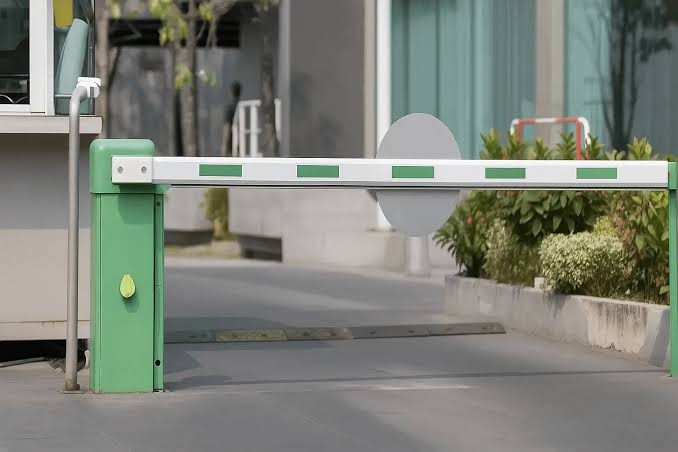
Managing vehicle entry and exit is an important part of securing commercial properties, residential estates, office buildings, shopping centres, hotels, hospitals and other facilities. As vehicle traffic increases, relying on security guards to manually open and close gates can create delays, inconsistent access procedures and unnecessary pressure on security personnel.
A boom barrier system provides a practical way to regulate vehicle movement at controlled entrances. It uses a motorised arm that rises to allow authorised vehicles to pass and lowers to restrict unauthorised entry. When integrated with suitable access control technology, the system can help property managers manage parking, improve entrance security and monitor vehicle movements more efficiently.
For businesses and property developers in Uganda, boom barrier installation is particularly useful at office parking facilities, apartment complexes, gated residential estates, hotels, warehouses, shopping centres, industrial facilities and institutional premises.
However, choosing the right boom barrier involves more than purchasing a motorised arm. The installation must consider traffic volume, entrance width, vehicle types, access control methods, safety devices, power supply and the layout of the premises.
This guide explains everything you need to know about boom barrier installation in Uganda, including how the systems work, available types, benefits, applications, installation procedures, cost factors and maintenance requirements.
What Is a Boom Barrier System?
A boom barrier is an automated vehicle access control device designed to regulate the movement of vehicles through a designated entrance or exit.
It consists of a motorised mechanism connected to a horizontal arm, commonly called a boom. The arm moves vertically or at an angle to open and close the vehicle passage.
When an authorised vehicle approaches the entrance, the system receives an opening command through a remote control, access card, security operator, ticketing system, mobile application or another compatible access device.
The boom arm rises to allow the vehicle to pass. After the vehicle has cleared the controlled area, the arm lowers according to the system’s configured operating procedure.
Boom barriers are commonly installed at:
- Commercial parking areas.
- Office building entrances.
- Shopping centres and retail complexes.
- Hotels and hospitality facilities.
- Residential estates and apartment complexes.
- Hospitals and educational institutions.
- Warehouses and industrial facilities.
- Government and institutional premises.
- Private compounds and controlled vehicle entrances.
Unlike a full sliding or swing gate, a boom barrier primarily controls vehicle passage through an entrance lane. It is not designed to provide the same level of physical perimeter protection as a full security gate.
How Does an Automatic Boom Barrier Work?
An automatic boom barrier operates through a combination of a motor, control panel, boom arm and access control devices.
The system is designed to receive an authorised opening command, raise the arm, allow a vehicle to pass and lower the arm when it is safe to do so.
A typical operating sequence involves the following steps:
1. A vehicle approaches the entrance
The driver stops at the designated access point, where a security officer, reader or vehicle detection system can initiate the access process.
2. The driver requests access
The driver presents an access card, enters a PIN, uses an authorised remote control, obtains a parking ticket or requests entry through an intercom.
3. The system verifies access
The access control system checks the credential or receives an authorised command from the operator.
4. The control panel activates the motor
Once access is approved, the control panel sends a signal to the boom barrier mechanism.
5. The boom arm rises
The motor lifts the barrier arm to create sufficient clearance for the vehicle.
6. The vehicle passes through
The vehicle moves through the entrance while the barrier remains open.
7. The barrier closes safely
After the vehicle has cleared the detection zone, the system lowers the arm according to its programmed safety and operating settings.
Depending on the installation, the barrier can also be configured for manual operation, controlled exit, ticket validation and integration with parking management software.
Types of Boom Barriers Used for Commercial and Residential Properties
Different boom barrier designs are available to meet the requirements of parking facilities, commercial premises and controlled entrances.
The right type depends on lane width, traffic volume, available space, operating frequency and the required level of access control.
1. Automatic Boom Barriers
<AsyncImage query=”automatic motorized boom barrier gate at modern commercial parking entrance” aspectRatio=”16:9″ width=”100%”/>
Automatic boom barriers use an electric motor and control mechanism to raise and lower the barrier arm.
They are suitable for locations where vehicles enter and exit regularly and where consistent operation is required.
Common applications include:
- Shopping centre parking facilities.
- Office buildings.
- Hotels.
- Apartment complexes.
- Residential estates.
- Commercial compounds.
- Industrial facilities.
Automatic boom barriers can be operated through access cards, remote controls, keypads, ticketing systems, vehicle detection devices and other compatible technologies.
Their motor and mechanism should be selected according to the expected operating frequency and the conditions at the installation site.
2. Semi-Automatic Boom Barriers
<AsyncImage query=”manual assisted semi automatic parking boom barrier gate entrance” aspectRatio=”16:9″ width=”100%”/>
Semi-automatic boom barriers use a combination of mechanical assistance and manual operation.
Depending on the design, the operator may need to raise or lower the arm manually, while springs or other mechanisms assist movement.
They may be suitable for entrances with relatively low vehicle traffic or where a fully automated system is not necessary.
Before selecting this option, property managers should consider the number of daily vehicle movements and the availability of personnel to operate the barrier.
3. Manual Boom Barriers
<AsyncImage query=”manual parking boom barrier arm gate at private vehicle entrance” aspectRatio=”16:9″ width=”100%”/>
Manual boom barriers are operated by security personnel or authorised users without an electric motor.
They can be used at smaller premises, temporary vehicle checkpoints and low-traffic entrances.
Although their initial equipment requirements may be simpler, manual operation can become inconvenient at entrances with frequent vehicle movements.
4. High-Speed Boom Barriers
<AsyncImage query=”high speed automatic boom barrier gate at busy commercial parking entrance” aspectRatio=”16:9″ width=”100%”/>
High-speed boom barriers are designed for entrances that require rapid opening and closing cycles.
They may be appropriate for busy parking facilities, commercial complexes and selected industrial entrances.
Their suitability depends on the manufacturer’s specifications, traffic conditions, arm length and safety requirements.
A high-speed barrier should not be selected solely because it opens quickly. Its detection and safety arrangements must be appropriate for the entrance and expected vehicle movements.
5. Heavy-Duty Boom Barriers
<AsyncImage query=”heavy duty industrial automatic boom barrier gate at factory security entrance” aspectRatio=”16:9″ width=”100%”/>
Heavy-duty boom barriers are designed for demanding environments and frequent operation.
They may be suitable for industrial facilities, logistics compounds, large warehouses and busy commercial entrances.
The equipment should be selected according to the expected duty cycle, boom arm dimensions, environmental exposure and manufacturer’s rated operating conditions.
6. Folding Arm Boom Barriers
<AsyncImage query=”folding arm automatic boom barrier installed at underground parking low ceiling entrance” aspectRatio=”16:9″ width=”100%”/>
Folding arm boom barriers use an articulated arm that folds as it rises.
They are useful where the available overhead clearance is limited, such as certain underground parking entrances, covered facilities and buildings with low ceilings.
The folding arrangement allows vehicle access where a conventional full-length arm may not have sufficient vertical clearance.
Access Control Technologies Used with Boom Barriers
A boom barrier controls the physical vehicle passage, but an access control device determines how permission to enter or exit is granted.
For commercial premises and residential estates, combining boom barriers with electronic access control can make vehicle management more organised and convenient.
1. RFID Card Access Control
<AsyncImage query=”RFID proximity card reader at automatic parking boom barrier entrance” aspectRatio=”16:9″ width=”100%”/>
RFID access control allows authorised drivers to open a boom barrier by presenting an electronic card or credential to a reader.
Each credential can be assigned to a resident, employee, tenant or other authorised user.
Administrators may be able to:
- Register new users.
- Assign access permissions.
- Deactivate lost cards.
- Restrict access to selected users.
- Configure access schedules on supported systems.
- Review available access records.
RFID access is particularly useful for office parking facilities, apartment complexes, gated estates and commercial properties with regular users.
The security level depends on the credential technology. Secure modern credentials should be considered where unauthorised duplication is a concern.
2. Remote Control Access
<AsyncImage query=”vehicle driver holding automatic parking boom gate remote control from car” aspectRatio=”16:9″ width=”100%”/>
Remote control systems allow authorised users or security personnel to operate a boom barrier using a wireless transmitter.
The transmitter sends an authorised signal to the barrier receiver, activating the opening mechanism.
Remote controls can be useful for private parking facilities, residential properties and selected commercial entrances.
Lost or stolen remotes should be disabled or removed from the system where the equipment supports credential management.
3. PIN Code Keypad Access
<AsyncImage query=”weatherproof digital keypad access control device at vehicle parking barrier entrance” aspectRatio=”16:9″ width=”100%”/>
A keypad allows authorised users to enter a PIN code to request access.
This method can be useful for selected commercial premises, private compounds and parking areas where users need an alternative to physical cards.
For better accountability, individual codes are preferable to widely shared codes where supported.
Codes should be changed when compromised, and access should be restricted according to the property’s requirements.
4. GSM and Mobile Phone Access
<AsyncImage query=”GSM automatic parking barrier access control module installed in electrical control cabinet” aspectRatio=”16:9″ width=”100%”/>
GSM and mobile-based access systems allow authorised users to operate boom barriers through supported mobile phone commands or applications.
Depending on the equipment, users may be able to request access remotely without carrying a physical remote control.
Potential applications include:
- Residential estates.
- Private parking areas.
- Office compounds.
- Commercial premises.
- Controlled vehicle entrances.
These systems may depend on mobile network coverage, software configuration and the availability of a compatible communication service.
5. Number Plate Recognition Systems
<AsyncImage query=”ANPR automatic number plate recognition camera overlooking commercial parking boom barrier entrance” aspectRatio=”16:9″ width=”100%”/>
Automatic Number Plate Recognition (ANPR) systems use specialised cameras and software to read vehicle registration plates.
The system compares the recognised registration number against an authorised vehicle database. If the vehicle is approved, the connected access control system can issue an opening command to the boom barrier.
ANPR can be useful for:
- Office parking facilities.
- Commercial car parks.
- Residential estates.
- Hotels.
- Industrial compounds.
- Controlled institutional entrances.
Performance depends on camera positioning, lighting, plate visibility, vehicle speed, software quality and local registration plate conditions.
Property managers should also consider how exceptions, unregistered vehicles and visitor access will be handled.
6. Ticket-Based Parking Access Control
<AsyncImage query=”automatic parking ticket dispenser and boom barrier at shopping mall car park entrance” aspectRatio=”16:9″ width=”100%”/>
Ticket-based systems issue parking tickets to drivers entering a controlled parking facility.
At the exit, the driver presents a validated ticket or completes the required payment process before the boom barrier opens.
These systems can be useful for:
- Shopping centres.
- Hospitals.
- Hotels.
- Paid parking facilities.
- Commercial buildings.
- Public parking areas.
A complete arrangement may include ticket dispensers, ticket readers, payment equipment, software, vehicle detection devices and entry and exit barriers.
Benefits of Boom Barrier Installation for Parking Areas and Commercial Premises
Installing a boom barrier system offers several operational and security advantages.
1. Controlled Vehicle Access
One of the main benefits of a boom barrier is its ability to regulate vehicle movement through a designated entrance.
Instead of allowing unrestricted vehicle entry, property managers can establish an access procedure that determines who is permitted to enter.
This is particularly important for commercial premises, office buildings, warehouses and residential estates.
2. Improved Parking Management
Parking areas often experience congestion when vehicles enter and exit without a clear access procedure.
A boom barrier can help organise vehicle movement by establishing controlled entry and exit points.
When integrated with suitable parking management software, the system may also support:
- Ticket issuance.
- Parking fee management.
- Vehicle entry and exit records.
- Authorised parking allocation.
- Parking occupancy information through compatible equipment.
3. Reduced Unauthorised Parking
Unauthorised vehicles can occupy spaces intended for employees, residents, tenants, customers or paying visitors.
A boom barrier combined with an appropriate access control method can help restrict entry to approved vehicles.
For example, an office building can register employee vehicles and issue separate visitor access procedures.
4. Faster Vehicle Entry and Exit
An automated barrier can reduce the time security personnel spend physically opening and closing gates.
When the correct access method is selected and properly configured, authorised drivers can request entry through a card reader, remote control or number plate recognition system.
This can help improve vehicle flow at busy entrances.
However, the actual improvement depends on traffic volume, lane layout, access verification time and the operating speed of the equipment.
5. Better Security Monitoring
When connected to compatible CCTV and access control systems, boom barriers can support better monitoring of vehicle entrances.
Security personnel may be able to review:
- Vehicle entry and exit activity.
- Denied access attempts.
- Parking area incidents.
- Relevant CCTV footage.
- Available access records.
These features can help property managers investigate security incidents and identify access management problems.
6. Improved Management of Residential Estates
Residential estates and apartment developments often have residents, visitors, delivery personnel, contractors and service providers entering the property.
A boom barrier can help establish a structured vehicle entry procedure.
For example, residents may use RFID cards while visitors request entry through a security officer or intercom.
This can make entrance management more organised without requiring every vehicle to use the same credential.
7. Reduced Manual Workload for Security Personnel
Manually operating a gate for every vehicle can take up considerable time, especially during busy periods.
An automatic barrier allows security personnel to focus more on verifying visitors, monitoring the entrance and responding to security concerns.
The system supports security operations but does not eliminate the need for personnel where supervision is required.
8. Improved Commercial Property Operations
Commercial properties often need to coordinate vehicle access for employees, customers, suppliers and delivery vehicles.
Boom barriers can support these operations by providing a consistent entry and exit process.
They can also be connected to compatible parking systems to help property managers administer controlled parking facilities.
9. Flexible Access Management
Modern boom barrier systems can support multiple access methods.
Depending on the equipment, a property may combine:
- RFID cards for regular users.
- Remote controls for selected personnel.
- PIN codes for authorised users.
- Intercom access for visitors.
- ANPR for registered vehicles.
- Ticketing systems for paying customers.
This flexibility allows property managers to design an access procedure that suits different categories of users.
Applications of Boom Barrier Systems in Uganda
Boom barriers can be used in different sectors depending on the property’s vehicle traffic and security requirements.
1. Shopping Centres and Retail Complexes
Shopping centres experience regular vehicle movements involving customers, employees, suppliers and service providers.
<AsyncImage query=”automatic boom barriers controlling vehicles entering large shopping mall parking facility” aspectRatio=”16:9″ width=”100%”/>
Boom barriers can help manage parking entry and exit, control access to designated parking areas and support paid parking operations.
For large facilities, a system with ticketing or number plate recognition may be appropriate.
2. Office Buildings and Business Parks
Office buildings often allocate parking spaces to employees, tenants, visitors and management.
<AsyncImage query=”office building underground parking entrance with automatic boom barrier and access reader” aspectRatio=”16:9″ width=”100%”/>
A boom barrier system can help restrict parking access to authorised users and organise visitor entry.
RFID cards, remote controls and ANPR can be considered depending on the building’s parking arrangement.
3. Residential Estates and Apartment Complexes
Residential developments need to manage vehicles belonging to residents, visitors, delivery personnel and service providers.
<AsyncImage query=”gated residential estate entrance automatic boom barrier and security guardhouse” aspectRatio=”16:9″ width=”100%”/>
Boom barriers can help regulate vehicle access while allowing property managers to maintain separate procedures for residents and visitors.
4. Hotels and Hospitality Facilities
Hotels receive guests, employees, suppliers, tour vehicles and service providers.
<AsyncImage query=”hotel entrance parking access automatic boom barrier gate with landscaped driveway” aspectRatio=”16:9″ width=”100%”/>
A boom barrier can help manage parking entry and exit while maintaining a convenient arrival experience.
For paid or time-based parking, the system can be integrated with a compatible ticketing or payment platform.
5. Hospitals and Healthcare Facilities
Hospitals and healthcare facilities experience vehicle movements involving patients, visitors, ambulances, staff and suppliers.
<AsyncImage query=”hospital parking entrance automatic boom barrier gate vehicle access management” aspectRatio=”16:9″ width=”100%”/>
Boom barriers can help control ordinary parking access and organise designated parking areas.
The access arrangement must preserve emergency vehicle routes and ensure that ambulances and other emergency services are never delayed by ordinary parking procedures.
6. Warehouses and Industrial Facilities
Factories, warehouses and logistics facilities regularly receive trucks, delivery vehicles, staff vehicles and contractors.
<AsyncImage query=”industrial warehouse compound heavy duty automatic boom barrier truck entrance” aspectRatio=”16:9″ width=”100%”/>
A boom barrier can help regulate vehicle movement and support entrance monitoring.
For industrial sites, the equipment should be selected for the expected traffic volume, vehicle types and environmental conditions.
7. Schools and Educational Institutions
Schools and universities need to manage staff vehicles, parents, visitors, suppliers and other authorised traffic.
<AsyncImage query=”university campus vehicle entrance automatic boom barrier access control” aspectRatio=”16:9″ width=”100%”/>
Boom barriers can help regulate vehicle entry while supporting separate procedures for visitors and authorised personnel.
Pedestrian movement and student safety should remain a priority in the entrance design.
8. Hotels, Resorts and Private Recreational Facilities
Hotels, resorts, private clubs and recreational facilities may need to control access to parking areas and private compounds.
A boom barrier can help distinguish authorised vehicles from visitors who require registration or verification.
Boom Barrier Installation in Uganda: Step-by-Step Process
Proper installation is essential for reliable operation, effective vehicle management and safe use.
A boom barrier project should begin with a site assessment rather than purchasing equipment without considering the entrance layout.
Step 1: Conduct a Site Assessment
The installation provider should examine the entrance and identify the operational requirements.
The assessment should consider:
- Entrance and lane width.
- Number of entry and exit lanes.
- Daily vehicle traffic.
- Vehicle types and sizes.
- Available installation space.
- Ground and foundation conditions.
- Electrical supply.
- Existing security systems.
- Pedestrian movement.
- Drainage and environmental exposure.
This information helps determine the suitable barrier type and equipment capacity.
Step 2: Determine Traffic Volume and Operating Requirements
The expected number of vehicle movements is an important consideration.
A small office parking area may have relatively low traffic, while a shopping centre or commercial parking facility may experience continuous vehicle movements.
The barrier should be selected according to its rated duty cycle and operating requirements.
Step 3: Select the Appropriate Boom Barrier
The next step is choosing the correct equipment.
Consider:
- Boom arm length.
- Opening and closing speed.
- Motor capacity.
- Expected operating frequency.
- Available installation space.
- Manual release arrangements.
- Environmental suitability.
- Safety features.
- Integration requirements.
A barrier that is too small or unsuitable for the entrance may lead to operational problems.
Step 4: Prepare the Installation Area
The installation location should be prepared to provide a stable and secure mounting surface.
Depending on the equipment and site conditions, this may require a concrete foundation, mounting plate, cable routes and protective arrangements.
The barrier cabinet should be positioned so that it does not obstruct vehicle movement or create unnecessary hazards for pedestrians.
Step 5: Install the Boom Barrier Mechanism
The barrier housing and motor mechanism are mounted according to the manufacturer’s installation requirements.
The boom arm is attached and adjusted to ensure suitable movement and clearance.
For wider entrances, the installer should assess whether a longer arm, additional support or a different access arrangement is required.
Step 6: Install Access Control Devices
The selected access devices are installed and connected to the barrier controller.
These may include:
- RFID readers.
- Remote control receivers.
- PIN code keypads.
- Intercom systems.
- GSM modules.
- ANPR cameras.
- Ticket dispensers.
- Parking management equipment.
Devices should be positioned so drivers can use them conveniently without creating unsafe stopping or reversing movements.
Step 7: Install Vehicle Detection and Safety Equipment
Safety devices help prevent the boom arm from lowering onto vehicles or people.
Depending on the site design, these may include:
- Inductive loop vehicle detectors.
- Infrared photocells.
- Safety beams.
- Boom arm obstruction detection.
- Warning lights.
- Manual emergency controls.
Vehicle detection should be configured to recognise a vehicle within the controlled area and prevent premature barrier closure.
Step 8: Complete Electrical Installation
The system requires a suitable power supply and appropriate electrical protection.
Cables, control panels and connections should be installed by appropriately qualified personnel.
For properties that experience power interruptions, compatible backup power may be considered.
Step 9: Configure the Access Control System
The installer configures the barrier and connected access devices.
This may include:
- Registering access cards.
- Programming remote controls.
- Setting PIN codes.
- Configuring authorised vehicle records.
- Setting opening and closing parameters.
- Connecting parking management software.
- Configuring entry and exit permissions.
Step 10: Test and Commission the System
Before the installation is handed over, the system should be tested under realistic operating conditions.
Testing should include:
- Barrier opening and closing.
- Access credential verification.
- Vehicle detection.
- Obstruction response.
- Safety device operation.
- Manual emergency release.
- Backup power operation, where fitted.
- Entry and exit procedures.
- Integration with connected security systems.
The system should only be placed into service after the installation and safety arrangements have been checked.
Boom Barrier Installation Costs in Uganda: What Determines the Price?
The cost of boom barrier installation in Uganda varies according to the equipment, entrance design and level of automation required.
A basic barrier for a small private parking area will have different requirements from a multi-lane parking facility with RFID access, ANPR cameras, ticketing and payment integration.
The main cost factors include the following.
1. Type of Boom Barrier
Manual, semi-automatic, automatic, high-speed and heavy-duty barriers have different equipment and installation requirements.
The selected design affects the total project cost.
2. Boom Arm Length
The width of the vehicle entrance determines the required arm length.
Wider entrances may require longer arms or a different installation arrangement.
3. Motor Capacity and Operating Frequency
Equipment designed for frequent operation may have different specifications and costs from systems intended for occasional use.
The expected number of daily opening and closing cycles should guide equipment selection.
4. Access Control Technology
The access method can significantly affect the overall project budget.
For example, an installation using remote controls may require less equipment than a system incorporating RFID readers, ANPR cameras, ticket dispensers or mobile access.
5. Number of Entry and Exit Lanes
A property with separate entry and exit lanes may require multiple barriers and additional control equipment.
Larger parking facilities may also need centralised management software.
6. Safety Equipment
Photocells, vehicle detection loops, warning lights and other safety components contribute to the total cost.
These devices should be included in the design rather than treated as optional decorations.
7. Electrical and Civil Works
Some sites require new power connections, cable trenches, foundations, mounting structures or improvements to the entrance surface.
These works affect the final installation budget.
8. CCTV and Security System Integration
Connecting the barrier to CCTV, intercoms, access control platforms or parking management software may require additional equipment and configuration.
9. Backup Power Requirements
Battery backup or another compatible power solution may be necessary where uninterrupted operation is important.
10. Maintenance and Technical Support
The long-term cost should include inspection, servicing, spare parts and technical support.
For an accurate boom barrier installation quotation in Uganda, the entrance should be assessed to establish the lane dimensions, expected traffic, equipment requirements, access technology and installation work.
Important Safety Features for Boom Barrier Systems
Safety is one of the most important considerations when installing an automatic boom barrier.
The moving arm can cause injury or damage if the equipment is poorly installed, incorrectly configured or operated without appropriate detection devices.
A properly planned system should consider the following features.
1. Vehicle Detection Loops
Inductive loop detectors can identify vehicles within a designated area.
They can help prevent the barrier from closing while a vehicle remains in the controlled zone, provided the system is correctly designed and configured.
2. Infrared Photocells
Photocells create a detection beam across an entrance.
When the beam is interrupted, the connected system can stop or prevent the barrier from closing, depending on its configuration.
3. Obstruction Detection
The barrier should have suitable protection against unexpected resistance or obstruction.
This helps reduce the risk of the arm continuing to move when it encounters an object.
4. Warning Lights
Warning lights can alert drivers and pedestrians that the barrier is operating.
5. Manual Emergency Release
A manual release mechanism provides an alternative method of operating the barrier when the motor or electrical supply is unavailable.
6. Appropriate Traffic Layout
The entrance should provide enough space for vehicles to stop, obtain authorisation and pass through safely.
The design should minimise unsafe reversing, congestion and conflicts between pedestrians and vehicles.
7. Pedestrian Safety
Boom barriers are designed primarily to regulate vehicles. They should not be treated as pedestrian safety gates.
Where people walk through the entrance, a separate pedestrian route should be provided where practical.
8. Emergency Access
Hospitals, residential developments and commercial facilities should ensure that emergency vehicles can access the premises without unnecessary delays.
The access design should include an appropriate emergency procedure and comply with applicable safety requirements.
Integrating Boom Barriers with CCTV and Access Control Systems
A boom barrier can become part of a wider security system when integrated with compatible CCTV and access control equipment.
This allows property managers to coordinate vehicle entry with security monitoring and access administration.
Boom Barriers with CCTV Cameras
<AsyncImage query=”CCTV surveillance camera monitoring automatic boom barrier vehicle parking entrance” aspectRatio=”16:9″ width=”100%”/>
CCTV cameras can monitor vehicles approaching, entering and leaving a controlled area.
When configured with suitable recording and access systems, video footage can help security personnel investigate incidents and review entrance activity.
Boom Barriers with RFID Access Control
RFID readers can be installed near the vehicle entrance to verify authorised users.
This is useful for estates, office parking areas and commercial compounds with regular users.
Boom Barriers with ANPR Cameras
ANPR cameras can read vehicle registration plates and compare them with an authorised vehicle database.
This can reduce reliance on physical cards for registered vehicles, although the system needs a procedure for visitors, unreadable plates and unauthorised vehicles.
Boom Barriers with Intercom Systems
An intercom allows drivers to communicate with security personnel or reception staff when they need assistance or visitor approval.
Boom Barriers with Parking Management Software
Compatible parking management software can support ticket issuance, payment processing, parking records and access administration.
The specific integration capabilities should be confirmed before purchasing equipment because they vary by manufacturer and platform.
Boom Barrier vs Automatic Sliding Gate: Which Is Better?
Both boom barriers and automatic sliding gates can regulate vehicle access, but they serve different purposes.
| Feature | Boom barrier | Automatic sliding gate |
|---|---|---|
| Main purpose | Controls vehicle passage | Controls and physically closes an entrance |
| Operation | Raises and lowers a horizontal arm | Slides horizontally along a track or guiding system |
| Typical applications | Parking areas and controlled vehicle lanes | Residential, commercial and industrial entrances |
| Physical obstruction | Mainly restricts vehicle passage | Provides a more substantial physical gate barrier |
| Vehicle flow | Suitable for controlled parking lanes | Suitable for controlled property entrances |
| Installation space | Requires space for housing and arm movement | Requires suitable side clearance or a designed trackless arrangement |
| Access control | Can integrate with cards, ANPR, ticketing and remotes | Can integrate with cards, intercoms, remotes and other access devices |
| Perimeter security | Not a substitute for a full security gate | Can form part of a property’s physical perimeter |
Which should you choose?
A boom barrier is generally suitable for parking management and regulating vehicle movement through controlled lanes.
An automatic sliding gate is more appropriate where a property needs a substantial physical gate across its entrance.
Some commercial properties may benefit from using both: a perimeter gate for physical security and a boom barrier for organised parking access.
Common Boom Barrier Problems and Their Solutions
Like other automated security equipment, boom barriers can experience mechanical, electrical and electronic faults.
Understanding common problems helps property managers identify issues and arrange timely servicing.
1. Boom Barrier Fails to Open
Possible causes include power supply problems, faulty remote controls, damaged wiring, control panel faults or access permission errors.
The system should be inspected to identify the source of the fault.
2. Boom Barrier Does Not Close
A barrier may remain open because a vehicle detection loop is active, a photocell is obstructed, a safety device has detected an obstruction or the controller has a configuration problem.
Safety devices should not be bypassed to force the barrier to close.
3. Slow Barrier Operation
Slow movement may result from mechanical wear, motor problems, unsuitable settings or equipment operating outside its intended conditions.
The motor and mechanism should be checked against the manufacturer’s specifications.
4. Remote Control Failure
A remote control may stop working because of a depleted battery, damaged transmitter or receiver problem.
The remote and receiver should be checked before replacing the barrier.
5. Faulty Vehicle Detection
A damaged or incorrectly configured detection loop may fail to identify vehicles accurately.
This can affect automatic closing and create safety concerns.
6. Electrical Problems
Power interruptions, loose connections, damaged cables or faulty electrical components may affect operation.
Electrical inspection should be carried out by appropriately qualified personnel.
7. Boom Arm Damage
Vehicles may strike the boom arm if drivers ignore signals or the entrance is poorly designed.
The arm should be inspected and repaired or replaced as required before normal operation resumes.
Boom Barrier Maintenance: How to Keep Your System Reliable
Regular maintenance helps reduce unexpected breakdowns, improve safety and maintain dependable vehicle access.
The maintenance schedule should follow the manufacturer’s recommendations and take account of how frequently the barrier is used.
Important maintenance activities include:
- Inspecting the boom arm for damage.
- Checking the motor and drive mechanism.
- Testing opening and closing cycles.
- Inspecting mounting bolts and foundations.
- Checking vehicle detection loops.
- Cleaning and testing photocells.
- Inspecting warning lights.
- Checking wiring and electrical connections.
- Testing backup power where installed.
- Reviewing access control devices.
- Checking manual emergency release arrangements.
- Reviewing software and access permissions where applicable.
Busy commercial parking facilities may require more frequent inspections than low-traffic private entrances.
Property managers should also maintain a record of faults, repairs and servicing activities.
How to Choose the Best Boom Barrier Installation Company in Uganda
Selecting the right equipment is important, but the quality of installation also affects performance, safety and long-term maintenance.
Before engaging an installation provider, consider the following factors.
1. Experience with Access Control Systems
Choose a provider that understands automatic barriers, vehicle access control and the electronic equipment required for the project.
2. Proper Site Assessment
A suitable provider should assess lane width, traffic volume, power availability, vehicle movement and installation conditions before recommending equipment.
3. Appropriate Equipment Selection
The barrier should match the entrance width, expected duty cycle and environmental conditions.
4. Safety-Focused Installation
Ask about vehicle detection, photocells, obstruction protection, warning lights and emergency operation.
5. Integration Capabilities
If you need CCTV, RFID, ANPR, intercom or parking software integration, confirm that the proposed equipment supports the required connections.
6. Testing and Commissioning
The completed installation should be tested to confirm that the barrier, access devices and safety equipment operate correctly.
7. Maintenance Arrangements
Ask about servicing requirements, spare parts and technical support after installation.
8. Clear Project Quotation
A quotation should explain the equipment, installation work, accessories, safety devices and any additional civil or electrical requirements.
Why Choose Daltrevco for Boom Barrier and Vehicle Access Control Solutions in Uganda?
Managing vehicle access requires equipment that is suitable for the property, the traffic volume and the security requirements of the entrance.
Daltrevco provides a point of contact for businesses, property owners and developers exploring modern building security and access control solutions in Uganda.
Whether you are planning a boom barrier for an office parking area, a commercial building, a residential estate, a shopping centre, a hotel or an industrial facility, the installation should begin with a clear assessment of your requirements.
When planning your project, consider:
- The number of vehicle entry and exit lanes.
- The width of each controlled entrance.
- The expected daily vehicle movements.
- The most suitable barrier type and operating capacity.
- RFID, remote, keypad, GSM or ANPR access options.
- CCTV and intercom integration.
- Vehicle detection and safety equipment.
- Electrical supply and backup arrangements.
- Parking management and visitor access requirements.
- Future maintenance and expansion.
Daltrevco can help you discuss suitable access control options for your commercial or residential property and identify the requirements of your boom barrier project.
Looking for boom barrier installation in Uganda? Contact Daltrevco to discuss your parking area, commercial premises or residential estate and explore a suitable vehicle access control solution.
Frequently Asked Questions About Boom Barrier Installation
1. What is a boom barrier used for?
A boom barrier is used to regulate vehicle entry and exit at controlled entrances. It is commonly installed in parking areas, office buildings, shopping centres, residential estates, hotels, warehouses and industrial facilities.
2. How does an automatic boom barrier work?
An automatic boom barrier uses a motor and control panel to raise and lower a horizontal arm. When an authorised access command is received, the motor lifts the arm to allow a vehicle to pass. The barrier closes when the configured conditions are met and it is safe to do so.
3. How much does boom barrier installation cost in Uganda?
The cost depends on barrier type, arm length, motor capacity, traffic volume, access control technology, safety devices, electrical work and installation complexity. A site assessment is required to establish an accurate quotation.
4. What is the difference between a boom barrier and an automatic gate?
A boom barrier uses a horizontal arm to control vehicle passage through an entrance. An automatic gate, such as a sliding or swing gate, provides a more substantial physical closure across the entrance. Boom barriers are commonly used for parking management, while automatic gates are often used for perimeter access control.
5. Can boom barriers be connected to RFID access control?
Yes. Compatible boom barriers can be connected to RFID readers, allowing authorised drivers to open the barrier using registered access cards or credentials.
6. Can boom barriers use number plate recognition?
Yes. ANPR cameras can read vehicle registration plates and compare them with an authorised vehicle database. A compatible access control system can then send an opening command to the barrier.
7. Are boom barriers suitable for residential estates?
Yes. They can help regulate vehicle access for residents, visitors, contractors and delivery personnel. RFID cards, intercoms, remote controls and other access methods can be used depending on the estate’s requirements.
8. Do boom barriers require electricity?
Automatic boom barriers require electrical power to operate. Backup batteries or other compatible power arrangements may be installed where continued operation during power interruptions is required.
9. Can a boom barrier work with CCTV cameras?
Yes. Compatible systems can be integrated with CCTV to monitor vehicle entry and exit activity. The available features depend on the cameras, access control equipment and software.
10. What safety features should a boom barrier have?
Important safety features include vehicle detection loops, photocells, obstruction detection, warning lights and suitable manual emergency release arrangements. The design should also provide safe pedestrian movement and prevent the arm from lowering onto a vehicle.
11. How long does boom barrier installation take?
Installation time depends on the number of barriers, site preparation, electrical work, access control integration and civil works. A simple installation may require less work than a multi-lane parking facility with ticketing, ANPR and centralised software.
12. Can one boom barrier control both entry and exit?
A barrier may be configured for a particular lane and direction of movement, but busy facilities commonly use separate entry and exit barriers. The correct arrangement depends on traffic flow, lane layout and the access control design.
13. How often should boom barriers be serviced?
Servicing frequency depends on operating cycles, environmental exposure and manufacturer recommendations. High-traffic commercial barriers generally require closer monitoring and more frequent inspection than barriers used occasionally.
14. Can a boom barrier be operated manually during a power failure?
Many systems include a manual release or alternative operating procedure. The method depends on the model and manufacturer. Property managers should ensure authorised personnel understand the emergency operating procedure.
15. Are boom barriers suitable for heavy trucks?
Some heavy-duty boom barrier systems can be used at industrial and logistics entrances. The equipment must be selected according to the lane width, vehicle traffic, operating frequency and manufacturer’s specifications.
Conclusion: Improve Vehicle Access Management with the Right Boom Barrier System
Boom barrier systems provide a practical way to control vehicle movement at parking facilities, commercial buildings, residential estates and industrial properties.
By combining automated barrier operation with suitable access control technology, property managers can organise vehicle entry, restrict unauthorised parking, support security monitoring and improve the management of busy entrances.
The most suitable system depends on traffic volume, lane width, barrier capacity, access requirements, power arrangements and safety considerations.
A properly designed installation should include an appropriate boom barrier, reliable access control devices, vehicle detection equipment, safety features and a maintenance plan.
For businesses and property owners in Uganda, choosing the right system can make vehicle access more organised and manageable.
Contact Daltrevco to discuss boom barrier installation in Uganda and explore vehicle access control solutions for your parking area, commercial premises or residential estate.

