
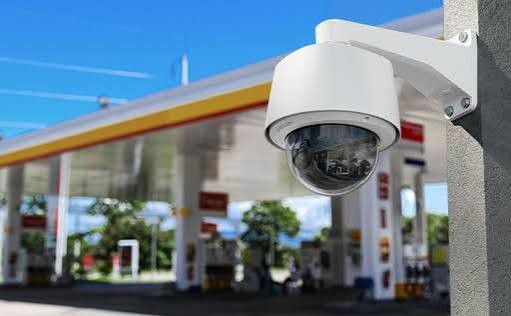
Petrol stations and fuel depots handle valuable products, large cash transactions, vehicle movements and potentially hazardous materials. Their operations often continue for extended hours, making effective security an important part of daily management. From monitoring fuel dispensing activities to protecting storage areas, controlling access and supervising vehicle movements, a properly designed CCTV surveillance system helps businesses improve visibility, reduce security risks and maintain better operational oversight.
CCTV installation for petrol stations and fuel depots in Uganda requires more than mounting cameras around a property. Fuel retail and storage facilities have specific security requirements, including outdoor camera protection, low-light monitoring, clear vehicle identification, suitable equipment selection and careful consideration of hazardous areas.
A well-planned surveillance system can help petrol station owners, fuel distributors, depot operators and facility managers monitor important activities, investigate incidents and protect their premises.
This guide explains how CCTV systems work in petrol stations and fuel depots, where cameras should be installed, which technologies are suitable, what affects installation costs and how to choose the right CCTV installation company in Uganda.
Why Petrol Stations and Fuel Depots Need CCTV Surveillance
Petrol stations and fuel depots face security challenges that differ from those of ordinary offices and retail businesses. Their premises may contain fuel storage infrastructure, dispensing equipment, delivery vehicles, payment points, staff facilities and restricted operational areas.
CCTV surveillance provides a visual record of activities across these locations and helps management identify security and operational concerns.
1. Preventing Theft and Unauthorised Activities
Fuel theft, unauthorised access, equipment interference and loss of business property can affect the profitability of fuel businesses.
Strategically positioned cameras can monitor fuel dispensers, storage access points, delivery areas, cash-handling locations and perimeter entrances. Recorded footage can help management investigate suspected incidents and establish what happened.
CCTV does not eliminate theft, but it can strengthen security when combined with access controls, staff procedures and physical security measures.
2. Monitoring Fuel Dispensing Operations
Fuel dispensing areas are among the busiest parts of a petrol station. Staff serve customers, vehicles enter and leave, payments are processed and dispensing equipment is operated throughout the day.
Cameras positioned to cover dispensing islands can help managers review operational activities, investigate customer complaints and identify unusual behaviour.
Camera positioning should provide useful views of the dispensing process without unnecessarily recording sensitive payment information or interfering with staff and customer privacy.
3. Improving Cash Security
Some petrol stations handle cash payments alongside card and mobile money transactions. Cash-handling points, cashier stations and administrative offices may therefore require dedicated surveillance coverage.
CCTV can help document incidents involving cash transactions, disputes, suspected theft and unauthorised entry into financial areas.
Cameras should be positioned to observe relevant activities without recording PIN entry, passwords or confidential payment information.
4. Protecting Fuel Storage and Delivery Areas
Fuel depots and larger petrol stations may have storage tanks, tanker parking areas, loading and unloading points, pumps, valves and other infrastructure.
Unauthorised access or interference with these installations can create significant financial and operational risks.
CCTV cameras can monitor access routes, storage infrastructure and delivery operations from suitable safe locations. Their installation must take account of hazardous-area classifications and the equipment’s suitability for the intended environment.
5. Monitoring Vehicle Movements
Petrol stations receive customer vehicles, fuel tankers, delivery trucks, maintenance vehicles and staff transport.
Cameras at entry and exit points can provide a visual record of vehicle movements. Specialised automatic number plate recognition (ANPR) cameras may also be considered where vehicle identification is an important requirement.
For ANPR to work reliably, the camera must be selected and positioned for the actual vehicle speed, viewing angle, lighting, plate characteristics and environmental conditions.
6. Supporting Incident Investigation
When a security incident occurs, CCTV recordings can help management review the events leading up to it.
Footage may assist with investigations involving:
- Suspected fuel theft or stock discrepancies.
- Unauthorised entry into restricted areas.
- Damage to dispensing equipment.
- Customer and staff disputes.
- Vehicle-related incidents.
- Suspicious activity around fuel storage infrastructure.
- Theft of tools, equipment or other business property.
The usefulness of recorded footage depends on camera coverage, image quality, correct timestamps, reliable storage and appropriate access to recordings.
Key Areas Where CCTV Cameras Should Be Installed at Petrol Stations
A professional CCTV layout should cover important operational and security areas while avoiding unnecessary duplication and blind spots.
The number, type and positioning of cameras depend on the size of the station, its layout, lighting conditions and security priorities.
1. Fuel Dispensing Islands
<PRIVATE_PERSON> cameras should be positioned to monitor fuel dispensing islands, including pump equipment, vehicle positioning and staff activities.
The objective is to obtain clear footage of relevant activities around the pumps. Cameras should be mounted at suitable angles and heights to minimise obstruction from vehicles, canopies and other structures.
For larger stations, multiple views may be necessary to cover separate dispensing islands.
2. Main Entrances and Exits
Entry and exit points are important locations for monitoring people and vehicles entering or leaving the premises.
Cameras should be positioned to capture useful views of approaching vehicles, pedestrian access and movement through the station.
Where vehicle identification is required, dedicated ANPR cameras may be more suitable than ordinary overview cameras.
3. Cashier Stations and Payment Areas
Cameras can monitor cashier workstations and the surrounding customer service area.
The installation should be designed to support incident investigation while protecting confidential payment details. Camera angles must avoid capturing PIN pads, passwords and other sensitive authentication information.
4. Fuel Storage Tank Areas
Storage tank areas are important security zones, particularly at fuel depots and larger distribution facilities.
Cameras may be used to monitor access routes, tank surroundings and restricted operational areas from suitable positions.
The equipment installed in or near classified hazardous areas must be appropriately certified and suitable for the specific zone. Ordinary commercial CCTV equipment must not automatically be assumed safe for use in locations where flammable vapours may be present.
5. Fuel Loading and Unloading Areas
Fuel depots often receive and dispatch large quantities of fuel through tanker loading and unloading operations.
CCTV coverage can help monitor vehicle movements, access to loading bays and activity around transfer infrastructure.
Cameras should be positioned to provide useful views without obstructing vehicle movement or creating hazards for workers.
6. Perimeter Fencing and Boundary Areas
Perimeter cameras help monitor the boundaries of petrol stations and fuel depots.
They can provide visibility over access gates, fence lines, vulnerable boundary sections and approaches to restricted areas.
Outdoor cameras should have suitable weather protection, appropriate mounting and lighting performance for the location.
7. Parking and Vehicle Waiting Areas
Customer parking, tanker waiting zones and staff parking areas may require CCTV coverage depending on the facility’s security needs.
These cameras can help document vehicle movements, collisions, suspicious activity and damage to property.
8. Administrative Offices and Control Rooms
Administrative offices may contain financial records, operational documents, computers and security monitoring equipment.
Cameras can help protect these areas, while access to recorded footage and monitoring systems should be restricted to authorised personnel.
Best Types of CCTV Cameras for Petrol Stations and Fuel Depots
Different locations require different camera technologies. Selecting cameras based only on price or resolution can result in poor coverage and unreliable identification.
The most suitable system may combine several camera types.
1. IP CCTV Cameras
<PRIVATE_PERSON> IP cameras transmit digital video over an internet protocol network. They are widely used in modern commercial surveillance installations.
Their features may include:
- High-definition video recording.
- Remote viewing through authorised applications.
- Power over Ethernet (PoE) support on compatible models.
- Motion detection and video analytics.
- Integration with network video recorders.
- Flexible expansion across larger facilities.
IP CCTV systems are suitable for petrol stations and fuel depots that require centralised monitoring and scalable security infrastructure.
2. Dome CCTV Cameras
Dome cameras are commonly used in sheltered locations such as cashier areas, office entrances and indoor operational spaces.
Their compact design can make them suitable for areas where a discreet camera installation is preferred.
The specific model should be selected according to its indoor or outdoor rating, image quality and environmental requirements.
3. Bullet CCTV Cameras
Bullet cameras are often used for outdoor monitoring because their directional design makes it easier to aim them at specific areas.
They can be suitable for:
- Perimeter boundaries.
- Entrance and exit points.
- Vehicle parking areas.
- External buildings.
- Access routes.
Weather-resistant models are important for installations exposed to rain, dust and changing outdoor conditions.
4. PTZ CCTV Cameras
Pan-Tilt-Zoom cameras can move horizontally and vertically and optically zoom into selected areas.
They may be useful for large fuel depots, extensive yards and facilities where operators need to inspect different sections remotely.
However, a PTZ camera cannot continuously monitor every direction while moving between viewing positions. It should therefore supplement, rather than automatically replace, fixed cameras covering critical areas.
5. Night Vision CCTV Cameras
Petrol stations and fuel depots may operate after dark, making night-time surveillance important.
Infrared or other low-light cameras can improve visibility in poorly illuminated areas.
When selecting night vision cameras, consider the actual lighting conditions, distance to the target, reflective surfaces, vehicle headlights and the need for colour identification.
6. ANPR and Vehicle Surveillance Cameras
Automatic number plate recognition cameras are designed to capture and interpret vehicle registration plates.
They can support vehicle monitoring at depot entrances, exits and controlled access points.
Their effectiveness depends on proper installation, compatible software, local plate recognition performance, suitable illumination and correct camera settings. A standard overview CCTV camera should not be assumed to provide reliable number plate recognition.
7. Explosion-Protected CCTV Cameras
Fuel depots and some petrol station areas may contain locations where flammable gases or vapours can create an explosive atmosphere.
Where a camera or its accessories must be installed within a classified hazardous area, the equipment must be certified and suitable for that particular zone and applicable standards.
Depending on the installation, this may involve appropriately certified explosion-protected cameras, housings, junction boxes and cable accessories.
The correct solution must be based on a hazardous-area assessment by qualified professionals. Installing ordinary CCTV equipment in a classified hazardous area can introduce serious safety risks.
Special CCTV Installation Requirements for Fuel Depots
Fuel depots have additional operational and safety requirements because of their storage capacity, tanker movements, fuel transfer infrastructure and potentially hazardous environments.
Hazardous-Area Classification
Before selecting CCTV equipment, the facility should establish whether proposed camera positions fall within classified hazardous areas.
Equipment selection must consider:
- The hazardous-area zone.
- The type of flammable substance present.
- Applicable equipment protection requirements.
- Certification and marking.
- Environmental conditions.
- Installation and maintenance procedures.
Not every camera near a fuel facility requires explosion protection. However, every installation location must be assessed rather than relying on assumptions based on distance alone.
Safe Cable Routing
CCTV cables should be routed to minimise exposure to mechanical damage, heat, interference and operational hazards.
Cable routes must comply with relevant electrical and hazardous-area requirements. Suitable cable protection, glands, junction boxes and installation methods should be specified for the environment.
Monitoring Tanker Operations
Cameras can be positioned to observe tanker arrival, parking, loading and unloading activities.
Coverage should support operational oversight without interfering with safe working procedures or replacing required supervision, inspection and process controls.
Centralised Monitoring
Large fuel depots may benefit from a centralised video management system that allows authorised personnel to monitor multiple cameras from a control room.
Where several facilities operate under one management structure, a properly designed network may also allow remote supervision of different locations.
Access permissions and cybersecurity controls are important when connecting surveillance systems across sites.
Important Features to Consider When Choosing CCTV Systems
The effectiveness of a CCTV system depends on more than the camera’s advertised resolution.
Petrol station owners and depot operators should consider the following features.
High Image Resolution
Cameras should provide sufficient detail for their intended purpose.
A camera monitoring a broad perimeter may have different requirements from one intended to identify vehicles or observe activities around a dispensing pump.
The correct resolution depends on the target distance, viewing angle, lens, lighting and required level of detail.
Wide Dynamic Range
Petrol stations can have challenging lighting conditions, including bright sunlight, deep shadows, covered pump islands and strong vehicle headlights.
Wide Dynamic Range (WDR) technology can help balance scenes with significant differences in brightness.
This is particularly useful where cameras face entrances, outdoor areas or brightly lit vehicle approaches.
Low-Light Performance
A camera should provide usable footage under the actual night-time lighting conditions of the site.
Infrared illumination, low-light sensors and suitable external lighting can improve visibility, depending on the application.
Motion Detection and Video Analytics
Some modern CCTV systems support intelligent video analytics, including:
- Line-crossing detection.
- Intrusion detection.
- Restricted-area monitoring.
- Human and vehicle classification.
- Loitering alerts.
- Object detection.
These features can help security personnel identify events requiring attention. Their reliability depends on camera placement, configuration, environmental conditions and software capability.
Reliable Video Storage
A CCTV system should have sufficient storage capacity for the intended recording period.
Storage requirements depend on the number of cameras, resolution, frame rate, compression, recording schedule and motion activity.
Network video recorders (NVRs) are commonly used with IP CCTV systems, while other architectures may use digital video recorders or centralised video storage.
Remote Monitoring
Authorised managers may need to view live footage or recordings when away from the premises.
Remote access should be configured securely, with strong passwords, individual user accounts, appropriate permissions and secure network connections.
Power Backup
Power interruptions can affect surveillance coverage.
A suitable uninterruptible power supply (UPS) or other backup arrangement can help keep cameras, recorders, network equipment and monitoring systems operating during outages.
The backup capacity should be designed around the actual equipment load and required operating period.
CCTV Integration with Other Security Systems
CCTV is most effective when it forms part of a broader security strategy.
Depending on the facility’s requirements, it can be integrated with other systems.
Access Control Systems
Access control can restrict entry into offices, control rooms, equipment rooms and other designated restricted areas.
CCTV can provide visual monitoring of access points, while access control records can help establish when authorised credentials were used.
Intruder Alarm Systems
An intruder alarm can detect unauthorised entry or other defined security events.
When properly integrated, alarm events can be associated with relevant camera views to help operators assess incidents.
Perimeter Protection
Perimeter detection systems can identify activity near selected boundary sections.
CCTV can provide visual verification of alerts, helping security teams determine whether a response is necessary.
Fire Detection and Emergency Systems
Fuel facilities require appropriate fire and emergency protection systems based on their risk assessments and applicable regulations.
CCTV may support visual monitoring during incidents, but it does not replace fire detection, gas detection, emergency shutdown systems or other required safety equipment.
Centralised Security Management
A central monitoring platform can bring together camera feeds and, where supported, information from other security systems.
This can be particularly useful for fuel companies managing multiple stations or depots.
CCTV Installation Process for Petrol Stations and Fuel Depots
A professional installation should follow a structured process to ensure that the system meets security, operational and safety requirements.
Step 1: Site Assessment
The installation begins with an inspection of the premises.
The assessment should identify:
- The size and layout of the facility.
- Fuel dispensing and storage locations.
- Entrances and exits.
- Vehicle movement routes.
- Cashier and administrative areas.
- Lighting conditions.
- Existing network and electrical infrastructure.
- Potential blind spots.
- Hazardous-area classifications.
Step 2: Security Risk Assessment
The next step is to identify the areas requiring surveillance and the incidents the system is intended to help detect or investigate.
A small roadside petrol station may need a different design from a large fuel distribution depot.
Step 3: CCTV Camera Layout and Design
A camera layout is prepared to determine the number, type and position of cameras.
The design should consider viewing angles, target distances, lighting, obstructions, image detail and environmental exposure.
Critical locations should receive appropriate coverage without unnecessary duplication.
Step 4: Equipment Selection
Cameras, recorders, storage devices, network equipment, mounting accessories and power backup components are selected according to the approved design.
Any equipment intended for a classified hazardous area must meet the applicable certification and suitability requirements.
Step 5: Cabling and Infrastructure Installation
Cables, conduits, network equipment and mounting infrastructure are installed according to the site design.
Cable routing should protect equipment from physical damage and comply with applicable electrical and hazardous-area requirements.
Step 6: Camera Installation and Configuration
Cameras are mounted and configured to achieve the required coverage.
The installer adjusts focus, viewing angles, image settings, recording schedules, motion detection and other relevant functions.
Step 7: Recording and Remote Monitoring Setup
The NVR or other recording platform is configured, storage is checked and authorised users are given appropriate access.
Remote monitoring should be secured before the system is put into service.
Step 8: Testing and Commissioning
The completed system should be tested under realistic operating conditions.
Testing should include:
- Daytime and night-time image quality.
- Coverage of critical areas.
- Recording and playback.
- Date and time accuracy.
- Network connectivity.
- Motion detection and analytics.
- Remote viewing.
- Power backup operation.
- User permissions.
- Any required hazardous-area compliance checks.
Step 9: Handover and Staff Training
The final stage involves explaining how to operate the system, review recordings, manage users and report faults.
Staff should understand the authorised purposes of surveillance and the procedures for handling recorded footage.
CCTV Installation Costs for Petrol Stations and Fuel Depots in Uganda
The cost of CCTV installation varies depending on the size of the facility, number of cameras, equipment specifications and complexity of the installation.
A small petrol station with a few dispensing islands will generally have different requirements from a large fuel depot with extensive storage infrastructure, loading bays and multiple access points.
Rather than selecting a system based only on the cheapest quotation, businesses should evaluate whether the proposed design provides suitable coverage and meets operational and safety requirements.
Factors That Determine CCTV Installation Costs
1. Number of cameras: Larger facilities generally require more cameras to cover dispensing islands, entrances, storage areas, offices and perimeters.
2. Camera specifications: High-resolution, PTZ, low-light, ANPR and specialised hazardous-area cameras have different equipment and installation requirements.
3. Hazardous-area requirements: Where cameras must be installed in classified hazardous areas, certified equipment and suitable installation accessories can increase project costs.
4. Recording and storage capacity: The required retention period, number of cameras and recording settings affect storage requirements.
5. Cabling and infrastructure: Long cable routes, underground or protected conduits, elevated mounting points and difficult installation conditions can affect labour and material costs.
6. Network infrastructure: Larger systems may require additional switches, fibre links, network cabinets and other equipment.
7. Remote monitoring: Remote access, centralised monitoring and multi-site connectivity can add to system design and configuration requirements.
8. Power backup: UPS equipment and other backup arrangements affect the overall project budget.
9. Integration with other systems: Connecting CCTV to access control, alarms and central monitoring platforms may require additional equipment and configuration.
10. Maintenance requirements: The long-term cost of keeping cameras, recorders, networks and storage equipment operational should be considered during procurement.
How to Obtain an Accurate CCTV Installation Quotation
For an accurate quotation, provide the installer with information about the facility, its layout, operational requirements and the areas requiring surveillance.
A site assessment is particularly important for fuel depots because hazardous-area classification and installation conditions can affect equipment selection.
A professional proposal should clearly describe the camera locations, equipment specifications, storage arrangements, cabling, installation work, configuration, testing and any applicable compliance requirements.
Contact Daltrevco to discuss your CCTV requirements and the appropriate surveillance solution for your petrol station or fuel depot.
Common CCTV Installation Mistakes to Avoid
Poorly planned surveillance can leave critical areas exposed or produce recordings that are difficult to use during investigations.
The following mistakes should be avoided.
Installing Cameras Without a Site Assessment
Using a standard camera layout for every petrol station can result in blind spots and unnecessary equipment.
Each facility should receive an assessment based on its layout, operations and security risks.
Using Ordinary Cameras in Classified Hazardous Areas
This is a serious safety concern.
Cameras and associated equipment installed in classified hazardous areas must be suitable and appropriately certified for the relevant environment.
Poor Camera Positioning
Cameras that face direct sunlight, vehicle headlights or strong reflections may produce poor footage.
The installer should test viewing angles and lighting conditions before finalising the camera positions.
Ignoring Night-Time Surveillance
A system that provides good footage during the day may perform poorly after dark.
Night-time testing should be part of commissioning.
Choosing Cameras Based Only on Megapixels
High resolution does not automatically guarantee useful identification.
Lens selection, distance, lighting, camera angle and image compression all influence the result.
Failing to Protect the Recording System
An unsecured recorder or poorly protected network can expose surveillance footage to unauthorised access.
CCTV infrastructure should be protected with suitable physical security and cybersecurity controls.
Ignoring Maintenance
Dust, rain, insects, vibration, damaged cables and ageing storage devices can affect performance.
Routine maintenance helps identify faults before they compromise important coverage.
Failing to Protect Privacy
Cameras should be installed for legitimate security and operational purposes.
Businesses should avoid recording private spaces and should not capture sensitive payment information, passwords or other confidential details.
CCTV Maintenance for Petrol Stations and Fuel Depots
Regular maintenance helps keep surveillance systems reliable.
Petrol stations and fuel depots operate in environments where outdoor cameras may be exposed to dust, rain, heat, vibration and changing lighting conditions.
A maintenance programme should include:
- Cleaning camera lenses and protective covers.
- Checking camera mounts and housings.
- Inspecting cables, conduits and connectors.
- Checking recording and playback functionality.
- Verifying date and time settings.
- Reviewing storage capacity and recording health.
- Testing remote monitoring.
- Checking UPS and backup power arrangements.
- Reviewing user accounts and access permissions.
- Testing motion detection and other configured analytics.
- Inspecting specialised hazardous-area equipment according to its approved maintenance requirements.
Any work in a classified hazardous area must follow the relevant safety procedures and be performed by appropriately qualified personnel.
Legal and Privacy Considerations for CCTV in Uganda
Businesses installing CCTV systems in Uganda should consider the requirements of the Data Protection and Privacy Act, 2019, and applicable regulations.
Video footage that identifies or can identify individuals may constitute personal data. Petrol station owners and fuel depot operators should therefore ensure that surveillance is handled responsibly.
Important considerations include:
Legitimate purpose: CCTV should be installed for defined security, safety or operational purposes.
Appropriate camera placement: Cameras should cover relevant business areas without unnecessarily intruding into private spaces.
Transparency: Appropriate CCTV notices should inform people that surveillance is taking place.
Controlled access: Only authorised personnel should be allowed to view or retrieve recordings.
Secure storage: Recorded footage should be protected against unauthorised access, loss, alteration or disclosure.
Retention: Footage should not be kept indefinitely without a legitimate reason. Retention periods should be established according to the purpose and applicable legal requirements.
Responsible sharing: Recordings should be disclosed only through appropriate, lawful procedures.
Businesses should seek suitable legal and data protection guidance when establishing their CCTV policies, particularly where surveillance involves employees, customers, contractors and visitors.
How to Choose the Best CCTV Installation Company in Uganda
Selecting the right installation company is important because the quality of the system depends on planning, equipment selection, installation workmanship and ongoing support.
Before appointing a contractor, consider the following factors.
1. Experience with Commercial Security Installations
Look for an installer who understands the requirements of commercial and industrial facilities.
Fuel stations and depots have operational conditions that may require more specialised planning than ordinary office installations.
2. Understanding of Hazardous-Area Requirements
For projects involving classified hazardous areas, confirm that the proposed design, equipment and installation arrangements meet the applicable requirements.
Do not accept unsupported claims that ordinary CCTV cameras are suitable for every location.
3. Ability to Design a Complete CCTV System
The company should assess the premises and recommend a system based on actual coverage requirements.
The proposal should explain camera positioning, recording, storage, network infrastructure and monitoring arrangements.
4. Quality of Equipment
Ask for camera models and specifications rather than accepting vague descriptions.
Check resolution, lens, night-time performance, weather protection, storage compatibility and any required certifications.
5. Installation and Testing Procedures
A reliable proposal should include proper installation, configuration, testing and commissioning.
6. Maintenance and Technical Support
Ask how faults will be handled and whether maintenance services are available.
A CCTV system requires attention after installation to maintain dependable performance.
7. Transparent Quotations
A quotation should identify the main equipment, installation work, infrastructure, configuration and any additional services.
This makes it easier to compare proposals based on value rather than price alone.
Why Consider Daltrevco for CCTV Installation in Uganda?
Choosing a CCTV solution requires careful consideration of the property’s layout, security objectives, equipment requirements and operating environment.
Daltrevco is a point of contact for businesses and property owners planning security and building infrastructure projects in Uganda.
For petrol stations and fuel depots, the starting point should be understanding the facility’s surveillance requirements and identifying the appropriate system for its operational areas.
When planning a CCTV project, discuss:
- The areas requiring surveillance.
- The number and type of cameras needed.
- Daytime and night-time monitoring requirements.
- Vehicle and perimeter monitoring.
- Recording and storage capacity.
- Remote viewing and monitoring.
- Power backup and network infrastructure.
- Any hazardous-area equipment and compliance requirements.
- Future system expansion and maintenance.
Visit Daltrevco to learn more about the company and discuss your project requirements.
Frequently Asked Questions About CCTV Installation for Petrol Stations and Fuel Depots
1. Why is CCTV important for petrol stations?
CCTV helps petrol station operators monitor dispensing areas, cashier stations, entrances, parking areas and other important locations. It can support theft investigations, improve operational visibility and provide recorded evidence when incidents occur.
2. What areas should have CCTV cameras at a petrol station?
Important areas include fuel dispensing islands, entrances, exits, cashier stations, parking areas, perimeter boundaries, administrative offices and relevant storage or equipment areas.
3. What type of CCTV camera is best for petrol stations?
IP cameras are suitable for many modern petrol station installations. Dome cameras, bullet cameras, PTZ cameras, night vision cameras and ANPR cameras may also be used depending on the location and surveillance requirements.
4. Are explosion-proof CCTV cameras necessary at fuel stations?
Not necessarily at every location. However, cameras and accessories installed within classified hazardous areas must be appropriately certified and suitable for the relevant zone. A hazardous-area assessment should determine the requirements.
5. Can CCTV cameras monitor fuel dispensing activities?
Yes. Cameras can be positioned to monitor dispensing islands and surrounding activities. The camera layout should provide useful views while respecting customer privacy and avoiding the capture of confidential payment information.
6. Can CCTV cameras monitor fuel storage tanks?
Yes. Cameras can monitor suitable views of storage tank surroundings, access routes and restricted areas. Equipment selection and placement must account for the site’s hazardous-area classification.
7. Can CCTV systems monitor fuel tanker deliveries?
Yes. Cameras can be installed around tanker entrances, waiting areas and loading or unloading zones to provide visual records of vehicle movements and relevant activities.
8. Can CCTV cameras identify vehicle number plates?
Specialised ANPR cameras can capture and interpret vehicle registration plates. Their performance depends on camera positioning, lighting, vehicle speed, plate condition and software compatibility with local registration plates.
9. Can petrol station CCTV work at night?
Yes. Suitable low-light and infrared cameras can provide night-time surveillance. Their effectiveness depends on lighting, camera specifications, distance and installation conditions.
10. Can I monitor my petrol station CCTV remotely?
Yes. Compatible systems can allow authorised users to view live footage and recordings remotely through secure applications or network connections.
11. How much does CCTV installation cost for a petrol station in Uganda?
The cost depends on the number of cameras, equipment specifications, storage, cabling, installation complexity, power backup and monitoring requirements. Specialised hazardous-area equipment can also affect the budget.
12. How many CCTV cameras does a petrol station need?
There is no fixed number for every station. The requirement depends on the size of the property, number of dispensing islands, entrances, parking areas, cashier points and other locations requiring surveillance.
13. Can CCTV be integrated with access control systems?
Yes. Compatible CCTV and access control systems can be integrated to provide visual monitoring of restricted entrances and support security investigations.
14. How long should petrol station CCTV footage be stored?
The appropriate retention period depends on the business’s security requirements, the purpose of surveillance and applicable data protection obligations. Storage capacity should be planned around the approved retention policy.
15. What is the difference between CCTV for a petrol station and a fuel depot?
A petrol station typically focuses on dispensing islands, cashier areas, customer vehicles and site entrances. A fuel depot may require broader coverage of storage infrastructure, tanker operations, loading areas, perimeter security and specialised hazardous-area locations.
16. Can CCTV cameras be installed outdoors?
Yes. Outdoor cameras should have suitable weather protection and be installed using appropriate mounting and cable protection. Equipment must also be suitable for any hazardous-area classification applying to the location.
17. Does CCTV prevent fuel theft?
CCTV can discourage some unauthorised activities and help identify incidents, but it cannot guarantee that fuel theft will not occur. It should be combined with stock controls, access management, staff procedures and other security measures.
18. How often should petrol station CCTV systems be maintained?
Maintenance frequency should reflect the environment, equipment manufacturer’s guidance and operational risk. Regular inspections are important, especially for outdoor cameras and systems installed in demanding industrial environments.
19. Is CCTV footage subject to data protection requirements in Uganda?
Yes. Footage that identifies individuals may constitute personal data. Businesses should consider the Data Protection and Privacy Act, 2019, and applicable regulations when collecting, storing, accessing and sharing recordings.
20. Who should install CCTV systems at petrol stations and fuel depots in Uganda?
Choose a competent security installation provider that can assess the site, design suitable coverage, specify appropriate equipment, follow relevant safety requirements and test the completed system.
Conclusion: Professional CCTV Installation for Petrol Stations and Fuel Depots
CCTV surveillance is an important part of security planning for petrol stations and fuel depots in Uganda. It provides visibility over fuel dispensing activities, cashier areas, vehicle movements, storage infrastructure, loading operations and property boundaries.
However, effective surveillance depends on selecting the right cameras, positioning them correctly, providing reliable recording and protecting the system against unauthorised access.
Fuel facilities also require special attention to hazardous-area classification. Ordinary CCTV equipment must not be installed in locations where certified explosion-protected equipment is required.
For businesses planning a new installation or upgrading an existing surveillance system, a professional site assessment is the best starting point.
Contact Daltrevco to discuss CCTV installation requirements for your petrol station, fuel depot or commercial facility in Uganda. A properly planned system can help strengthen security, improve operational visibility and support responsible management of your property.

