
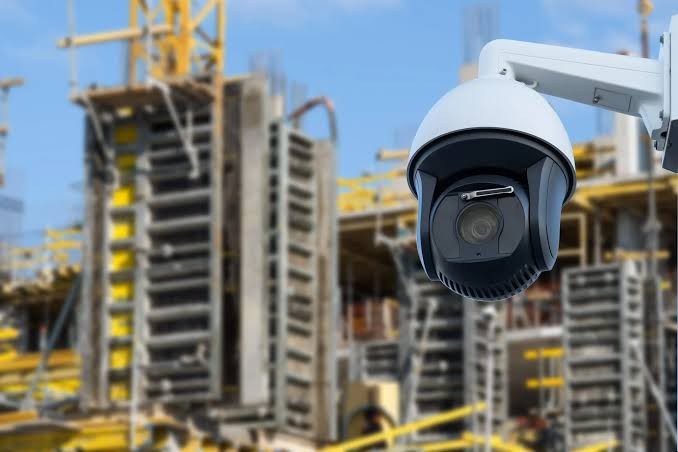
Construction sites are among the most challenging environments to secure. Building materials, construction equipment, machinery, tools, fuel and valuable installations are often stored in open or partially completed areas. Workers, contractors, suppliers and visitors also move around the site throughout the day, creating security and operational management challenges.
For construction companies, property developers, project managers and building contractors in Uganda, effective site security is essential for protecting investments, reducing losses and maintaining better control over construction activities.
CCTV security systems for construction sites and building projects provide a practical way to monitor site activities, observe access points, protect valuable equipment and maintain visual records of important operations. Modern surveillance technology also allows authorised managers to monitor projects remotely, even when they are away from the construction site.
However, construction sites require a different CCTV approach from completed residential or commercial buildings. Temporary structures, changing site layouts, dust, rain, power interruptions, moving machinery and limited network infrastructure can all affect surveillance performance.
This guide explains how CCTV systems protect construction sites in Uganda, where cameras should be installed, which surveillance technologies are suitable, how installation works and what determines CCTV installation costs.
Whether you are constructing a residential estate, apartment building, commercial complex, warehouse, factory or infrastructure project, choosing the right CCTV system can improve site security and project oversight.
Why Construction Sites Need CCTV Security Systems
Construction projects involve significant financial investment. Materials and equipment may be delivered in stages, machinery may remain on-site overnight and multiple contractors may work in different areas.
Without suitable surveillance, it can be difficult to identify unauthorised activities, investigate losses or monitor what happens outside normal working hours.
A professionally designed CCTV system provides several important benefits.
1. Preventing Theft of Building Materials
Construction materials such as cement, steel reinforcement bars, timber, roofing sheets, electrical cables, plumbing fittings and finishing materials can represent a substantial project investment.
These materials may be stored in open areas, temporary stores or partially completed buildings.
CCTV cameras positioned around storage areas, delivery points and site boundaries can help monitor material handling and identify suspicious activity.
Recorded footage may also assist project managers when investigating missing materials or disputes involving deliveries.
2. Protecting Construction Equipment and Machinery
Construction sites often contain valuable equipment, including:
- Excavators and bulldozers.
- Concrete mixers.
- Cranes and lifting equipment.
- Generators.
- Welding machines.
- Compressors.
- Scaffolding equipment.
- Power tools.
- Site vehicles and trailers.
Cameras can monitor machinery parking areas, equipment stores and restricted sections of the project.
Combining CCTV with secure equipment storage, inventory controls and access management can strengthen protection against theft and unauthorised use.
3. Monitoring Site Entrances and Exits
Construction sites receive workers, subcontractors, suppliers, consultants, delivery vehicles and visitors.
Monitoring entry and exit points helps site management maintain better visibility over movement around the premises.
Cameras can provide visual records of people and vehicles entering or leaving the site. Where vehicle identification is required, specialised Automatic Number Plate Recognition (ANPR) cameras may also be considered.
CCTV should complement, not replace, proper visitor registration, site induction and access control procedures.
4. Reducing Unauthorised Access
Construction sites may contain unfinished structures, excavations, electrical installations, lifting equipment and other potentially dangerous areas.
Unauthorised entry can create security, safety and liability concerns.
CCTV cameras can help monitor perimeter fencing, access gates, restricted work zones and vulnerable sections of the development.
When integrated with suitable access control and alarm systems, surveillance can help security personnel respond more effectively to unauthorised access.
5. Improving Worker and Contractor Oversight
Large construction projects may involve several contractors working simultaneously.
CCTV provides management with visual information about activities in designated work areas. It can help review reported incidents, investigate disputes and understand operational events.
However, surveillance should be used responsibly and should not replace direct supervision, occupational health and safety procedures or proper worker training.
6. Monitoring Construction Activities Remotely
Developers and project owners may manage several construction projects in different locations.
Remote CCTV monitoring allows authorised users to view selected cameras through secure applications or central monitoring systems.
This can help management maintain visibility over project sites without having to be physically present at every location.
Remote access is particularly useful for projects in Kampala, Wakiso, Entebbe and other parts of Uganda where developers may oversee multiple properties.
7. Supporting Incident Investigations
Construction sites may experience incidents involving equipment damage, material losses, vehicle movements, unauthorised entry and disputes.
Recorded CCTV footage can help establish the sequence of events and support internal investigations.
The usefulness of recordings depends on suitable camera positioning, image quality, correct timestamps, reliable storage and controlled access to footage.
8. Improving Overall Project Management
Although CCTV is primarily a security tool, it can also provide useful visual oversight of construction operations.
Depending on camera placement and the project’s requirements, managers may use footage to review:
- Delivery and unloading activities.
- Movement of construction vehicles.
- Access to material storage areas.
- Equipment parking arrangements.
- Activities around selected work zones.
- Site opening and closing procedures.
CCTV does not replace construction supervision, project documentation or quality inspections, but it can complement these processes.
Important Areas Where CCTV Cameras Should Be Installed on Construction Sites
A good CCTV system begins with identifying the locations that require surveillance.
The camera layout should reflect the size of the development, the value of materials and equipment, the site boundaries, access routes and construction activities.
1. Main Construction Site Entrance
<PRIVATE_PERSON> cameras should be positioned at the main entrance to monitor people and vehicles entering and leaving the site.
This location is particularly important because it may be used by workers, suppliers, contractors, visitors and heavy vehicles.
The camera layout should provide useful views of the gate and approaching traffic without being obstructed by vehicles or temporary structures.
2. Perimeter Fencing and Boundary Areas
Perimeter surveillance helps monitor vulnerable sections of a construction site’s boundary.
Cameras can be installed at suitable locations overlooking:
- Boundary walls.
- Temporary security fencing.
- Access gates.
- Side entrances.
- Vulnerable fence sections.
- External approaches.
Outdoor cameras should have appropriate weather protection and be mounted securely to withstand the site’s environmental conditions.
3. Building Material Storage Areas
Materials are often stored in designated locations before being transported to different work areas.
CCTV cameras can monitor cement stores, steel storage yards, timber areas, roofing material storage and other valuable inventory locations.
Camera positioning should provide a clear view of access routes and material handling activities.
4. Equipment and Machinery Parking Areas
Heavy machinery and construction equipment may be parked on-site when not in use.
Cameras can monitor equipment yards, vehicle parking spaces, generator locations and tool storage areas.
Where equipment is spread across a large development, multiple fixed cameras may be more effective than relying on one camera to cover the entire area.
5. Temporary Site Offices
Construction site offices may contain computers, project documents, drawings, financial records, communication equipment and other valuable property.
CCTV can monitor office entrances, reception areas and external approaches.
Cameras should be positioned carefully to protect confidential information and avoid unnecessary surveillance of private spaces.
6. Delivery and Loading Zones
Construction projects receive regular deliveries of materials, machinery, equipment and supplies.
Cameras can monitor delivery vehicles, unloading points and designated material receiving areas.
This can help project managers review delivery-related disputes, damaged materials and unusual activities.
7. High-Value Work Areas
Some areas may contain expensive installations or materials, including electrical equipment, plumbing infrastructure, HVAC components, specialised machinery and finishing products.
CCTV can be used to monitor access to these locations, particularly when valuable equipment has been installed but the building is not yet occupied.
8. Temporary Fuel and Generator Areas
Construction sites may store fuel and operate generators to support machinery and temporary power requirements.
These areas may need dedicated surveillance based on the site’s security and safety assessment.
Where flammable materials create classified hazardous areas, all electrical and surveillance equipment installed within those zones must be suitable and appropriately certified. Ordinary CCTV equipment should not automatically be assumed safe for such environments.
9. Large Open Work Areas
For extensive developments, cameras may be positioned to provide general visibility over selected work zones.
This can be useful for monitoring vehicle movements and reviewing activity across larger sections of the project.
The design should account for changing building heights, scaffolding, temporary structures and equipment that may obstruct views as construction progresses.
Best Types of CCTV Cameras for Construction Sites
Construction environments require cameras that can handle outdoor exposure, changing layouts and different monitoring distances.
A suitable installation may combine several camera types.
1. IP CCTV Cameras
<PRIVATE_PERSON> IP cameras transmit digital video over an Internet Protocol network and are widely used in modern commercial surveillance systems.
They are suitable for construction projects that require high-quality recording, centralised monitoring and the ability to expand the system as the development progresses.
Common features include:
- High-definition video.
- Remote monitoring.
- Motion detection.
- Power over Ethernet (PoE) on compatible models.
- Integration with network video recorders.
- Video analytics.
- Flexible system expansion.
IP cameras are particularly useful where a suitable network infrastructure can be established.
2. Bullet CCTV Cameras
Bullet cameras are commonly used for outdoor surveillance because their directional design makes it easier to target specific locations.
They can be installed around:
- Construction site entrances.
- Perimeter boundaries.
- Equipment yards.
- Material storage areas.
- Vehicle parking zones.
Weather-resistant models are important for cameras exposed to rain, dust and other outdoor conditions.
3. Dome CCTV Cameras
Dome cameras are often suitable for sheltered areas, including temporary offices, indoor storage facilities, reception areas and completed sections of buildings.
They provide a compact design and can be installed in locations where a less conspicuous camera is preferred.
4. PTZ CCTV Cameras
Pan-Tilt-Zoom cameras can move horizontally and vertically and zoom into selected areas.
They may be useful for large construction sites where security personnel need to inspect different areas from a central monitoring point.
However, a PTZ camera cannot continuously observe every direction while moving between viewing positions. Fixed cameras should therefore provide continuous coverage of important locations.
5. Night Vision CCTV Cameras
Construction sites may have limited lighting after workers leave for the day.
Infrared and low-light CCTV cameras can help monitor storage areas, access points, machinery yards and perimeter boundaries at night.
The camera should be selected according to the actual lighting conditions, viewing distance and required image detail.
6. 4G and 5G CCTV Cameras
Some construction sites do not have reliable fixed internet connections, especially during the early stages of development.
Compatible cellular CCTV systems can transmit video using supported mobile networks.
Depending on the site, these systems may provide a practical option for remote monitoring without waiting for permanent internet infrastructure.
Network coverage, data costs, video quality and power requirements should be assessed before installation.
7. Solar-Powered CCTV Cameras
Solar-powered CCTV systems may be suitable for remote or temporary construction locations where mains electricity is unavailable or difficult to access.
A complete system may include:
- Solar panels.
- Rechargeable batteries.
- Compatible cameras.
- Power management equipment.
- Wireless or cellular connectivity.
- Recording or cloud storage arrangements.
The system should be designed around camera power consumption, local sunlight conditions, battery capacity and the required operating period.
8. ANPR CCTV Cameras
ANPR cameras are designed to capture and interpret vehicle registration plates.
They can be useful at construction site entrances where vehicle identification is an important part of access management.
The camera must be positioned and configured for the expected vehicle speed, viewing angle, lighting and local number plate characteristics.
An ordinary CCTV camera may provide a general vehicle view without being reliable for automatic number plate recognition.
Temporary CCTV Systems for Construction Projects
Unlike completed buildings, construction sites change throughout the project.
A location that initially contains open ground may later have foundations, structural columns, walls, scaffolding and roofing. These changes can obstruct cameras and create new security risks.
For this reason, construction projects may benefit from temporary and adaptable surveillance systems.
Mobile CCTV Towers
Mobile CCTV towers are portable surveillance units designed for temporary deployment.
They may be used to monitor large construction sites, open storage areas, infrastructure projects and locations where permanent camera mounting points are not yet available.
Depending on the model, they may include:
- Elevated camera mounting.
- PTZ cameras.
- Solar power.
- Battery backup.
- Cellular connectivity.
- Remote monitoring.
- Motion detection and alerts.
The tower should be positioned on stable ground, secured against unauthorised movement and installed without interfering with construction operations.
Wireless CCTV Systems
Wireless CCTV cameras can reduce the need for extensive signal cabling in locations where installing cables would be difficult.
They may be suitable for temporary offices, remote storage areas and sections of a project where network infrastructure is limited.
However, wireless cameras still require reliable power and a suitable communication link. Signal strength, interference, network security and recording arrangements must be considered.
Repositionable Cameras
For long-term construction projects, camera positions may need to change as the building develops.
A flexible installation can allow selected cameras to be relocated when new structures obstruct existing views or when additional security requirements arise.
Any relocation should be followed by testing to confirm that the camera provides the intended coverage.
CCTV Systems for Different Types of Construction Projects
Different construction projects have different surveillance requirements.
1. Residential Building Construction
Residential developments may involve valuable building materials, temporary stores, workers and equipment.
CCTV cameras can monitor entrances, storage areas, perimeter fencing, temporary offices and machinery parking zones.
For housing developments with multiple units, a carefully planned system can provide coverage across different sections of the site.
2. Apartment and Estate Developments
Large apartment projects and residential estates may have extensive boundaries, multiple access gates and several construction zones.
Surveillance may be designed around:
- Main and secondary entrances.
- Material storage locations.
- Equipment parking areas.
- Construction blocks.
- Internal access roads.
- Perimeter boundaries.
As construction progresses, the camera layout may need to be adjusted to cover completed and unfinished sections.
3. Commercial Building Projects
Office buildings, shopping complexes, hotels and commercial developments may contain expensive construction materials and specialised building systems.
CCTV can monitor delivery areas, site entrances, electrical installation zones, mechanical plant areas and other important locations.
4. Industrial Construction Projects
Factory construction, warehouse development and industrial facilities may require surveillance over large areas containing heavy machinery, steel structures, equipment and valuable installations.
These projects may benefit from fixed cameras, PTZ systems, remote monitoring and suitable perimeter surveillance.
5. Road and Infrastructure Projects
Road construction, bridge development and other infrastructure projects may cover extensive or geographically separated areas.
Mobile CCTV towers, solar-powered cameras and cellular surveillance may be considered where permanent power and network infrastructure are unavailable.
The equipment must be selected according to the environmental and operational requirements of each location.
Important Features to Consider When Choosing Construction Site CCTV Systems
Choosing CCTV cameras based only on advertised resolution or price can result in poor performance.
Construction site managers should evaluate the following features.
High Image Resolution
The required resolution depends on what the camera must capture.
A camera monitoring a wide construction yard may require a different specification from one monitoring a gate where identifying people or vehicles is important.
Image quality is also affected by lens selection, viewing distance, lighting, camera angle and compression.
Weather Resistance
Outdoor cameras may be exposed to rain, dust, wind and changing temperatures.
Select equipment with appropriate ingress protection and environmental ratings for the installation location.
Night-Time Performance
A CCTV system should provide usable footage after working hours.
Consider infrared illumination, low-light performance and suitable external lighting.
Wide Dynamic Range
Cameras facing entrances and outdoor areas may encounter bright sunlight, shadows and vehicle headlights.
Wide Dynamic Range (WDR) can help improve image visibility in scenes with significant differences in brightness.
Motion Detection and Intelligent Analytics
Modern CCTV systems may include features such as:
- Human and vehicle detection.
- Intrusion detection.
- Line-crossing alerts.
- Restricted-area monitoring.
- Loitering detection.
- Object detection.
These functions can help identify selected activities, but their reliability depends on correct configuration, camera positioning and environmental conditions.
Remote Monitoring
Remote viewing allows authorised project managers and security personnel to check selected cameras from different locations.
This is useful for developers managing several construction projects.
Remote access should be protected with strong authentication, individual accounts and secure network configurations.
Recording and Storage Capacity
A CCTV system needs sufficient storage for the intended recording period.
Storage requirements depend on:
- Number of cameras.
- Image resolution.
- Frame rate.
- Video compression.
- Continuous or motion-based recording.
- Required retention period.
A network video recorder (NVR) or suitable centralised recording platform may be used depending on the system design.
Power Backup
Power interruptions can affect surveillance coverage.
UPS equipment or another suitable backup arrangement can help keep cameras, recorders and network devices operating when mains power is interrupted.
Solar-powered systems may be appropriate for locations without reliable electricity.
Cybersecurity
Networked CCTV systems should be protected against unauthorised access.
Important measures include changing default passwords, using secure network connections, limiting user permissions, updating firmware and protecting remote access.
Integrating CCTV with Other Construction Site Security Systems
CCTV should form part of a wider site security arrangement rather than being treated as a complete security solution on its own.
Access Control Systems
Access control can regulate entry into site offices, equipment stores and restricted work areas.
Depending on the project, it may use access cards, PINs, biometric devices or other approved credentials.
CCTV can provide visual monitoring of these access points.
Intruder Alarm Systems
Intruder alarms can detect selected unauthorised entry events in protected areas.
When integrated with compatible CCTV platforms, alarm events may be linked to relevant camera views for verification.
Perimeter Security Systems
Perimeter security solutions can include fencing, gates, lighting, intrusion detection and CCTV surveillance.
Combining these measures helps strengthen protection around vulnerable boundaries.
Security Lighting
Suitable lighting improves visibility around entrances, equipment storage areas and perimeter zones.
It can also improve the performance of cameras that depend on visible light.
Centralised Monitoring Systems
For large developments or construction companies managing multiple projects, centralised monitoring can bring different camera feeds into one management platform.
This allows authorised personnel to monitor selected locations and review recordings from a central control point.
CCTV Installation Process for Construction Sites and Building Projects
A successful installation requires proper planning, suitable equipment and testing under real site conditions.
Step 1: Construction Site Security Assessment
The first step is to inspect the site and understand its security requirements.
The assessment should consider:
- Total site size.
- Boundary layout.
- Number of access points.
- Material storage locations.
- Equipment and machinery yards.
- Temporary offices.
- Available power supply.
- Internet and network availability.
- Lighting conditions.
- Areas likely to change as construction progresses.
Step 2: Identify Security Priorities
The project team should identify the most important areas requiring surveillance.
For some sites, the main priority may be protecting construction materials. Others may need greater attention to vehicle access, machinery parking or remote monitoring.
Step 3: Prepare a CCTV Camera Layout
A camera layout should identify proposed camera positions, viewing angles, mounting arrangements and areas requiring coverage.
The design should minimise blind spots while avoiding unnecessary duplication.
It should also consider future changes to the construction site.
Step 4: Select Suitable CCTV Equipment
The installer selects cameras, lenses, recorders, storage devices, network equipment, mounting accessories and power backup components.
The choice should reflect the site conditions and the intended surveillance functions.
Step 5: Install Mounting Structures and Infrastructure
Cameras may be installed on existing buildings, poles, temporary structures or dedicated mounting supports.
Cables should be routed and protected against mechanical damage, weather exposure and interference.
Installations should not obstruct machinery movement, lifting operations, emergency routes or other construction activities.
Step 6: Install and Configure Cameras
The cameras are mounted and configured to provide the intended views.
This includes adjusting focus, viewing angles, image settings, motion detection and other supported functions.
Step 7: Configure Recording and Remote Access
The recording platform is configured according to the required recording schedule and storage capacity.
Where remote monitoring is required, authorised users receive appropriate access permissions through secure connections.
Step 8: Test the Complete System
The installer should test:
- Camera coverage.
- Daytime and night-time image quality.
- Recording and playback.
- Motion detection and alerts.
- Network connectivity.
- Remote monitoring.
- Storage capacity and recording health.
- Power backup.
- Date and time accuracy.
- User permissions.
Step 9: Handover and Training
Site managers and authorised security personnel should be shown how to view cameras, retrieve recordings, manage access and report system faults.
The project team should also receive relevant system documentation.
Step 10: Review Coverage as Construction Progresses
For long-term projects, CCTV coverage should be reviewed as new buildings, walls, roofs and other structures are completed.
Relocating cameras or adding additional units may be necessary to maintain effective surveillance.
CCTV Installation Costs for Construction Sites in Uganda
The cost of installing CCTV on a construction site depends on the size of the project, surveillance requirements, camera specifications and complexity of the installation.
A small residential building project may require a relatively simple system, while a large commercial development, industrial facility or multi-building estate may need a more extensive surveillance network.
Factors That Determine CCTV Installation Costs
1. Number of cameras
The number of cameras depends on the areas requiring coverage, the size of the site and the number of entrances, storage locations and equipment yards.
2. Camera specifications
IP cameras, PTZ cameras, night vision cameras, ANPR cameras and specialised outdoor models have different equipment costs.
3. Site size and layout
Large or irregularly shaped sites may require additional cameras, mounting structures, longer cable routes and network infrastructure.
4. Cabling and installation complexity
The installation cost may increase where cameras require elevated mounting, protected cable routes, long-distance connections or difficult access arrangements.
5. Power supply
Sites without reliable electricity may require UPS equipment, solar panels, batteries or other power solutions.
6. Internet and connectivity
Remote monitoring may require cellular connectivity, wireless links, fibre infrastructure or additional network equipment.
7. Recording and storage
The number of cameras, recording quality and footage retention period determine storage requirements.
8. Temporary or mobile surveillance equipment
Mobile CCTV towers and portable surveillance units may have different acquisition, installation and maintenance costs from fixed camera systems.
9. Integration with other security systems
Integrating CCTV with alarms, access control and centralised monitoring may require additional hardware and configuration.
10. Maintenance and future expansion
The project budget should account for maintenance, equipment replacement, camera relocation and additional coverage as the development progresses.
How to Get an Accurate CCTV Installation Quotation
Before requesting a quotation, establish the project size, construction stage, main security concerns and locations requiring surveillance.
A site assessment helps determine the most suitable equipment and installation approach.
A professional quotation should clearly explain:
- Proposed camera locations.
- Camera types and specifications.
- Recording and storage arrangements.
- Cabling and network infrastructure.
- Power backup requirements.
- Remote monitoring configuration.
- Installation and commissioning work.
- Maintenance and support arrangements.
Contact Daltrevco to discuss your construction site’s CCTV requirements and the appropriate surveillance solution.
Common CCTV Installation Mistakes on Construction Sites
Poorly planned surveillance can create blind spots, unreliable recordings and unnecessary costs.
Construction companies should avoid the following mistakes.
1. Installing Cameras Without a Site Assessment
Every construction project has a different layout and risk profile.
A system designed without inspecting the site may fail to cover important access points and storage locations.
2. Ignoring Changes in Construction Layout
As a building develops, walls, scaffolding, roofing and machinery can obstruct camera views.
Surveillance coverage should be reviewed regularly as construction progresses.
3. Choosing Cameras Based Only on Price
Cheap equipment may not provide sufficient image quality, durability or low-light performance for demanding outdoor environments.
The total suitability of the system should be considered rather than purchase price alone.
4. Failing to Protect Outdoor Cameras
Dust, rain, vibration and accidental impacts can damage equipment.
Cameras should have suitable environmental protection and secure mounting arrangements.
5. Ignoring Night-Time Security
A camera system that works well during the day may provide poor footage at night.
Night-time testing and appropriate lighting are important.
6. Poor Power and Network Planning
Unstable power and unreliable connectivity can interrupt surveillance.
The installation should include suitable power backup and network planning.
7. Failing to Secure CCTV Systems
Default passwords, shared user accounts and unsecured remote access can expose video systems to unauthorised users.
Cybersecurity should be included in the installation and maintenance plan.
8. Using CCTV as a Replacement for Physical Security
Cameras do not physically prevent people from entering a site.
They should be combined with fencing, gates, security personnel, lighting, access control and appropriate site procedures.
9. Neglecting Maintenance
Dirty lenses, loose mounts, damaged cables and failing storage devices can compromise surveillance.
Routine inspections and testing are necessary.
CCTV Maintenance for Construction Sites
Construction environments can be demanding for electronic equipment.
Dust, vibration, rain, changing temperatures and temporary electrical installations may affect camera performance.
Regular maintenance should include:
- Cleaning camera lenses and protective covers.
- Checking mounting brackets and supports.
- Inspecting cables, conduits and connectors.
- Confirming that cameras provide the intended coverage.
- Testing night vision and low-light performance.
- Reviewing NVR operation and recording playback.
- Checking available storage capacity.
- Testing remote access.
- Inspecting UPS and battery backup equipment.
- Reviewing passwords and user permissions.
- Repositioning cameras where new structures obstruct views.
Maintenance should be performed by competent personnel using safe access procedures, particularly where cameras are installed at height or near active construction operations.
Legal and Privacy Considerations for Construction Site CCTV in Uganda
Businesses and contractors installing CCTV in Uganda should consider the Data Protection and Privacy Act, 2019, and applicable regulations.
CCTV footage that identifies or can identify workers, visitors, contractors or other individuals may constitute personal data.
Construction companies should establish responsible surveillance practices.
Important considerations include:
Legitimate purpose: CCTV should be installed for defined security, safety or operational purposes.
Transparency: Workers, contractors and visitors should receive appropriate information about surveillance.
Suitable camera positioning: Cameras should cover relevant operational and security areas without unnecessarily intruding into private spaces.
Restricted access: Only authorised personnel should view or retrieve recordings.
Secure storage: Footage should be protected against unauthorised access, alteration, loss and disclosure.
Retention policies: Recordings should be retained according to a defined and justified retention policy, taking applicable legal requirements into account.
Responsible sharing: Footage should only be disclosed through appropriate lawful procedures.
Employers and project owners should also ensure that surveillance does not replace occupational safety systems, site supervision or mandatory safety procedures.
How to Choose the Best CCTV Installation Company in Uganda
Selecting an appropriate installation company is important because a surveillance system is only as effective as its design, installation and ongoing maintenance.
Consider the following factors before choosing a contractor.
1. Experience with Commercial and Industrial CCTV Systems
Look for an installer who understands the requirements of large properties, outdoor installations and complex building environments.
2. Site Assessment and System Design
The company should inspect the project and develop a camera layout based on the actual security requirements.
Avoid accepting a quotation that lists cameras without explaining where they will be installed and what areas they will cover.
3. Suitable Equipment Selection
Ask for camera models, technical specifications, environmental ratings and recording equipment details.
4. Understanding of Construction Site Conditions
The installer should consider temporary structures, changing layouts, equipment movement, dust, weather and available power and network infrastructure.
5. Professional Installation
Cameras, mounting structures, cables and network devices should be installed securely and in a way that does not interfere with construction operations.
6. Testing and Commissioning
A completed installation should be tested before handover to confirm that cameras record correctly and provide the required coverage.
7. Maintenance and Technical Support
Ask about inspection schedules, troubleshooting, repairs and system expansion as construction progresses.
8. Transparent Quotation
The proposal should clearly identify equipment, installation work, infrastructure, recording arrangements and any additional services.
Why Consider Daltrevco for CCTV Security Systems for Construction Projects?
Planning security for a construction project requires understanding the site’s layout, the value of materials and equipment, operational activities and the risks that may arise as the development progresses.
Daltrevco is a point of contact for property owners, developers and businesses planning construction and security infrastructure projects in Uganda.
For construction site CCTV projects, the starting point should be a clear assessment of the areas requiring surveillance and the most appropriate technology for the working environment.
When planning your CCTV installation, consider:
- Construction site size and layout.
- Number of entrances and exits.
- Material storage and machinery parking locations.
- Perimeter security requirements.
- Daytime and night-time monitoring.
- Temporary and mobile CCTV options.
- Solar-powered and cellular camera systems.
- Recording and storage capacity.
- Remote monitoring requirements.
- Future camera relocation and expansion.
- Maintenance and technical support.
Visit Daltrevco to learn more about the company and discuss your project requirements.
Frequently Asked Questions About CCTV Security Systems for Construction Sites
1. Why do construction sites need CCTV security systems?
Construction sites need CCTV to monitor valuable materials, machinery, equipment, workers, visitors and access points. Surveillance can help deter some unauthorised activities, support incident investigations and improve project oversight.
2. What areas should have CCTV cameras on a construction site?
Important areas include main entrances, perimeter boundaries, material storage areas, equipment yards, temporary offices, delivery zones, parking areas and selected work areas.
3. What type of CCTV camera is best for construction sites?
IP cameras are suitable for many modern construction projects. Bullet cameras, dome cameras, PTZ cameras, night vision cameras and cellular cameras may also be used depending on the site layout and security requirements.
4. Can CCTV cameras monitor a construction site at night?
Yes. Infrared and low-light cameras can monitor selected areas after working hours. Suitable lighting and correct camera positioning improve night-time surveillance.
5. Can construction site CCTV be monitored remotely?
Yes. Compatible systems allow authorised users to view live footage and recordings through secure applications or centralised monitoring platforms.
6. Can CCTV cameras work without internet?
Yes. Many CCTV systems can record locally using an NVR or other recording device without an internet connection. Internet or another communication link is generally needed for remote viewing, depending on the system design.
7. Are solar-powered CCTV cameras suitable for construction sites?
Yes. Solar-powered systems may be useful where mains electricity is unavailable or unreliable. The solar panel, battery and camera must be correctly sized for the required operating conditions.
8. Can 4G CCTV cameras be used on construction sites?
Yes. Compatible cameras can use supported cellular networks to transmit footage. Network coverage, data usage, power supply and recording arrangements should be considered before installation.
9. How many CCTV cameras does a construction site need?
There is no standard number for every project. The requirement depends on the size of the site, number of entrances, storage areas, equipment locations and other security priorities.
10. Can CCTV cameras monitor construction material deliveries?
Yes. Cameras can monitor delivery entrances, unloading zones and material receiving areas. They can provide visual records that help management investigate delivery disputes and suspected losses.
11. Can CCTV cameras identify vehicles entering a construction site?
Ordinary CCTV cameras can provide general views of vehicles. Specialised ANPR cameras can capture and interpret number plates where vehicle identification is required.
12. What is a mobile CCTV tower?
A mobile CCTV tower is a portable surveillance unit that can be moved between locations. It may include elevated cameras, remote monitoring, cellular connectivity, solar power and battery backup, depending on the model.
13. Can construction site CCTV cameras be moved?
Yes. Some systems are designed for temporary deployment and camera relocation. However, cameras should be repositioned and tested to ensure that the required coverage is maintained.
14. Does CCTV prevent construction material theft?
CCTV may discourage some theft and help identify incidents, but it cannot guarantee that theft will not occur. It should be combined with secure storage, access control, inventory management, fencing and appropriate site security procedures.
15. How much does construction site CCTV installation cost in Uganda?
The cost depends on camera quantity, specifications, site size, cabling, power supply, recording capacity, connectivity and installation complexity. A site assessment is necessary to develop an accurate quotation.
16. Can CCTV be integrated with construction site access control?
Yes. Compatible systems can integrate CCTV with access control to provide visual monitoring of gates, offices, equipment stores and other restricted areas.
17. Can CCTV cameras monitor large construction projects?
Yes. Large developments can use a combination of fixed cameras, PTZ cameras, mobile CCTV towers and centralised monitoring systems to cover different sections of the site.
18. How long should construction site CCTV footage be stored?
The retention period should be based on the project’s security requirements, investigation needs and applicable data protection obligations. Storage capacity should be designed to support the approved retention policy.
19. Is construction site CCTV subject to data protection laws in Uganda?
Yes. Footage that identifies individuals may be personal data. Businesses should consider Uganda’s Data Protection and Privacy Act, 2019, and applicable regulations when collecting, storing and sharing recordings.
20. How often should construction site CCTV systems be maintained?
Maintenance frequency depends on environmental conditions, equipment specifications and operational requirements. Regular inspections are important because dust, rain, vibration and construction activities can affect camera performance.
Conclusion: Protect Your Construction Project with Professional CCTV Surveillance
Construction sites and building projects require effective security because they contain valuable materials, machinery, equipment and installations throughout different stages of development.
A professionally designed CCTV system helps monitor access points, storage areas, machinery yards, delivery zones and other important locations. It can also support remote supervision, incident investigation and improved site security management.
The most suitable solution depends on the size of the project, construction stage, power availability, network infrastructure and security requirements.
Whether you are building a residential property, apartment complex, commercial building, warehouse, factory or large development, investing in properly planned CCTV surveillance can help protect your project throughout construction.
Contact Daltrevco to discuss CCTV security systems for your construction site or building project in Uganda. Start with a suitable site assessment and choose a surveillance solution designed around your project’s security and operational requirements.

